Embry-Riddle Gets a $56 Million Construction Push and a New Transportation Research Partnership
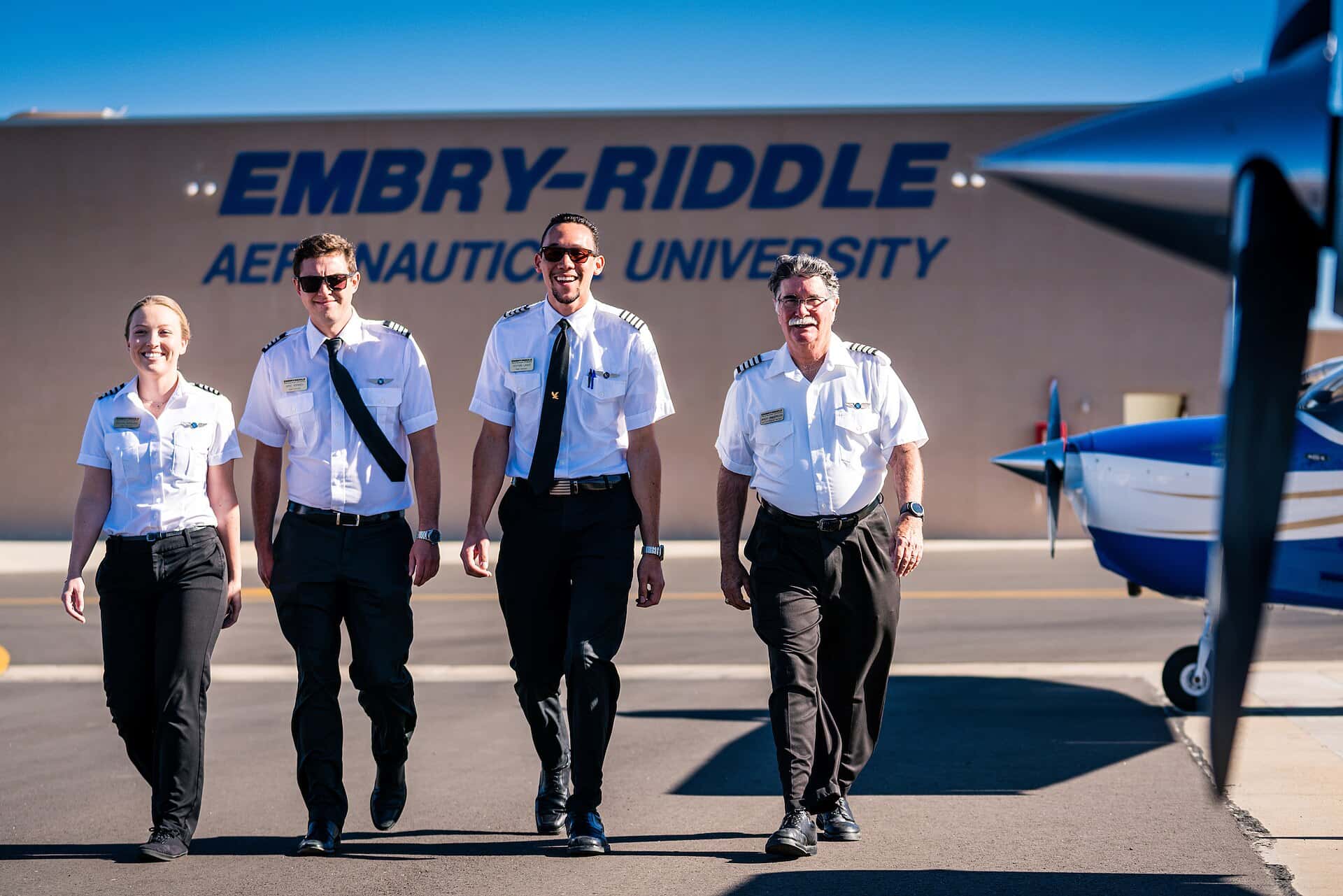
Gov. Ron DeSantis announced on August 14 at Embry-Riddle Aeronautical University in Daytona Beach that construction on a $56 million campus project will proceed on an accelerated schedule, and he highlighted a new partnership between the university and the Florida Department of Transportation focused on emerging transportation technology.
The announcement pairs capital investment with a research relationship, a combination Florida has increasingly used to tie university expansion to specific state workforce and infrastructure priorities.
For Volusia County and the broader Central Florida corridor, the investment reinforces Embry-Riddle's position as an anchor institution in a region whose economy runs on aerospace, aviation and, increasingly, the technology sectors that surround them.
What was announced
The governor announced the accelerated start of construction on the $56 million project at the university's Daytona Beach campus. Accelerating a construction start rather than following the original schedule generally reflects a decision to commit funding earlier in order to reduce exposure to construction cost inflation and to bring facilities online sooner.
Separately, DeSantis highlighted a new partnership between Embry-Riddle and the Florida Department of Transportation to advance research on emerging transportation technology. FDOT has expanded its research portfolio in recent years around connected and automated vehicles, advanced air mobility, drone integration into airspace and infrastructure that supports those systems.
Embry-Riddle occupies an unusual position for that work. It is one of the few universities in the country built specifically around aviation and aerospace, with programs spanning aeronautical science, aerospace engineering, air traffic management, unmanned systems and aviation maintenance.
Why Florida invests here
Florida's aerospace sector has expanded substantially over the past decade. The Space Coast, roughly an hour south of Daytona Beach, now supports a launch cadence that has repeatedly set records, with commercial and government missions flying from Cape Canaveral Space Force Station and Kennedy Space Center.
That growth generates demand for engineers, technicians, air traffic professionals and systems specialists. Florida's strategy has been to build the talent pipeline inside the state rather than importing it, which requires university capacity in the specific disciplines the sector needs.
Aviation, distinct from space, is also a major Florida industry. The state operates a dense network of commercial airports, general aviation fields and flight training operations, and Florida's weather and airspace make it one of the country's primary flight training markets. The commercial pilot and aviation maintenance technician shortages that have affected the national industry are felt acutely in a state that trains a large share of the workforce.
The transportation technology angle
The FDOT partnership points toward a set of problems Florida faces earlier and more acutely than most states.
Florida's population growth has outpaced highway capacity expansion in most metropolitan areas, and the state has invested in connected vehicle infrastructure, traffic management technology and corridor studies aimed at moving more vehicles through existing right-of-way.
Advanced air mobility, the category covering electric vertical takeoff aircraft and drone-based logistics, presents both opportunity and regulatory complexity. Florida's flat terrain, dense population corridors and existing aviation infrastructure make it a plausible early market, and FDOT has an interest in understanding how such systems would interact with ground transportation, emergency response and existing airspace.
Drone operations for infrastructure inspection are already in use. Bridge inspection, roadway surveying, post-storm damage assessment and traffic monitoring by unmanned aircraft reduce cost and risk relative to manned alternatives, and research partnerships help agencies establish the protocols and standards those operations require.
What it means for students and the region
For Embry-Riddle students, capital investment translates into laboratory, classroom and research facility capacity, and research partnerships with a state agency create funded project work and internship pathways into public sector engineering careers.
For Volusia County, university construction is direct economic activity, employing trades workers over the build period and supporting the local supplier base. Completed facilities support enrollment growth, which in turn supports off-campus housing demand, retail and services in Daytona Beach.
For Florida taxpayers, the return is measured in workforce output and in research that state agencies can apply. FDOT research partnerships typically produce deliverables intended for operational use rather than purely academic publication.
Florida's broader higher education posture
The announcement fits a pattern in Florida higher education policy that has emphasized programs with identifiable workforce outcomes and direct industry linkage.
The State University System and the Florida College System have both been directed toward closer alignment with employer demand, with funding models that reward graduate employment and earnings outcomes. Private institutions such as Embry-Riddle sit outside the state system but participate in state research partnerships and workforce initiatives.
Florida has also expanded aerospace-specific programs across multiple institutions, including at the University of Central Florida in Orlando, Florida Institute of Technology in Melbourne and Florida Polytechnic University in Lakeland, building a regional cluster around the Space Coast rather than concentrating capacity at a single campus.
Florida's aerospace workforce pipeline
The investment lands in the middle of a workforce challenge that the aviation and aerospace industries have been describing for years.
Commercial aviation faces a sustained pilot shortage driven by mandatory retirement ages, the hour requirements for airline transport pilot certification and the cost of flight training. Aviation maintenance technicians are in similarly short supply, with an aging workforce and a training pipeline that has not kept pace with retirements.
On the space side, the growth in launch cadence has created demand for engineers, technicians and operations personnel that did not exist at this scale a decade ago. The Space Coast has absorbed workers from across the country, and Florida institutions have expanded programs to supply more of that demand locally.
Embry-Riddle occupies a specific position in that pipeline. Its Daytona Beach campus operates a substantial flight training fleet, and the university's programs span the range from professional flight and aviation maintenance science through aerospace engineering and unmanned systems.
The economics matter for students. Flight training is expensive, and the debt load associated with a professional pilot pathway has been a barrier for many prospective students. Institutional capacity and scholarship availability directly affect who enters the field.
Daytona Beach beyond the speedway
Daytona Beach's national identity is built around Daytona International Speedway and the events it hosts, but the local economy has diversified considerably.
Embry-Riddle is among Volusia County's larger employers, and the university's presence supports a cluster of aviation-related businesses at and around Daytona Beach International Airport, which shares the field with the university's flight operations.
The county sits between the Space Coast to the south and Jacksonville to the north, positioning it to draw employment from both. That geography has driven residential growth, particularly in western Volusia County and along the Interstate 4 corridor toward Orlando.
Tourism remains a substantial part of the local economy, anchored by the beach, the speedway events including the Daytona 500 in February and the summer race, and the motorcycle events that draw large crowds twice a year.
The mix has made Volusia County less dependent on any single sector than it was decades ago, which matters during downturns in tourism or in any individual industry.
What research partnerships produce
State agency research partnerships with universities follow a defined pattern in Florida, and understanding it clarifies what the FDOT arrangement is likely to yield.
The department identifies operational problems it needs solved, ranging from pavement performance and bridge inspection methods to traffic signal optimization and, increasingly, the integration of automated and connected vehicle technology into existing infrastructure.
Universities compete for those projects, and awarded work produces deliverables intended for departmental use: technical reports, specifications, design guidance and in some cases prototype systems. FDOT maintains a public catalog of research projects and publishes completed reports.
The value to students is direct. Funded research supports graduate assistantships and undergraduate research positions, and the work provides a credential and a professional network that transfers into employment with the department, with consulting engineering firms or with the private sector.
The value to the state is applied rather than theoretical. Transportation research addresses problems the department will face regardless, and doing that work at a Florida university keeps both the expertise and the resulting workforce in the state.
The broader higher education budget picture
Florida's investment in university facilities runs through the state's public education capital outlay program and, for private institutions, through targeted appropriations tied to specific projects and outcomes.
The Legislature has directed higher education funding increasingly toward programs with identifiable workforce results, using performance metrics that include graduate employment rates, earnings and program completion. That framework favors technical and professional programs with clear employment pathways.
Aerospace and aviation programs perform well under those metrics, which has made them consistent recipients of state support across recent budget cycles regardless of the broader political environment.
Accelerating construction rather than following the original schedule reflects a judgment that the cost of waiting, in construction inflation and in delayed capacity, exceeds the cost of committing funds earlier.
Drones and the airspace question
The research partnership arrives as Florida confronts practical questions about integrating unmanned aircraft into busy airspace.
Florida's airspace is among the most congested in the country, combining commercial airline traffic through major hubs, a dense general aviation population, extensive flight training operations, military activity around several bases and the periodic airspace closures that launch operations require on the Space Coast.
Adding routine drone operations to that environment requires detection, identification and traffic management systems that do not yet exist at scale. Remote identification requirements have been implemented federally, and unmanned traffic management concepts remain under development.
The applications driving the demand are practical. Infrastructure inspection, agricultural monitoring, public safety support, post-storm damage assessment and package delivery all have identified use cases in Florida, and each requires operations beyond the visual line of sight that current rules generally restrict.
State agencies including FDOT have an operational interest as well as a regulatory one, since the department would be among the larger users of unmanned systems for bridge and roadway inspection.
What's next
Construction timelines and facility details will be managed by the university. Project completion dates for higher education construction typically run two to three years from groundbreaking depending on scope.
The FDOT research partnership will produce work through the department's research office, which publishes completed project reports and maintains a public catalog of ongoing studies.
Florida's next legislative session will take up the state's capital outlay and research funding priorities, and the aerospace and transportation technology sectors have consistently drawn bipartisan support in recent budget cycles.
Spotted an issue with this article?
Have something to say about this story?
Write a letter to the editorComments
No comments yet. Be the first to weigh in.
Related Coverage
Duval Falls Below 100,000 Students as Florida Public School Enrollment Slides and Vouchers Surge
3d ago
Florida Board of Governors Bars Undocumented Students From Public Universities Starting in 2027-2028
4d ago
University of Florida Reports Record $1.34 Billion in Research Spending for Fiscal 2026
4d ago

Florida Education Commissioner Orders Districts to Audit Library Books Without Waiting for Parent Complaints
5d ago