Gators Set August 5 Fall Camp Start as Jon Sumrall Era Begins in Earnest
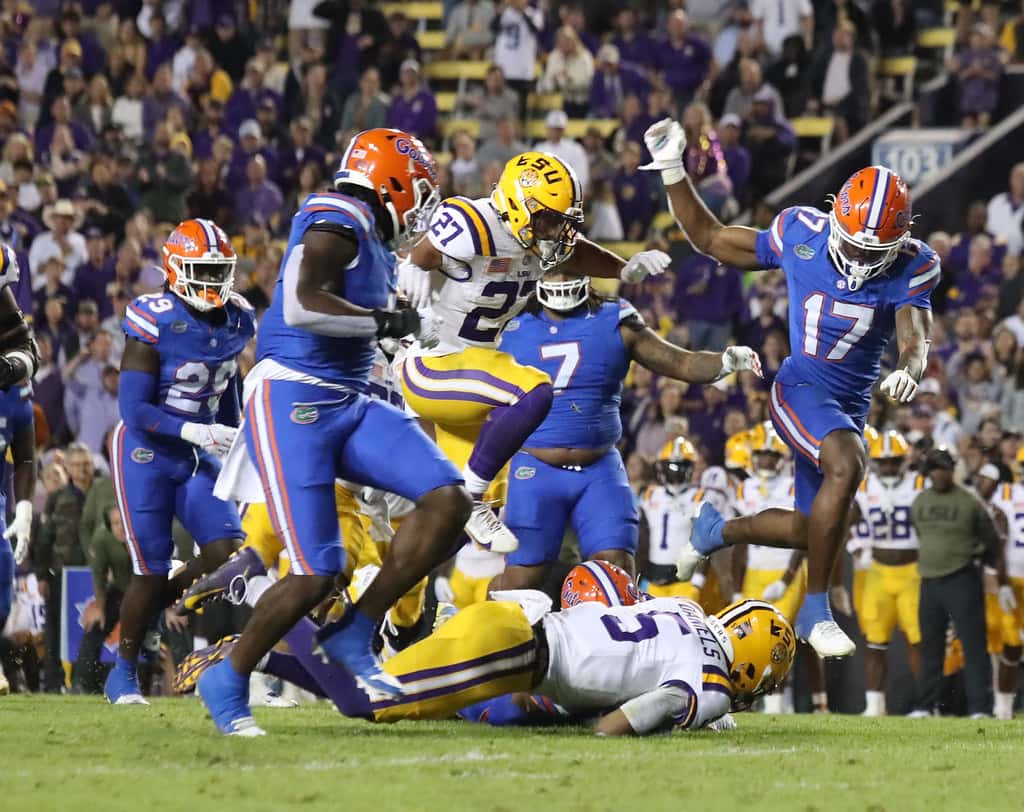
Florida will open fall camp on Wednesday, August 5, beginning the first full preseason of the Jon Sumrall era in Gainesville. The date arrives days after Sumrall made his debut appearance at Southeastern Conference Media Days in Tampa and told reporters this week that the program still has a long way to go, a candid assessment from a coach entering his first season leading the Gators.
Florida has scheduled scrimmages for Saturday, August 15 and Saturday, August 22, with camp concluding the following week. Sumrall is expected to meet with the media on Tuesday, August 4, the day before camp opens, in what typically serves as the program's most detailed public accounting of offseason work, position competitions and expectations for the season ahead.
The Gators' 2026 schedule includes a November 27 trip to Florida State at 3:30 p.m. on ABC, the annual rivalry game that closes the regular season. That date is one of several on a schedule that, as in every SEC season, offers little margin for a program in transition.
Sumrall's first SEC Media Days
Sumrall took the stage at SEC Media Days on Wednesday, July 22, at the Marriott Water Street and JW Marriott in Tampa, appearing alongside three Florida players: junior running back Jadan Baugh, junior linebacker Myles Graham and sophomore receiver Vernell Brown III. The selection of those three signals where the coaching staff sees returning production and leadership.
Media Days appearances are largely ceremonial, but they are also the first extended public exposure a new head coach gets to the conference's press corps. Coaches use the platform to set expectations, and Sumrall's subsequent comment that the team has a long way to go suggests an approach oriented toward managing expectations rather than raising them.
That framing is common for first-year coaches inheriting programs in transition, and it is often accurate. Roster continuity in college football has been reshaped by the transfer portal and by name, image and likeness compensation, which means a coaching change now produces far more turnover than it did a decade ago. Evaluating a first-year staff by wins alone misses most of what actually happens in a transition season.
The quarterback competition
The most consequential question of Florida's camp is the quarterback battle between Aaron Philo and Tramell Jones Jr. Quarterback resolution is the variable that most directly determines a team's ceiling in the Southeastern Conference, and it is the position where a new coaching staff's evaluation carries the most weight.
Competitions of this kind typically resolve in one of two ways. Either one player separates during the first two weeks of camp and the staff commits, or the competition extends into the season and the team rotates until a clear answer emerges. The second path is generally less productive, because offensive rhythm and receiver timing suffer when the passer changes week to week.
Sumrall's August 4 press conference is the most likely point at which the staff offers meaningful public detail on where the competition stands. Coaches rarely name a starter before camp begins, but the language they use about the position often reveals more than the formal announcement that follows weeks later.
What the returning players bring
Baugh, Graham and Brown represent three of the areas where Florida has established production. A junior running back, a junior linebacker and a sophomore receiver span offense and defense and cover the age range where college programs typically find their most reliable contributors, players experienced enough to have adjusted to the speed of the conference but still on the roster rather than departed.
The decision by returning players to stay at Florida during a coaching transition is itself notable in the current environment. Coaching changes are among the most common triggers for transfer portal entries, and a new staff retaining productive upperclassmen is a meaningful early indicator of buy-in.
Running back production in particular tends to travel well across coaching changes, since the position depends more on offensive line play and scheme fit than on a specific system. Linebacker play is more scheme-dependent, and how Graham fits the new defensive structure is one of the things camp will reveal.
The Florida football landscape
Florida operates in the most demanding conference in college football, and the Gators share a state with two other programs competing at the highest level. Florida State and Miami both draw from the same recruiting base, and the three programs' relative trajectories shape recruiting in a way that has few parallels in other states.
The Southeastern Conference's expanded membership has also changed the arithmetic of a schedule. More conference games against high-quality opponents means fewer opportunities to bank comfortable wins, and the depth of the league compresses the difference between a good season and a disappointing one into a small number of close games.
The expanded College Football Playoff format has raised the stakes further by putting postseason access within reach for teams that would previously have been out of contention by November. That change makes September results matter more than they used to, and it reduces the room a first-year coach has to work through early problems.
What it means for Florida fans
For Gators supporters, the practical calendar begins now. Fall camp opening on August 5 means roughly four weeks of preparation before the season, and the scrimmages on August 15 and August 22 are the closest approximation to game conditions the staff will get.
Expectations in Gainesville have historically been high regardless of circumstances, and a first-year coach saying the program has a long way to go is unlikely to lower them substantially. The more useful measure through September will be whether the team looks organized, whether penalty and turnover rates are under control and whether the quarterback position is settled.
The November 27 game at Florida State will, as always, carry weight beyond its place in the standings. Rivalry results shape offseason recruiting narratives, and for a program in its first year under new leadership, the closing game of the regular season can define how the entire season is remembered.
How the transfer portal reshaped transitions
A coaching change in college football now triggers roster movement on a scale that did not exist a decade ago. Players who committed to a departing staff can enter the transfer portal, and incoming coaches simultaneously use the portal to fill needs quickly. The result is that a first-year roster can differ substantially from the previous season's in ways that go well beyond ordinary graduation.
That churn has both costs and benefits for a new staff. The cost is continuity, since installing a system with a heavily changed roster takes longer and produces more early-season errors. The benefit is speed, since a coach who identifies a specific positional weakness can address it in a single offseason rather than waiting several recruiting cycles.
Name, image and likeness compensation has added another variable. Retention now involves financial arrangements alongside playing time and development conversations, and programs with well-organized collectives have an advantage in keeping productive players through a transition. Florida's returning upperclassmen appearing at Media Days is a signal about how that process has gone.
What August scrimmages actually reveal
The two scheduled scrimmages, on August 15 and August 22, are the sessions where coaching staffs get their cleanest evaluation data before the season. Scrimmages are conducted with officials, with a clock and with live tackling, which removes the artificiality that limits what ordinary practice can show.
Quarterback evaluation in particular depends on scrimmage conditions. Throwing accuracy in a non-contact setting tells a staff relatively little about how a passer performs when a rush is live and a decision has to be made in under three seconds. Competitions that appear close in practice frequently resolve during scrimmage work.
Offensive and defensive line evaluation likewise requires live conditions. Pad level, hand placement and the ability to sustain blocks against a defender genuinely trying to disengage are difficult to assess in controlled drills. For a staff still learning its roster, those two Saturdays carry disproportionate weight in the depth chart decisions that follow.
The expanded playoff changes the calculus
The College Football Playoff's expansion has altered how programs and fans evaluate a season. Under the previous four-team format, a team with two losses was generally eliminated from national contention by early November, which meant most programs spent the back half of a season playing for bowl positioning.
The expanded field keeps far more teams mathematically alive into December. For a program in transition, that changes the risk calculus around early-season losses and gives a first-year staff a longer runway before a season is written off. It also raises expectations, since access that was previously reserved for a handful of programs is now theoretically within reach for many.
Conference championship structures interact with that. The Southeastern Conference's schedule strength means its teams can accumulate losses while retaining strong résumés by selection committee measures, an advantage that has generally worked in favor of SEC programs under both the old and new formats.
For Florida specifically, the practical implication is that the season's meaningful evaluation window extends further than it once did. A slow September under a new staff does not necessarily foreclose a competitive November, which is a different environment than first-year coaches faced a decade ago.
What's next
Sumrall meets with the media on August 4, and camp opens the following day. Scrimmages follow on August 15 and August 22, with camp concluding the week after and game preparation beginning in earnest.
Roster clarity typically arrives in the final week of August, when depth charts firm up and the staff makes decisions about which young players will contribute. For a program in transition, that week is often the most informative of the entire preseason.
Florida's complete 2026 schedule, camp details and ticket information are available through the athletic department's official channels.
Spotted an issue with this article?
Have something to say about this story?
Write us a letterComments
No comments yet. Be the first to weigh in.
Related Coverage

Rays await Guardians or White Sox in ALCS after sweeping Yankees; Game 1 Monday at Tropicana Field
1h ago

John Carlson scores twice, Dennis Hildeby makes 34 saves as Lightning hold off Wild 3-2
2h ago

Winless Dolphins host Bengals at Hard Rock Stadium seeking first win under Jeff Hafley
22h ago
Hurricane Isaias Scrambles Florida Sports: FSU Cancels Pensacola Games, FAMU Moves to Friday
1d ago