Rays Lead American League at 2026 Break, Eye Bats Before Trade Deadline

The Tampa Bay Rays arrived at the 2026 All-Star break in an unfamiliar and enviable position, reportedly sitting among the best teams in the American League and, by some accounts, leading it outright. For a franchise that entered the season with modest expectations and one of the smallest payrolls in Major League Baseball, the first-half surge has reframed the entire year and turned a club many observers overlooked into a genuine contender in the sport's toughest division.
The rise carries real weight for the Tampa Bay region, where the Rays remain the area's lone Major League Baseball franchise and a fixture of the local sports landscape. A team built on player development, analytics and low-cost roster construction is once again outperforming clubs that spend far more, and the success has arrived with the trade deadline at the end of July looming as the season's next pivotal moment. The front office now faces the kind of decision that defines contending seasons.
The central question is whether the Rays can add offense, particularly in the outfield, without surrendering the young talent that fuels their model. Tampa Bay has already made one move, acquiring catcher Nick Fortes from the Miami Marlins, and reports suggest the club is weighing a range of bats to shore up a lineup that has lagged behind its pitching and defense. How the Rays navigate the coming days could shape both the 2026 stretch run and the years that follow.
A Surprising Rise to the Top
Few outside the organization expected the Rays to be leading the American League when the season paused for the All-Star break. Tampa Bay is not a team that buys its way to the top, and its offseason additions rarely generate the headlines that follow bigger-market clubs. Yet the standings, as reported through the first half, place the Rays among the league's elite, a result that speaks to the franchise's long-standing ability to find value where others do not.
The foundation of the first-half run, by most accounts, has been pitching and defense rather than a fearsome lineup. That formula fits the Rays' identity. For years the organization has leaned on run prevention, versatile position players and a deep bullpen to stay competitive against opponents with far greater resources. When those elements click, the club can hang with anyone, and the 2026 first half suggests they have clicked again.
Standings and records this far into a season can shift quickly, and the second half of a Major League Baseball campaign often looks different from the first. Injuries, slumps and the grind of the schedule can erode even a strong start. Still, holding a leading position at the break gives the Rays a cushion and, just as important, a reason to treat the trade deadline as an opportunity to reinforce a winner rather than a moment to sell.
The Outfield Problem
For all the Rays' first-half success, one weakness stands out clearly: the offense from the outfield. Reports indicate that Tampa Bay's outfielders have posted a slash line in the neighborhood of .243/.298/.364, numbers that rank among the worst in the league at the position. A group producing at that level drags on a lineup that already lacks the star power of higher-payroll rivals, and it represents the most obvious area for improvement.
The shortfall is concentrated on the offensive side. Defensively, the same outfield group reportedly ranks among the top ten in the league, a reflection of the Rays' emphasis on run prevention and athletic, versatile fielders. That defensive strength has helped keep the team winning, but it has not solved the problem of a unit that struggles to reach base and generate power at the plate.
The imbalance frames the Rays' deadline calculus. A club with elite defense and thin outfield offense does not necessarily need to overhaul the position. Instead, it needs a bat, ideally one that can add on-base ability or power without sacrificing too much of the defensive value the team already enjoys. Finding that fit is easier described than accomplished, especially for a front office unwilling to overpay.
The stakes are heightened by the strength of the American League. Contending in a demanding field requires a lineup that can keep pace in high-leverage games, and an offense that relies too heavily on pitching and defense can be exposed against the league's best. Addressing the outfield is, in that sense, less a luxury than a competitive necessity for a team with real designs on October.
The First Move: Fortes From Miami
The Rays have already made one addition, acquiring catcher Nick Fortes from the Miami Marlins in exchange for outfield prospect Matthew Etzel. The trade is a modest one by the standards of a deadline period, but it reflects the kind of targeted, low-cost move that has become a hallmark of the Rays' approach. Rather than chasing a marquee name, Tampa Bay addressed a roster need with a proven Major League catcher.
The deal also carries a distinctly Florida flavor, sending a player from Miami's franchise to Tampa Bay's within the same state. Intra-state trades between the Marlins and Rays are not everyday occurrences, and the swap underscores the different directions the two clubs may be heading as the deadline nears. For the Rays, adding catching depth is a sensible piece of a contender's roster.
In exchange, the Rays parted with Etzel, an outfield prospect, a notable detail given the team's stated need for outfield help at the Major League level. Moving a young outfielder while searching for outfield offense suggests the organization is separating its immediate needs from its long-term depth, and that it valued Fortes' present contributions over the prospect's future upside in this instance.
The Fortes acquisition may prove to be only the first of several moves, or it may stand as a smaller supporting piece alongside a larger addition still to come. Either way, it signals that the front office is engaged and willing to act, and it sets the stage for the more consequential outfield decision that many expect to follow before the month ends.
The Bats on the Board
Reports have linked the Rays to a number of potential outfield and hitting targets as the deadline approaches. Among the names mentioned are Taylor Ward, Jake McCarthy, Trevor Larnach, Lars Nootbaar and JJ Bleday. Each represents a different profile and price point, and the variety of options reflects a market in which the Rays can shop across a spectrum of experience, contract status and offensive skill.
Any of the reported names would be intended to address the same core issue: adding offense to an outfield that has struggled to produce. The ideal target would improve the team's ability to reach base or hit for power while fitting within the framework of a roster that already excels defensively. Balancing those priorities is the essence of the Rays' deadline task.
It is worth noting that reported trade targets do not always translate into completed deals, and the Rays have historically kept their intentions closely guarded. The list of names offers a window into the kind of player the club is pursuing, but the eventual outcome could involve one of these targets, several, or none at all. What is clear is that the Rays are actively looking to upgrade their bats.
The Small-Market Balancing Act
The defining tension of the Rays' deadline is the one that shapes almost every decision the franchise makes: how to improve now without mortgaging the future. Operating on a low payroll, Tampa Bay cannot absorb expensive contracts the way larger-market teams can, and it cannot afford to strip its farm system to rent a short-term upgrade. Every addition must be weighed against its cost in both money and young talent.
At the same time, a season in which the team leads the American League at the break is exactly the kind of opportunity that can justify a more aggressive posture. Contention windows are not guaranteed, especially for a club that cannot simply reload through free agency each winter. When a team overachieves, the temptation to push in more chips grows, even for an organization as measured as the Rays.
The front office must therefore weigh the value of the current season against the health of future ones. Trading young, controllable talent for immediate help can pay off if it delivers a deep playoff run, but it can also sting if the return underperforms or the prospects given up blossom elsewhere. Threading that needle is the central challenge facing Tampa Bay in the days ahead.
Built on Development and Analytics
The Rays' ability to contend on a limited budget rests on two pillars that have come to define the organization: player development and analytics. The franchise has earned a reputation across baseball for identifying undervalued players, refining them and deploying them in roles that maximize their strengths. That pipeline is the engine that keeps a low-payroll team competitive year after year.
Analytics inform nearly every layer of the operation, from roster construction to in-game strategy to the evaluation of potential trade targets. The same data-driven mindset that helps the Rays find bargains in the market also shapes how they assess the players they might acquire at the deadline. It is why the club can be linked to a wide range of names and still be trusted to pursue the ones that best fit its models.
That development-first identity also raises the stakes of any trade that involves prospects. The Rays' system is not just a source of future stars but the very mechanism that sustains the franchise, which makes the organization especially protective of it. Parting with young talent, as the club did in sending Etzel to Miami, is a decision the front office does not take lightly.
The reputation cuts both ways at the deadline. Other teams know the Rays covet controllable, cost-effective players, and they know Tampa Bay is disciplined about what it will surrender. That dynamic can make deals harder to complete, but it also reflects the consistency of an approach that has kept the Rays relevant far longer than most small-market clubs manage to stay.
What's Next
With the trade deadline arriving at the end of July, the Rays have a narrow window to decide how far to push. The Fortes acquisition has shown the front office is willing to engage, and the reported interest in outfield bats suggests more moves could follow. Whether Tampa Bay lands one of the names linked to it, or pivots to a target not yet reported, the coming days will reveal how aggressively the club intends to chase its surprising position.
The most likely path, based on the team's profile, is a measured one. The Rays appear positioned to add offense where they can while guarding the young talent that underpins their success. A splashy, farm-emptying blockbuster would run counter to the franchise's history, but a well-chosen bat that fits the roster and the budget would be very much in character.
For the Tampa Bay region, the deadline offers a chance to see its Major League club treat a season as a genuine contender rather than a rebuilder. That alone marks a notable moment for a franchise accustomed to being underestimated, and it gives local fans a reason to watch the final days of July closely as the roster takes its stretch-run shape.
Beyond the deadline, the larger test will come in the season's second half, when the standings settle and the strength of the Rays' first-half start is put to the test. If the club can pair its pitching and defense with even modestly improved offense, it could remain in the American League race deep into the summer and fall. The moves made in the next several days will go a long way toward determining whether this unexpected rise becomes a lasting run.
Spotted an issue with this article?
Have something to say about this story?
Write us a letterComments
No comments yet. Be the first to weigh in.
Related Coverage
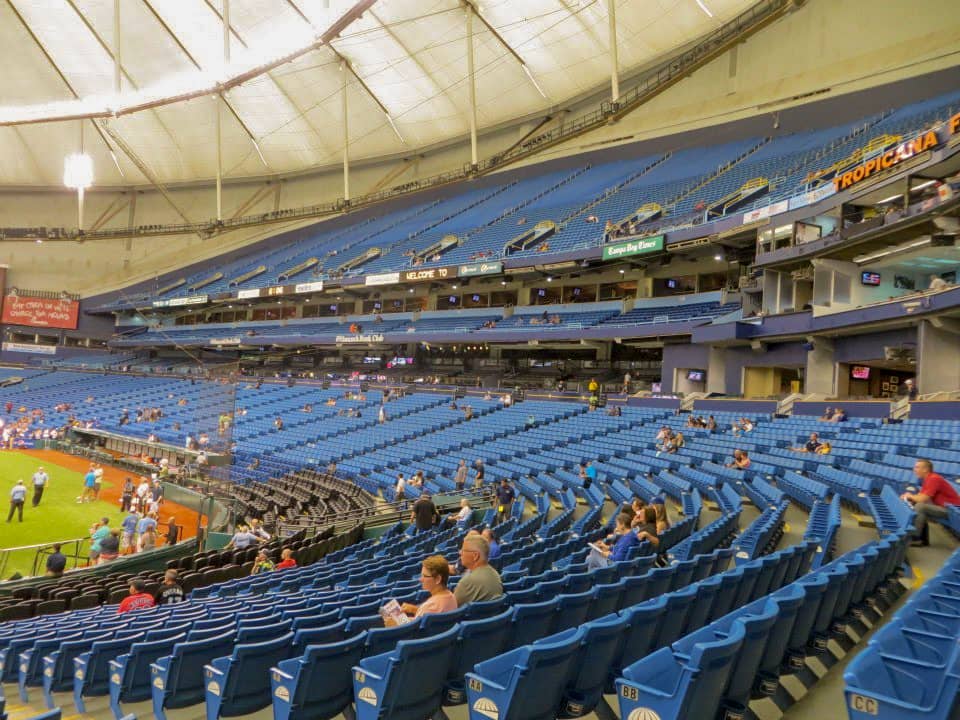
Rays await Guardians or White Sox in ALCS after sweeping Yankees; Game 1 Monday at Tropicana Field
1h ago
John Carlson scores twice, Dennis Hildeby makes 34 saves as Lightning hold off Wild 3-2
2h ago
Winless Dolphins host Bengals at Hard Rock Stadium seeking first win under Jeff Hafley
22h ago
Hurricane Isaias Scrambles Florida Sports: FSU Cancels Pensacola Games, FAMU Moves to Friday
1d ago