Fed Meets in September With Florida Mortgage Costs in the Balance
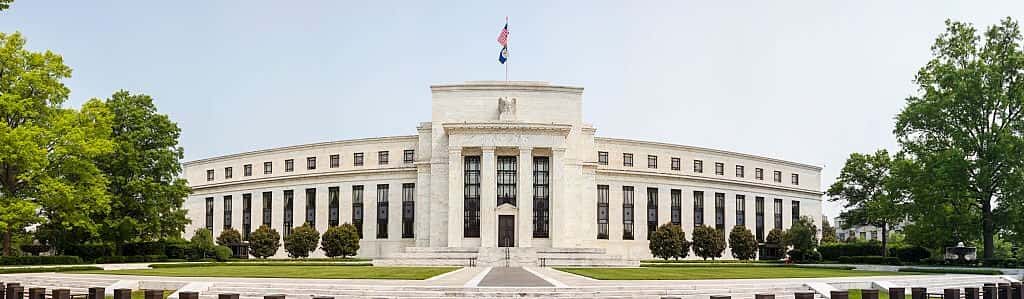
The Federal Open Market Committee meets on September 15 and 16, and the outcome carries direct consequences for a Florida housing market that has spent eleven consecutive months rebuilding sales volume without any help from borrowing costs. The Federal Reserve held the federal funds rate in a range of 3.50 to 3.75 percent at its July meeting, the fifth consecutive meeting without a change, but three committee members dissented in favor of raising the policy rate by a quarter point.
Those dissents are what makes September consequential. A unanimous hold signals a settled committee. A hold with three dissents signals a committee where a meaningful minority believes policy is too loose, and it raises the probability that the next move is upward rather than downward.
The driver is inflation, which has been running near 3.4 percent, well above the Federal Reserve's 2 percent objective, alongside a labor market that has remained resilient. Jobless claims nationally slipped to roughly 203,000 in a recent week from a revised 207,000 the week prior, levels consistent with historically low layoff activity.
How Fed policy reaches Florida homebuyers
The federal funds rate is not the mortgage rate. The funds rate governs overnight lending between banks, while thirty-year mortgage rates track the yield on long-term Treasury securities plus a spread that reflects prepayment risk and lender margin.
The transmission runs through expectations. When the Federal Reserve signals that policy will remain restrictive for longer, long-term yields rise, and mortgage rates follow. When it signals easing, the reverse occurs. That is why mortgage rates frequently move before a Fed decision rather than after it: markets price the expected path rather than the announced level.
Thirty-year mortgage rates have been sitting near 6.69 percent, roughly where they have hovered for much of the past two years. Analysis of a potential quarter-point increase suggests thirty-year rates could move above 7 percent, which on a $400,000 loan translates to roughly $56 more per month, or about $672 per year.
That figure is modest in isolation. It becomes more significant when combined with the other components of a Florida housing payment, particularly insurance and, for condominium buyers, association assessments.
The Florida housing math
Florida's median single-family sales price stood at approximately $425,000 in July, up about 3.7 percent year over year, with closed sales rising 5.1 percent and condominium sales up 11 percent. That is a market absorbing higher borrowing costs rather than waiting for relief.
The reason buyers returned without a rate improvement appears to be the insurance side of the equation. Citizens Property Insurance implemented a statewide average rate decrease of roughly 8.7 percent for 2026, and multiple private carriers filed reductions in the 7 to 10 percent range. For a Florida buyer, insurance is a large enough share of the monthly payment that a decrease there can offset a great deal of mortgage rate pressure.
That offset has limits. Insurance reductions are annual, occur at renewal and vary by county and property characteristics. A mortgage rate is locked for thirty years. A buyer facing a rate increase now and an insurance decrease later experiences the two on very different timelines.
Qualification is where the interaction matters most. Lenders evaluate the full monthly obligation including principal, interest, taxes, insurance and association dues against income. In Florida, the insurance and association components are unusually large, which means Florida buyers hit qualification ceilings at lower purchase prices than buyers in states with cheaper coverage.
Why Florida is more rate-sensitive than most states
Several features of the Florida market amplify the effect of borrowing costs. The state has a high share of retirees and second-home buyers, categories that behave differently than primary-residence buyers and are often more sensitive to financing terms because the purchase is discretionary.
Florida also has a large investor presence, particularly in condominiums and in short-term rental markets across coastal counties and the Orlando area. Investor purchases are evaluated on financing cost against projected yield, so rate increases remove marginal deals from consideration immediately.
The state's construction sector is significant, and homebuilder activity responds quickly to demand signals. Rate increases that slow contract signings show up in construction employment within a couple of quarters, which reaches a labor market where construction is a meaningful share of employment.
Florida's unemployment rate reached 4.7 percent in June, down from 4.8 percent in May, ending a period of gradual increase. Weekly initial claims have run in the range of roughly five thousand in recent reports, and the state's labor force stands above eleven million.
What it means for Floridians
For buyers under contract or shopping now, the practical question is whether to lock a rate. Lock periods are finite and locking carries cost, but a committee with three dissenting members raises the risk of an upward move within a typical lock window.
For sellers, an increase would reduce the pool of qualified buyers at any given price. Florida's current single-family inventory of roughly 4.5 months provides some cushion, but the condominium market at roughly 7.8 months supply has less room to absorb a demand reduction.
For existing owners with fixed-rate mortgages, a rate increase has no direct effect on the payment. It affects home equity lines of credit, which are variable, and it affects the calculation for anyone considering refinancing.
Local impact across the state
Southwest and Southeast Florida carry the highest median prices, which means each basis point of rate movement translates into more dollars per month there than elsewhere in the state. Coastal Miami-Dade, Broward, Palm Beach, Collier and Lee county buyers face the largest absolute effect.
Central Florida's market is driven substantially by relocation and by employment in tourism, health care and logistics. Entry-level buyers in the Orlando metropolitan area are the most rate-sensitive segment, since they operate closest to qualification limits.
North Florida and the Panhandle generally offer lower entry prices, which cushions the payment effect. Those markets have also seen less of the insurance premium escalation that has weighed on South Florida, giving buyers there more total capacity.
What the dissents signal
Dissents at the Federal Open Market Committee are uncommon and carry information beyond the vote itself. The committee places substantial weight on consensus, and members generally support the chair's position even when they hold reservations, expressing those reservations through speeches rather than votes.
Three dissents in the same direction is therefore a meaningful signal. It indicates that a bloc of members believes current policy is insufficiently restrictive given inflation running near 3.4 percent, and that they were willing to make that disagreement formal rather than private.
Markets read vote distributions closely for exactly this reason. A hold with unanimous support suggests policy is settled for several meetings. A hold with multiple dissents suggests the committee is closer to a move than the announced decision implies, which is why the September meeting has drawn attention it would not otherwise receive.
The updated economic projections released alongside the September decision will add further detail. Those projections include each participant's view of the appropriate policy path, and the distribution of those views often moves markets more than the rate decision itself.
Why inflation has stayed elevated
Inflation running near 3.4 percent against a 2 percent target is the central problem the committee faces. Several components have contributed, and housing costs are among the most persistent, since shelter enters the index with a substantial weight and adjusts slowly.
That creates a circular dynamic relevant to Florida. Housing costs contribute to measured inflation, elevated inflation keeps policy restrictive, restrictive policy keeps mortgage rates high, and high mortgage rates discourage the construction that would eventually increase housing supply and moderate costs.
Services inflation has also proven durable, reflecting wage growth in a labor market where layoffs remain rare. Florida's service-heavy economy, weighted toward hospitality, health care and retail, is directly exposed to that dynamic on both sides: as an employer of service workers and as a consumer market where service prices are rising.
Insurance is a distinctive Florida contributor. Property insurance premiums entered the national inflation data as a significant driver during the period when Florida rates were climbing fastest, and the current reductions work in the opposite direction, though the state's share of the national index limits how much that registers.
What buyers can control
Borrowers have limited influence over the rate environment but meaningful influence over the rate they are offered. Credit score, down payment size, debt-to-income ratio and loan type all affect pricing, and the spread between a well-qualified borrower and a marginal one can exceed the difference a Federal Reserve decision would produce.
Comparison shopping produces measurable savings. Mortgage pricing varies across lenders on any given day, and research on borrower behavior has consistently found that people who obtain multiple quotes secure better terms than those who accept the first offer.
Rate buydowns are worth evaluating carefully. Paying points to reduce a rate makes sense when a borrower expects to hold the loan long enough to recover the upfront cost, and the calculation depends on how long they actually stay, which buyers frequently overestimate.
In Florida specifically, shopping insurance alongside the mortgage matters as much as the loan terms. Because premiums are a large share of the payment used for qualification, a lower quote can expand purchasing power in a way that a modest rate improvement would not.
What is next
The September 15 and 16 meeting concludes with a policy statement and updated economic projections, followed by a press conference. Markets will read the projections and the vote distribution as closely as the rate decision itself, since both signal the expected path.
Inflation and employment data released before the meeting will shape the outcome. A softer inflation reading strengthens the case for holding, while continued readings near 3.4 percent strengthen the dissenters' position.
For Florida, the housing data through the fall will show whether the eleven-month sales streak survives a higher rate environment. The July report showed new pending sales rising, which typically converts to closings within sixty days, so the September and October releases are where any effect from a rate move would first appear.
Spotted an issue with this article?
Have something to say about this story?
Write us a letterComments
No comments yet. Be the first to weigh in.
Related Coverage

Florida Voters Face Few New Rules on Nov. 3 as Other GOP States Roll Out Citizenship and ID Laws
3h ago

Florida Leads the Nation in ICE Detainer Arrests as Local Police Take a Growing Role, New Data Show
3h ago
Federal Government Again Asks Miami Judge to Toss Lawsuit by Nearly 1,000 Cubans With I-220A Papers
4h ago

Alvaro Pulido, Alex Saab's Longtime Partner, Heads to Miami Federal Court After Arrest in Venezuela Bribery Case
4h ago