Federal Food and Health Cuts Would Land Hard on Florida, Analysts Say
Florida stands to absorb one of the largest state-level impacts from federal changes to nutrition assistance and Medicaid, according to policy analyses circulating as the changes move toward implementation. Projections cited by the Florida Policy Institute and by national research organizations place Florida's potential SNAP funding loss between $1.6 billion and $1.7 billion, with employment effects estimated at roughly 45,000 jobs and a reduction in state gross domestic product of more than $4.5 billion.
The employment projection breaks down in a way that surprises people unfamiliar with how these programs work. Roughly 33,200 of the projected job losses are attributed to Medicaid reductions rather than to nutrition assistance, reflecting workforce contraction at hospitals and nursing homes that depend heavily on Medicaid reimbursement.
Projections of this kind are modeled estimates rather than measurements, and they depend on assumptions about implementation, state response and economic conditions. They should be read as indications of scale and direction rather than as precise forecasts. The scale, however, is large enough that even substantial estimation error leaves a significant effect.
How SNAP works and what is changing
The Supplemental Nutrition Assistance Program, administered in Florida by the Department of Children and Families, provides monthly benefits on an electronic card usable for groceries. Benefits have historically been fully federally funded, with states and the federal government splitting administrative costs.
The structural change under discussion would require states to contribute a share of benefit costs, a departure from the program's longstanding design. Analyses indicate that a 5 percent state match on SNAP benefits would cost Florida roughly $328 million annually, an obligation that does not currently exist in the state budget.
An additional mechanism ties a state's required contribution to its payment error rate, the measure of how accurately benefits are calculated. Analyses indicate that if Florida's error rate remains above 10 percent, the state would face the largest proportional increase in SNAP costs of any state, with one projection describing a spike of 768 percent in the share of its budget dedicated to the program.
Error rates measure administrative accuracy, including both overpayments and underpayments, and they are affected by caseload complexity, staffing levels and system quality. A funding formula tied to error rates creates strong incentives for administrative investment, and states with high error rates face the largest exposure.
Who receives these benefits in Florida
More than 2.9 million Floridians receive SNAP benefits, according to figures cited by the Florida Policy Institute. That is a substantial share of the state's population, and the composition of the caseload is often misunderstood.
The majority of SNAP recipients nationally are in households with children, older adults or people with disabilities. Among working-age adults receiving benefits, a large share are employed, frequently in sectors that characterize Florida's economy: hospitality, food service, retail and agriculture, where hours fluctuate and wages are low relative to the state's housing costs.
Florida's economic structure makes this population large. The state's dominant industries pay below-average wages, its housing costs have risen sharply, and it has no state income tax and correspondingly limited state-funded safety net programs. Federal nutrition assistance therefore fills a larger role in Florida than in states with more extensive state-level programs.
The Medicaid dimension
Medicaid is jointly funded by federal and state governments, with the federal government paying a share determined by a formula based on state per capita income. Florida did not expand Medicaid under the Affordable Care Act, which means its eligibility criteria for adults are among the most restrictive in the country.
That non-expansion status shapes how federal changes would affect the state. Florida has a large population in what is commonly called the coverage gap: adults whose incomes are too high for Florida's restrictive Medicaid eligibility and too low to qualify for marketplace subsidies. Changes to Medicaid financing interact with that existing gap.
The employment effect runs through providers. Hospitals, nursing homes, home health agencies and community health centers rely on Medicaid reimbursement for a substantial portion of revenue, and rural hospitals in particular operate on margins where a reimbursement change can determine viability. Health care is among Florida's largest employment sectors, and reduced reimbursement flows through to staffing.
Where the effects would concentrate
Rural counties face the greatest exposure. Their populations have higher rates of program participation, their hospitals operate closer to the margin, and their local economies have fewer alternatives when a major employer contracts. A rural hospital closure removes not only health care access but often one of the county's largest employers.
Agricultural regions carry additional exposure. Florida's agricultural workforce, concentrated in areas including the Immokalee region, the Lake Okeechobee basin, Homestead and parts of the Panhandle, includes many households whose earnings fluctuate seasonally and who rely on nutrition assistance during low-work periods.
Urban effects would be more diffuse but larger in absolute terms. Miami-Dade, Broward, Hillsborough, Orange and Duval counties have the largest numbers of program participants, and reduced benefit spending flows through local grocery retailers, which is the channel by which SNAP reductions produce broader economic effects.
The state budget consequence
Florida operates under a constitutional balanced budget requirement, which means new obligations must be met through spending reductions, revenue increases or reserves. The state has maintained substantial reserves in recent years, but a recurring annual obligation of several hundred million dollars is a structural commitment rather than a one-time expense.
The timing interacts with the property tax constitutional amendment headed to voters in November. That measure would reduce local government revenue, and local governments facing revenue reductions have historically turned to the state for assistance. A state simultaneously absorbing new federal cost-sharing obligations has less capacity to provide it.
The Legislature convenes for its 2027 regular session in Tallahassee, and these obligations would be part of that budget process. State agencies typically build implementation cost estimates into their legislative budget requests in the fall.
How the grocery multiplier works
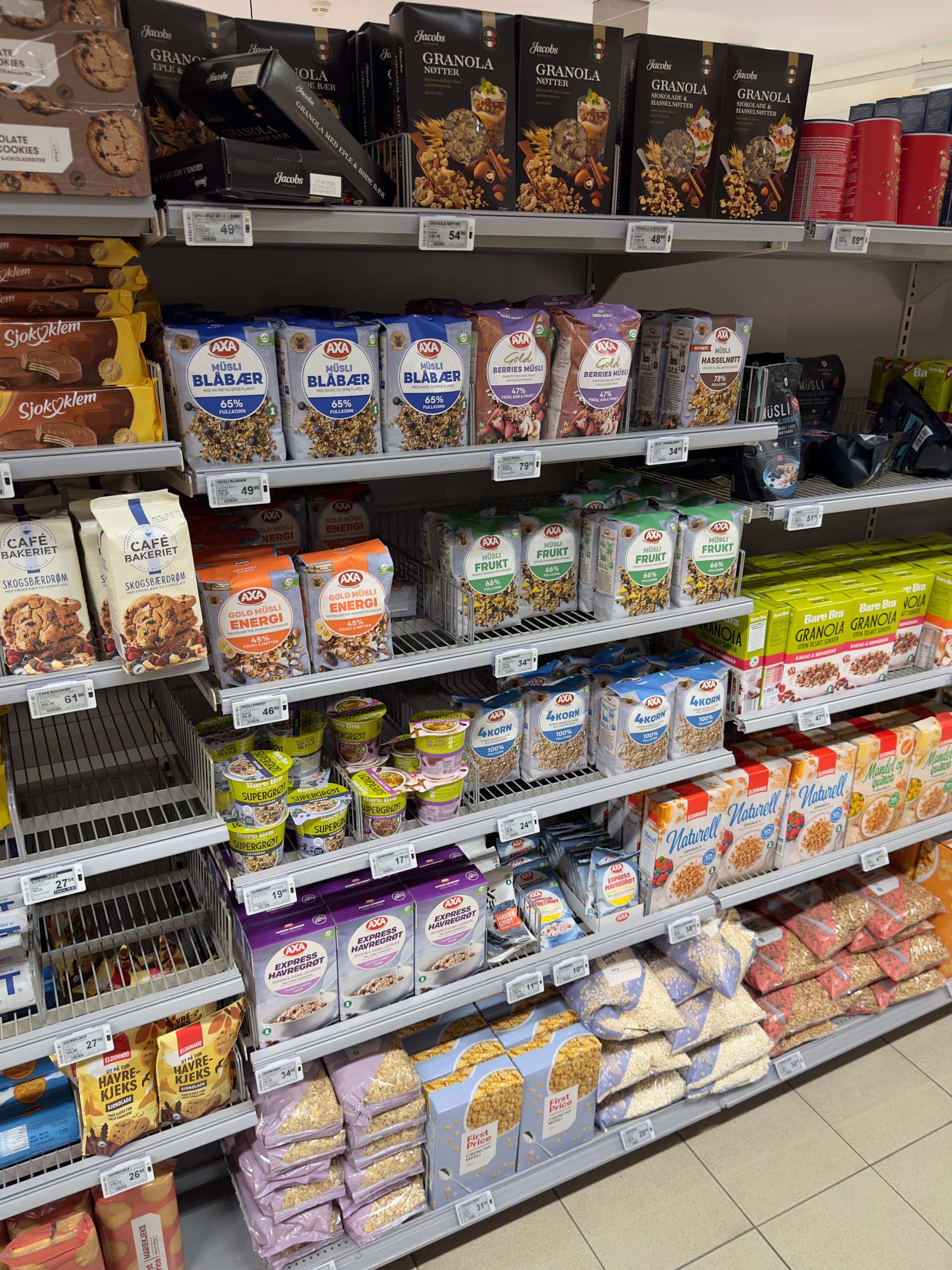
The projected economic effects extend beyond the households receiving benefits because SNAP dollars circulate quickly through local economies. Benefits must be spent on food, they cannot be saved, and they are typically used within weeks of issuance.
That velocity is why economic analyses assign nutrition assistance a relatively high multiplier compared to other forms of spending. A dollar in benefits becomes revenue for a grocery retailer, which supports employment at that store and purchases from distributors and, ultimately, from agricultural producers.
Rural grocery retailers carry disproportionate exposure. In counties where a large share of customers use SNAP, a reduction in benefit volume can push a marginal store toward closure, and grocery closures in rural areas create food access problems that compound the original benefit reduction.
What Florida hospitals face
Hospital finance in Florida is shaped by the state's decision not to expand Medicaid eligibility for low-income adults under the Affordable Care Act. That decision left a coverage gap population that receives care primarily through emergency departments, where hospitals are required to treat regardless of ability to pay.
Uncompensated care costs are absorbed through a combination of supplemental payment programs, cost shifting to privately insured patients and, for public hospitals, local tax support. Several Florida counties operate hospital taxing districts specifically to fund indigent care.
Reductions in Medicaid reimbursement compound that structure. Hospitals with high Medicaid patient mixes, which are disproportionately rural facilities and urban safety-net hospitals, have the least capacity to absorb reductions and the fewest alternatives. Rural hospital closures have occurred across the Southeast for exactly these reasons.
Where Florida's safety net is thin
Florida's approach to social programs relies heavily on federal funding because state-level programs are limited. The state has no income tax, which constrains revenue, and its general revenue depends substantially on sales tax collections that fluctuate with tourism and consumer spending.
That structure produces a specific vulnerability. When federal programs contract, states with robust state-funded alternatives can partially backfill. Florida has fewer such mechanisms, which means federal reductions translate more directly into reduced assistance for households.
The state's cost of living has also risen substantially, particularly housing, which increases the number of households at risk even as program eligibility criteria remain unchanged. A wage that supported a household comfortably a decade ago may now leave it food insecure, and eligibility thresholds indexed to federal poverty guidelines do not account for regional housing costs.
Where families can turn
Households facing reduced benefits have a network of local resources, though capacity varies significantly by county. Florida's food bank network, affiliated with national organizations, distributes through hundreds of partner pantries, and those organizations generally do not require proof of program eligibility.
School meal programs remain an important channel for families with children. Many Florida schools operate under community eligibility provisions that allow universal free meals in high-poverty attendance areas, and summer meal programs operate when school is out.
The 211 information and referral network, available by phone across Florida, connects callers to local assistance for food, utilities, housing and health care. Area agencies on aging serve older residents specifically, including congregate and home-delivered meal programs that operate independently of SNAP.
What's next
Implementation timelines for the federal changes will determine when effects appear. Some provisions phase in over multiple years, which gives states time to adjust administratively, and the state match requirements in particular have implementation dates that determine when budget impact begins.
Florida's payment error rate is the variable most directly within state control, and reducing it would meaningfully lower the state's exposure under the error-rate-linked formula. That is an administrative project involving staffing, technology and process, and it is the kind of work that produces results over years rather than months.
Households currently receiving benefits should watch for notices from the Department of Children and Families regarding eligibility redeterminations and any changes to work requirements. Program rules change through administrative action as well as legislation, and the operative details for any individual household come through those notices.
Spotted an issue with this article?
Have something to say about this story?
Write a letter to the editor