Florida Agencies Collect Tens of Millions in Federal Immigration Enforcement Funding
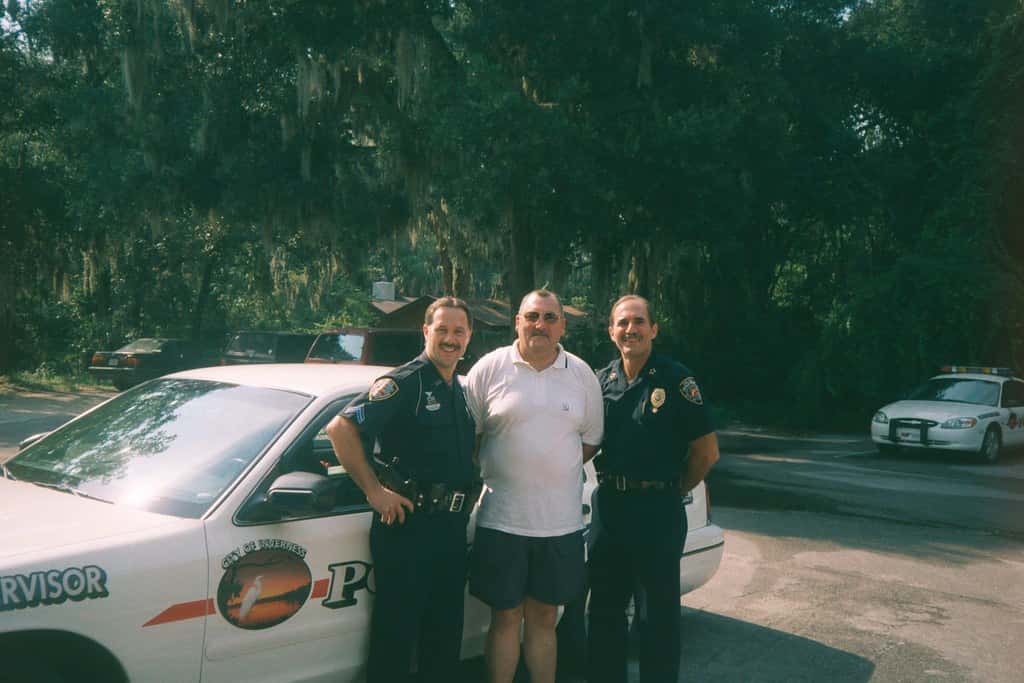
Immigration and Customs Enforcement has announced a package of financial awards to Florida state and local law enforcement agencies participating in the federal 287(g) program, distributing funding for equipment and transportation across thousands of officers. The awards include roughly $27.5 million in equipment funding for 3,676 state-level officers and $7.3 million in equipment funding for 974 local officers, alongside transportation funding of about $1 million for state agencies and $2.7 million for local agencies. Florida now holds 325 such agreements, a 577 percent increase since January 2025.
What 287(g) agreements do
Section 287(g) of the Immigration and Nationality Act authorizes the federal government to delegate certain immigration enforcement functions to state and local officers who receive federal training and operate under federal supervision. The agreements come in several models that differ substantially in what they permit.
The jail enforcement model, historically the most common, allows designated officers to identify and process people already in local custody on criminal charges for potential immigration violations. That work happens inside a correctional facility and is triggered by an arrest that occurred for other reasons.
The task force model allows designated officers to exercise certain immigration authorities during their regular duties in the field. It is the more expansive model and the more contested one, because it extends immigration enforcement into routine street-level police work rather than confining it to jails.
A third model, the warrant service officer program, is narrower, authorizing local officers to serve administrative immigration warrants on people already in custody. Florida agencies participate across these models, and the distinctions determine what a given agreement actually authorizes.
The scale of Florida's participation
The 325 agreements Florida agencies hold represent the largest state participation in the country by a wide margin. The 577 percent increase since January 2025 reflects a rapid statewide expansion driven by both state policy direction and federal encouragement.
Florida law requires certain state and local agencies to enter into these agreements, which distinguishes the state's participation from the voluntary adoption seen in most of the country. That statutory requirement is the mechanism behind the growth rate.
The officer counts in the funding announcement give a sense of the scale: 3,676 state-level officers and 974 local officers receiving equipment funding. Those figures represent a substantial share of Florida's law enforcement workforce operating with some form of immigration authority.
The state has also conducted joint operations with federal agencies. A weeklong multi-agency operation in the Fort Myers area in late August involved ICE working alongside the Florida Highway Patrol, the Lee County Sheriff's Office, the Florida National Guard, the Florida Fish and Wildlife Conservation Commission and Customs and Border Protection, producing 500 arrests.
What the money pays for
The awards are divided between equipment and transportation, and the split is informative. Equipment funding, the larger share, covers the technology and gear agencies need to perform immigration functions, including access to federal databases and the systems used to process individuals.
Transportation funding addresses a practical bottleneck. Moving detainees between local facilities and federal custody requires vehicles, fuel and officer time, and those costs have historically fallen on local agencies, creating a disincentive to participate.
Federal reimbursement of those costs changes the fiscal calculation for a sheriff's office deciding how much to invest in the program. Local agencies operate under county budgets, and unreimbursed federal work competes directly with local policing priorities for finite resources.
The per-officer figures work out to roughly $7,500 in equipment funding per state officer and about $7,500 per local officer, though the actual allocation across agencies is likely uneven based on agreement type and agency size.
The Florida communities pushing back
The expansion has generated organized opposition in communities with large immigrant populations, most visibly in Doral, the Miami-Dade city where roughly 70 percent of residents are foreign-born and Venezuelans make up more than a third of the population.
Former lawmakers and immigrant rights advocates held a news conference in Doral this week calling on the city to end its 287(g) agreement, which city leaders approved in 2025. Advocates cited fear among residents and described business impacts, with some local businesses reporting sales declines of as much as 70 percent.
The economic argument has become central to that opposition. A community where residents avoid leaving their homes produces less commercial activity, and business owners in Doral have described the effect on restaurants and retail as immediate and severe.
Florida's statutory framework limits how much room a city has to exit. State law requires participation for certain agencies, which means a municipal decision to withdraw may conflict with state requirements, a tension that has not been fully resolved in Florida courts.
What it means for Florida residents
For residents, the practical effect depends heavily on which model their local agency operates under. A jail enforcement agreement affects people who have been arrested on criminal charges. A task force agreement extends the reach of immigration authority into ordinary police encounters.
That distinction matters for how communities interact with police. Law enforcement leaders who have historically opposed task force models have generally argued that they suppress crime reporting, because victims and witnesses without status avoid contact with police entirely.
Supporters argue the opposite, contending that cooperation removes people with serious criminal histories from communities and that public safety improves as a result. The Fort Myers operation was described as including people with convictions involving domestic violence, drug offenses, DUI, assault and violent and sexual offenses.
For citizens and lawful residents, the agreements do not change their legal status, though civil rights organizations have raised concerns about the risk of prolonged detention based on mistaken identification.
The federal and state relationship
Florida's approach represents a close alignment between state policy and federal immigration priorities that is unusual in scale. Governor Ron DeSantis has highlighted the partnership repeatedly, including announcements tied to Operation Tidal Wave, which state officials have said passed 10,000 arrests.
The state has committed its own resources to the effort, including Florida National Guard participation in joint operations and the involvement of state agencies whose primary missions lie elsewhere, such as the Fish and Wildlife Conservation Commission.
Federal funding of the kind announced this week reduces the state's net cost and strengthens the arrangement's durability, because programs that agencies pay for themselves are more vulnerable to budget pressure than programs the federal government reimburses.
The relationship runs in both directions. Federal immigration enforcement capacity is limited, and 287(g) partnerships extend that capacity substantially in states willing to participate at Florida's scale.
The litigation and oversight questions
287(g) agreements have generated litigation in multiple states over the years, with claims centering on detention authority, the duration of holds based on immigration detainers, and Fourth Amendment questions about stops conducted under task force authority.
Detainer practice has been a recurring subject. A detainer is a request that a jail hold a person briefly beyond their scheduled release so federal authorities can take custody, and courts have examined whether holding someone on that basis without independent probable cause is lawful.
Oversight of the program runs through ICE, which trains and supervises designated officers and which can terminate agreements. Advocacy organizations have argued that oversight has been inconsistent, while supporters point to the training and certification requirements as adequate safeguards.
Florida's rapid expansion increases the number of officers exercising these authorities and therefore the volume of encounters, which is likely to generate additional litigation regardless of how the program is administered.
Training and certification
Officers designated under a 287(g) agreement must complete federal training before exercising any immigration authority. The training covers immigration law, the scope of delegated authority, civil rights obligations and the documentation requirements that federal processing involves.
Training capacity has been a practical constraint on how quickly the program can expand. A state adding hundreds of agreements requires federal instructors and course slots to certify the officers those agreements cover, and the equipment funding announced this week addresses a different bottleneck than the training one.
Certification is not permanent. Officers require refresher training, and ICE retains authority to revoke an individual officer's designation or to terminate an agency's agreement, mechanisms that constitute the program's primary accountability structure.
Critics have argued that the training period is short relative to the complexity of immigration law, which is a specialized federal practice area. Supporters note that delegated authority is narrower than the full scope of immigration enforcement and is exercised under federal supervision.
What comes next for local agencies
Sheriff's offices and municipal departments receiving these funds will apply them to equipment and transportation over the coming budget period, and agencies participating at a larger scale will face decisions about how many additional officers to certify.
County commissions and city councils retain budget authority over their law enforcement agencies, which makes local governing bodies a venue where participation levels are debated even where state law requires the underlying agreements.
The distinction between what state law mandates and what remains a local choice has not been fully tested, and the debate in Doral is likely to clarify where that line sits for municipalities across Florida.
What's next
The funding awards will flow to participating agencies and be applied to equipment and transportation costs over the coming period. Agencies will report on their use of the funds through federal grant administration processes.
Doral's city government faces continued pressure to revisit its agreement, and how it responds will be watched across South Florida as a test of how much room a municipality has under Florida law to step back from participation.
The midterm election arrives in early November, and South Florida Democrats have identified immigration enforcement fears in Doral and similar communities as a campaign issue in congressional districts across the region.
Federal and state joint operations are expected to continue, and additional announcements of arrest totals and funding awards have followed a regular cadence through 2026.
Spotted an issue with this article?
Have something to say about this story?
Write a letter to the editor