Suspended Osceola Sheriff Marcos Lopez Set for October Racketeering Trial
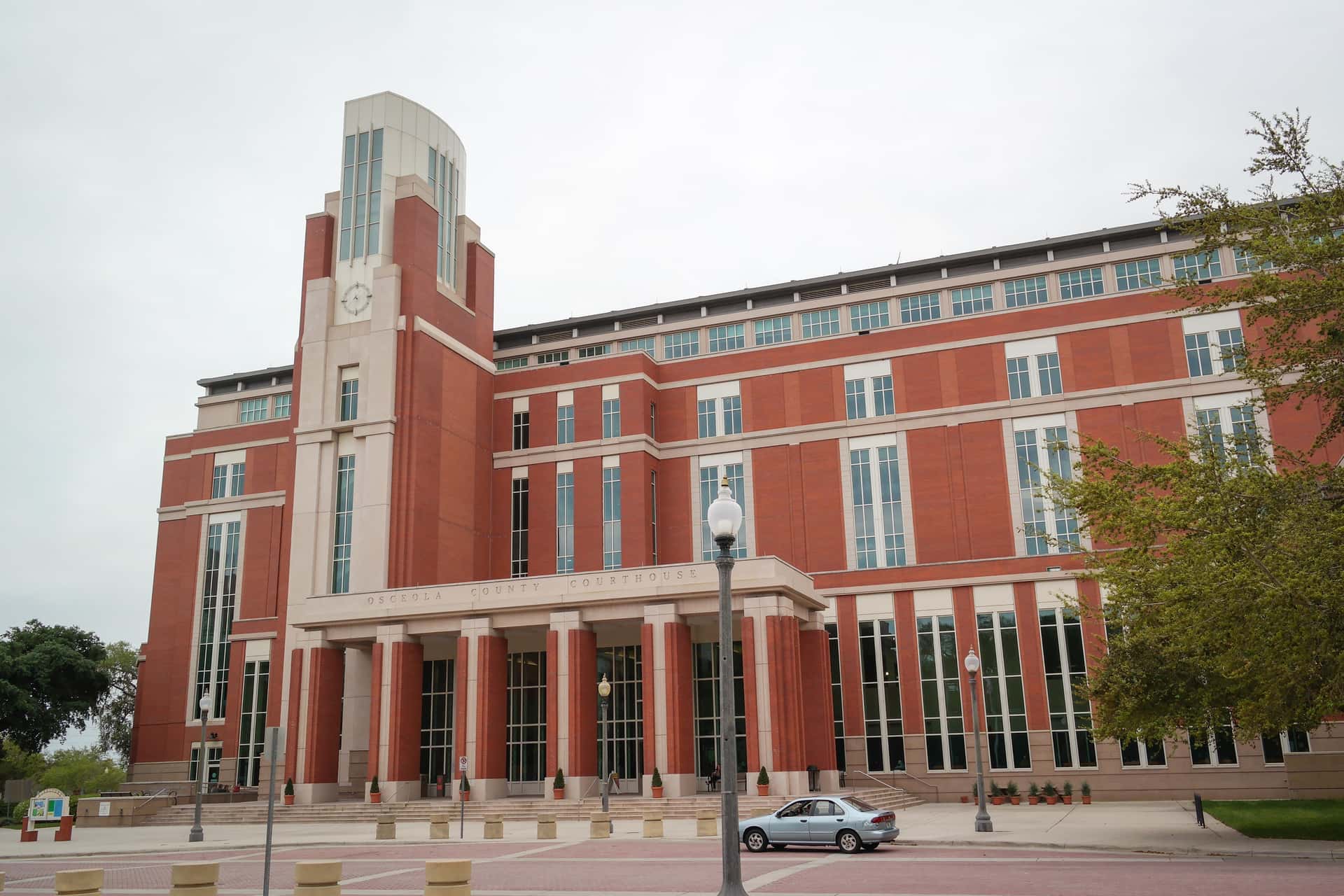
Suspended Osceola County Sheriff Marcos Lopez is scheduled to stand trial beginning October 20 in Lake County on racketeering charges tied to what prosecutors describe as a multimillion-dollar illegal gambling network, more than a year after his arrest and removal from office.
Lopez faces charges of racketeering and conspiracy to commit racketeering. He has pleaded not guilty. He is the only named defendant in the case currently planning to proceed to trial, with the trial set to begin at 8 a.m. on October 20 in Lake County.
Prosecutors allege the gambling operation, centered on arcades and gaming rooms spanning Lake and Osceola counties, generated more than $21.6 million in illicit proceeds. They allege Lopez used his influence as sheriff to collect more than $600,000 while a gaming room housing slot machines and illegal equipment operated.
Those are allegations that prosecutors will have to prove beyond a reasonable doubt at trial. Lopez is presumed innocent, and no finding of guilt has been made on any charge.
How the case reached this point
Lopez was arrested on June 5, 2025, and Governor Ron DeSantis suspended him from office by executive order shortly afterward. Florida's constitution authorizes the governor to suspend elected county officials who are charged with a felony, with the Senate holding the ultimate authority to remove or reinstate.
Bond in the case was set at $1 million following his arrest, and he remained in custody for a period afterward before the case moved into its pretrial phase.
The case has moved through more than a year of pretrial litigation. Court documents detailing the accusations were filed in September 2025. In February 2026, a judge denied a defense motion to compel evidence. In March 2026, Lopez appeared in court regarding a potential conflict of interest involving one of his attorneys, and he voluntarily waived any potential conflict with both attorneys.
By June 2026, one year after the arrest, a trial date had still not been finalized. The October 20 setting represents the resolution of that scheduling question.
What racketeering charges require
Florida's Racketeer Influenced and Corrupt Organization Act, modeled on the federal RICO statute, makes it a crime to participate in an enterprise through a pattern of racketeering activity. The statute allows prosecutors to charge an overall scheme rather than isolated offenses.
To convict, the state generally must prove the existence of an enterprise, the defendant's association with or participation in it, and a pattern of racketeering activity consisting of at least two qualifying predicate offenses within a specified period.
Conspiracy to commit racketeering is a separate charge requiring proof of an agreement to participate in the enterprise's affairs through such a pattern. It does not require that the underlying racketeering activity be completed.
Both are first-degree felonies under Florida law, carrying substantial potential prison terms. What any individual defendant would face on conviction depends on scoring under Florida's sentencing guidelines and on the specific findings a jury makes.
The gambling allegations
Florida law tightly restricts gambling. Legal gaming in the state is limited to activity authorized under the Seminole Tribe's compact, licensed pari-mutuel facilities, the Florida Lottery and certain charitable arrangements. Slot machines outside authorized venues are illegal.
Internet cafes and adult arcades have been a recurring enforcement subject in Florida for more than a decade. Operators have historically argued that their machines are games of skill or promotional sweepstakes rather than gambling devices, an argument the Legislature addressed through statutory changes.
Prosecutors in this case allege the operation involved slot machines and illegal equipment rather than devices operating within any legal exception. The $21.6 million figure represents the state's estimate of proceeds generated across the operation.
Osceola County deputies made multiple responses to a casino allegedly controlled by the sheriff, according to reporting on the case, an element prosecutors would use to establish the connection between the official position and the alleged enterprise.
A public corruption case with an elected defendant
Prosecuting an elected sheriff presents distinctive complications. The sheriff is the county's chief law enforcement officer and supervises the agency that would ordinarily investigate crimes in that jurisdiction, which requires the investigation to be handled elsewhere.
Florida's constitutional structure makes sheriffs independently elected officers rather than employees of the county commission. That independence limits the oversight mechanisms available when questions arise about a sheriff's conduct.
The suspension and removal process runs through the governor and the Florida Senate rather than through local government. A suspended officer remains suspended pending resolution, and the Senate acts on removal after the criminal matter concludes.
Venue for the trial is Lake County rather than Osceola, reflecting the geographic scope of the alleged enterprise, which prosecutors say extended from Lake County into Osceola County.
What it means for Osceola County
Osceola County, which includes Kissimmee and St. Cloud and sits directly south of Orlando, has roughly 435,000 residents and one of the fastest growth rates in Central Florida. Its economy is tied closely to the Orlando tourism corridor.
The sheriff's office has operated under interim leadership since the suspension. Continuity of operations in a suspended-sheriff situation falls to an appointed replacement who serves until the matter is resolved or until an election fills the position.
Public confidence in local law enforcement is the less quantifiable cost of a case like this. Agencies whose leadership faces corruption allegations generally invest considerable effort in demonstrating that the rest of the organization operated properly.
The case has been among the most closely followed in Central Florida since the arrest, with Orlando-area outlets covering each pretrial hearing and the timeline of co-defendants resolving their own cases.
The co-defendants
Lopez is the only named defendant in the case currently planning to go to trial. That framing indicates other individuals charged in connection with the alleged enterprise have resolved their cases through other means.
Co-defendants who plead guilty in racketeering prosecutions frequently do so under cooperation agreements, which can involve testimony against remaining defendants in exchange for sentencing consideration.
Cooperating witness testimony is common in enterprise prosecutions and is also the element defense attorneys most frequently attack, on the grounds that a witness testifying in exchange for leniency has an incentive to shape testimony toward what prosecutors want to hear.
How the state builds its case, and how much it relies on cooperator testimony versus financial records and electronic evidence, will be visible when the trial begins.
Florida's record on public corruption
Florida has an extensive history of public corruption prosecutions at the local level, spanning county commissioners, city officials, school board members and law enforcement officers across the state.
Cases are handled variously by state attorneys in the relevant judicial circuit, by the Office of Statewide Prosecution for matters spanning multiple circuits, by the Florida Department of Law Enforcement as the investigating agency, and by federal prosecutors when federal offenses are implicated.
A case spanning Lake and Osceola counties crosses judicial circuit boundaries, which is the kind of multi-circuit matter that falls within the Office of Statewide Prosecution's jurisdiction.
Financial crimes of this type typically rest on documentary evidence: bank records, business filings, communications and the forensic accounting that traces proceeds. That evidentiary base takes time to assemble, which contributes to the long pretrial period.
What to expect at trial
Jury selection in a high-profile case involving a well-known local official generally takes longer than in a routine criminal trial, because attorneys must identify jurors who have not formed opinions from media coverage.
The state's case will need to establish the enterprise, the pattern of racketeering activity and Lopez's participation. The defense is not required to present any case, and the burden remains entirely on the prosecution throughout.
A trial of this complexity, involving financial records and multiple predicate offenses, typically runs longer than a single-count criminal trial. The specific length depends on witness volume and evidentiary disputes.
Any conviction would be subject to appeal, and the Senate's role in removal from office would follow the criminal case rather than precede it.
How suspension and removal work in Florida
Article IV of the Florida Constitution gives the governor authority to suspend any state or county officer, other than a member of the Legislature or the cabinet, for malfeasance, misfeasance, neglect of duty, drunkenness, incompetence, permanent inability to perform official duties or commission of a felony.
The governor fills the vacancy by appointment during the suspension. The appointed official exercises the full authority of the office and serves until the suspension is resolved.
The Florida Senate holds the removal power. It may remove the suspended officer or reinstate them, and the Senate's process typically waits for the criminal case to conclude rather than proceeding in parallel.
That structure means a suspension can last a long time. An officer suspended on felony charges remains out of office through a criminal process that in complex cases runs well over a year, as this one has.
Gambling enforcement in Florida
Florida's gambling landscape changed substantially with the 2021 compact between the state and the Seminole Tribe, which expanded authorized gaming and created a framework for sports wagering in the state.
The Florida Gaming Control Commission, created in the same period, was established to regulate authorized gaming and to investigate illegal gambling operations, consolidating functions previously spread across multiple agencies.
Unauthorized gaming rooms have persisted despite that framework, and enforcement has been uneven across the state. Operations typically present themselves as internet cafes, adult arcades or sweepstakes promotions.
The financial scale alleged in the Osceola case, more than $21.6 million in proceeds, illustrates why these operations persist. Cash-intensive businesses with high margins generate returns that make enforcement risk worth accepting for operators.
What's next
Pretrial motions and hearings continue ahead of the October 20 start date. Trial dates in complex cases have moved before, and the current setting is not a guarantee against further continuances.
If the trial proceeds on schedule, it would run through late October and potentially into November depending on length. Verdict, if reached, would be followed by sentencing proceedings in the event of any conviction.
The Osceola County sheriff's position remains under suspension pending the outcome, and the Florida Senate's removal authority is exercised after the criminal matter concludes.
Until a verdict, Lopez remains presumed innocent of all charges. The allegations described here are the state's contentions, and they have not been proven.
Spotted an issue with this article?
Have something to say about this story?
Write a letter to the editor