FEMA Overhaul Could Shift Billions in Storm Costs Onto Florida
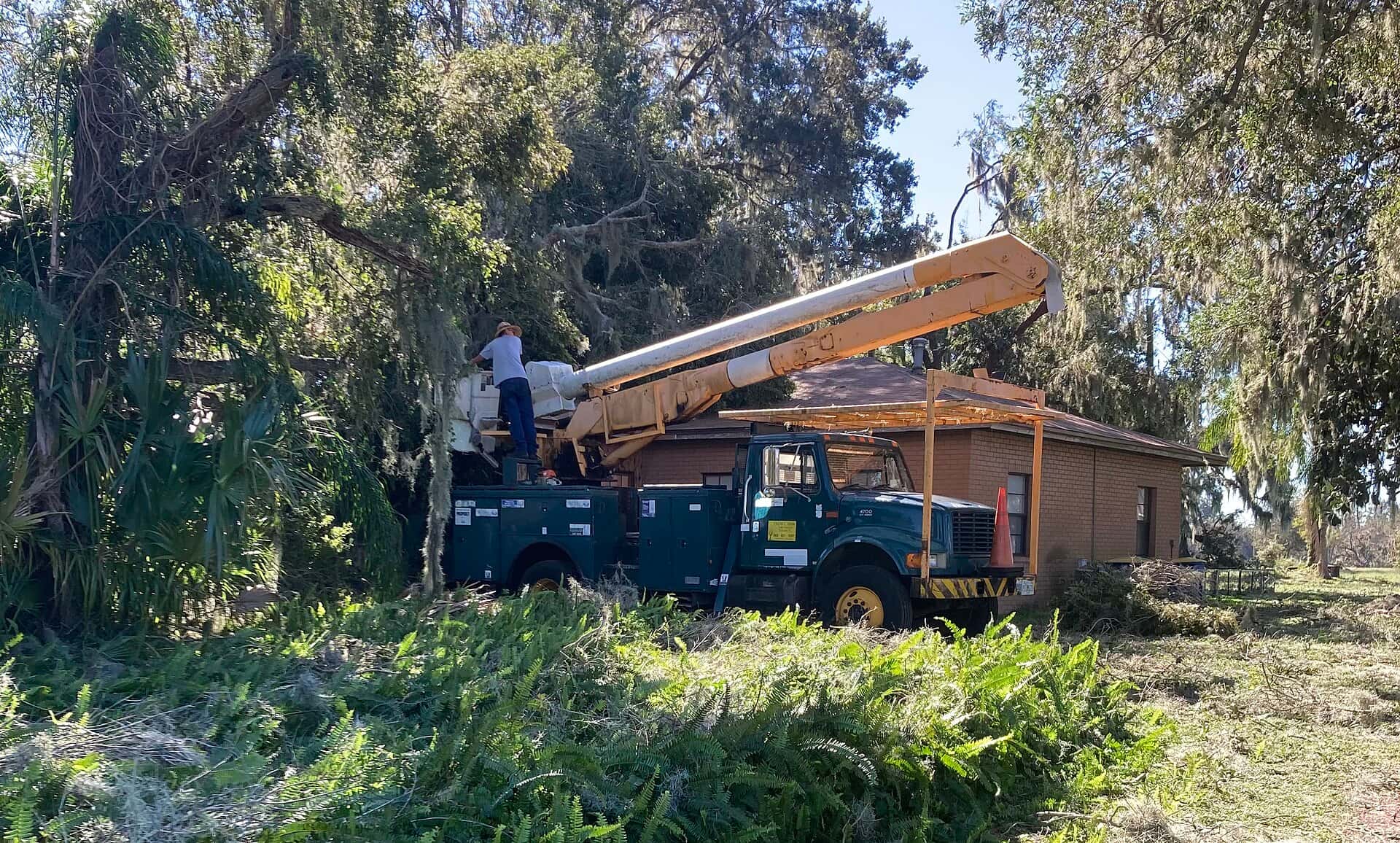
Proposed changes to how the federal government shares disaster costs would push billions of dollars in hurricane recovery expenses onto Florida state and local governments, according to analysis circulating this week, and the shift would arrive at the same moment Florida voters consider a constitutional amendment that would sharply reduce local property tax revenue.
The Florida Policy Institute has described the combination as a potential one-two punch, with an analyst quoted in coverage this week saying FEMA may pay less for hurricane recovery going forward. Applying the recommendations to the five largest recent storms, analysts identified a little over $3 billion in additional costs that states and localities would have needed to absorb.
For a state that faces the most frequent and expensive hurricane exposure in the country, the question of who pays for recovery is not abstract budgeting. It determines how quickly communities rebuild and which local governments can afford to.
What is being proposed
The FEMA Review Council released a final report on May 7, 2026, recommending a substantial redesign of federal disaster policy across preparedness, response, recovery, mitigation and flood insurance. The central direction is to reduce FEMA's direct role in some disasters and shift responsibility toward states, tribes, territories, local governments, private insurers, nonprofits and faith-based organizations.
One specific proposal would change how individual assistance is delivered. Rather than reimbursing categories of documented loss, the federal government would provide a single lump sum payment to affected households, with the amount tied largely to home value rather than to actual losses including vehicles, funeral expenses and other costs FEMA has historically covered.
Changes have already taken effect ahead of the report. The administration froze Hazard Mitigation Grant Program funding for new disasters beginning in March 2025, and in April 2025 canceled the Building Resilient Infrastructure and Communities program, rescinding nearly $300 million in planned mitigation projects across Florida.
How federal disaster cost sharing works now
Understanding what would change requires understanding the current structure. When a president declares a major disaster, several federal programs activate. Public Assistance reimburses state and local governments for debris removal, emergency protective measures and repair of public infrastructure. Individual Assistance provides direct help to households. Hazard Mitigation funds projects reducing future risk.
Public Assistance normally operates on a 75 percent federal share, with the remaining 25 percent covered by state and local governments. For catastrophic events, the federal share has frequently been increased, sometimes to 90 or 100 percent, through presidential action.
That flexibility has mattered enormously in Florida. Following the largest storms, elevated federal cost shares have been the mechanism that allowed heavily damaged counties to fund cleanup and rebuilding without insolvency. Proposals that raise the threshold for federal involvement or reduce the federal percentage remove that cushion.
Why Florida is the most exposed state
Florida's disaster exposure is structural. The state has more coastline vulnerable to Atlantic and Gulf hurricanes than any other, its population is heavily concentrated in coastal counties, its elevation is low across much of the peninsula, and its construction stock includes substantial pre-code housing alongside newer buildings meeting stringent post-Andrew standards.
The state also experiences disasters more frequently than most. Federal disaster declarations in Florida are close to an annual occurrence, and in active seasons the state may face multiple declared events. A cost-sharing formula that is manageable for a state facing a major disaster once a decade produces very different arithmetic for one facing them repeatedly.
Since January 2025, more than $2 billion has been provided to Florida to support infrastructure repair and rebuilding, and FEMA announced an additional $89 million for the state in June 2026 alongside other approvals earlier in the year. Those figures indicate the scale of the flow that proposed changes would reduce.
The property tax collision
The timing is what makes the analysis pointed. Florida voters will decide on Nov. 3 whether to approve a constitutional amendment expanding the homestead exemption from $50,000 to $150,000 in 2027 and $250,000 in 2028. The measure passed the Legislature during a June special session and requires 60 percent voter approval.
The expanded exemption would not apply to school district funding, which insulates education revenue. It would apply to county and municipal budgets, which are precisely the governments responsible for the local share of disaster recovery costs.
The convergence is the concern analysts have raised. Local governments would face a larger share of storm costs at the same time their principal revenue source contracts. Counties with substantial commercial tax bases and healthy reserves can absorb that. Smaller counties with predominantly residential tax bases, several of which are also among the most hurricane-exposed in the state, have less capacity.
What reduced mitigation funding means
The cuts to mitigation programs deserve attention separate from response and recovery funding, because mitigation spending is where the return on investment is highest. Studies of federal mitigation programs have consistently found that each dollar spent reducing hazard vulnerability avoids several dollars in future disaster losses.
In Florida, mitigation dollars have funded elevating flood-prone structures, hardening critical facilities, upgrading stormwater systems, strengthening building envelopes on public buildings and acquiring repetitively flooded properties. Those projects reduce the damage a future storm produces and therefore reduce future federal expenditure.
The nearly $300 million in canceled Florida projects represents work that will not reduce vulnerability before the next storm. The cost of that decision does not appear in a budget line, but it appears in damage totals after the next event affecting those communities.
The insurance dimension
Shifting responsibility toward private insurers intersects with a Florida market that has been through severe disruption. The state experienced carrier insolvencies and market withdrawals in recent years before regulatory and legislative changes produced a period of stabilization, with Citizens Property Insurance approving statewide rate decreases for 2026, including an average 8.8 percent reduction for multiperil policyholders.
The persistent gap is flood. Standard homeowners policies exclude flood damage entirely, and flood coverage comes primarily through the National Flood Insurance Program. A large share of Florida households in flood-prone areas carry no flood coverage, including many outside mapped high-risk zones where flooding nonetheless occurs.
That gap is what federal individual assistance has partially filled. Households without flood insurance whose homes take on water have relied on FEMA assistance to begin recovery. A lump sum tied to home value rather than to documented loss would produce very different outcomes for those households, and the effect would fall hardest on those with the least ability to absorb it.
What it means for Floridians
For homeowners, the practical implication is that federal assistance after a future storm may look different from what neighbors received after past ones. Households should not plan recovery finances around historical FEMA assistance levels.
Flood insurance is the most direct hedge available, and the timing matters. Policies through the National Flood Insurance Program generally carry a 30-day waiting period, which means coverage purchased when a storm appears on a forecast map will not apply to that storm. Coverage is available to properties outside high-risk zones, often at lower premiums, and a substantial share of flood claims come from outside mapped high-risk areas.
For voters, the November amendment now carries a dimension beyond its immediate tax effect. Whatever position a voter takes on property taxes, the measure's interaction with local governments' capacity to fund disaster recovery is a legitimate factor to weigh.
Which Florida counties are most exposed
A shift in disaster cost sharing would not affect Florida counties equally, and the variation follows a predictable pattern.
Counties with large commercial tax bases, substantial reserves and professional emergency management operations are best positioned to absorb a higher local share. Several of Florida's largest metropolitan counties fall into that category, with budgets and borrowing capacity that can bridge a gap while reimbursement is processed.
The counties least able to absorb it tend to be smaller, more rural, and in several cases among the most storm-exposed in the state. Coastal counties along the Panhandle, the Nature Coast and parts of Southwest Florida combine high hurricane exposure with modest tax bases, which is the least favorable combination.
Cash flow compounds the problem independent of the cost share. Federal reimbursement arrives after expenses are incurred, sometimes long after, which means local governments must fund debris removal and emergency work upfront. Counties without reserves borrow to do it, and borrowing costs are themselves an expense.
What households can control
Federal policy is outside any individual's influence, but household preparation is not, and the proposed changes raise the value of steps residents can take now.
Documentation is the most underrated. Photographing or recording the interior and exterior of a home, including serial numbers on major items, and storing that record somewhere accessible after a storm makes both insurance claims and any federal assistance application substantially easier. Households that lose everything and have no record of what they owned face a much harder recovery.
Understanding policy terms matters equally. Florida homeowners policies carry separate hurricane deductibles, typically expressed as a percentage of the insured value rather than as a flat amount, which can mean thousands of dollars before coverage begins. Knowing that figure before a storm prevents an unpleasant discovery after one.
Building an emergency fund sized to the hurricane deductible, or as close to it as a household can manage, is the most direct hedge available against a reduction in federal assistance.
What's next
The Review Council's recommendations require implementation through rulemaking, administrative action or legislation depending on the provision, and the timeline for each remains unsettled. Some changes, including the mitigation program actions, have already taken effect.
Florida's congressional delegation has an obvious institutional interest in the outcome, since no state has more at stake in federal disaster policy. Members from both parties have historically worked together on disaster funding, and the delegation's engagement will influence how the changes are structured.
Voters decide the property tax amendment on Nov. 3. If it passes with the required 60 percent, most provisions would take effect Jan. 1, 2027. Local governments would then be budgeting for reduced revenue and potentially higher disaster cost shares heading into the 2027 hurricane season.
Spotted an issue with this article?
Have something to say about this story?
Write us a letterComments
No comments yet. Be the first to weigh in.
Related Coverage
SpaceX Targets Tuesday Dawn Launch From Cape Canaveral With Final Solar Arrays for the Space Station
1h ago

Justice Department Restarts Federal 7-OH Ban Using the Same Limits Florida Adopted in June
3h ago
FHA Home Loans to Non-Permanent Residents Collapse in Orlando, Lakeland and Miami After HUD Rule Change
5h ago

Federal Appeals Court Upholds Florida Bar's Higher Fees for Experienced Out-of-State Lawyers
6h ago