FHA Home Loans to Non-Permanent Residents Collapse in Orlando, Lakeland and Miami After HUD Rule Change
Before the Trump administration closed Federal Housing Administration loans to noncitizens without green cards, about one in six FHA home purchase loans in metro Orlando went to those buyers. New figures released by the U.S. Department of Housing and Urban Development show that share has dropped to almost nothing.
HUD released the data Oct. 9. It is drawn from mortgage origination records compiled by Intercontinental Exchange and first reported by HousingWire. Nationally, borrowers classified as non-permanent residents made up about 5.8% of FHA purchase loans before the policy took effect and about 0.1% afterward. Among the country's largest housing markets, Florida metros were some of the hardest hit: Orlando, Lakeland, Cape Coral and Miami.
For Florida, which has one of the country's largest immigrant populations and some of its highest housing costs, the numbers show how one federal eligibility change has removed a common path to homeownership for thousands of working families who are in the country legally but do not have permanent residency.
What HUD changed
In March 2025, HUD issued Mortgagee Letter 2025-09 and Title I Letter 490. The two letters removed the "non-permanent resident" category from FHA's single-family programs. Lenders were allowed to apply the change right away and were required to apply it to all FHA case numbers assigned on or after May 25, 2025.
Under the revised rules, FHA borrowers must be U.S. citizens, lawful permanent residents, or citizens of the Federated States of Micronesia, the Republic of the Marshall Islands or the Republic of Palau. Lawfully present immigrants without green cards, such as many work visa holders and recipients of Deferred Action for Childhood Arrivals, lost eligibility. Non-permanent residents who already had FHA-insured mortgages also cannot use FHA for future transactions, including streamline refinances. HUD justified the change by noting that non-permanent residents are subject to immigration laws that can affect their ability to stay in the country.
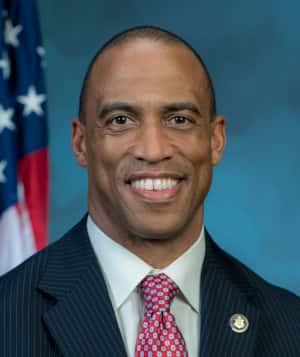
HUD Secretary Scott Turner presented the new data as a promise kept. "President Trump promised to put Americans first, and HUD delivered," Turner said. "We are preventing illegals and non-residents from accessing taxpayer-backed programs at the expense of American homebuyers. Today, that share is zero."
The department's release describes the affected borrowers as "illegals and non-residents." However, the category HUD eliminated covered lawfully present noncitizens. Immigrants without legal status were not eligible for FHA loans under the prior rules either.
Florida markets among the steepest declines
The analysis compared each market's share of FHA purchase loans going to non-permanent residents from the second quarter of 2024 through the first quarter of 2025 with the share from the fourth quarter of 2025 to the present. It covered the 100 largest U.S. markets and 33 markets along the Mexican and Canadian borders. The Florida results and several comparison markets are shown below.
| Market | Share before policy | Share after policy |
|---|---|---|
| Orlando | 16.1% | 0.2% |
| Lakeland | 13.6% | 0.16% |
| Cape Coral | About 10% | Less than 1% |
| Miami | About 10% | Less than 1% |
| Salt Lake City | 26% | 0.15% |
| Provo, Utah | 20% | Less than 0.5% |
| Raleigh, N.C. | 11.1% | 0.8% |
| Nationwide | 5.8% | About 0.1% |
Only the two Utah markets had higher pre-policy shares than Orlando among the markets highlighted. In metro Orlando, roughly one in every six FHA purchase loans had gone to a non-permanent resident.
Conventional loans have not filled the gap
Some affected buyers have moved to other loan types, but the data suggest many have not. Non-permanent residents' share of purchase mortgages across all loan types fell 2.2 percentage points, from 5.6% to 3.4%. Their volume of conventional prime conforming loans stayed relatively flat instead of rising enough to offset the FHA losses.
"This new policy has definitely had an impact on families that would have qualified before May 2025," said Michael Brown, a Tennessee-based home loan specialist at Churchill Mortgage, in the report HUD republished. "Many of these borrowers are doing conventional loans now because Fannie Mae and Freddie Mac permit lawful non-permanent residents to obtain financing."
Brown said non-qualified mortgage loans, known as non-QM loans, are another option but cost more. "Some of these non-permanent residents will end up having to put more money down, work on improving their credit scores to qualify, or simply will need to wait until they obtain permanent-resident status," he said.
FHA loans are popular with first-time buyers because they allow down payments as low as 3.5% and are more forgiving of lower credit scores. Losing access can mean saving thousands of dollars more before buying. Isaac Schultz, a Michigan-based loan specialist at the same company, said a loan he is working on for one such borrower "does make it far more difficult for the borrower to qualify." He added: "For better or for worse, that was the main desired result of the policy change."
Prices in Florida markets
The report said it is unclear whether the policy affected home prices, but it tracked median list prices for single-family homes before and after. In Orlando, the median ranged from $490,000 to $544,950 before the change and from $489,000 to $525,000 afterward. In Lakeland, prices barely moved: $350,000 to $374,999 before and $357,000 to $375,000 after. Cape Coral had the biggest shift, from $475,000 to $510,000 before to $420,000 to $467,450 after.
Other forces have shaped Florida's housing markets over the same period, including insurance costs and hurricane recovery, so the price changes cannot be tied to the FHA policy alone. Mortgage rates have also climbed above 7% this fall after the Federal Reserve's first rate hike since 2023, adding to pressure on Florida buyers.
Who is affected in Florida
The policy reaches a large group in Florida. The state is home to large numbers of noncitizens living and working legally on temporary status, including people on employment visas and DACA recipients. Many of Florida's Venezuelan and Haitian residents relied on Temporary Protected Status, which the administration has been working to end through the courts. People who lose those temporary statuses would also lose the lawful presence that conventional lenders require.
What's next
HUD has given no sign it will reverse the policy, and Turner has presented it as part of a broader push against what the administration calls misuse of federal programs. Industry observers have said the rule could face legal challenges, especially over DACA recipients, but no court has blocked it. For now, lawfully present Floridians without green cards who want to buy a home must use conventional loans backed by Fannie Mae and Freddie Mac, which still accept them, or turn to higher-cost non-QM lenders.
Spotted an issue with this article?
Have something to say about this story?
Write us a letterComments
No comments yet. Be the first to weigh in.
Related Coverage

Federal Appeals Court Upholds Florida Bar's Higher Fees for Experienced Out-of-State Lawyers
1h ago

ATF Ends Registration for Suppressors and Short-Barreled Rifles, Leaving Florida's Federal-Linked Gun Law in Limbo
2h ago

Appeals Court Lowers the Bar for Proving U.S. Jurisdiction in High-Seas Cocaine Cases Prosecuted in Florida
2h ago

Trump's Russian Diesel Deal Unlikely to Ease Florida's Near-$6 Fuel Bills, Experts Say
20h ago