DeSantis Awards Nearly $23 Million to Florida's Defense and Aerospace Base
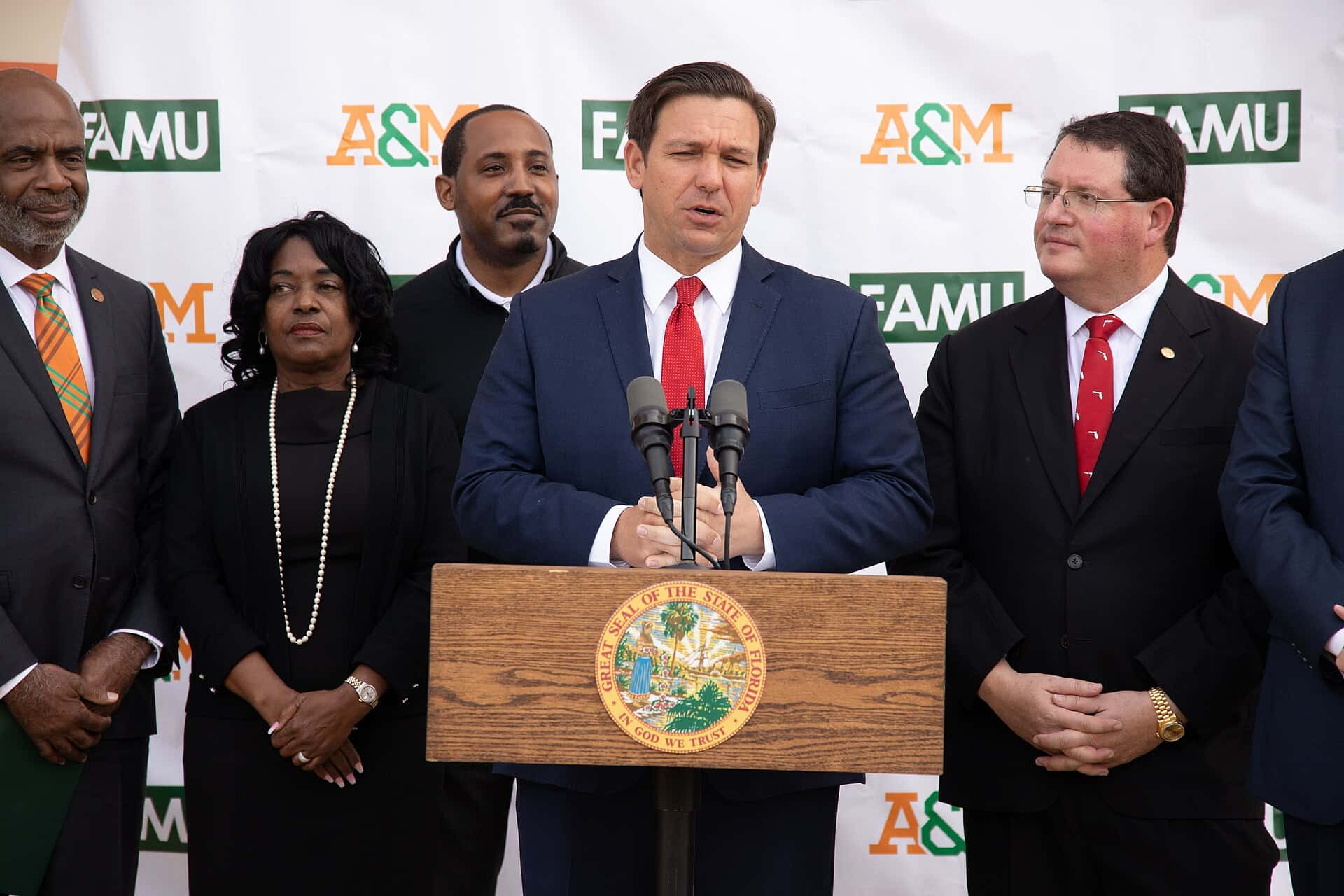
Governor Ron DeSantis has announced close to $23 million in state investments aimed at Florida's defense workforce, its military communities and the industrial base that supplies the armed services. The awards move through four separate state programs and are weighted heavily toward colleges training technicians and toward the infrastructure that supports shipbuilding, aerospace and supply chain work in Florida.
Where the money comes from
The package draws on more than one funding stream. The largest share, roughly $15.3 million, flows through the Florida Job Growth Grant Fund, a program the state uses for workforce training and public infrastructure projects tied to economic development. Up to $5 million comes through the Florida Department of Transportation's Spaceport Improvement Program in partnership with Space Florida, the state's aerospace finance and development authority.
The remaining amount, more than $3.1 million, is split between the Defense Reinvestment Grant Program and the Florida Defense Support Commission Grant Program. Those two programs are smaller and more specialized, designed to help communities near military installations strengthen their relationship with the base and to protect installations from encroachment and closure risk.
The multi-program structure explains why the awards look uneven at first glance. A community receiving a defense reinvestment grant and a college receiving job growth funding are being served by different policy instruments with different criteria, even though they appear in the same announcement.
The largest awards
Florida State College at Jacksonville received the largest single share, more than $7 million. Jacksonville is home to a substantial Navy presence, including Naval Air Station Jacksonville and Naval Station Mayport, along with a shipbuilding and ship repair sector that has grown around the St. Johns River. A community college award of that size is generally aimed at expanding training capacity in trades that feed those employers directly, including welding, machining, electrical and avionics work.
The City of Palm Bay in Brevard County received $3.5 million tied to the city's redevelopment plan. Palm Bay sits in the heart of the Space Coast, within the orbit of Patrick Space Force Base, Cape Canaveral Space Force Station and Kennedy Space Center, and the region's defense and aerospace employment base has expanded substantially with the growth of commercial launch activity.
Northwest Florida State College received $3 million. The Panhandle hosts one of the densest concentrations of military installations in the country, including Eglin Air Force Base, Tyndall Air Force Base near Panama City and Naval Air Station Pensacola. The western Panhandle drew more than $4 million across the package overall.
Polk State College received an award in the range of roughly $1.8 million to $2 million, extending the workforce training investment into the interior of the state, where Polk County has been building out logistics and advanced manufacturing capacity along the Interstate 4 corridor.
Why defense matters to Florida's economy
Defense is one of Florida's largest economic sectors and one of its least visible to most residents. The state hosts a wide range of installations across every service branch, and it is the headquarters location for United States Central Command and United States Special Operations Command at MacDill Air Force Base in Tampa.
The economic footprint extends well beyond uniformed personnel. Contractors, maintenance and repair operations, simulation and training companies, shipbuilders and a large supplier network employ Floridians in communities from Pensacola to Jacksonville to Tampa to the Space Coast. In several Panhandle and Northeast Florida counties, the installation and its associated economy are the largest employers by a wide margin.
That concentration is also a vulnerability. Communities heavily dependent on a single installation are exposed to force structure decisions and base realignment processes made in Washington. The Defense Reinvestment and Defense Support Commission grant programs exist substantially to manage that exposure, funding infrastructure and land use work that makes an installation more valuable to the Pentagon and less likely to be targeted for reduction.
The spaceport component
The Spaceport Improvement Program allocation, administered through the state transportation department in partnership with Space Florida, addresses a specific bottleneck. Florida's launch cadence from Cape Canaveral Space Force Station and Kennedy Space Center has increased dramatically over the past several years, and the supporting infrastructure, including roads, utilities, processing facilities and range assets, has been under pressure to keep pace.
Florida treats spaceport infrastructure as transportation infrastructure, a policy choice that gives launch facilities access to state transportation funding mechanisms that most states do not extend to aerospace. That framework has been a meaningful part of how Florida has retained and expanded commercial launch activity against competition from other states.
The Space Coast has a busy schedule ahead. A Falcon 9 launch carrying satellites for a commercial operator is scheduled from Cape Canaveral in the coming days, and a crewed mission to the International Space Station has been in a delayed posture pending resolution of a spacecraft propulsion issue.
What it means for Floridians
For students, the most direct effect is capacity. Workforce training programs at state colleges are frequently constrained not by student demand but by equipment, lab space and instructor availability. Awards of this size typically buy welding booths, machining equipment, avionics trainers and the physical space to house them, which translates into more seats in programs that lead to jobs with wages above the regional median.
For the communities involved, the effect is longer-term and less visible. Infrastructure and redevelopment funding around installations tends to show up as improved roads, utility capacity and land use compatibility rather than as a ribbon-cutting. The payoff is measured in whether an installation grows or contracts over a decade.
For the state economy broadly, defense and aerospace employment provides a counterweight to sectors that are more sensitive to consumer spending and tourism. Central Florida's theme park market has been reporting softening attendance, and the state's construction and real estate sectors have been navigating higher interest rates. Federal defense and space spending moves on a different cycle.
The federal context
State investment complements but does not substitute for federal decisions. Defense installations, force structure and procurement all originate in Washington, and Florida's congressional delegation has historically worked those questions on a bipartisan basis given how many districts contain military or aerospace employment.
Federal funding itself is currently unsettled. Congress faces a September 30 deadline to fund the government for fiscal year 2027, and the Senate has passed a continuing resolution that would extend funding into December while the House considers its next move. Extended funding uncertainty affects contract awards and program starts, which in turn affects the Florida suppliers positioned to compete for them.
How the grant programs differ
The four funding streams in the package serve distinct purposes, and understanding them clarifies why the recipient list looks the way it does.
The Florida Job Growth Grant Fund supports workforce training and public infrastructure tied to economic development. Proposals come from local governments and state colleges rather than from private companies directly, and the statutory framework requires that projects support job creation or infrastructure serving a defined economic purpose. That is why community colleges rather than defense contractors appear as recipients.
The Defense Reinvestment Grant Program funds community-level activity around installations, including planning studies, compatible land use work and initiatives that strengthen the relationship between a base and the surrounding community. Awards are typically small relative to the other streams but are targeted precisely.
The Florida Defense Support Commission Grant Program supports projects identified as protecting or enhancing a specific installation's military value. Its work is oriented toward the possibility of future base realignment decisions, which is a long-horizon concern that communities cannot address after a decision is announced.
The Spaceport Improvement Program operates through the transportation department because Florida statute treats spaceports as transportation facilities, which brings them within the state's transportation funding framework.
What the workforce actually needs
The recurring constraint that Florida defense and aerospace employers describe is not facilities or incentives. It is people with specific technical credentials.
Welding certified to aerospace and marine standards, computer numerical control machining, composites fabrication, avionics and electronics technician work, and industrial maintenance are the categories that come up repeatedly. Those are credential-based occupations reachable through community college programs in a year or two rather than through four-year degrees.
Security clearance requirements add a complication that other industries do not face. Many defense positions require clearance eligibility, which constrains the applicant pool and lengthens hiring timelines. Employers have increasingly worked with colleges to identify candidates early in their training.
Wage competition is the other pressure. Aerospace and defense employers in Florida compete for the same technicians against construction, utilities and manufacturing, all of which have been hiring. Training capacity expansion addresses the supply side of that competition rather than the wage side, which is why employers generally welcome it.
For students, these occupations offer a path to wages well above the Florida median without the debt associated with a four-year degree, which is part of why state policymakers have favored this category of investment.
What's next
Recipients will move into the procurement and construction phases, with timelines that vary by project type. Equipment purchases for college training programs typically move within an academic year. Infrastructure and redevelopment projects run considerably longer.
The Florida Defense Support Commission continues its ongoing work assessing installation vulnerability and community readiness, and its findings inform future rounds of the grant programs. Communities near installations that did not receive awards in this round will be positioning for the next.
The broader question for Florida is whether the state can convert its installation footprint into a durable industrial base rather than a payroll. Shipbuilding capacity in Jacksonville, aerospace manufacturing on the Space Coast and simulation and training in Orlando are the three clusters where that conversion is furthest along, and all three received attention in this round.
Spotted an issue with this article?
Have something to say about this story?
Write us a letterComments
No comments yet. Be the first to weigh in.
Related Coverage

Florida AG Investigates Insurer Over Clauses That Void Claims When Homeowners Hire a Public Adjuster
5h ago
Port of Palm Beach's $43 Million Plan to Draw Bigger Cruise Ships Puts Palm Beach Neighbors on Alert
1d ago

Fort Lauderdale Has $12.4 Million in Flood Recovery Grants, but Few Homeowners Are Applying
1d ago

Florida Gas Prices Hold at $4.08 as Diesel Tops $6 Again; Oil Dips After Trump's Russia Sanctions Waiver
2d ago