Florida Remains the Center of the Nation's Immigration Detention Litigation
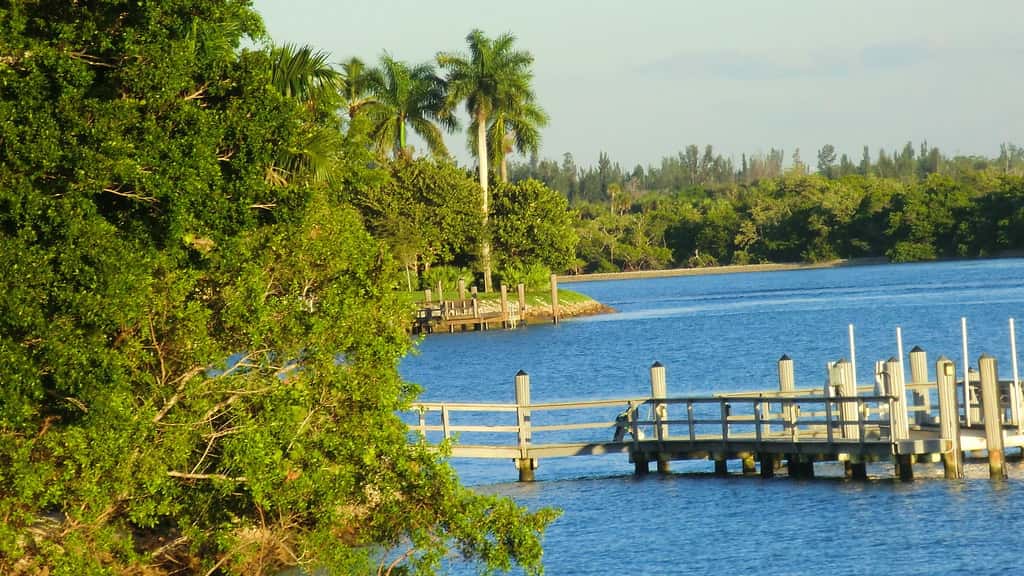
Florida has become the principal venue for litigation over federal immigration detention policy, with courts in the state issuing a series of rulings across 2026 that have reached the state-run Everglades detention facility, access to legal counsel for detainees, and the scope of mandatory detention.
The Miami-based Eleventh Circuit Court of Appeals has been among the courts weighing the federal government's mandatory detention policy, which holds people in immigration custody without the possibility of bond. Reporting on that litigation has described two federal appeals courts ruling against the policy, two supporting it and one deadlocked, a split that typically signals eventual Supreme Court review.
Separately, the facility in the Everglades commonly referred to as Alligator Alcatraz has generated its own extended litigation involving environmental review requirements, detainee access to attorneys, and questions about the division of authority between state and federal government.
The Everglades facility litigation
The facility was constructed rapidly by the state of Florida in the Everglades and has been used to hold people in immigration custody. Its location and construction method drew immediate legal challenges on environmental grounds.
U.S. District Judge Kathleen Williams issued a preliminary injunction in August 2025 requiring the facility to wind down, based on the absence of federal environmental review. In April 2026, a divided Eleventh Circuit panel invalidated that injunction and allowed the facility to remain open.
The panel majority reasoned that the facility was not under federal control and therefore did not trigger the federal law requiring an environmental impact review, writing that Florida rather than federal officials constructed it. Judge Nancy Abudu dissented, writing that immigration is a federal responsibility and that a state building a detention facility does not permit the federal government to abdicate its authority.
A separate lawsuit filed by immigrants' rights advocates has challenged Florida's authority to detain people at the facility at all, raising the underlying question of state power in an area historically reserved to the federal government.
Access to counsel
A distinct line of litigation has addressed whether people held at the facility can reach attorneys. A federal court ordered ICE to provide detainees with access to legal counsel, and a preliminary injunction issued by U.S. District Judge Sheri Polster Chappell required that confidential outgoing legal calls be readily available.
The injunction also required publication of information explaining how attorneys and detained individuals may contact one another. Those requirements address a practical problem: a facility in a remote location with limited communications infrastructure can effectively prevent legal representation regardless of any formal right to it.
Immigration proceedings are civil rather than criminal, which means detained individuals have no right to appointed counsel at government expense. Representation depends on the individual's ability to retain an attorney or to obtain pro bono assistance, and both require the ability to communicate.
Research has consistently found that representation substantially affects outcomes in immigration proceedings, which is why access to counsel litigation carries practical consequence rather than only procedural significance.
Mandatory detention and the circuit split
The mandatory detention policy at issue in the appellate litigation determines whether individuals in immigration proceedings can seek release on bond while their cases proceed, or whether they must remain in custody throughout.
The distinction affects large numbers of people and has downstream effects on detention capacity, on individuals' ability to work and support families during proceedings, and on their practical ability to prepare a case.
The reported division among federal appellate courts, with two ruling against the policy, two supporting it and one deadlocked, produces a situation where the same federal law operates differently depending on geography. That is precisely the circumstance the Supreme Court exists to resolve.
Until the Supreme Court acts, the Eleventh Circuit's rulings govern federal immigration detention practice in Florida, Georgia and Alabama.
What it means for Floridians
Florida has entered into a substantial share of the nation's agreements deputizing local law enforcement to assist federal immigration authorities, accounting for roughly 31 percent of all such agreements nationally according to reporting this year. That concentration means detention policy affects Florida communities more directly than most states.
Research from the University of South Florida drawing on interviews with mixed-status families in Central Florida found effects on financial, physical and emotional wellbeing among immigrants and their children.
Economic effects have also been documented in specific sectors. Construction employment across affected states declined 1.3 percent since early in the current administration, single-family home permits in those states fell 9.2 percent between June 2024 and June 2026, and average home construction costs rose 13.1 percent over the same period.
Those construction figures matter for Florida's housing affordability picture, since higher building costs and reduced permitting both work against increasing the supply of homes.
Local impact across the state
South Florida has the largest immigrant population in the state and the highest concentration of immigration legal practice, and Miami's immigration court handles a substantial caseload.
Agricultural regions including Immokalee, the Lake Okeechobee area and Central Florida's citrus and nursery districts depend on workforces where immigration status questions are salient, and labor availability affects harvests and production costs.
Construction and hospitality across the state employ significant immigrant workforces, and both sectors have reported labor availability concerns.
The Everglades facility itself sits in a remote area of the state, which creates practical difficulties for attorneys, family members and advocates attempting to reach detainees, and which is central to the access to counsel litigation.
How immigration proceedings differ from criminal cases
Much of the confusion surrounding this litigation stems from the fact that immigration proceedings are civil rather than criminal, which changes the applicable protections substantially.
The most consequential difference concerns counsel. Criminal defendants who cannot afford an attorney are provided one at government expense. People in immigration proceedings have the right to counsel but not at government expense, which is why access to communication with attorneys and to pro bono resources carries so much practical weight.
Immigration courts are administered by the executive branch rather than the judiciary. Immigration judges are Justice Department employees rather than judges appointed under Article III of the Constitution, which affects both their independence and the appellate structure above them.
Detention in the immigration context is characterized legally as civil detention rather than punishment, a characterization that carries consequences for what conditions and procedures are constitutionally required.
The federalism question
Beneath the specific disputes lies a structural question about which level of government may act in immigration, and it recurs across several of these cases.
Immigration has historically been treated as an area of federal authority, grounded in the constitutional allocation of powers over naturalization and foreign affairs. The Supreme Court has previously struck down state immigration enforcement provisions on preemption grounds, holding that federal law occupied the field.
The Eleventh Circuit panel's reasoning in the April Everglades facility decision turned on this question from an unusual direction. By holding that the facility was state-constructed and not under federal control, the majority reached a conclusion that avoided federal environmental review requirements. The dissent's objection was that immigration is a federal responsibility and that the arrangement allowed the federal government to avoid obligations it would otherwise bear.
The pending lawsuit challenging Florida's authority to detain people at the facility raises the preemption question directly, asking whether a state may hold people in immigration custody at all.
A Supreme Court decision has separately denied Florida's request to enforce a state immigration law that lower courts found unconstitutional, an outcome consistent with the traditional preemption framework.
How a circuit split gets resolved
The reported division among federal appellate courts on mandatory detention is the kind of situation the federal judicial structure is built to resolve, and the mechanism is worth explaining.
Federal appellate courts are divided into circuits covering defined geographic regions, and each circuit's decisions bind only the district courts within it. The Eleventh Circuit covers Florida, Georgia and Alabama.
When circuits reach conflicting interpretations of the same federal statute, identical federal law produces different outcomes depending on where a case arises. That inconsistency is among the primary factors the Supreme Court considers when deciding whether to grant review.
Review is discretionary. Parties petition for a writ of certiorari, and the Court grants a small fraction of petitions. A well-developed split among circuits substantially improves the odds of a grant, particularly where the question affects large numbers of cases.
Until the Court acts, or unless a circuit reconsiders its own precedent through en banc review, the geographic inconsistency persists.
The scale of Florida's detention footprint
Florida's role in immigration enforcement extends well beyond the litigation, and the operational footprint gives the legal questions their practical weight.
The state's share of 287(g) agreements, roughly 31 percent of the national total, reflects state legislation requiring participation rather than the voluntary local decisions that govern in most states. That structure produces uniformity across Florida counties that does not exist elsewhere.
Detention capacity in Florida includes federally contracted facilities alongside the state-constructed Everglades facility, and the mix of state and federal involvement is precisely what the Eleventh Circuit panel addressed in the April environmental review decision.
Immigration courts in Florida handle substantial caseloads, and backlogs affect how long individuals remain in proceedings, which interacts directly with detention policy. Longer proceedings mean longer detention where release on bond is unavailable.
Legal service capacity has not scaled with detention capacity. Pro bono organizations and immigration attorneys concentrated in urban areas face practical difficulty serving clients held in remote facilities, which is the underlying problem the access to counsel litigation addresses.
What's next
The circuit split on mandatory detention makes Supreme Court review plausible, and any grant of certiorari would be the most consequential development in this area.
The lawsuit challenging Florida's authority to detain people at the Everglades facility remains pending, and a ruling on that question would address the underlying state authority issue rather than the environmental review question the April decision resolved.
Compliance with the access to counsel injunction will be monitored through the district court, and enforcement proceedings would follow any alleged failure to comply.
Court dockets for the Southern and Middle Districts of Florida and for the Eleventh Circuit are the authoritative sources for case status, filings and opinions in these matters.
Spotted an issue with this article?
Have something to say about this story?
Write a letter to the editorComments
No comments yet. Be the first to weigh in.
Related Coverage

Supreme Court Opens New Term Oct. 5 With Florida's Six-Person Felony Juries on the Docket
1d ago

Rubio Calls Cuba a Failed State, Warns Havana Cannot Wait Out Trump as South Florida Watches
1d ago
No Shutdown at Fiscal Year's End: What the Dec. 11 Funding and Flood Insurance Deadline Means for Florida
1d ago
The Fed's First Rate Hike Since 2023 Pushes Mortgages Past 7% and Freezes Florida's Housing Market
2d ago