No Shutdown at Fiscal Year's End: What the Dec. 11 Funding and Flood Insurance Deadline Means for Florida
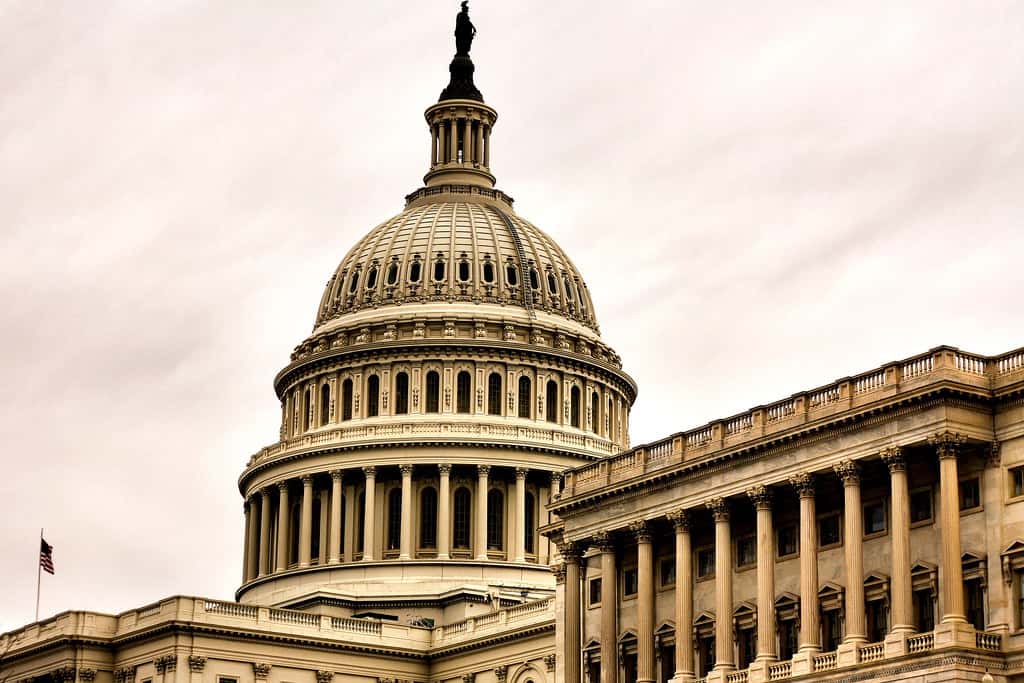
The federal fiscal year ends at midnight Wednesday, Sept. 30, and this time Florida is not bracing for a government shutdown when it does. Congress already approved a stopgap spending law, the Continuing Appropriations and Extensions Act, 2027, that keeps federal agencies funded at existing levels through Dec. 11 and extends the National Flood Insurance Program to the same date. That means paychecks for federal workers at Florida's military bases, air traffic control towers and national parks keep flowing on Oct. 1, and flood policies keep being written. It also sets up a new cliff just after the midterm elections, with Florida, the state most dependent on federal flood insurance, once again near the front of the line.
What Congress passed
The measure, H.R. 6500, is a continuing resolution, the short-term funding tool Congress uses when it has not finished the regular annual appropriations bills. It continues funding for federal programs at current levels until Dec. 11, rather than setting new full-year budgets for the 2027 fiscal year that begins Oct. 1.
The plan was announced by Senate Appropriations Committee Chair Susan Collins and Vice Chair Patty Murray. The Senate passed the measure in August, and the House then approved the Senate's version by a bipartisan vote of 370 to 48, according to the House Appropriations Committee. The bill was then sent to President Donald Trump, who signed it into law.
The House had earlier passed its own continuing resolution, H.R. 9770, on a much narrower 220 to 205 vote. The broader bipartisan margin on the final version reflected a desire in both parties to avoid a shutdown in the closing weeks before the Nov. 3 midterm elections.
Because the law was enacted weeks ahead of the deadline, this year's end of the fiscal year is unusually quiet. Agencies do not need to activate shutdown plans, furlough notices are not going out, and federal contractors in Florida are not facing a sudden stop-work order on Oct. 1.
Flood insurance extended to Dec. 11
For Florida, the most consequential piece of the package may be the flood insurance extension. The National Flood Insurance Program, run by FEMA, needs periodic reauthorization from Congress, and the law extends that authority through Dec. 11, 2026, according to FEMA and industry groups including the National Association of Home Builders.
If Congress lets that authority lapse, the consequences are specific. According to FEMA, the program would lose the ability to write new flood insurance contracts, and its authority to borrow from the U.S. Treasury would drop from $30.425 billion to $1 billion. Existing policies would remain in force until they expire, and claims on those policies would still be paid, but new policies and some renewals could not be issued.
That matters enormously in Florida real estate. Federally backed mortgages on homes in high-risk flood zones require flood insurance, so when the program cannot issue new policies, some home sales stall until buyers can find private coverage. That happened during the long shutdown in fall 2025, when FEMA said it would stop selling new flood policies because of the lapse in appropriations, and agents and closing attorneys across the state scrambled to find alternatives.
The Dec. 11 date also falls after the Nov. 30 end of the Atlantic hurricane season, which removes the worst-case scenario of a lapse in the middle of storm season. It still lands in the middle of the busy winter home-buying period, when many out-of-state buyers are closing on Florida properties.
Why Florida has the most at stake
Florida has about 1.7 million active NFIP policies, more than any other state by a wide margin, according to industry analyses of FEMA data. That is roughly 35 to 40 percent of the entire program, which had more than 4.5 million policies nationwide at the end of 2025.
Those Florida policies provide hundreds of billions of dollars in coverage on homes and businesses from Pensacola to Key West. Many are concentrated in coastal counties such as Miami-Dade, Broward, Palm Beach, Pinellas, Lee and Collier, but inland flooding from heavy rain has pushed more homeowners in Central Florida and North Florida to buy coverage in recent years as well.
State policy has increased the reach of flood insurance too. Florida law is phasing in a requirement that policyholders of Citizens Property Insurance, the state-backed insurer of last resort, carry flood coverage, and many of those homeowners rely on the NFIP to meet it. Any interruption in the federal program therefore ripples into the state's own property insurance system.
Private flood insurers have grown in Florida, and they offer an alternative for some homeowners. But industry analysts, including AM Best during the 2025 shutdown, have noted that private carriers cannot fully replace the federal program, particularly for older homes and properties with high flood risk.
What a shutdown would have meant
Florida has recent experience with what a lapse in federal funding looks like. The fall 2025 shutdown stretched into November and became the longest in U.S. history, and a partial shutdown followed early in 2026 before Congress resolved it.
During those lapses, federal employees in essential roles, including air traffic controllers, Transportation Security Administration officers, Coast Guard members and many military personnel, were required to keep working without pay until funding resumed. Florida is home to major airports in Orlando, Miami, Tampa and Fort Lauderdale, along with a large concentration of military installations, so the pressure on those workers and their families is felt in every region of the state.
Shutdowns also slow services that Floridians use every day, from some Small Business Administration lending to national park operations at places like Everglades and Dry Tortugas, and they create uncertainty for programs that serve low-income families. Avoiding that disruption at the start of fiscal 2027 gives agencies and households at least a little over two months of stability.
Florida's federal footprint
Few states rely on federal operations as heavily as Florida. The state hosts major Air Force, Navy, Space Force and Coast Guard installations, including Eglin and Tyndall in the Panhandle, MacDill in Tampa, Naval Air Station Jacksonville and Naval Station Mayport, and Patrick Space Force Base on the Space Coast.
Federal science and emergency agencies are also deeply embedded in Florida. NOAA's National Hurricane Center operates in Miami, NASA's Kennedy Space Center anchors the Space Coast, and FEMA's disaster recovery work continues in communities still rebuilding from past hurricanes.
A continuing resolution keeps those operations running, but at last year's spending levels. Agencies generally cannot start new programs or shift money into new priorities under a stopgap, which can delay contracts, hiring and construction projects until full-year appropriations are enacted.
The lame-duck showdown ahead
The Dec. 11 deadline sets up a spending fight in the lame-duck session that follows the Nov. 3 midterm elections. Depending on which party controls the House and Senate in the next Congress, lawmakers may try to finish full-year 2027 spending bills in December or pass another short-term extension that pushes decisions into the new year.
Florida's U.S. House delegation, which has 28 members, and its two senators, Rick Scott and Ashley Moody, will be part of those negotiations. Florida members have frequently called for a longer-term NFIP reauthorization rather than the string of short extensions the program has lived on for years, arguing that the repeated deadlines unsettle real estate markets.
The program's last multiyear reauthorization expired in 2017, and since then Congress has kept it alive through a long series of short-term extensions, most of them attached to stopgap spending bills like this one. Each deadline brings a brief period of uncertainty for lenders, insurance agents and title companies, even when lawmakers ultimately act in time. FEMA maintains a public page tracking the current reauthorization date, which is now listed as Dec. 11, 2026.
The flood program also carries a large debt to the Treasury from past catastrophic storms, and Congress has long debated how to make its finances sustainable while keeping premiums affordable. FEMA's current pricing system, known as Risk Rating 2.0, has pushed premiums higher for many Florida policyholders, an issue that frequently comes up whenever reauthorization is on the table.
What Floridians should do now
For homeowners with existing NFIP policies, nothing changes on Oct. 1. Policies remain in force, and claims continue to be paid. Homeowners with renewals coming up in December may want to renew early rather than wait until close to the Dec. 11 deadline.
For buyers under contract on a home in a flood zone, real estate professionals generally advise locking in flood coverage well ahead of the closing date, particularly for closings scheduled in mid to late December. If the program lapses, some buyers may need to turn to private flood insurance or delay closing.
Condominium associations should check their calendars too. Many Florida condo buildings carry a federal master flood policy for the structure, known as a Residential Condominium Building Association Policy, and boards with renewals due around the December deadline may want to confirm timing with their agents now rather than later.
Federal workers and contractors in Florida can plan on normal operations through Dec. 11. Those with jobs or contracts tied to agencies that were disrupted in past shutdowns may want to watch the December negotiations closely.
What's next
The fiscal year turns over on Oct. 1 without a shutdown. The next hard deadline is Dec. 11, when both the continuing resolution and the National Flood Insurance Program's authority expire unless Congress acts.
Between now and then, lawmakers will return to Washington after the Nov. 3 election to decide whether to pass full-year spending bills, another stopgap, or a longer-term flood insurance reauthorization. For Florida, the outcome will shape federal operations across the state and determine whether its 1.7 million federal flood policyholders face another round of uncertainty during the holiday season.
Spotted an issue with this article?
Have something to say about this story?
Write a letter to the editorComments
No comments yet. Be the first to weigh in.
Related Coverage

The Fed's First Rate Hike Since 2023 Pushes Mortgages Past 7% and Freezes Florida's Housing Market
23h ago
Florida Sits at the Center of Record Federal Immigration Enforcement With 287(g) Deals in All 67 Counties
1d ago

FEMA Aid for Helene and Milton Recovery Tops $11 Billion as Florida Projects Keep Closing Out
1d ago
Coast Guard and CBP Keep Interdicting Smuggling Boats Off the Florida Keys as Routes Shift
1d ago