Florida School Board Members Say State Pressure Is Silencing Them, Researchers Report
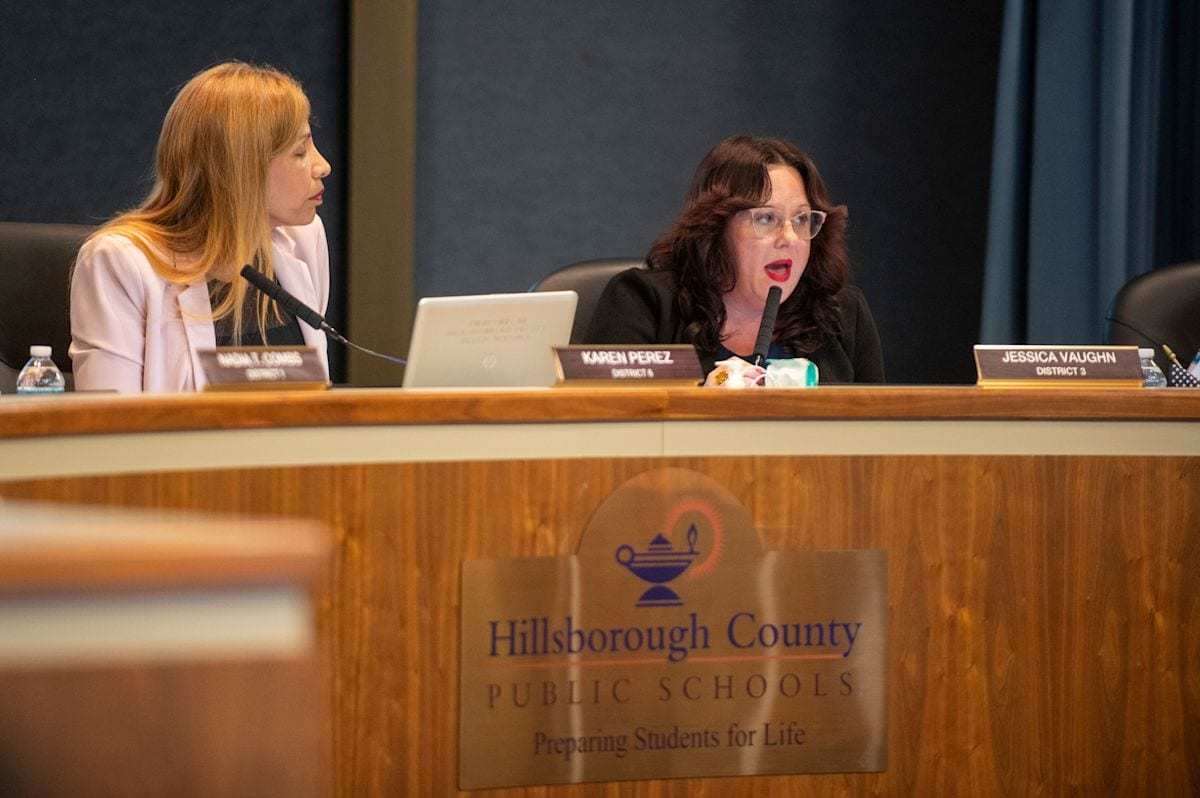
Some Florida school board members say pressure from top state officials has made them afraid to ask basic questions or voice dissent, according to a study by education researchers at the University of Southern California and the University of San Francisco that WLRN reported on Tuesday.
The report, titled "Bullied, Threatened, and Exhausted: Florida School Board Members' Struggle to Defend Public Education," is based on interviews with 17 school board members from 11 of Florida's 67 counties. It argues that Gov. Ron DeSantis and former Education Commissioner Anastasios Kamoutsas pressured local officials into what the authors call "silence and compliance" through threats to their jobs, threats to district funding and public posts on social media.
What the study found
The research was published through Indiana University Bloomington's Center for Evaluation and Education Policy. Its authors include Elizabeth Grubb of the USC Rossier School of Education and Danfeng Koon of the University of San Francisco School of Education. The interviews were conducted at the beginning of the year, WLRN reported, and included members from at least one South Florida county. Florida has more than 350 elected school board members.
The study's main findings, as described in WLRN's and the Tampa Bay Times' coverage and the researchers' release:
- Board members described feeling targeted and intimidated by top state officials and said fear of attention from Tallahassee makes basic oversight of their districts harder.
- The authors describe "extra-legal tactics," including state officials monitoring board members' social media posts and comments at meetings, then threatening or humiliating them in public forums.
- They describe what they call "targeted lawfare," in which the state threatens to pull funding or remove officials when districts do not follow its agenda.
- According to the release, 11 of the 17 members, about 65%, said the threat of removal from office shaped their decisions and actions.
- School board attorneys, superintendents and professional associations often reinforced the pressure, the authors say, advising members to over-comply rather than protect independent deliberation.
The researchers also argue that conventional laws, such as the expansion of vouchers that send public money to private schools, have centralized power at the state level, and that the combination of tactics resembles patterns seen in authoritarian governments.
In board members' words
The members interviewed were not named in the report. One told the researchers, according to WLRN, "I feel like they've taken a lot of the autonomy away for my job," adding, "So there is no local control." Another said their main job had become educating the public about what was happening.
Koon told WLRN that local officials should be able to ask hard questions, but that board members were feeling very scared to even ask basic ones. Grubb said public letters from state officials are often performative and do not encourage real dialogue.
When the Tampa Bay Times first reported on the study in August, Koon said, "Florida is the cutting edge of these attacks," and that it is important for the rest of the country to watch. She said she decided to study the issue after hearing board members express frustration at a Florida conference.
The cases behind the concerns
The report's description tracks with several high-profile clashes between the state and local boards. In August 2025, Kamoutsas recommended that the State Board of Education withhold from Alachua County schools an amount equal to all board members' salaries, after finding what he called probable cause that the board had failed to protect free expression during public comment. In a post on X on Aug. 1, 2025, he wrote that the state should "withhold the entire school board's salaries." On Aug. 20, 2025, the State Board voted to monitor the district and cut members' pay if it found parents' rights had been violated.
That October, Kamoutsas appeared unannounced at an Alachua County School Board meeting, said he was outraged by what he called the board's toxic culture and urged Vice Chair Tina Certain to resign over a social media post about Charlie Kirk, according to WUFT. He ordered her to appear before the State Board of Education in November. Certain refused to step down.
In Hillsborough County, board member Jessica Vaughn was among the members state officials singled out over social media comments, according to the Tampa Bay Times. Kamoutsas's letters to districts, some signed "Govern yourselves accordingly," were posted publicly.
The pushback
Kamoutsas, who left the commissioner's job this year to become president of Polk State College, did not respond to WLRN's interview request.
Tina Descovich, co-founder and CEO of Moms for Liberty, disputed the findings. She told WLRN that school board members are elected public officials and that parents engaging with them is ordinary civic participation.
A spokesperson for current Education Commissioner Henry Mack declined to comment on past leadership. Mack, who the State Board appointed in July, said at a recent event in Hollywood that the department's goal is to "get out of the way," and WLRN reported that the Department of Education says it wants to return power to local entities. Mack is also a strong supporter of expanding the voucher program and is pushing to remove the district-level cap on voucher funding.
Why it matters for Florida districts
School boards in Florida set budgets, hire and evaluate superintendents, and approve policies for their districts' public schools. If members avoid questioning district staff or state directives out of fear of removal, the researchers argue, local oversight of that spending and those policies weakens.
The political balance on some boards is also shifting. WLRN noted that Broward County voters kept a DeSantis appointee on the school board, the first time that has happened, and that he was endorsed by the Broward teachers union. The Miami-Dade board's majority is considered conservative.
What's next
Koon has called for further research to expand on the findings and to identify practices that protect local decision-making. The study arrives as a new administration prepares to take over: Governor-elect Byron Donalds, a longtime school choice advocate, takes office Jan. 5, and the 2027 legislative session will show whether the state's posture toward local boards changes under new leadership in Tallahassee.
Spotted an issue with this article?
Have something to say about this story?
Write us a letterComments
No comments yet. Be the first to weigh in.
Related Coverage

Byron and Erika Donalds Pitch 'Accountability' for Public and Choice Schools Alike as Florida's Voucher Tracking Problems Linger
3h ago
Board of Governors Chair Asks Florida Universities to Keep H-1B Hiring Freeze Past Jan. 5 While the State Reviews Data
3h ago
Orange County School Board Imposes District Health Plan in 5-3 Vote; Unions Say $66.6 Million Shifts to 20,000 Workers
22h ago
Florida Universities Move Closer to Armed Guardians as Board Weighs Mass-Casualty Training After FAMU Shooting
23h ago