Florida Students Return to Tighter Phone Rules as the 2026-27 School Year Begins
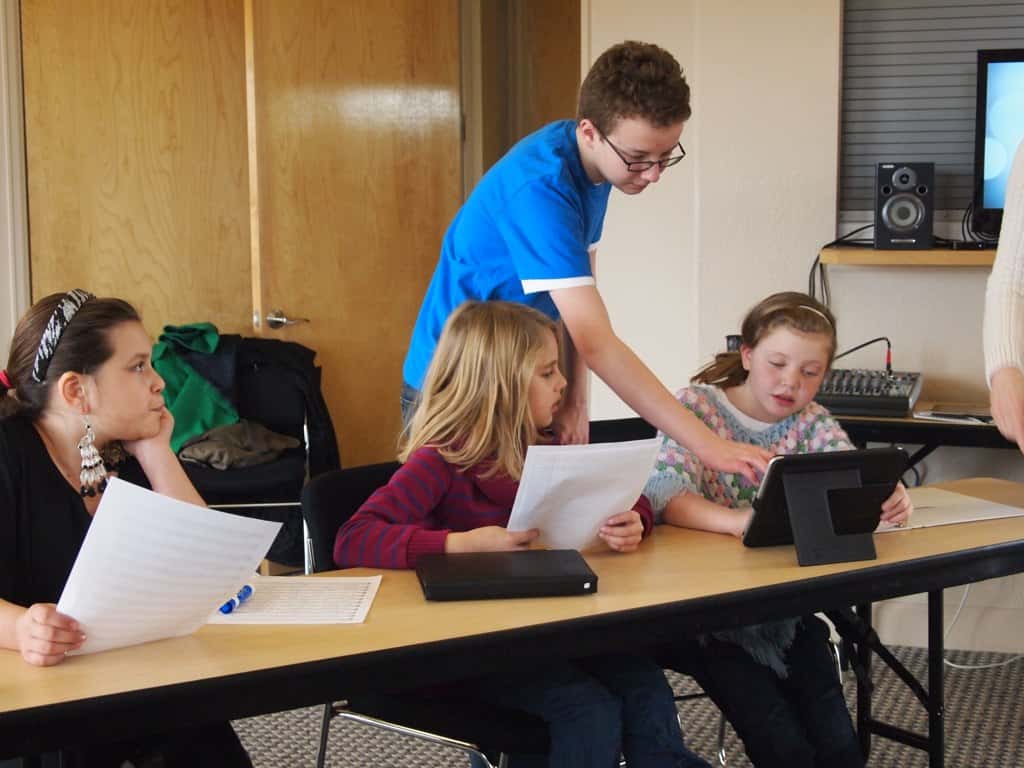
Florida students have returned to classrooms for the 2026-27 school year under the strictest cellphone rules the state has ever applied, with a statewide bell-to-bell prohibition covering kindergarten through eighth grade and a patchwork of district-level policies governing high schools.
The rules stem from legislation that phased in over two school years. An initial statewide ban prohibited cellphone use during instructional time in Florida elementary and middle schools. Subsequent legislation extended the restriction to the entire school day for grades K through 8, meaning devices must remain put away through lunch, passing periods and any other non-instructional time.
For high schools, the Legislature left districts with discretion over when and how phones may be used, which has produced meaningfully different rules depending on which county a student attends school in.
What bell-to-bell means in practice
A bell-to-bell policy means a device must be off and stored from the start of the school day until dismissal. The practical implementation varies, but most districts require phones to be powered down and kept in a backpack, a locker, a classroom pouch or a designated storage location.
Districts have also had to address the expanding category of auxiliary devices. A rule written only for phones leaves smartwatches, wireless earbuds, tablets and smart glasses unaddressed, and several Florida districts have written their policies to cover all personal electronic devices rather than phones specifically.
Lee County, for example, applies a district-wide bell-to-bell ban that requires electronic devices to be zipped inside backpacks for the entire school day, explicitly including smartwatches, earbuds and smart glasses alongside phones.
Enforcement generally escalates through a defined sequence: confiscation and return at the end of the day for a first offense, parent contact and pickup requirements for repeat violations, and progressive discipline beyond that. The specific ladder is set at the district level and published in student codes of conduct.
The high school variation
Because the statute leaves high school policy to districts, families with students at multiple grade levels can face different rules within the same household.
Some districts have voluntarily extended bell-to-bell restrictions through twelfth grade, reasoning that a single consistent policy is easier to enforce and explain. Others permit high school students to use phones during lunch and between classes while prohibiting use during instructional periods. A smaller number have adopted classroom-by-classroom approaches that leave discretion with individual teachers.
Parents can find the applicable policy in their district's student code of conduct, which Florida districts are required to publish and distribute at the start of each school year. School-level handbooks sometimes add requirements beyond the district baseline, particularly around storage logistics.
The reasoning behind the rules
Lawmakers framed the restrictions around two goals: instructional focus and student wellbeing.
The instructional argument holds that phone access fragments attention, that notifications interrupt sustained work and that even the presence of a device in reach reduces the cognitive resources available for learning. Teachers have reported spending meaningful classroom time on device management.
The wellbeing argument centers on social dynamics. Proponents have pointed to research associating heavy adolescent social media use with anxiety, sleep disruption and depressive symptoms, and to the specific problem of cyberbullying that follows students through the school day when devices are accessible.
Florida was among the earlier states to legislate in this area, and researchers have since used the state's phased implementation to study effects on student outcomes, since the staggered rollout across grade bands creates a natural comparison.
Parent concerns
The most persistent objection from parents has centered on emergency communication. Families want the ability to reach a child during a lockdown, a severe weather event or a medical situation, and phones have become the assumed channel for that contact.
School safety officials have generally pushed back on that reasoning, arguing that student phone use during an actual emergency can compromise response. Ringing devices can reveal locations during a lockdown, students texting parents can spread inaccurate information faster than administrators can correct it, and inbound calls can overwhelm networks that emergency responders need.
Districts have responded by strengthening official communication channels, including mass notification systems that push verified information to parents by text and email, and by maintaining front office contact procedures for families who need to reach a student directly.
Accommodations exist for students with documented medical needs, including those managing diabetes with continuous glucose monitors or other conditions requiring device-connected equipment, and for students with individualized education programs or Section 504 plans that specify device use.
What else changed this year
The phone rules arrive alongside other curriculum and instructional changes Florida has implemented in recent sessions, including cursive writing requirements and adjustments to school start time rules.
The Legislature previously enacted and then revisited a mandate that would have pushed high school start times later, a change districts across the state warned would carry substantial transportation costs given the tiered bus schedules most Florida districts operate.
Districts have also continued adjusting to school choice expansion, which has shifted enrollment patterns and, in several counties, prompted school consolidation and boundary discussions.
What it means for Florida families
The practical guidance for parents is to read the district code of conduct rather than relying on what neighboring counties do or on what the rules were last year. Policies changed between the 2025-26 and 2026-27 school years in many districts, and high school policies in particular are not uniform.
Families should also confirm they are enrolled in their district's emergency notification system and that contact information on file at the school is current, since that is the channel through which verified information travels during an incident.
Students who need a device for a documented medical or educational reason should have that accommodation formalized in writing through the school rather than handled informally with individual teachers, since enforcement generally falls to whichever staff member observes a violation.
What the research shows
Florida's phased implementation has made the state a subject of academic interest, since staggered rollouts across grade bands create comparison groups that are difficult to construct deliberately.
The broader research literature on phone restrictions in schools has produced mixed but generally supportive findings. Studies have associated restrictions with improved test scores, with the largest effects appearing among lower-performing students, which suggests the intervention narrows achievement gaps rather than lifting all students equally.
Effects on wellbeing measures have been harder to isolate, in part because school-day restrictions do not address the substantially larger volume of device use that occurs outside school hours.
The methodological challenge in all of this work is that schools adopting restrictions frequently adopt other changes simultaneously, which makes attributing outcomes to any single policy difficult.
What educators consistently report is a change in the texture of the school day: more conversation in hallways and cafeterias, fewer disciplinary referrals related to social media conflicts, and less classroom time spent on device management.
How districts handle enforcement
The practical difficulty of any phone policy is enforcement, and Florida districts have converged on a few models.
Backpack storage is the most common and the least resource-intensive. Devices go in a bag and stay there. Enforcement depends on staff observation and on consistency across classrooms.
Classroom pouch systems require students to deposit devices in numbered slots at the start of each period. The approach is more visible but adds transition time and creates a custody question if a device is damaged or missing.
Locking pouch systems, in which a student retains a sealed pouch that is unlocked at dismissal, remove the custody question and eliminate mid-day access entirely. The systems carry per-student costs that have limited adoption to districts able to fund them.
Whatever the method, the consistent finding from districts is that uniform enforcement matters more than the specific mechanism. A policy applied inconsistently across classrooms generates friction and undermines compliance, while a policy applied uniformly becomes routine within a few weeks.
The teacher shortage backdrop
The phone rules arrive in classrooms that many Florida districts have struggled to staff.
Florida has faced persistent teacher vacancies, concentrated in certain subject areas including mathematics, science, special education and English for speakers of other languages, and in certain geographic areas including rural districts and high-poverty schools.
State policy has raised minimum teacher salaries substantially in recent years, which improved starting pay. The unintended consequence in many districts was salary compression, where veteran teachers saw smaller increases and the differential between a first-year and a twenty-year teacher narrowed.
Several districts have sought local millage referenda specifically to supplement teacher compensation, including a measure headed to Duval County voters in November that would extend a dedicated one mill levy for four years.
Classroom conditions factor into retention alongside compensation. To the extent that phone restrictions reduce the management burden teachers carry, districts have argued the policy supports retention as well as instruction.
What parents should do this week
A few concrete steps address most of the confusion families encounter in the opening weeks of the school year.
Read the district student code of conduct and the individual school handbook, since school-level rules sometimes add storage or enforcement requirements beyond the district baseline.
Confirm enrollment in the district's emergency notification system and verify that phone numbers and email addresses on file at the school are current, since that is the channel through which verified information travels during an incident.
Formalize any needed accommodation in writing through the school rather than arranging it informally with individual teachers, since enforcement falls to whichever staff member observes a violation.
Discuss the rules with students before a violation occurs. The most common enforcement problem districts report is not defiance but students who did not know the policy had changed from the prior year.
What's next
The Florida Department of Education and the State Board of Education continue to monitor implementation, and district-level data on discipline referrals and academic outcomes will accumulate through the school year.
Legislators have signaled continued interest in the area, and further adjustments to high school policy are plausible in the 2027 regular session, particularly if districts report substantially different outcomes under different approaches.
Parents with questions about a specific school's implementation should start with the school administration and, if needed, the district's student services office. School board meetings, which are open to the public and include comment periods, remain the forum where district-level policy is set and revised.
Spotted an issue with this article?
Have something to say about this story?
Write a letter to the editorComments
No comments yet. Be the first to weigh in.
Related Coverage

Sarasota Schools Face Uthmeier's Oct. 1 Deadline in Pine View Teacher Dispute
10h ago

Duval Falls Below 100,000 Students as Florida Public School Enrollment Slides and Vouchers Surge
3d ago

Florida Board of Governors Bars Undocumented Students From Public Universities Starting in 2027-2028
4d ago

University of Florida Reports Record $1.34 Billion in Research Spending for Fiscal 2026
5d ago