Florida's 2026 Bear Hunt Expands as Permit Applications Open September 11
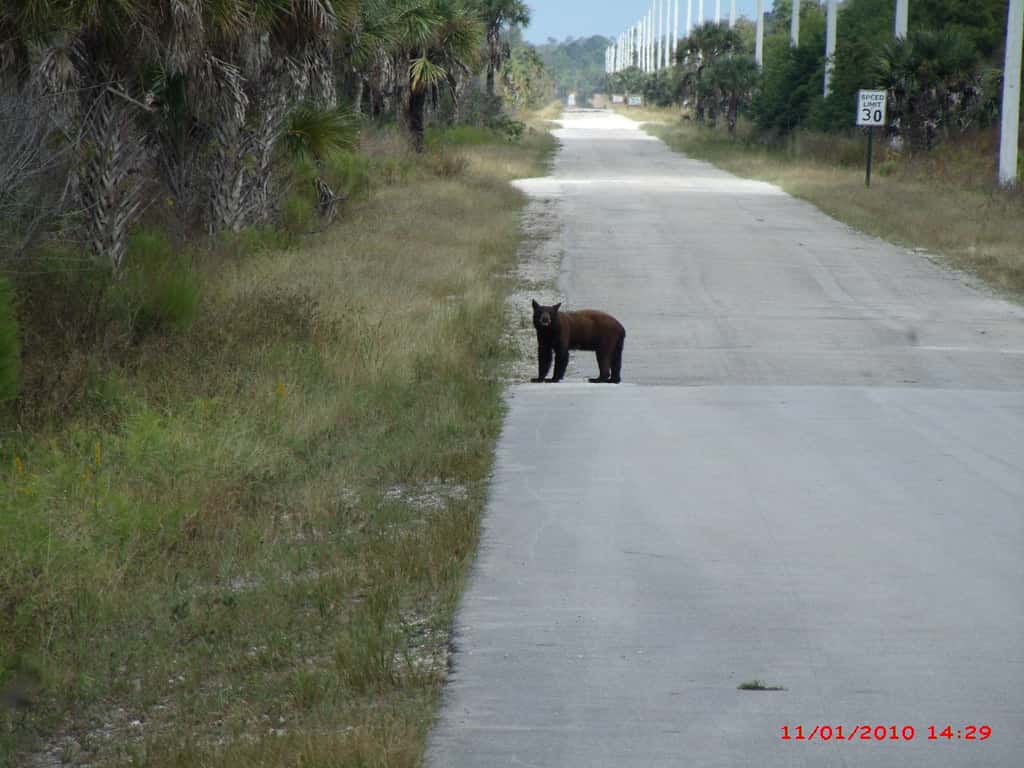
Florida's regulated black bear hunt returns this December with a larger permit pool and expanded access to private land, and the application window opens at 10 a.m. on September 11. The Florida Fish and Wildlife Conservation Commission will offer up to 215 permits for the 2026 harvest, with the season running December 5 through December 27 across four hunt zones covering parts of the Panhandle, north Florida, central Florida and south Florida.
The application process is a random drawing rather than first-come access. Applicants pay $5 per entry beginning September 11, with the window closing at 11:59 p.m. on September 21. Those drawn have from September 25 through October 5 to purchase a non-transferable permit costing $100 for Florida residents and $300 for non-residents. Hunters must be at least 18 years old by October 1 to qualify.
The 2026 structure represents an expansion over the previous season in both permit count and geography. More permits are available, and the commission has extended opportunity onto private land in additional areas, including parts of southwest Florida that were not previously included. In the 13-county central Florida area, 21 permits are on offer.
How Florida got back to a bear hunt
Florida's history with bear hunting is short and contentious. The state held a hunt in 2015 after a two-decade pause, and it ended early and badly. The commission had authorized a season of up to a week with a statewide quota, and hunters reached the quota in some regions within two days, prompting the agency to close the season after 48 hours amid substantial public criticism.
The commission did not hold another hunt for years afterward, instead focusing on population monitoring, bear-resistant waste containers and public education about securing attractants. The Florida black bear had been removed from the state threatened species list in 2012 following population recovery from a low point of a few hundred animals in the 1970s.
The agency's return to a regulated harvest reflects both a larger bear population and a redesigned framework meant to avoid the 2015 outcome. Rather than an open season with a running quota, the current structure is a limited-entry permit system with a fixed number of permits and a defined zone allocation, which caps harvest at the front end rather than trying to halt it mid-season.
That design difference is the central point of the modern program. A permit-limited hunt produces a harvest number that can be forecast before the season opens, which is what wildlife managers need in order to tie a hunt to a population objective rather than to hunter demand.
The population and conflict argument
The commission's stated rationale rests on population data and human-bear conflict statistics. Florida's black bear population has grown substantially from its mid-twentieth-century low, and bears now occupy a fragmented but expanding range across the state. Several subpopulations, particularly in the Ocala and Osceola areas, are considered robust.
Conflict is the second half of the argument. Calls to the commission about bears in residential areas have run in the thousands annually, concentrated in the counties where suburban development abuts bear habitat. Central Florida communities around the Ocala National Forest have been the most persistent source of complaints, involving garbage, bird feeders, livestock feed and occasionally homes and vehicles.
Wildlife biologists are careful about the causal claim here, and the commission's own guidance is too. Hunting removes bears from the landscape, but it does not preferentially remove the specific animals that have learned to associate neighborhoods with food. Reducing conflict reliably requires removing the food source, which is why bear-resistant container programs remain the agency's primary conflict tool.
The state has invested in those programs, distributing bear-resistant garbage cans in high-conflict areas and working with local governments on waste ordinances. Those measures have produced measurable reductions in complaint volume where they have been implemented consistently.
Opposition and legal history
Opposition to the hunt has been organized and persistent. Conservation and animal welfare organizations have challenged both the underlying decision and the specifics of season design, arguing that the population estimates supporting harvest quotas are dated and that a hunt is a poor instrument for a conflict problem rooted in human behavior.
Public comment at commission meetings on the bear hunt has been heavily weighted toward opposition, a pattern that has held across multiple hearings. The commission has consistently responded that public comment volume is not the standard by which it sets harvest policy, and that its obligation runs to the statutory mandate to manage wildlife populations.
Legal challenges have been brought and have not succeeded in stopping a season. Florida courts have generally deferred to the commission's constitutional authority over wildlife management, which is unusually broad because the agency is established in the Florida Constitution rather than created by statute.
That constitutional standing is why the bear hunt debate has stayed largely political and administrative rather than judicial. Changing the policy realistically requires changing the commission, whose members are appointed by the governor.
The rules hunters will operate under
The 2026 season carries the regulatory structure the commission has built around limited-entry harvest. Permits are non-transferable and zone-specific, meaning a hunter drawn for one zone cannot use the permit elsewhere. The season runs a defined 23-day window rather than closing when a quota is hit.
Florida's bear hunting rules prohibit the use of dogs and prohibit hunting over bait, restrictions that distinguish the state's approach from several other southeastern states. Both provisions were adopted in part to address fair chase objections and in part to limit harvest efficiency.
Minimum weight requirements and prohibitions on taking bears accompanied by cubs are standard elements of the framework, designed to protect reproductive females and to avoid orphaning young animals. Hunters are required to check harvested bears at designated stations, which is how the commission collects the biological data that feeds subsequent population modeling.
The private land expansion is the notable 2026 change on the access side. Previous seasons concentrated opportunity on public wildlife management areas, and extending to private land in additional zones opens acreage where bear densities are sometimes higher and hunting pressure has been lower.
What it means for Florida residents
For most Floridians, the hunt itself will be invisible. Two hundred fifteen permits across a state of 22 million people describes a small activity, and the December season falls outside the periods when public lands see the heaviest recreational use.
For residents in bear country, the more useful information is unchanged by the hunt. Securing garbage until the morning of collection, removing bird feeders during active months, bringing in pet food and cleaning grills are the measures that determine whether a neighborhood has a bear problem. Communities that do this consistently report far fewer conflicts than communities that do not.
Feeding bears intentionally is illegal in Florida and carries penalties, and the commission has pursued cases against residents who have done so. The prohibition exists because a bear that associates people with food becomes a bear that has to be removed, and removal in that context usually means euthanasia rather than relocation.
Drivers in bear country face the more common practical risk. Vehicle collisions kill more Florida black bears annually than any other cause, and the fall months bring increased bear movement as animals build fat reserves before winter denning.
How the drawing works and what applicants should know
The $5 entry fee is deliberately low, and the commission permits multiple entries, which means the drawing functions more like a lottery than an application. Applicants select a zone preference, and the odds in any given zone depend on how many people apply against the permits allocated there. Central Florida, with 21 permits available across 13 counties, is expected to be among the more competitive.
Applicants who are drawn face a firm purchase window from September 25 through October 5. Missing that window forfeits the permit, and the commission has historically reallocated forfeited permits to alternates rather than leaving them unused. Hunters planning to apply should confirm they will be reachable and able to complete payment during that period.
Non-residents pay $300 versus $100 for Florida residents, a differential common across state wildlife agencies and consistent with how Florida prices most of its hunting and fishing licenses. Residency is determined by the standard criteria the state uses for license issuance rather than by a hunt-specific test.
Permits also carry the general Florida hunting license requirement, meaning a drawn applicant needs the underlying license in addition to the bear permit. Hunters who have not held a Florida license recently should verify their status before the season rather than during it.
The age requirement is worth noting because it is set to a specific date. Applicants must turn 18 by October 1 to qualify, which excludes some hunters who will be adults by the December season itself.
The bigger habitat question
The long-term variable for Florida's bear population is not harvest but habitat. Bear range in Florida has been fragmented into subpopulations separated by highways and development, and genetic connectivity between those groups depends on corridors that development pressure continues to narrow.
The Florida Wildlife Corridor initiative, which has drawn bipartisan legislative support and substantial state funding for conservation easements and land acquisition, addresses exactly that problem. Bears are among the species most often cited in corridor advocacy, because their large home ranges make them a useful indicator for landscape connectivity generally.
Wildlife crossings on major highways are the other intervention with a measurable record. Structures built on Interstate 75 through the Big Cypress area and elsewhere have documented use by bears and panthers, and additional crossings have been funded in recent state budgets.
Those investments operate on a different timescale than an annual hunt, and they are the ones that determine whether Florida has a bear population to manage in fifty years.
What's next
The application window runs September 11 through September 21, with the drawing and permit purchase period following through October 5. The commission will publish results and zone allocations through its licensing system.
The season itself opens December 5 and closes December 27. Harvest data collected at check stations during that window will feed into the commission's assessment of whether and how to structure a 2027 season, which is the decision point where the current debate will resume.
Spotted an issue with this article?
Have something to say about this story?
Write us a letterComments
No comments yet. Be the first to weigh in.
Related Coverage

71-Year-Old Man Killed by Nearly 12-Foot Alligator While Fishing at Winter Garden Park
2d ago

Extreme Drought Vanishes From Florida Map After a Week of Rain
2d ago

Record Sargassum Season Fades as Key West and UM Researchers Prepare for the Next Wave
Oct 11
Florida's New Stormwater Pollution Credit Rules Draw Fire From Environmentalists and Industry Alike
Oct 10