Florida's Bell to Bell Phone Ban Reaches Every District This Year
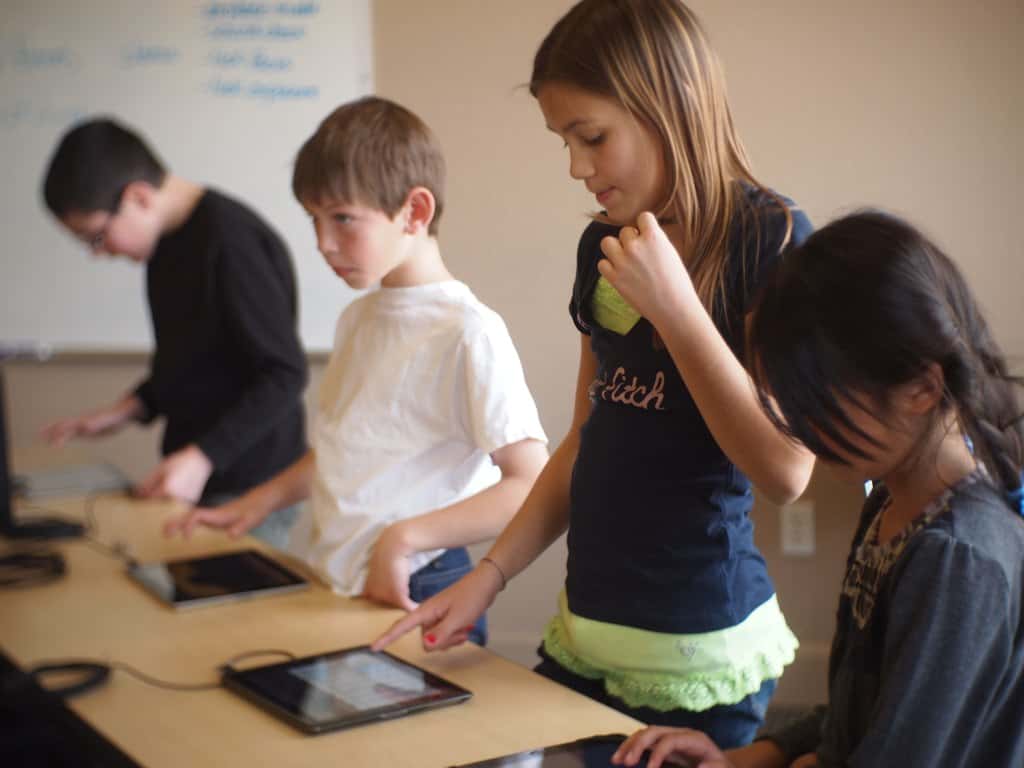
Florida students returned to classrooms this month under the state's most restrictive wireless device policy to date, with a bell to bell ban on phone use now applying to every elementary and middle school student in the state for the entire school day.
The requirement, which took effect no later than July 1, 2026, covers cell phones and auxiliary devices including smartwatches, wireless earbuds and smart glasses. Districts have implemented it in different ways, with some requiring devices to be stored in backpacks and others using locking pouches, but the underlying prohibition is uniform statewide.
High school students face a narrower rule. They may use wireless devices outside instructional time, or during instruction if a teacher directs it for an educational purpose in a designated area. Six districts, two small, two medium and two large, are participating in a pilot program testing a full day ban at the high school level.
What the law requires
The policy builds on a 2023 Florida law that restricted phone use during instructional time. The expanded requirement extends the prohibition to the full school day for K-8 students, meaning lunch periods, class changes and any other non-instructional time are also covered.
Exemptions exist for students with a documented medical requirement for a wireless device based on valid clinical reasoning or evidence. That category includes students who use connected glucose monitors or similar devices, and districts handle those accommodations through the same processes used for other medical needs.
Districts retain discretion over enforcement mechanics. Some have adopted locking pouches that students carry but cannot open during the day. Others require devices to be stored in backpacks, turned off, with progressive discipline for violations. The statute sets the requirement; the method is a local decision.
The research behind the policy
Florida's earlier phone restrictions have drawn academic attention precisely because the state moved before most others, creating a natural comparison. Researchers at Stanford have examined the effect of Florida school phone bans on student outcomes, using the staggered adoption across districts to isolate the policy's effect.
The broader research literature on classroom phone restrictions has generally found effects concentrated among lower-achieving students, with smaller or negligible effects on higher-achieving students. Studies have also looked at behavioral outcomes including disciplinary referrals and reported bullying incidents.
Policymakers have cited concerns beyond academic performance, including social media use during the school day and its documented associations with adolescent mental health outcomes. Those associations are the subject of active scientific debate about the direction and magnitude of causal effects.
How districts are implementing it
Lee County adopted a district-wide bell to bell approach requiring electronic devices to be zipped inside backpacks at all times until dismissal. Broward County Public Schools has published guidance for families explaining the wireless device rules and how they apply at each grade band.
Larger districts face logistical questions that smaller ones do not, including how to manage device storage for schools with several thousand students and how to handle the volume of parent communication that arrived when the policy expanded. Most districts sent notices to families before the start of the school year.
Teacher training has also been part of the rollout. Because high school teachers retain discretion to permit device use for instructional purposes, districts have had to establish what that authorization looks like in practice and how it is documented.
What it means for Florida families
The most common concern parents have raised concerns emergency communication. Families want the ability to reach a child during a school emergency, and the policy removes the direct channel they have relied on.
Districts and school safety officials have responded that during an actual emergency, phone use by students can complicate response, congest cellular networks and, in a lockdown scenario, create noise and light that pose a risk. Official guidance directs families to district emergency notification systems and school front offices rather than to direct contact with students.
For families coordinating after-school logistics, the practical adjustment is arranging pickup and activity plans before the school day rather than adjusting by text during it. Districts have generally maintained front office phone access for genuine needs.
Local impact across the state
Miami-Dade County Public Schools, the largest district in Florida and among the largest in the country, serves more than 300,000 students, which makes implementation at scale a substantial operational undertaking across hundreds of school sites.
Rural districts have reported different challenges, including a higher share of students who travel long distances on buses and whose families rely on phone contact during those trips. Bus time falls outside the school day for purposes of the ban in most district interpretations.
Charter schools operating in Florida are subject to the same statutory requirements, though their governance structures mean implementation decisions run through their own boards rather than through district administration.
How Florida got ahead of the national curve
Florida was among the first states to legislate on classroom phone use, adopting restrictions in 2023 that applied during instructional time. That timing put the state ahead of a wave of similar legislation that has since moved through other states.
The early adoption created something researchers value: variation. Because Florida districts implemented restrictions at different times and with different scope, researchers can compare outcomes across districts and time periods in ways that a simultaneous statewide implementation would not permit.
Several states have since adopted their own restrictions, ranging from instructional-time limits similar to Florida's original approach to full-day bans. The policy has drawn support across party lines in most states where it has advanced, which is unusual for education legislation.
School districts in other countries have run similar experiments. Several European systems adopted phone restrictions before American states did, and the published evaluations of those programs form part of the evidence base American policymakers have cited.
What teachers and administrators report
The most consistently reported effect from schools implementing full-day restrictions concerns the social environment outside the classroom. Administrators describe louder hallways and cafeterias, which they interpret as students talking to one another rather than looking at screens.
Classroom management is the second area. Teachers who previously spent instructional time addressing phone use report reallocating that attention. Whether that translates into measurable learning gains is the question the research literature addresses, and findings there are more mixed than anecdotal reports suggest.
Enforcement burden is a recurring administrator concern. A policy requiring devices to be zipped in backpacks depends on compliance that is difficult to verify continuously. Locking pouch systems shift the burden but carry procurement costs and create logistical questions around distribution and collection.
Discipline data is one measurable outcome districts track. Referrals for phone-related violations typically spike in the first weeks of implementation and then decline as norms establish, a pattern consistent across districts that have published data.
The debate that continues
Opponents of full-day restrictions raise several arguments. The emergency communication concern is the most widely voiced by parents. Others argue that restricting devices entirely removes an opportunity to teach responsible technology use, which students will need after graduation regardless.
Equity considerations enter the discussion as well. Some students rely on phones for functions that other students access through home computers or family resources, including translation tools, transportation coordination and, in some cases, medical monitoring outside the formal exemption process.
Supporters counter that the school day is a defined period with a defined purpose, that adults in many workplaces face comparable restrictions, and that the classroom is not the appropriate venue for teaching device self-regulation given the competing demands on instructional time.
The high school pilot is the mechanism Florida chose to generate evidence rather than resolve the debate through argument alone. Six districts across three size categories provide a comparison group structure that should produce interpretable results.
What families can do at home
School restrictions cover roughly seven hours of a student's day, which leaves the majority of screen time under family rather than district control. Pediatric guidance has consistently emphasized that household norms matter more to overall outcomes than school policy alone.
Common recommendations include keeping devices out of bedrooms overnight, since sleep displacement is among the more clearly documented effects of adolescent device use. Sleep quantity in adolescents correlates with academic performance, mood and physical health across a large body of research.
Establishing device-free periods, particularly around meals and in the hour before bed, is a frequently suggested approach. Consistency matters more than the specific rules, since predictable expectations are easier for adolescents to internalize than shifting ones.
Modeling is the element parents most often overlook. Adolescents adjust their behavior in response to what adults around them do, and household norms that apply to everyone tend to hold better than rules that apply only to children.
The start of a new school year
Florida districts began the 2026-2027 academic year in August under a calendar that varies somewhat by county. Start dates are set by district school boards within parameters state law establishes.
The wireless device policy is one of several changes districts communicated to families before the year began. Districts publish student codes of conduct annually, and the current versions reflect the expanded restrictions.
Enrollment across Florida's public school system exceeds 2.8 million students, spread across 67 county districts plus charter schools and the Florida Virtual School. Miami-Dade, Broward, Hillsborough, Orange and Palm Beach are the five largest districts.
Families with questions about how the policy applies at a specific school are generally directed to the school administration first, with district-level offices handling matters that cannot be resolved at the building level.
What's next
The six-district high school pilot will generate the data the Legislature is likely to consider when deciding whether to extend the full day ban to all high school students. Results from that pilot will inform debate in an upcoming session.
The Florida Department of Education oversees compliance and publishes guidance to districts. Families with questions about how the policy applies at a specific school should consult their district's student code of conduct, which has been updated for the 2026-2027 year.
Districts will also be tracking their own outcome measures, including disciplinary referrals and attendance patterns, over the course of the year. Those measures typically surface in school board reporting during the spring.
Spotted an issue with this article?
Have something to say about this story?
Write a letter to the editorComments
No comments yet. Be the first to weigh in.
Related Coverage

Florida Board of Governors Confirms Michael Shannon as University of North Florida's Eighth President
1d ago

Sarasota Schools Face Uthmeier's Oct. 1 Deadline in Pine View Teacher Dispute
1d ago

Duval Falls Below 100,000 Students as Florida Public School Enrollment Slides and Vouchers Surge
5d ago

Florida Board of Governors Bars Undocumented Students From Public Universities Starting in 2027-2028
6d ago