FSU Opens Its 175th Year With One of Its Largest Freshman Classes
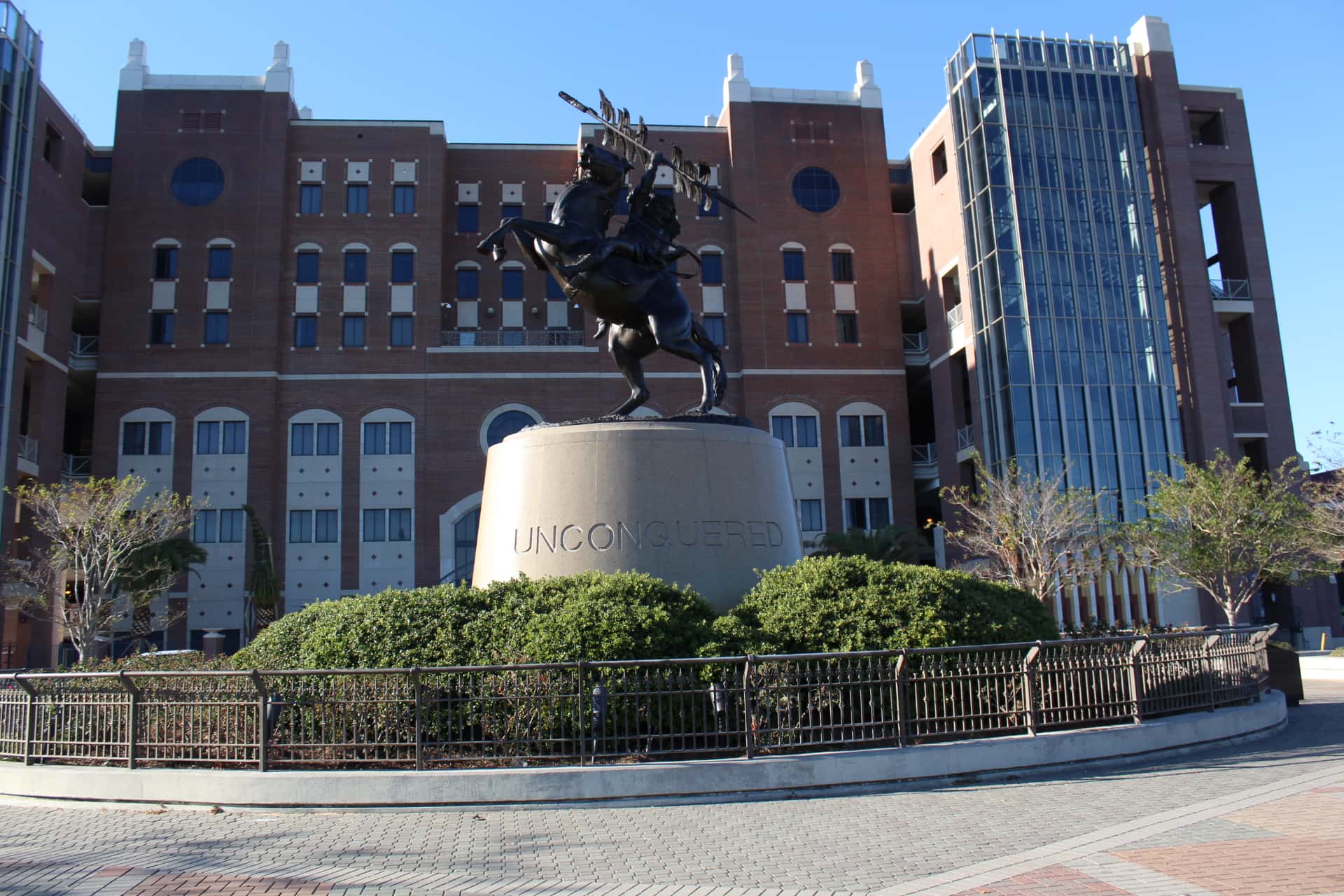
Florida State University is opening its fall semester with nearly 6,000 first-year students, a class arriving as the institution marks its 175th anniversary. Graduate programs will enroll about 3,200 new students this fall, bringing total graduate enrollment to nearly 11,000 across the university.
The numbers reflect a decade of steady growth in both size and selectivity at Florida's second-largest public research university, and they arrive at a moment when Florida's higher education system is navigating leadership turnover, legislative scrutiny and a state labor market that has weakened for the graduates it produces.
For Tallahassee, where the university is the dominant economic institution, the arrival of a class this size is also a municipal event: housing, transportation and local business activity all shift when tens of thousands of students return.
The incoming class
The Class of 2030 numbers close to 6,000 first-year students. FSU has generally held first-year enrollment near that level in recent years while raising admission standards, a pattern common across Florida's flagship institutions as application volume has grown faster than capacity.
Graduate enrollment tells a different story. About 3,200 new graduate students this fall push total graduate enrollment toward 11,000, a figure that reflects deliberate expansion. Graduate programs are central to research capacity, and universities pursuing higher research standing generally grow doctoral and master's enrollment.
University President Richard McCullough framed the moment in terms of momentum, saying the institution has set records each year over the past five years in student success, research and community impact. Institutional leaders describing their own institutions are advocates rather than neutral evaluators, though FSU's rankings and research expenditure trends have moved upward over that period.
The 175th anniversary places the university's founding in 1851, predating Florida's Civil War era and making it among the oldest continuously operating institutions of higher education in the state.
Florida's higher education landscape
FSU's stability contrasts with turnover elsewhere in the system. The FSU Board of Trustees voted to retain its president during a period when several other Florida institutions changed leadership, in some cases amid public disputes over the selection process.
The University of Florida's presidential search concluded this year with the selection of Stuart R. Bell, formerly president of the University of Alabama, after a process that included a delay in Board of Governors confirmation and public disagreement over the choice.
Florida's public university system operates under the Board of Governors, with individual boards of trustees at each institution. Appointments to both bodies are made by the governor and the Board of Governors, which has made university governance a more politically visible arena in Florida than in most states.
The Legislature has also been active in higher education policy, enacting changes to tenure review, general education curriculum requirements and diversity program funding over recent sessions.
What it means for students and families
Florida remains among the least expensive states in the country for in-state public university tuition. Undergraduate tuition and fees at FSU for Florida residents run well below the national average for public four-year institutions, and the Legislature has not approved a base tuition increase in more than a decade.
Bright Futures, the state's lottery-funded merit scholarship program, covers a substantial portion of tuition for students who meet its academic thresholds. That combination means a significant share of Florida students graduate from state universities with relatively low debt by national standards.
Housing is the cost that has moved. Tallahassee rents have risen substantially over the past five years, and on-campus housing capacity at FSU has not grown proportionally with enrollment. Off-campus housing costs now represent the largest variable expense for many students.
The employment picture for graduates has weakened. Florida's unemployment rate has moved above 4% this year, with losses concentrated in high-wage sectors including finance and information that have historically absorbed university graduates.
The research question
Research expenditure is the metric that determines institutional standing in the categories universities compete in, and FSU has grown its research activity substantially over the past decade.
The university's research portfolio includes the National High Magnetic Field Laboratory, the only facility of its kind in the United States, along with programs in materials science, oceanography and medicine. FSU Health represents a more recent expansion into clinical enterprise.
State research funding matters directly here. Florida's cancer research programs, including the Cancer Innovation Fund from which the governor announced $60 million in awards this week, are among the state-level sources that Florida institutions compete for.
Federal research funding remains the larger stream, and changes in federal agency budgets and indirect cost policies affect Florida universities as they do institutions nationally.
The Tallahassee effect
Tallahassee's economy rests on two pillars: state government and higher education. Between FSU, Florida A&M University and Tallahassee State College, the city's student population represents a substantial share of its total population during the academic year.
That produces a distinctive seasonal economy. Restaurant, retail and service employment expand when students return and contract when they leave, and local businesses structure their operations around the academic calendar.
Housing markets in Tallahassee are similarly shaped by student demand, with purpose-built student housing representing a large share of recent multifamily construction and with rents responding to enrollment changes.
Athletics adds another layer. FSU football home games bring tens of thousands of visitors to a city of roughly 200,000, generating hotel and restaurant activity concentrated into a handful of fall weekends.
Selectivity and access
Florida's flagship universities have become substantially more selective over the past decade, driven by application growth that has outpaced capacity expansion. Admitted student academic profiles at FSU and the University of Florida have risen accordingly.
That trend creates a policy tension the state has not resolved. Rising selectivity at the flagships pushes more Florida students toward regional universities and state colleges, which is a defensible outcome if those institutions are well funded, and a problem if they are not.
Florida's 2+2 pathway, under which students complete an associate degree at a state college and transfer with guaranteed admission to a state university, is the structural mechanism the state uses to manage this. The pathway works well for students who use it deliberately and less well for those who arrive at it after a rejection.
Bright Futures eligibility thresholds also interact with selectivity. The scholarship is merit based, meaning the students most likely to receive full awards are also the students most likely to gain flagship admission, which concentrates the benefit.
What research standing requires
Universities compete on research expenditure, doctoral production and faculty recognition, and those metrics move slowly. Building research capacity requires sustained investment across at least a decade, since the faculty hires that drive it take years to establish laboratories and win grants.
FSU's National High Magnetic Field Laboratory is the kind of asset that anchors a research portfolio. Facilities that exist nowhere else attract researchers who need them, and those researchers bring funding and graduate students.
FSU Health represents a newer direction. Clinical enterprise expansion connects a university to health system revenue and to the clinical research that follows patient volume, and it is the path several Florida institutions have pursued.
The constraint is that research expansion is expensive and the return is deferred. State funding decisions made on annual budget cycles do not naturally accommodate investments whose payoff arrives in a decade, which is why sustained legislative commitment matters more than any single appropriation.
What returning students face this fall
Housing is the practical concern for many students. Tallahassee rents have risen substantially, and on-campus capacity does not accommodate the full undergraduate population, which means most upperclassmen live off campus at market rates.
Textbook and course material costs have moderated somewhat through open educational resources and rental programs, but remain a meaningful expense on top of tuition and housing.
Employment prospects for graduating seniors have weakened relative to recent years. Florida has lost jobs in financial activities and information over the past twelve months, sectors that hire heavily from university graduating classes, and entry-level hiring slows before overall employment does.
Career services engagement earlier in the academic year is the standard advice in a softer market, since internship and full-time recruiting timelines run months ahead of graduation.
Athletics and the university
Florida State's athletic program operates at a scale that affects the institution's finances, visibility and community relationships in ways few other university functions do.
Conference realignment has reshaped college athletics repeatedly over the past decade, and Florida institutions have been central to those discussions. The revenue distributions that follow conference membership are large enough to influence institutional budgets.
Name, image and likeness compensation and the revenue-sharing arrangements that have followed have changed roster construction and the financial relationships between athletes and institutions. Those changes are still working through their implications.
For the university, athletics is also an admissions and fundraising channel. Applications and donations respond to athletic visibility, an effect documented across institutions, though its size is debated.
What's next
The fall semester runs through December. Enrollment figures reported at the census date will confirm the final class size, which typically differs somewhat from projections announced before classes begin.
The Board of Governors will continue reviewing institutional performance under the state's performance funding model, which allocates money based on metrics including graduation rates, employment outcomes and cost to the student.
The Legislature will take up higher education matters again in the next session, with tuition policy, performance funding and governance among the recurring topics.
For students arriving this month, the more immediate calendar is the academic one: add-drop deadlines, the first round of assessments, and for the roughly 6,000 first-year students, the transition that determines whether they return next fall. First-year retention is the metric that most reliably predicts eventual graduation.
Spotted an issue with this article?
Have something to say about this story?
Write us a letterComments
No comments yet. Be the first to weigh in.
Related Coverage

Broward School Board Weighs Next Round of Closures as Empty Seats Reach 61,000
13m ago

Boy dies after 120-pound display board falls on him at Palm Bay's Riviera Elementary
1d ago
Pinellas pulls Sexton Elementary from closure list as six schools face Oct. 13 vote
1d ago

Winter Haven School Bus Crash Kills 10th Grader and Jeep Driver After Car Crosses Center Line
2d ago