Gators Open Sumrall Era With a 66-21 Rout of Florida Atlantic
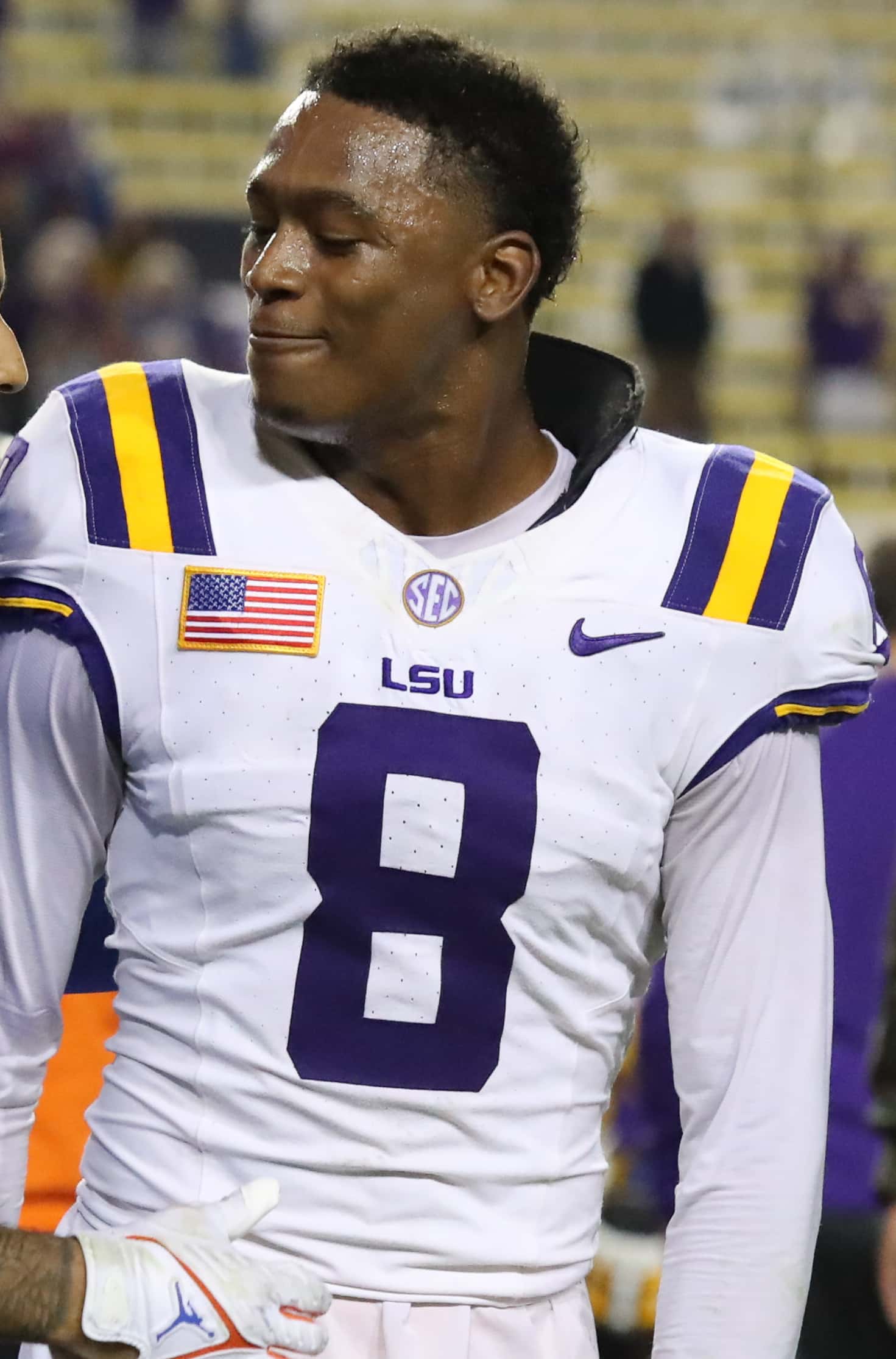
Florida opened the Jon Sumrall era at Ben Hill Griffin Stadium with a 66-21 win over Florida Atlantic, a result that gave the Gators their seventh consecutive victory in a new head coach's home debut. Running back Jadan Baugh carried the offense with 160 rushing yards and three touchdowns, and quarterback Aaron Philo threw for 275 yards and accounted for four total scores.
Sixty-six points is an emphatic number in any season opener, and it is a particularly loud one for a program that has spent much of the past decade searching for offensive identity. Whether it means anything about how Florida will fare in Southeastern Conference play is the question every Gators fan already knows to ask, because the SEC schedule that follows bears very little resemblance to an opener against an American Conference opponent.
What the game did establish is that the pieces Sumrall inherited and assembled work together at least against overmatched competition. Baugh and Philo both produced at a level that suggests a functional offense rather than a collection of individual talents, and the margin left the coaching staff room to play reserves in the second half.
What Baugh's afternoon means
A 160-yard, three-touchdown rushing performance is the kind of line that sets a tone for a season. Baugh's production came against a defense that could not consistently win at the line of scrimmage, which is the appropriate caveat, but volume rushing success in an opener does tell you something about how an offensive line is functioning as a unit.
Florida's recent history at running back has been a story of talent that arrived and then had to wait for blocking that never quite materialized. Whether this offensive line holds up against SEC defensive fronts is the question that will define the season, and the answer will come quickly once conference play begins.
Baugh's usage is also worth watching over the coming weeks. A back who carries a heavy early-season workload against lesser opponents can arrive at the difficult part of the schedule with accumulated wear, and how the staff distributes carries in the non-conference stretch tends to reveal how they plan to deploy him in November.
For a program that has needed a reliable identity on offense, an efficient ground game is a reasonable foundation. It controls tempo, protects a defense, and reduces the burden on a quarterback in hostile environments, all of which matter more in the SEC than anywhere else in college football.
Aaron Philo's debut
Philo's 275 passing yards and four total scores made for a clean opening statement. The more meaningful evaluation of a quarterback in a blowout is not the raw total but the decision-making, and a performance that produces four scores without visible disaster is what a coaching staff wants from a first start under a new system.
Quarterback play has been the central variable in Florida football for years. The program has cycled through starters, transfers, and schemes without finding sustained stability at the position, and that instability has propagated into recruiting, play-calling, and ultimately results.
One game against Florida Atlantic does not resolve that. It does mean the position is not an immediate crisis, which is a lower bar than Gators fans want but a real one given recent history.
The offense's balance is the encouraging detail. A team that runs for a big number and throws for 275 yards in the same game is not one-dimensional, and defenses preparing for Florida will have to account for both.
The Sumrall hire in context
Jon Sumrall arrived at Florida with a track record of turning around programs at Troy and Tulane, building teams known for physical defense and disciplined execution rather than for schematic novelty. That profile fits what Florida has needed, which is less a reinvention than a restoration of competence.
The seventh consecutive home debut win for a new Florida head coach is a fun statistic and close to a meaningless one predictively. New coaches almost always open at home against manageable opponents, and the record reflects scheduling convention more than program strength.
The real evaluation of the hire happens over three years, not three weeks. What an opener can show is whether a staff has the roster organized, whether the schemes are installed, and whether players understand their assignments. A 45-point win suggests all three, with the caveat about the level of opposition.
Florida's fan base has been through several coaching transitions in a short period, and patience is thin. A convincing opener buys goodwill that a narrow win would not have.
What it means for Florida football fans
Gainesville has a team worth watching again, at minimum. That is not a small thing for a fan base that has endured stretches where the product was genuinely difficult to sit through.
The schedule ahead will determine whether the opener was a signal or a mirage. Florida plays in the toughest division in college football, and the SEC has only gotten deeper with conference realignment. Winning games in that environment requires more than beating an American Conference opponent by 45.
For recruiting, a strong start matters. High school prospects and transfer portal candidates watch early results, and a program that looks organized and productive in September has an easier conversation in December and January than one that stumbles out of the gate.
For the broader Florida college football landscape, the Gators winning big is one part of an unusually strong opening for the state's flagship programs. Miami opened with a 45-6 win over Stanford, and Florida State beat New Mexico State 34-17 in its opener.
The state of Florida college football
The three major in-state programs all opened with wins, and two of them did so by more than 40 points. That is a better collective start than the state has had in several years, and it sets up a fall in which Florida, Florida State, and Miami all have plausible paths to relevance.
Miami entered the season ranked seventh and validated that ranking against Stanford, with quarterback Darian Mensah throwing five touchdown passes in his debut and receiver Malachi Toney setting a school record with 234 receiving yards. Florida State's win over New Mexico State was more workmanlike, and the Seminoles face a much steeper test against SMU.
Non-conference results in early September are a weak signal, but the rivalry games later in the season are what determine how the state's programs are ultimately measured against each other. Miami and Florida State meet on October 17.
For the state's high school pipeline, which produces as much Division I talent as anywhere in the country, having all three flagship programs competitive at once changes the recruiting calculus in ways that compound over multiple cycles.
What an opener can and cannot tell you
Season openers against overmatched opponents generate more confident conclusions than they support, and it is worth being precise about which parts of a 45-point win carry real information.
What does transfer: execution of assignments, penalty discipline, whether the team looked prepared, whether substitution patterns suggested confidence in depth, and whether players appeared to understand a new system. Those are process indicators that hold regardless of opponent quality.
What does not transfer: raw production totals. Rushing yards against a defense that cannot hold the point of attack say very little about rushing yards against an SEC front. Passing efficiency against secondary talent that will not play on Sundays says little about efficiency against defensive backs who will.
The most useful single observation from a game like this is often what a coaching staff chose to run rather than how it worked. Play-calling in a blowout reveals what a staff wants its identity to be, because a comfortable lead allows them to practice the offense they intend to use rather than doing whatever is necessary to win.
Florida ran the ball for a big number and threw for 275 yards, which describes a staff that wants balance rather than a scheme built around a single strength.
The SEC schedule ahead
The Southeastern Conference after realignment is deeper than it has ever been, with the addition of Texas and Oklahoma to a league that already contained multiple perennial national contenders. Florida plays in that environment every week from the start of conference play.
The specific difficulty is defensive line play. SEC programs recruit and develop defensive fronts at a level no other conference matches consistently, and that is precisely the matchup that determines whether a rushing attack like the one Florida showed against Florida Atlantic remains viable.
Road environments are the second factor. SEC stadiums are among the loudest in the country, and offensive communication degrades in ways that produce procedural penalties, missed protection calls, and broken plays. A quarterback making his early starts in a new system faces that test repeatedly.
The expanded College Football Playoff has changed what a successful SEC season looks like. A team can lose two conference games and remain in playoff contention, which was not true under the four-team format. That gives a program in Florida's position a realistic path that did not previously exist.
The measure for this season is probably whether Florida is competitive in games it is not favored to win, rather than whether it wins them all.
What's next
Florida's schedule moves toward the SEC portion, and the tests that follow will be nothing like the opener. The Gators will face defensive fronts that can win at the line of scrimmage, which is the specific condition under which Baugh's production will be genuinely evaluated.
The immediate questions for the coaching staff are health and depth. A 45-point win allows reserves to play meaningful snaps, which builds depth for a conference schedule that inevitably produces injuries.
For fans, the calibration point is the first genuine road test. Beating a lesser opponent at home in Gainesville is the expected outcome. Winning in a hostile SEC stadium is the thing Florida has not done consistently in years, and it is the measure that will define the Sumrall era's first season.
Spotted an issue with this article?
Have something to say about this story?
Write us a letterComments
No comments yet. Be the first to weigh in.
Related Coverage

Brandon Hagel Scores Twice in Final Two Minutes for Hat Trick as Lightning Beat Islanders 5-3
8h ago

Kirill Kaprizov's Hat Trick Spoils Panthers' Home Opener as Wild Win 4-1 in Sunrise
1d ago

Rays Draw Guardians in ALCS After Cleveland's Game 5 Win; Drew Rasmussen Lined Up for Game 1 Monday
2d ago

John Carlson scores twice, Dennis Hildeby makes 34 saves as Lightning hold off Wild 3-2
2d ago