Heat Head Toward Camp With a Rebuilt Roster Around Giannis Antetokounmpo
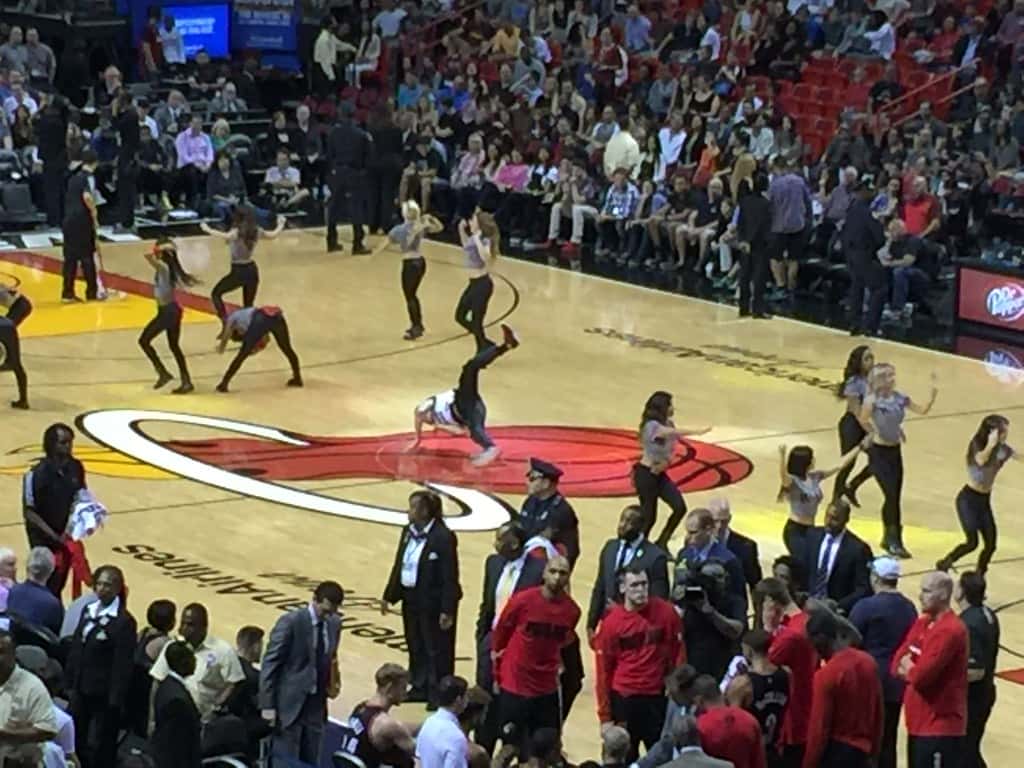
The Miami Heat enter the final stretch before training camp having executed the most consequential offseason in the franchise since its last championship era began. Miami acquired Giannis Antetokounmpo, who was introduced at a press conference alongside team president Pat Riley and head coach Erik Spoelstra, and followed that move by reshaping much of the surrounding roster.
The context makes the aggressiveness understandable. Miami missed the playoffs last season despite production from Bam Adebayo and Norman Powell, an outcome that fell short of the standard the organization has set over the past decade and that left the front office with a decision about whether to retool or to make a franchise-altering move.
They made the move. For South Florida, it converts a team that had drifted toward the middle of the Eastern Conference into one that will be evaluated against a different standard from the opening night of the season.
What Miami added
Antetokounmpo is the centerpiece. A player of his caliber changes the geometry of an offense before any scheme is drawn, because defenses must account for him in transition and on drives in ways that create space for everyone else on the floor. His arrival also changes what Miami needs from the rest of the roster.
The Heat added Bobby Portis, a former Milwaukee teammate, which brings both frontcourt depth and familiarity with how Antetokounmpo plays. Reports around the team indicate Miami is also likely to add Nick Richards as a backup big man before camp opens, though that move has not been confirmed as complete.
Adebayo remains the defensive anchor and the player whose fit alongside Antetokounmpo will define what the team can be. Both are frontcourt players whose value derives substantially from defensive versatility, and pairing them creates the possibility of a defense that switches across nearly every matchup. It also raises the question of spacing, since neither is a high-volume perimeter shooter.
Powell provides the perimeter scoring that a frontcourt-heavy roster requires. How Spoelstra distributes shots and floor spacing between the interior and the perimeter is the central schematic problem of the season.
The Heat culture question
Miami has built its identity around player development and organizational discipline, frequently turning undrafted and overlooked players into rotation contributors. That approach produced deep playoff runs from rosters that were not, on paper, among the conference's most talented.
Adding a superstar changes that equation. The development pipeline that turned marginal players into contributors matters less when the roster is built around an established elite player, and the coaching challenge shifts from maximizing limited talent to integrating substantial talent.
Spoelstra has managed both versions of this problem. He coached a roster built around three max-contract players during the early 2010s and has since coached teams that reached the Finals with far less individual talent. Miami is betting that experience translates to the current construction.
Riley has been the constant across both eras, and the willingness to move decisively for a franchise player is consistent with how he has operated for decades. The offseason reflects an organization that concluded incremental improvement was not going to be sufficient.
The Eastern Conference picture
The conference has been in flux, with several contenders reshaping rosters and others working through injuries to central players. That volatility is part of what made an aggressive move sensible: a conference without a settled favorite rewards the team willing to concentrate talent.
Orlando took the opposite approach. The Magic largely retained last season's roster and are betting on improved health and a new voice, with Sean Sweeney taking over as head coach. Orlando's offseason moves included waiving forward Jonathan Isaac and absorbing a partial guarantee before re-signing him at the minimum, a transaction that freed money while retaining the player.
The two Florida franchises therefore enter the season on divergent paths, one betting on a star acquisition and the other on internal development and continuity. They meet multiple times, and the state's two NBA markets have a clearer contrast between organizational philosophies than they have had in years.
What it means for Florida basketball fans
South Florida gets a team that will be nationally scheduled and nationally scrutinized. Star acquisitions bring national television slots, which changes how accessible the team is to fans across the state and how much attention it draws outside the market.
Ticket demand responds accordingly. Games featuring a player of Antetokounmpo's stature draw higher attendance and secondary market pricing, both at home and on the road, which affects what fans pay to attend.
For Orlando fans, the Magic's continuity approach means the evaluation is different. Success there looks like a healthier roster, improved offensive efficiency and a coaching change that produces measurable results, rather than a reshaped depth chart.
Local impact across the state
Florida supports two NBA franchises in markets with different profiles. Miami has the longer championship history and the larger national brand, while Orlando's market is more concentrated on its single professional franchise given the region's sports landscape.
Both markets compete with football for attention during the opening months of the NBA calendar, which is a persistent challenge for basketball in Florida. The season begins during college and professional football, and basketball generally does not command the state's full attention until the new year.
College basketball adds another layer. Florida programs have produced national contenders in recent years, and the state's basketball attention divides across professional and college schedules from November onward.
The salary cap arithmetic
Acquiring a player of Antetokounmpo's contract size consumes a very large share of a team's payroll, and the collective bargaining agreement imposes escalating restrictions on teams above defined spending thresholds. Those restrictions limit the tools available for adding further talent.
Teams above the higher tax apron face constraints on aggregating salaries in trades, on using midlevel exceptions and on taking back more salary than they send out. The practical effect is that a roster built around expensive stars must fill its remaining spots with minimum contracts and drafted players.
That explains the pattern in Miami's supplementary moves. Adding a frontcourt veteran and pursuing a backup center on modest terms is the kind of roster building available to a team in this position, and it places substantial weight on internal development for the rotation beyond the top of the roster.
Orlando's approach reflects the opposite position. Waiving a player and absorbing a partial guarantee before re-signing him at the minimum is a transaction that creates flexibility, which is available to a team not operating against the aprons.
What has to go right
Several things must break correctly for a roster built this way to reach its ceiling. Health is the first and the least controllable, since a team with concentrated talent has less capacity to absorb an extended absence than one with distributed production.
Spacing is the schematic question. A frontcourt pairing of two players whose primary value is interior and defensive requires shooting from the perimeter positions, and the quality of that shooting determines whether the offense functions or stalls in crowded paint situations.
Defensive identity is the element most likely to translate immediately. Miami has consistently fielded organized defenses, and adding a defender of Antetokounmpo's versatility to a unit anchored by Adebayo provides a foundation that does not depend on offensive fit being solved first.
Chemistry is the intangible that determines the rest. Rosters assembled quickly around a star acquisition sometimes cohere within weeks and sometimes require most of a season, and Miami's organizational track record with integration is the reason the front office was willing to make the bet.
What a star acquisition costs beyond salary
Trades of this magnitude are paid for in assets as well as money. Acquiring an established elite player generally requires sending out young players, draft picks or both, which reduces the acquiring team's ability to replenish its roster in subsequent years.
That tradeoff sets a window. A team that spends its future assets to acquire a star is committing to compete during that player's remaining prime years, because the mechanisms for rebuilding afterward have been spent in advance. Front offices that make these moves generally do so with a defined multi-year horizon in mind.
Miami's organizational history suggests comfort with that structure. The franchise has repeatedly concentrated resources around star players and accepted the subsequent constraints, and it has generally managed the transitions between eras more smoothly than most teams that follow the same approach.
Age is the clock running underneath all of it. Elite production in the NBA has a finite span, and a team acquiring an established star is buying the remaining seasons of that span rather than a full career. Roster decisions made around such a player are therefore made against a shrinking window rather than an open one.
The alternative path, which Orlando has chosen, preserves assets and flexibility at the cost of a lower ceiling in any given season. Neither approach is inherently correct, and the two Florida franchises now provide a direct comparison over the next several years.
What is next
Training camps open in the fall, and the immediate questions are about fit rather than talent. How Antetokounmpo and Adebayo share the frontcourt, who takes the perimeter shots that spacing requires and how the rotation settles are all questions that preseason begins to answer.
Roster construction is not finished. Teams routinely make additions between now and opening night, and Miami has been linked to further frontcourt depth. Final roster spots and two-way contracts are typically resolved in the weeks immediately before the season.
The season itself is the only real test. An offseason can be evaluated in October by anyone, but a roster built around a star acquisition is ultimately measured in the spring, and Miami has structured this one to be judged by that standard.
Spotted an issue with this article?
Have something to say about this story?
Write us a letterComments
No comments yet. Be the first to weigh in.
Related Coverage
Orlando City Edges Columbus Crew 3-2 on Iván Angulo's Late Winner and Maxime Crépeau's Record 12 Saves
1h ago

Inter Miami Routs D.C. United 4-0 as Messi and Suárez Score Twice Each, Climbs to Second in the East
1h ago
Brandon Hagel Scores Twice in Final Two Minutes for Hat Trick as Lightning Beat Islanders 5-3
1d ago
Kirill Kaprizov's Hat Trick Spoils Panthers' Home Opener as Wild Win 4-1 in Sunrise
2d ago