Florida Locally Acquired Dengue Cases Climb Past 100 Across Six Counties
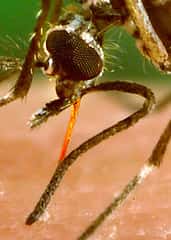
Florida has recorded 111 locally acquired dengue cases and 16 positive mosquito pools across six counties this year, according to state arbovirus surveillance reporting from early September, a total that has climbed steadily through the summer and now exceeds the count for the same period in most recent years. County health departments have issued mosquito-borne illness advisories in Orange and Hillsborough counties, and the state surgeon general appeared in Hillsborough in early September to urge residents to take precautions.
Locally acquired means the infection was transmitted by mosquitoes within Florida rather than picked up during travel. That distinction is the one that matters for public health response, because it indicates the virus is circulating in local mosquito populations rather than arriving with returning travelers. Florida has also reported 109 travel-associated dengue cases in 2026.
The trajectory through the summer was steep. By mid-August, the state had recorded 23 locally acquired cases and five positive mosquito pools in four counties. By late August, that had risen to 73 cases and 14 pools in five counties. By early September the count reached 111 cases and 16 pools in six counties, roughly a fivefold increase in three weeks.
What dengue is and why it matters here
Dengue is a viral illness transmitted primarily by Aedes aegypti mosquitoes, a species well established across Florida. Most infections produce fever, severe headache, pain behind the eyes, joint and muscle pain, and rash. A minority of cases progress to severe dengue, which involves plasma leakage, bleeding, and organ impairment, and which requires hospitalization.
Risk of severe disease is higher on a second infection with a different dengue serotype than on a first infection, a phenomenon called antibody-dependent enhancement. That matters in a state with a large population of residents who have lived in or traveled frequently to dengue-endemic regions in the Caribbean and Latin America, because a meaningful share of Florida residents may carry prior exposure.
There is no specific antiviral treatment. Clinical management is supportive, focused on fluid balance and monitoring for warning signs. Aspirin and non-steroidal anti-inflammatory drugs are generally avoided because of bleeding risk, which is a practical point for anyone treating what feels like flu in an area under an advisory.
The Aedes aegypti problem
What makes dengue difficult to control in Florida is the biology of the vector. Aedes aegypti breeds in small containers of standing water close to human housing: plant saucers, bromeliads, buckets, clogged gutters, tarps, discarded tires, pet bowls, and the corrugated drainage pipe common under South Florida driveways. It does not require marsh or pond habitat.
The species bites during daylight hours, particularly early morning and late afternoon, which defeats the assumption that dusk is the dangerous window. It also tends to feed on multiple people during a single blood meal, which increases transmission efficiency relative to mosquito species that feed once and rest.
Because the breeding habitat is largely on private property in containers that hold only a small amount of water, aerial and truck-mounted spraying alone does not eliminate populations. Mosquito control districts across Florida run source reduction and inspection programs for this reason, and the standard public health message is that residents dumping standing water weekly does more than spraying.
The advisories in Orange and Hillsborough
The Florida Department of Health in Orange County issued a mosquito-borne illness advisory in late August after an increase in mosquito-borne disease activity, including sentinel chickens testing positive for West Nile virus, and updated it on September 2 following a confirmed human case of locally acquired dengue in the county.
Sentinel chicken surveillance is a longstanding Florida tool. Flocks are placed in fixed locations and tested regularly for antibodies to arboviruses. Because the birds do not develop illness and do not transmit the virus onward, a seroconversion functions as an early warning that virus is circulating in local mosquitoes before human cases appear.
In Hillsborough County, the state surgeon general joined local officials in early September to urge residents to take steps against mosquito-borne illness ahead of a holiday weekend that draws people outdoors. The county health department separately issued a rabies alert on September 14 after a confirmed rabies case in an unvaccinated cat in the Gibsonton area, an unrelated but concurrent animal-borne disease warning.
Florida's broader arbovirus picture
State surveillance tracks a wider set of pathogens than dengue alone. The endemic mosquito-borne viruses monitored in Florida include West Nile virus, Eastern equine encephalitis virus and St. Louis encephalitis virus. Exotic viruses under surveillance include dengue, chikungunya, Zika and California encephalitis group viruses, along with malaria, a parasitic mosquito-borne disease that Florida has recorded in locally acquired form in recent years.
Eastern equine encephalitis is rare but has a high fatality rate and significant neurological sequelae in survivors, and Florida's warm season transmission window for it runs long. West Nile is more common and usually mild or asymptomatic, though it can cause serious neuroinvasive disease in older adults.
The state publishes weekly arbovirus surveillance reports that break activity down by county and by pathogen. Those reports are the primary source for anyone tracking local risk, and they are more current than most secondary coverage.
What Floridians can do
The standard guidance is straightforward and effective. Drain standing water around the home at least weekly, including plant saucers, birdbaths, buckets, tarps, toys and gutters. Cover skin with clothing when practical, and use repellents registered for the purpose containing DEET, picaridin, oil of lemon eucalyptus or IR3535, applied according to label directions.
Repair window and door screens, and keep doors closed. Aedes aegypti readily enters homes and will rest indoors, so indoor biting is common and the assumption that being inside means being safe does not hold for this species.
Anyone developing fever with severe headache, eye pain, joint or muscle pain, or rash within two weeks of being in an area with reported dengue activity should contact a clinician and mention the exposure, since dengue is frequently misdiagnosed as influenza or another viral syndrome when the possibility is not raised.
How Florida controls mosquitoes
Florida operates one of the most extensive mosquito control infrastructures in the country, organized largely through independent special districts and county programs with taxing authority. That structure dates to the mid-twentieth century, when mosquito abundance was a genuine obstacle to the state's development.
Control operations use an integrated approach. Surveillance traps monitor species composition and abundance. Larvicides applied to standing water kill immature mosquitoes before they emerge. Adulticides applied by truck-mounted foggers or aircraft target flying adults during outbreak response.
For Aedes aegypti specifically, none of that is sufficient alone. Because the species breeds in small artificial containers on private property and rests indoors, control depends on inspection and source reduction at the household level, which requires either resident cooperation or door-to-door work by inspectors.
Novel approaches have been trialed in Florida, including releases of male mosquitoes carrying genetic modifications intended to suppress local populations. Those trials, conducted in the Keys and elsewhere, have been scientifically promising and locally controversial.
Florida's history with mosquito-borne disease
Dengue is not new to Florida. The state experienced substantial dengue outbreaks in the late nineteenth and early twentieth centuries, and yellow fever, transmitted by the same mosquito species, repeatedly devastated Florida cities before mosquito control and vaccination.
Those diseases receded because of drainage, screening, and organized mosquito control rather than because the vector disappeared. Aedes aegypti remained established throughout, which means the conditions for transmission have always been present and the limiting factor has been introduction of the virus.
Modern travel volume changes that calculation. Florida receives enormous numbers of travelers from dengue-endemic regions, and each infected traveler represents a potential introduction. The 109 travel-associated cases reported this year are the pipeline; the 111 locally acquired cases are what happens when introductions meet a competent vector population.
Florida also recorded locally acquired malaria cases in recent years, the first local transmission in the United States in two decades, which underscored the same point about vector competence and introduction pressure.
The rabies alert in Hillsborough
Separate from the mosquito advisories, the Florida Department of Health in Hillsborough County issued a rabies alert after a confirmed rabies case in a cat with no known vaccination history that was killed in the Gibsonton area on September 11.
Rabies alerts in Florida typically cover a defined radius around the confirmed case for a set period, and they carry standard guidance: avoid contact with wild or stray animals, keep pets vaccinated and confined, and report animal bites to the health department immediately.
Raccoons, bats and foxes are the primary reservoir species in Florida. Domestic animals become infected through contact with wildlife, and an unvaccinated outdoor cat is a common bridge between the wildlife reservoir and human exposure.
What's next
Dengue transmission in Florida typically tracks the warm, wet season and declines as temperatures and rainfall drop, which means the coming weeks through October are the remaining high-risk window before seasonal decline. Whether the case count continues its summer trajectory or plateaus will be visible in the weekly surveillance reports.
Local mosquito control districts in the affected counties will continue source reduction, larviciding and adulticiding operations, and several have expanded door-to-door inspection in neighborhoods with confirmed cases. Residents in advisory areas may see increased spraying activity and inspection crews.
The longer-term question for Florida is whether locally acquired dengue is becoming an annual expectation rather than an intermittent event. Case counts have risen in several recent years, and the combination of established vector populations, high travel volume to endemic regions and a warming climate points toward a persistent rather than episodic risk. That would have implications for clinician training, for mosquito control funding, and eventually for vaccine policy, an area where dengue vaccines carry complications tied to prior infection status.
Spotted an issue with this article?
Have something to say about this story?
Write us a letterComments
No comments yet. Be the first to weigh in.
Related Coverage

DeSantis Says Florida Fentanyl Deaths Fell Nearly 60% Since 2023, Crediting State's Trafficking Crackdown
7h ago
Miami Archbishop Thomas Wenski Accuses AG James Uthmeier of 'Classic Bullying' Over Catholic School Vaccine Rules
1d ago

Florida AG Uthmeier subpoenas Performance Food Group as potassium bromate probe widens
4d ago

Manatee Mosquito Control Pilot Killed After Helicopter Strikes Unlit Radio Tower in Myakka City
5d ago