ICE Seeks 700 More Detention Beds in South Florida as Local Deals Expand
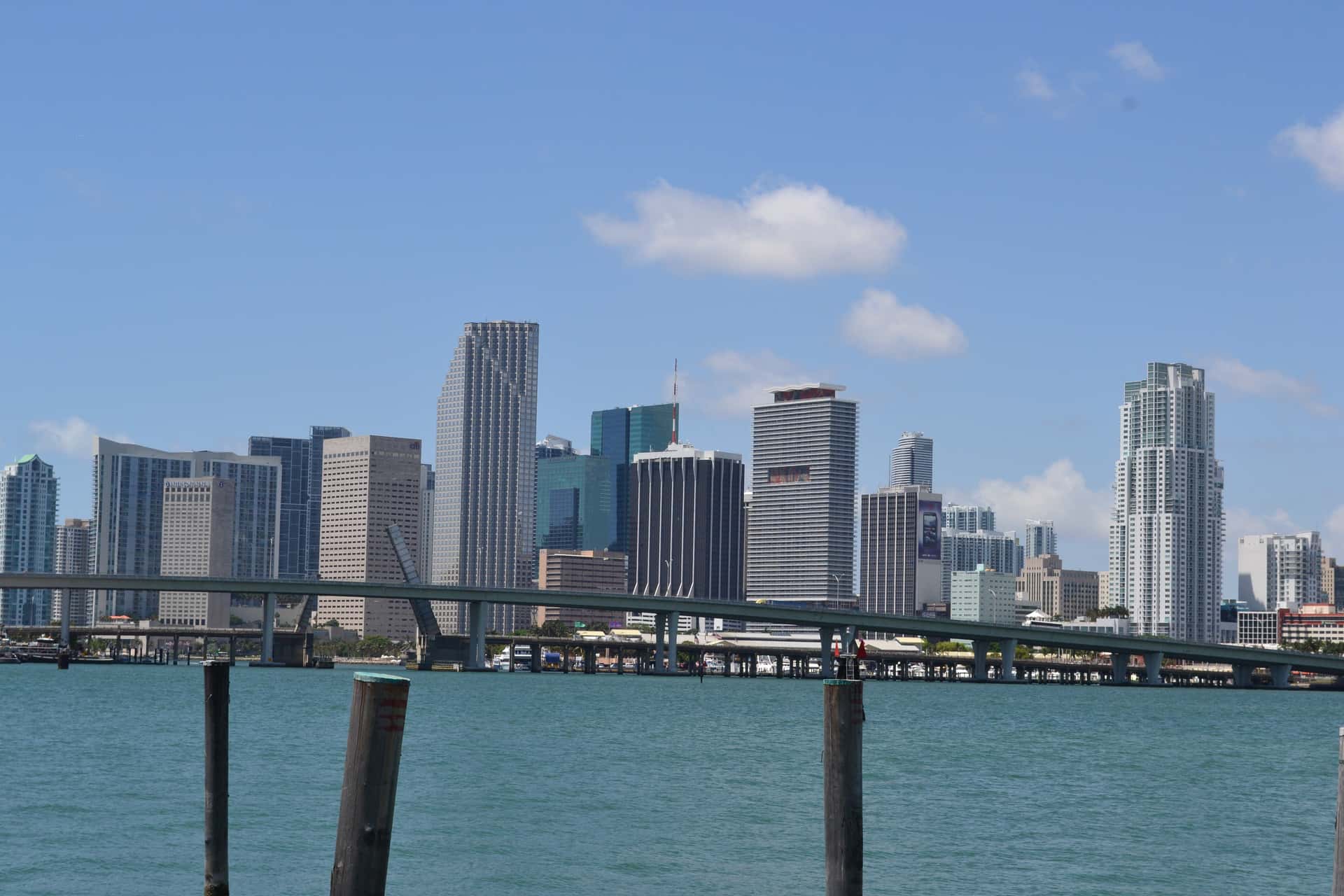
U.S. Immigration and Customs Enforcement is seeking at least 700 additional detention beds in South Florida, according to procurement records reported in late July that describe a search for a turnkey facility within 50 driving miles of the agency's Miami Field Office. The expansion comes as Florida has built the largest network of local immigration enforcement partnerships in the country.
Florida now has 327 agreements under the 287(g) program, which allows state and local agencies to perform certain immigration enforcement functions under federal supervision. That total represents a 577 percent increase since January 20 of last year and gives Florida more such agreements than any other state by a wide margin.
As of late July, roughly 4,300 people were being held in ICE custody in Florida. Immigration advocates have described a surge in arrests and detentions across South Florida, and community organizations have stepped up know-your-rights outreach in response.
What 287(g) does
Section 287(g) of the Immigration and Nationality Act permits the Department of Homeland Security to delegate specified immigration enforcement authority to state and local law enforcement officers. The agreements come in several models with different scopes.
The jail enforcement model allows officers to identify and process people already in local custody for immigration violations. The task force model, which was largely discontinued for years before being revived, permits officers to make immigration arrests in the field during their routine duties. A warrant service officer model allows local officers to execute administrative immigration warrants inside jails.
Florida's participation extends unusually far beyond sheriffs and police departments. At least 17 colleges and universities in the state have agreements with ICE, along with state agencies including the Department of Environmental Protection and the Department of Financial Services. Those agencies alone have logged more than 800 immigration stops and arrests since August 2025.
State law has driven much of the expansion. Florida legislation has required certain agencies to enter into agreements and has restricted local governments from adopting sanctuary policies, removing the discretion that produces variation in other states.
The detention capacity question
Detention capacity is the binding constraint on immigration enforcement volume. Arrests exceed available beds in many regions, and the agency responds by transferring detainees across state lines, releasing people on supervision, or expanding capacity through contracts.
The South Florida search for a turnkey facility, meaning one already built and operable rather than requiring construction, reflects the urgency. Building a detention facility takes years; contracting for an existing one takes months.
Florida already hosts substantial detention capacity, including the Krome Service Processing Center in Miami-Dade County, the Broward Transitional Center in Pompano Beach, and county jail space used under intergovernmental agreements. Advocacy organizations and oversight bodies have documented conditions concerns at multiple facilities.
The state also operated a detention facility in the Everglades that was the subject of federal litigation, with a district judge having ordered its closure on environmental grounds. That case illustrated how quickly detention capacity questions become legal ones.
What it means for Florida communities
Florida has one of the largest immigrant populations in the country. Roughly one in five Florida residents was born outside the United States, and in Miami-Dade County the figure exceeds half. Those communities include large populations from Cuba, Haiti, Venezuela, Nicaragua, Colombia, and Mexico, with widely varying immigration statuses.
Enforcement at the current scale reaches into the ordinary functioning of those communities. Employers in agriculture, construction, hospitality, and landscaping have reported labor availability problems. School districts have reported attendance effects. Health care providers have reported patients avoiding care.
The economic dimension is significant. Florida's agriculture sector depends heavily on immigrant labor, and construction, which the state needs at scale to address its housing shortage, has a workforce with substantial immigrant participation. Industry groups have raised these concerns in Tallahassee without changing policy direction.
Law enforcement leaders have expressed divided views. Some sheriffs have embraced the agreements as a public safety tool. Others have raised concerns that immigration enforcement responsibilities damage the community cooperation that ordinary policing depends on, particularly the willingness of witnesses and crime victims to come forward.
The legal landscape
Florida's own immigration enforcement statute, SB 4-C, which made it a crime for people who entered the country unlawfully to enter or remain in Florida, was blocked by a federal district judge in Miami. The Supreme Court declined Florida's request to allow enforcement while the litigation proceeded.
That case also produced a contempt proceeding after the attorney general's office communicated to law enforcement that officers could continue enforcing the law notwithstanding the injunction, a dispute that drew national attention to the boundaries of state authority in immigration.
The core constitutional question is preemption. Immigration is a federal power, and states may assist federal enforcement but generally may not create parallel immigration crimes or enforcement regimes. The 287(g) program is designed to operate within that framework by having local officers act under federal authority rather than state authority.
Additional litigation has concerned detention conditions, access to counsel, and arrests at or near immigration courthouses, with a federal judge having barred certain courthouse arrest practices and limits on prolonged detention.
The federal policy backdrop
The scale of enforcement reflects federal policy priorities set in Washington, with Florida serving as the most willing state partner. The relationship is reciprocal: federal capacity determines how many people can be detained and removed, and state cooperation determines how many are identified and turned over.
Florida's congressional delegation has been broadly supportive of the enforcement expansion, though members representing districts with large immigrant populations have raised specific concerns, including about facility siting.
Funding runs through DHS appropriations, and detention capacity expansion requires either appropriated funds or reallocation within the agency's budget. Congressional appropriations decisions therefore set the ceiling on how far the expansion can go.
Florida's own expenditures on immigration enforcement, including state agency participation and transport operations, come from the state budget and have been subject to legislative scrutiny.
Who Florida's immigrant communities are
Policy discussion often treats immigration as a single category, but Florida's immigrant population is unusually varied in origin and in legal status, and those differences determine who is exposed to enforcement.
Cuban Americans constitute the largest and most politically established group, concentrated in Miami-Dade County. For decades, Cuban arrivals benefited from adjustment provisions unavailable to other nationalities, which produced a community with high rates of citizenship and permanent residency. More recent arrivals have faced a different framework.
Haitian Americans, concentrated in Miami-Dade, Broward, and Palm Beach counties, have historically received far less favorable treatment, and status for many has depended on temporary humanitarian designations that are subject to periodic renewal decisions.
Venezuelan and Nicaraguan communities grew rapidly over the past decade, concentrated in Doral, Weston, and surrounding areas. Many arrived under humanitarian parole or temporary protected status, categories that provide lawful presence without a path to permanent residency and that can be terminated by policy change.
Mexican and Central American workers form a substantial share of the agricultural workforce in Immokalee, Homestead, and the interior farming counties, along with construction and landscaping labor statewide. This population includes the highest proportion without lawful status and is therefore the most directly exposed to enforcement activity.
How detention capacity gets built
ICE does not generally construct its own facilities. The agency's detention footprint is assembled through three mechanisms, and each carries different oversight implications.
The first is direct federal operation, of which the Krome Service Processing Center in Miami-Dade is Florida's example. These facilities are staffed by federal employees and subject to federal detention standards enforced through internal inspection.
The second is contracts with private corrections companies, which operate a substantial share of national detention capacity. Those contracts are competitively awarded and have been the subject of persistent litigation and oversight reporting regarding conditions, medical care, and grievance procedures.
The third is intergovernmental service agreements with county jails, under which a sheriff's office houses federal detainees for a per-diem payment. These arrangements are attractive to counties with excess jail capacity because they convert a fixed cost into revenue, and they are the mechanism most likely to expand quickly since the facilities already exist. Oversight in that model runs through the county as much as through the federal government, which advocacy groups have identified as a gap.
What's next
County commissions considering intergovernmental service agreements are required to act in public session, which gives residents a formal opportunity to comment before a jurisdiction commits jail capacity to federal detention.
Employers in agriculture, construction, and hospitality have been advised by industry associations to review employment verification practices, since enforcement activity has included worksite operations alongside individual arrests.
The ICE procurement process for the South Florida beds will produce a contract award, and the location of any selected facility will become a local issue in whichever community it lands in. Detention facility siting has generated substantial local opposition in multiple Florida communities.
Litigation over Florida's immigration statute continues on appeal, and the outcome will determine the boundaries of state authority going forward. A ruling either way would have implications well beyond Florida.
The 287(g) agreement count is likely to continue rising given state statutory requirements. Whether the arrest and detention volume rises proportionally depends on federal capacity.
For Florida residents, the practical guidance from legal aid organizations remains constant: know your rights during encounters with law enforcement, keep documentation accessible, and have a family plan. Those organizations publish materials in Spanish and Haitian Creole alongside English across South Florida.
School districts in South Florida have reiterated that enrollment does not depend on immigration status, a principle established by the Supreme Court in Plyler v. Doe, and districts have published guidance for families concerned about attendance.
Health systems have made similar statements regarding emergency care, which federal law requires hospitals to provide regardless of status or ability to pay.
Spotted an issue with this article?
Have something to say about this story?
Write a letter to the editor