Miami-Dade School Board Weighs Proof of Citizenship Requirement for Dual Enrollment Students
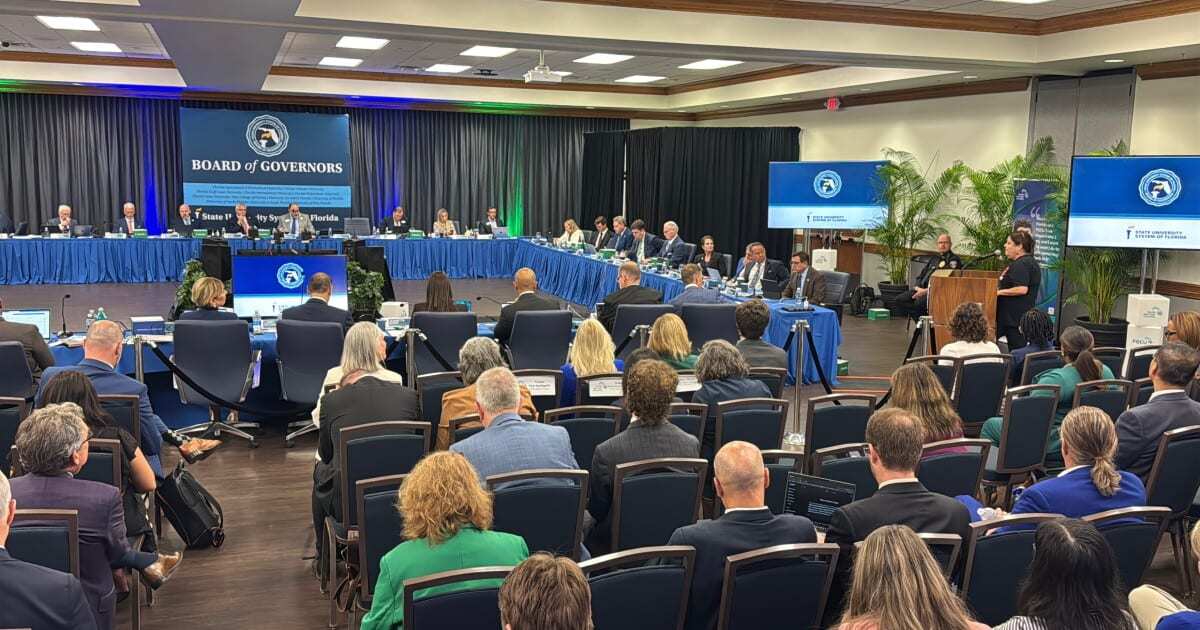
The Miami-Dade County School Board on Wednesday, Nov. 18, held a first hearing on a proposal to require high school students to show proof of U.S. citizenship before they enroll in college-credit dual enrollment courses at local community colleges. The change would bring Miami-Dade County Public Schools in line with new state rules that close Florida's public colleges and universities to students who are not lawfully present in the country, starting in the 2027-28 school year. Board members did not vote on the proposal, according to WLRN.
The hearing put a local face on a statewide shift. The board's apparent intention is to follow the state's lead, WLRN reported, but the item drew emotional pushback from a board member who was herself an undocumented student in Miami-Dade schools.
What the board is considering
Dual enrollment allows high school juniors and seniors to take courses such as math or English at a nearby college and earn credit toward a degree while they are still in high school. In Miami-Dade, the district's dual enrollment partners include Miami Dade College and Florida International University, according to district materials.
Under the proposal discussed Wednesday, high schoolers would have to present proof of U.S. citizenship to enroll in those college-credit courses at local community colleges. WLRN's report did not identify who brought the item forward or cite a policy number. Because the state rules on college admission take effect for the 2027-28 academic year, undocumented students in the Class of 2027 are the first group affected, WLRN reported.
The board did not adopt or reject the proposal. Members will revisit it at a committee meeting, where they will decide whether to place it on a regular meeting agenda for a vote.
A board member's own story
Board member Luisa Santos came to the United States from Colombia at age 8 as an undocumented immigrant. She told her colleagues that she took dual enrollment business calculus at Miami Dade College's Kendall Campus while she was in high school.
"I was an eight-year-old. That was not my choice," Santos said during the meeting, according to WLRN. She said the district's schools "gave me everything" and argued that the board's role now is to ask the state to change the rules rather than simply carry them out. "It is our duty to now go to the state and ask that these rules be changed," she said.
Daniella Pierre, president of the Miami-Dade branch of the NAACP, also addressed the board. She said she did not fully appreciate dual enrollment when her own children were in school. "Today, I understand that dual enrollment is more than earning college credits," Pierre said, according to WLRN. She warned that state-level changes could disrupt access to education and said, "I encourage transparency and preserving the access for all students with dual enrollment."
The state rules behind the proposal
The Miami-Dade proposal follows a series of state actions in 2026 that require students at Florida's public colleges and universities to be citizens or lawfully present in the country.
| Date | Body | Action |
|---|---|---|
| Feb. 13, 2025 | Legislature and governor | Repeal of in-state tuition for undocumented students, effective July 1, 2025 |
| June 30, 2026 | State Board of Education | Requires lawful presence for admission to the 28 state colleges and for adult education |
| Sept. 3, 2026 | Board of Governors | Unanimously bars undocumented students from the 12 public universities, starting 2027-28 |
| 2026 | State Board of Education | Blocks undocumented students from postsecondary career and technical education programs |
| Nov. 13, 2026 | Board of Governors | Defers a proposed carve-out for some state college students |
The State Board of Education approved the college rule in late June over the objections of nearly 40 public speakers, all of whom opposed it, WUSF reported. One speaker, Shakhea Hinton of Hope CommUNITY Center, warned the board against stripping high school students of opportunities like dual enrollment. Board member Daniel Foganholi cast the lone vote against it.
The State University System Board of Governors followed on Sept. 3, voting without discussion at a meeting at Florida Gulf Coast University to stop admitting students without lawful status starting in the 2027-28 academic year, WGCU reported. That vote put Florida alongside Alabama, Georgia and South Carolina among states that limit undocumented students' access to public higher education.
Gov. Ron DeSantis and his administration support the restrictions, arguing that state tax dollars should prioritize legal U.S. residents and citizens, WLRN reported. DeSantis called the State Board of Education's college rule "the right thing to do" before that vote, according to WUSF.
The new rules build on a 2025 law. In February 2025, the Legislature passed and DeSantis signed an immigration package that repealed the 2014 law letting undocumented students who graduated from Florida high schools pay in-state tuition. The repeal took effect July 1, 2025. More than 6,500 students had qualified for the out-of-state tuition waiver in the 2023-24 school year, according to news coverage of the repeal.
The university admission conflict
The Miami-Dade item is separate from, but tangled up with, an unresolved question at the Board of Governors. Florida law guarantees graduates of the state's 28 public colleges admission to one of its 12 public universities, and the statewide "2+2" articulation agreement ensures that an associate degree transfers as 60 credits toward a bachelor's degree.
The university ban created a conflict for undocumented students already enrolled in state colleges. The Board of Governors was scheduled on Nov. 13, at a meeting at FIU, to consider a carve-out for undocumented students who were enrolled in a state college before spring 2027, WUSF reported. The board instead deferred action, with member Doug Broxson saying the board needed to review additional feedback it had received, according to the Florida Phoenix. The Florida Press covered that delay on Nov. 12.
How many students could be affected
About 60,000 undocumented students attend a Florida higher education institution, and about 8,000 undocumented students graduate from Florida high schools each year, according to the Higher Ed Immigration Portal, as cited by WLRN. Neither the district nor WLRN's report gave a count of how many Miami-Dade dual enrollment students lack lawful status.
The program itself is large. Miami Dade College officials said in August that about 21,000 Miami-Dade students were taking dual enrollment courses, according to Miami Today. Florida's public colleges and universities have not specifically tracked enrollment of students without legal status, according to 2025 reporting on the tuition repeal, so the number of undocumented students among them is not known.
What's next
The proposal now goes to a Miami-Dade School Board committee meeting. If committee members choose to advance it, the item would be placed on a regular board meeting agenda for a formal vote. Separately, the Board of Governors is expected to take up the deferred carve-out for state college students at a future meeting. The state college and university restrictions take effect with the 2027-28 academic year, which means the district's current seniors, the Class of 2027, are the first class whose dual enrollment and college plans could be affected.
Spotted an issue with this article?
Have something to say about this story?
Write us a letterComments
No comments yet. Be the first to weigh in.
Related Coverage
Bradenton's Saint Stephen's Episcopal School Disputes Attorney General Uthmeier's Expulsion and Tuition Claims
1d ago
Florida School Board Members Say State Pressure Is Silencing Them, Researchers Report
2d ago

Byron and Erika Donalds Pitch 'Accountability' for Public and Choice Schools Alike as Florida's Voucher Tracking Problems Linger
2d ago
Board of Governors Chair Asks Florida Universities to Keep H-1B Hiring Freeze Past Jan. 5 While the State Reviews Data
2d ago