Miami-Raised Producer Celebrates as 'Giant' Wins Big at the 2026 Tony Awards
Broadway's biggest night had a distinct Florida thread this year. The 2026 Tony Awards, held Sunday, brought recognition to the play "Giant" and to one of its producers, West Kendall native Josh Fiedler, whose path from a Miami-Dade public high school to the front rows of the American theater establishment offered a homegrown story to celebrate. The ceremony capped a season that drew renewed attention to the role South Florida talent plays on the national stage, and it gave audiences back home a reason to feel personally invested in an event that usually unfolds a thousand miles away.
A South Florida thread on Broadway's biggest night
Fiedler, who grew up in West Kendall, is one of the producers behind "Giant," the John Lithgow vehicle that arrived at this year's ceremony with multiple nominations. According to coverage of the awards, Fiedler graduated from Miami Sunset Senior High School and the University of Miami before moving to New York in the early 2000s to pursue a career in theater, a journey that placed a Miami-Dade County product among the producers competing for the industry's highest honors.
His presence at the ceremony underscored a point that often gets lost in the glamour of Broadway: behind every production is a team of producers who assemble financing, shepherd creative decisions, and shoulder the financial risk of mounting a show. For a Miami-raised producer to share in a major Tony season is a meaningful marker of South Florida's growing footprint in the national arts world. It is also the kind of accomplishment that tends to accumulate quietly, built over years of smaller projects and partnerships before a name finally appears on a show that the whole country is watching.
The journey from a suburban Miami-Dade neighborhood to the producer ranks of Broadway is rarely a straight line. The early years of a theater career often involve unglamorous work: reading scripts, sitting in on rehearsals, learning how budgets are built and how investors are courted. By the time a producer is in a position to attach a name to a celebrated production, that person has typically absorbed lessons from dozens of projects that never reached the same heights. The credit on a season this visible reflects not a single lucky break but the cumulative result of choices made over many years.
The Florida angle gives local audiences a reason to follow a national arts story that might otherwise feel distant. The Tony Awards are the theater world's equivalent of the Oscars, and a connection to a Miami Sunset graduate turns the ceremony into a point of regional pride for a community that has produced a steady stream of performers, designers, and producers over the years. For families who watched the broadcast knowing that one of the people responsible for a celebrated production once walked the same hallways their children do, the night carried a resonance that no purely national story could match.
The night for 'Giant'
The headline moment for the production came in the acting categories. John Lithgow won the Tony for lead actor in a play for his work in "Giant," the third Tony win of his distinguished career. Lithgow is one of the most decorated performers in American entertainment, with a body of work spanning stage, film, and television, and his victory anchored the production's strong showing.
"Giant" entered the ceremony with several nominations, reflecting the critical attention it drew during the season. While the marquee best musical honors went elsewhere, the recognition for Lithgow's performance affirmed the production's standing among the year's most notable works and rewarded the team, including its Florida-connected producers, that brought it to the stage. A lead-acting win at the Tonys carries weight well beyond the trophy itself, because it signals to audiences, critics, and presenters around the country that a production is worth their attention, and that kind of validation can shape a show's commercial life for months or years to come.
For a play, as opposed to a splashy musical, a marquee acting win can be especially consequential. Plays often operate on tighter margins and shorter runs, and they depend heavily on word of mouth and critical momentum to sustain ticket sales. A performance singled out on the industry's biggest night becomes a centerpiece of marketing and a reason for audiences to choose one show over the many competing for their attention. In that sense, the recognition for Lithgow does double duty, honoring an individual achievement while strengthening the commercial prospects of the entire production.
The broader ceremony spread its honors across the season's offerings. The stage adaptation of the musical "Schmigadoon!" claimed the best musical prize along with several other awards, including recognition for its score, orchestrations, and book. The night, described by some reviewers as a solid telecast capping a mixed season, distributed its top prizes among a range of productions rather than crowning a single dominant show. That spread of recognition is itself a reflection of a Broadway landscape that has been working to rebuild momentum and audiences, with no single juggernaut towering over the rest of the field.
The role of a producer
For audiences who experience theater primarily through the performers on stage, the work of a producer can be invisible. Yet producers are essential to whether a show exists at all. They raise the capital required to mount a Broadway production, a process that can involve millions of dollars and significant personal and financial risk, and they remain involved in shaping the production from development through opening night and beyond.
That makes a producing credit on a nominated show a genuine achievement, not merely an honorary association. Producers share in the recognition because they share in the risk and the creative stewardship. For Fiedler, a credit on a season as visible as this one represents the kind of milestone that follows years of building relationships and reputation in a notoriously difficult industry. The role demands a blend of skills that rarely overlap in one person: the financial discipline to manage budgets and investors, the taste to recognize promising material, and the patience to guide a project through the long stretch of development before an audience ever sees it.
The economics of Broadway make the producer's job particularly unforgiving. A large share of new productions never recoup their initial investment, which means producers operate in an environment where failure is the statistical norm and success the exception. Those who persist learn to weigh artistic ambition against commercial reality, to read the appetites of audiences, and to assemble the partnerships that can carry a fragile project from a first reading to a full run. A Tony season is, in part, a vindication of that risk-taking, evidence that the bet placed years earlier on a particular script and creative team has paid off.
The path he traveled, from a Miami-Dade public high school through the University of Miami and on to New York, is also a reminder that the pipeline to Broadway runs through Florida classrooms and campuses. Local theater programs, school productions, and university training all feed a national industry that depends on talent drawn from across the country. Many of the people who end up shaping major productions began in exactly these settings, learning the fundamentals of staging, collaboration, and storytelling long before any thought of a Tony Award entered the picture.
The Florida context
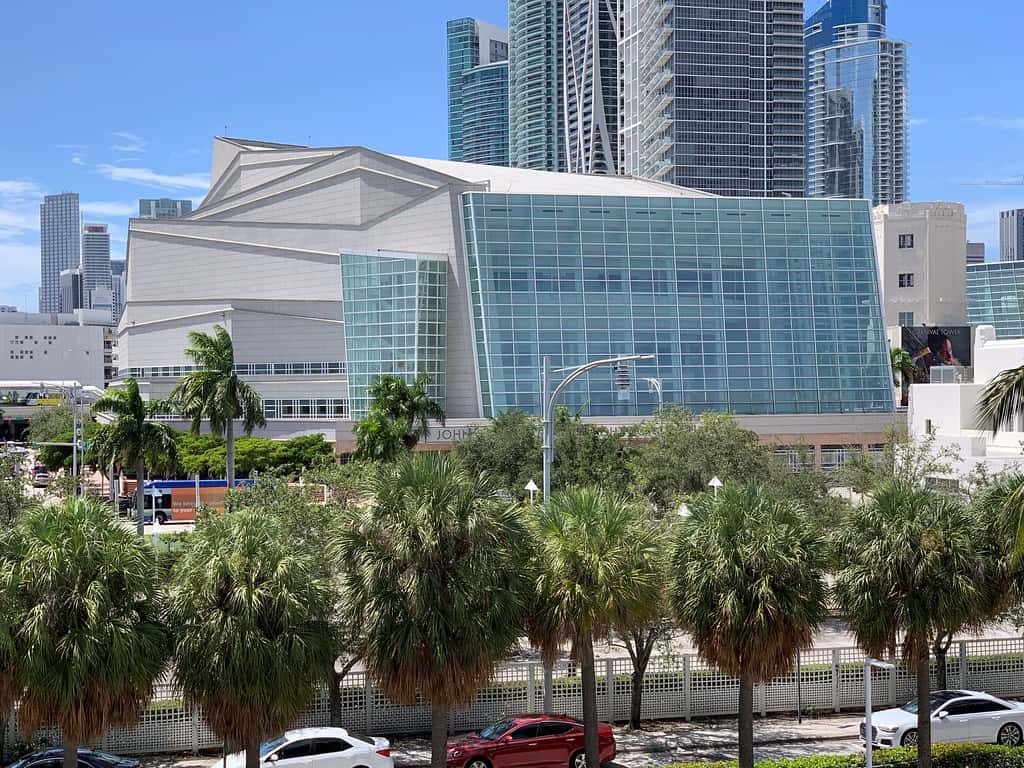
South Florida has long been a fertile source of performing-arts talent, and Miami in particular has nurtured a generation of artists who went on to national careers. The region's cultural institutions, from the Adrienne Arsht Center to a vibrant network of community and educational theater, have helped build an audience and a training ground for the next generation.
Stories like Fiedler's resonate because they connect that local ecosystem to the pinnacle of the profession. When a Miami Sunset graduate shares in a major Tony season, it validates the investment that families, schools, and the University of Miami make in arts education, and it gives aspiring young performers and producers a concrete example of what is possible. Representation of this kind matters in a practical way: young people are far more likely to pursue a path when they can point to someone from their own community who has already walked it successfully.
The connection also reflects the broader cultural confidence of a region that increasingly sees itself as a national arts hub rather than a satellite of New York or Los Angeles. Miami's film, music, and theater scenes have all grown, and homegrown success on Broadway reinforces that trajectory. The city has spent years cultivating a reputation as a destination for creative work, and milestones like this one help cement the idea that talent nurtured in South Florida can compete at the very top of any artistic field.
That confidence has practical roots. As more South Florida artists build national careers, they create networks that draw further opportunity back to the region, whether through mentorship, casting connections, or simply the visibility that comes from association with celebrated work. Each success makes the next one slightly easier to imagine, and over time those individual stories accumulate into a reputation that institutions and audiences alike can point to. A Tony season with a Miami connection is one more entry in that growing record.
What it means for Florida arts
For Florida's arts community, the recognition is both a celebration and a motivator. It highlights the value of strong school and university theater programs and offers a tangible payoff for the often underfunded work of cultivating young talent. Educators and arts advocates frequently point to success stories as evidence that investment in the arts produces real returns, and a Tony season with a Miami connection provides exactly that.
The moment also arrives as Florida communities continue to debate funding for the arts and for public education more broadly. A high-profile reminder that local schools can launch careers reaching the top of the national stage adds a data point to those conversations, even if the larger questions about resources remain unresolved. Arts programs are often among the first to face cuts when budgets tighten, and advocates will likely seize on a story like this to argue that the long-term value of those programs is easy to underestimate in the moment.
For audiences, the simplest takeaway is pride. A production celebrated on Broadway's biggest night carried a piece of South Florida with it, and the region can claim a share of the spotlight. That sense of shared ownership, the feeling that a neighbor's success is in some small way a community's success, is part of what keeps local arts ecosystems vibrant and self-sustaining.
What's next
For Fiedler and the team behind "Giant," the recognition opens the door to the next phase of a production's life, including touring possibilities and the long tail of attention that follows a Tony-honored show. Lithgow's win adds to the production's prestige and could extend its reach to audiences far beyond New York, potentially including Florida stages. A national tour, should one materialize, would carry the production into markets that rarely get to see Broadway-caliber work in its original form, and it would close the loop on a story that began in a South Florida classroom.
For South Florida's arts community, the night is a reminder to keep an eye on the local talent moving through the pipeline. The region's schools and universities continue to train performers and producers who may one day stand where Fiedler stood this week. The success of one graduate does not guarantee the success of the next, but it does demonstrate that the path exists and that the training available in Florida can carry someone all the way to the top. For now, Miami can savor a connection to Broadway's biggest stage and the homegrown story behind it.
Spotted an issue with this article?
Have something to say about this story?
Write us a letterComments
No comments yet. Be the first to weigh in.
Related Coverage

St. Pete Pride Asks Supporters to Raise $289,000 by Nov. 30 to Erase Its Deficit Before the 25th Anniversary
2d ago

Joe Redner, Tampa's 'Strip Club King' and longtime courtroom combatant, dies at 86
5d ago

SeaWorld Orlando closes Mako after fatal fall on similar Georgia coaster
6d ago

Orlando Approves $12.6 Million Pulse Memorial Contract, With Construction Set to Begin Nov. 25
Oct 14