NASA and SpaceX Push Back Crew-13 Launch From Kennedy Space Center After Dragon Oxidizer Leak
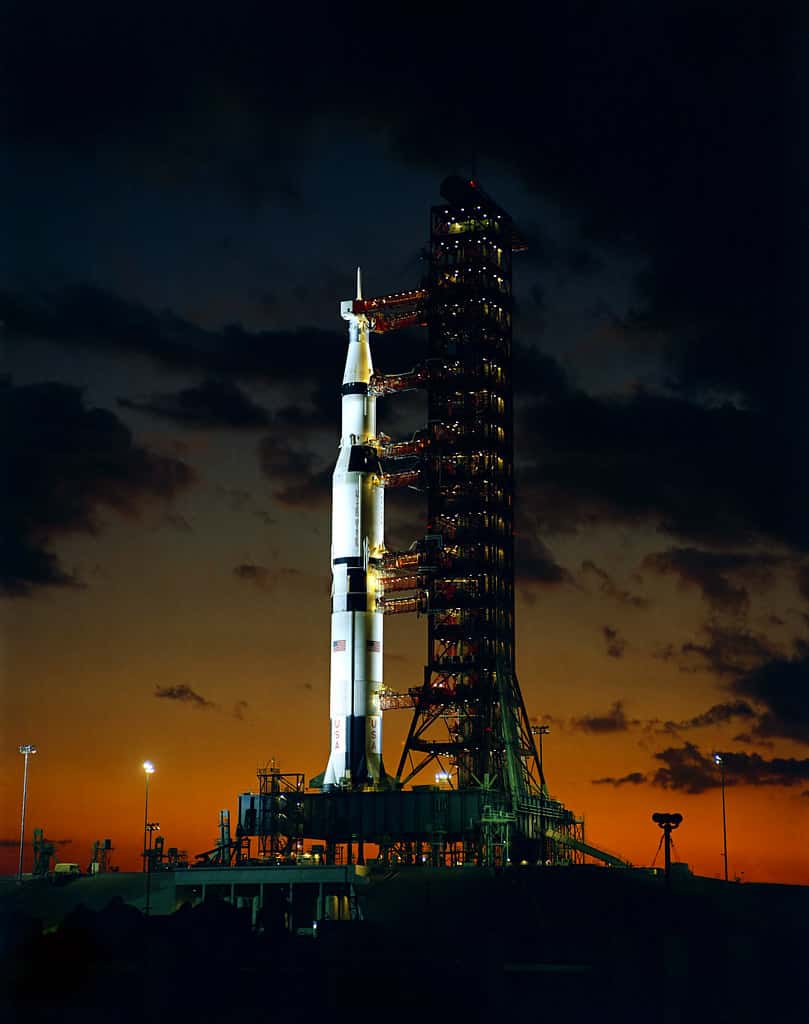
NASA and SpaceX have delayed the launch of the Crew-13 mission to the International Space Station after teams identified an oxidizer leak in the Dragon spacecraft's propulsion system during standard prelaunch processing at Kennedy Space Center. Mission managers are assessing upcoming launch opportunities, and a new target date will be announced once the issue is resolved.
What was found
The leak was detected in Dragon's propulsion system during routine prelaunch spacecraft processing, the sequence of checks and servicing operations that precedes every crewed flight. Finding a propulsion anomaly during that phase is precisely what the process is designed to accomplish, and the decision to stand down rather than press toward a launch date reflects the standard posture for crewed missions.
Oxidizer in the Dragon system is nitrogen tetroxide, which combines with the hydrazine-family fuel in the spacecraft's Draco and SuperDraco thrusters. These are hypergolic propellants, meaning they ignite on contact without an ignition source. That property makes the system reliable and simple in flight, and it makes any leak a serious matter on the ground because the propellants are highly toxic and corrosive.
The Draco thrusters handle on-orbit maneuvering, rendezvous with the space station and the deorbit burn. The SuperDracos provide launch escape capability, the abort system that would pull the capsule away from a failing rocket. Both functions are safety-critical, which is why a propulsion leak halts a launch campaign rather than being worked around.
The mission and its crew
Crew-13 is scheduled to launch from Launch Complex 39A at Kennedy Space Center in Florida, the pad that supported Apollo and Space Shuttle missions and that SpaceX now leases for Falcon and Dragon operations. The mission had been targeting a mid-September launch before the delay.
The crew includes NASA astronauts Jessica Watkins and Luke Delaney, serving as spacecraft commander and pilot respectively, joined by Canadian Space Agency astronaut Joshua Kutryk and Roscosmos cosmonaut Sergey Teteryatnikov as mission specialists. The four-person composition, with international partner representation, follows the standard structure of NASA's Commercial Crew rotation flights.
After arriving at the orbiting laboratory, the Crew-13 astronauts will join Expedition 75. Crew rotation missions typically involve a handover period during which the arriving and departing crews overlap, transferring operational knowledge before the outgoing crew returns to Earth.
Why launch delays work this way
Human spaceflight operates on a different risk calculus than uncrewed launches. A commercial satellite mission that encounters a technical issue can weigh schedule pressure against the cost of the payload. A crewed mission cannot, and the culture that governs those decisions was shaped substantially by the Challenger and Columbia accident investigations.
Both of those accident reports identified schedule pressure as a contributing organizational factor. The result was a decision-making framework in which any team member can call a stand-down and in which the burden falls on those who want to proceed to demonstrate that it is safe, rather than on those who want to wait.
Launch windows to the International Space Station are also constrained by orbital mechanics. The station's orbit passes over the launch site at specific times, and the spacecraft must launch within a narrow window to reach it efficiently. That is why delays measured in days can shift a launch by more than a day, and why mission managers speak in terms of assessing upcoming opportunities rather than simply picking a new date.
The Space Coast dimension
Launch activity is a foundational element of the Brevard County economy. Kennedy Space Center and Cape Canaveral Space Force Station together support thousands of direct jobs and a much larger network of contractors, suppliers and service businesses along the Space Coast, from Titusville down through Cocoa Beach and Melbourne.
Launches also drive tourism. Crewed missions in particular fill hotels, restaurants and viewing sites across the region, and a delayed launch means visitors who traveled for the event either extend stays or leave without seeing it. Local businesses have adapted to the rhythm of scrubs and delays, but the economic effect of a slip is real.
Florida's launch cadence has increased dramatically over the past decade, with the Cape supporting a launch rate that would have been unimaginable in the shuttle era. That volume has made the Space Coast the busiest spaceport in the world and has driven population and housing growth across Brevard County.
Florida's stake in the program
Beyond Brevard, Florida has built substantial state-level infrastructure around the space sector. Space Florida, the state's aerospace development authority, works to attract launch providers, manufacturers and research operations. The state has invested in spaceport infrastructure at multiple sites, including facilities outside the Cape.
That investment extends to the Panhandle and Northeast Florida. State grants have supported spaceport improvements including a rocket motor test stand at Cecil Spaceport in Jacksonville, part of a broader effort to distribute aerospace activity beyond the Space Coast and to capture manufacturing and testing work alongside launch operations.
The workforce pipeline runs through Florida institutions including the University of Central Florida, Embry-Riddle Aeronautical University, Florida Institute of Technology and the state college system. Those programs feed engineers and technicians into an industry whose Florida footprint has grown substantially and continues to expand.
What the delay does not mean
A propulsion leak found during processing is a technical issue, not a program crisis. Commercial Crew has flown a sustained cadence of successful rotation missions since 2020, and delays for hardware issues have occurred throughout that period without indicating systemic problems.
The International Space Station has crew aboard and continues normal operations. Rotation schedules carry margin precisely so that a delay of days or weeks does not create an operational problem on orbit. Consumables, science operations and station maintenance continue on their established schedules.
Resolution will depend on what the inspection finds. A leak traced to a fitting or a seal is a different repair than one traced to a component that must be replaced, and the latter takes longer. Mission teams will announce a new target date once they know which situation they are in.
What the station's future means for Florida
The International Space Station is currently planned to be retired near the end of this decade, with a controlled deorbit that NASA has contracted for. That timeline creates a transition question that has direct consequences for Florida's launch economy: what replaces the rotation flights that have driven crewed launch cadence from the Cape.
NASA's approach has been to support commercial space stations developed by private companies, with the agency purchasing services rather than owning the destination. Several such projects are in development, and their success or failure will determine whether crewed launches from Florida continue at the current pace into the 2030s.
The Artemis program provides a separate thread. Lunar missions launch from Kennedy Space Center and involve substantially larger vehicles and longer preparation cycles than station rotation flights, which produces fewer launches but a larger sustained workforce for each one.
Brevard County's economy has been shaped by these transitions repeatedly. The end of Apollo, the end of the shuttle program and the gap before Commercial Crew each produced local downturns, and the county's planning now accounts for the possibility that launch cadence is not permanent.
How Commercial Crew changed the Cape
The Commercial Crew Program was created after the Space Shuttle's retirement in 2011 left the United States without a domestic capability to launch astronauts. For nearly a decade, American crews reached the International Space Station aboard Russian Soyuz spacecraft launched from Kazakhstan, at a cost of tens of millions of dollars per seat.
The program's structure differed from how NASA had historically procured spacecraft. Rather than owning the vehicle and contracting for its construction, NASA purchased transportation services from companies that retained ownership of the hardware and could sell the same capability to other customers.
That arrangement is why Dragon flies both NASA rotation missions and private missions, and why the spacecraft's development costs were shared between the agency and the company. It has been cited as a model for other NASA procurements, including lunar landing systems.
For Florida, the practical effect was the restoration of crewed launches from the Space Coast after a nine-year absence. That absence had cost Brevard County thousands of jobs and had produced a period of economic difficulty across the region that took years to reverse.
The recovery since has been substantial. Launch cadence from the Cape now exceeds anything achieved during the shuttle era by a wide margin, and Brevard County has been among Florida's faster-growing counties as a result, with housing and infrastructure pressures that follow from that growth.
Residents along the Space Coast can generally see launches from public viewing areas in Titusville, Cocoa Beach and Playalinda Beach, and crewed launches draw the largest crowds. Local officials plan traffic management around announced launch windows, which is another reason schedule changes carry costs beyond the program itself.
Weather is the other variable that routinely moves launch dates from the Cape. Range criteria cover cumulus clouds, lightning within a defined distance, upper-level winds and conditions along the ascent corridor and at abort landing sites, and crewed launches carry additional constraints tied to recovery operations in the Atlantic.
What's next
NASA and SpaceX will complete their assessment of the leak and determine the repair path. Once that work is complete and the spacecraft is cleared, mission managers will set a new launch date from the available windows to the station.
The Cape's broader launch schedule continues in the meantime, with other Falcon 9 missions on the manifest from both Kennedy Space Center and Cape Canaveral Space Force Station. Crew missions receive priority in range scheduling, but the pad and range support a high volume of activity around them.
For Florida residents planning to watch, the standard advice applies: launch dates for crewed missions move, sometimes more than once, and confirming the date within 24 hours of travel is the only reliable approach.
Spotted an issue with this article?
Have something to say about this story?
Write us a letterComments
No comments yet. Be the first to weigh in.
Related Coverage

Monroe County Elections Chief Investigating Video of Apparent Armed Federal Agents Outside Keys Early Voting Site
1h ago

Frost and Lee File Bipartisan SLOTHS Act to Ban Sloth Imports After Orlando's Sloth World Deaths
2h ago
Democrat Nicole Locklin Challenges Longtime Rep. Mario Díaz-Balart in Redrawn 26th Congressional District
5h ago

SpaceX Launches Bandwagon-5 Rideshare From Cape Canaveral, Lighting Up a Brief Space Jellyfish Over Florida
21h ago