Palm Beach County Clerk Michael Caruso Charged With Five Felonies, Suspended
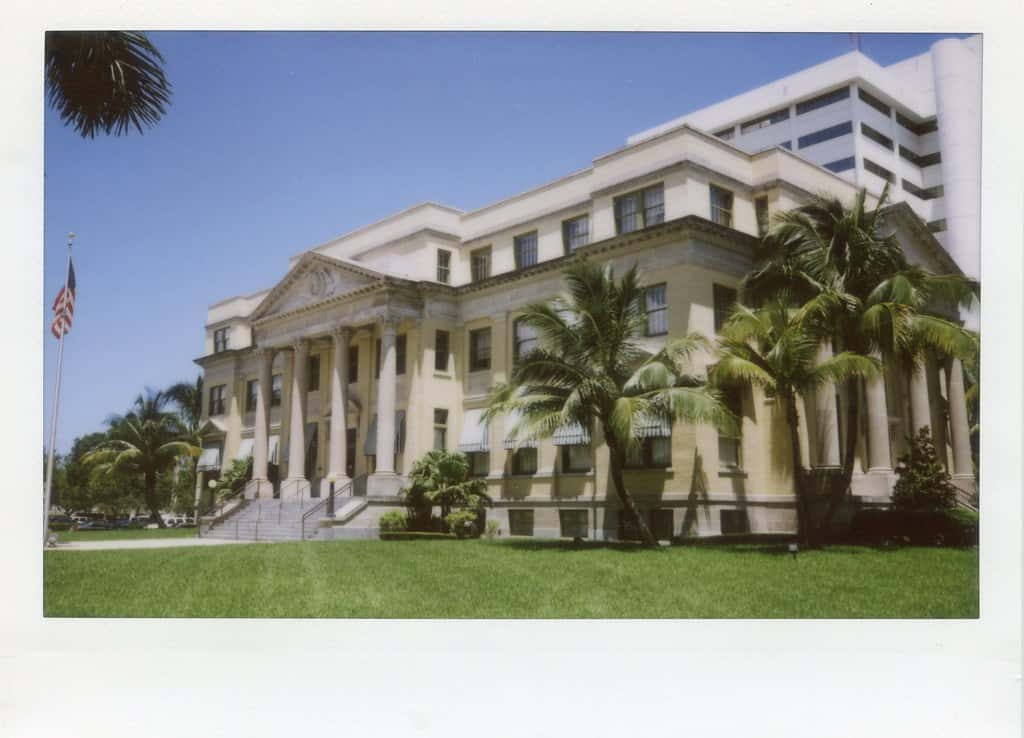
Palm Beach County Clerk of the Circuit Court and Comptroller Michael Caruso was arrested Aug. 18 on five felony charges related to alleged child sexual abuse, and Gov. Ron DeSantis suspended him from office hours later. Caruso, 67, has not entered a plea, and the allegations against him have not been proven in court.
Florida Attorney General James Uthmeier announced the arrest, saying it was carried out with substantial assistance from the Florida Department of Law Enforcement and local law enforcement agencies. Uthmeier said the investigation remains ongoing and that additional charges are possible.
Caruso is charged with kidnapping, lewd or lascivious molestation, lewd or lascivious exhibition, luring or enticing a child, and child abuse causing mental injury. He was being held without bond pending a first appearance and was transported to the Orange County Corrections Department, outside the county where he served as clerk.
A probable cause affidavit is a document written by law enforcement to establish that there is reasonable basis to believe an offense occurred and that the named person committed it. It is a one-sided document by design, prepared without input from the defense and without any evidentiary testing. Courts and reporters treat it as the initial account of the state's theory, not as findings. The gap between what an affidavit alleges and what a jury eventually concludes can be substantial in either direction.
What the charging documents allege
According to a probable cause affidavit described in reporting on the case, the alleged abuse began in the fall of 2024 and continued into at least 2025. The affidavit alleges incidents at the child's home, during fishing outings, at a Thanksgiving gathering, and aboard a cruise ship. Investigators identified the vessel as a Royal Caribbean ship, with an alleged incident occurring in August 2025.
The alleged victim is described in reporting on the affidavit as a relative of Caruso, a boy under the age of 12. The Florida Press does not identify alleged victims of child sexual abuse, and does not publish identifying details about minors in these cases.
All of the above are allegations contained in charging documents. Caruso is presumed innocent, and none of the allegations have been tested in court. He has the right to a trial and to contest every element of the state's case.
Constitutional officers in Florida counties, the clerk, sheriff, property appraiser, tax collector, and supervisor of elections, sit outside the county commission's authority by design. They are independently accountable to voters rather than to county government, which insulates their functions from local political control and also means the county commission has no power to remove one. The governor's suspension authority exists precisely because there is no local mechanism.
The office and the suspension
The clerk of the circuit court and comptroller in Florida counties is a constitutional officer with substantial responsibilities. The office maintains court records, collects and disburses court-ordered payments including child support, serves as county auditor and treasurer in most counties, issues marriage licenses, and administers the county's official records system.
In Palm Beach County, that means responsibility for the records of one of Florida's largest court systems. The office handles filings, fee collection, jury administration, and the financial oversight function for county government.
DeSantis suspended Caruso under the governor's constitutional authority to suspend officers charged with a felony. That authority is executive and does not require a conviction. Under the Florida Constitution, a suspended officer may ultimately be removed by the Florida Senate or reinstated, and the governor may appoint a temporary replacement in the interim.
Palm Beach County is Florida's third most populous county, with roughly 1.5 million residents, and its court system handles a correspondingly large volume of civil, criminal, family, and probate matters. The clerk's office there employs hundreds of people and processes court filings, collects fines and fees, disburses child support, and maintains official records including deeds and mortgages for the entire county.
Caruso's political background
Caruso came to the clerk's office through appointment rather than election. DeSantis appointed him in August 2025 to fill the position. Before that, he served in the Florida House of Representatives from 2018 to 2025, representing a Palm Beach County district as a Republican.
During his legislative service, Caruso was involved in criminal justice policy. Coverage of his arrest has noted that he had supported legislation expanding penalties for offenses against children, a fact that has drawn heavy attention nationally.
The appointment path matters legally as well as politically. Because Caruso was appointed rather than elected to the clerk's office, his tenure was already dependent on the governor's judgment in a way an elected clerk's would not be, though the suspension authority applies to both.
Florida's evidence code contains a specific provision governing evidence of other acts in child molestation prosecutions, which permits admission of prior similar acts for broader purposes than the general prohibition on propensity evidence would allow. Whether that provision applies to an allegation raised in a civil family proceeding decades ago, never charged and never adjudicated, is exactly the kind of question that will be litigated before trial and that can substantially shape the case.
Prior allegations
Reporting on the case has referenced an allegation raised during Caruso's 2012 divorce proceedings, in which his former spouse alleged that he had sexually assaulted one of their children. No charges are reported to have resulted from that allegation at the time.
An allegation raised in a family law proceeding is not a criminal charge and carries no legal finding. It is being reported now because prosecutors and defense counsel in the current case may litigate whether prior allegations are admissible, and because it is part of the public record of the case as it has developed.
Whether that history is legally relevant will be decided by a judge under Florida's rules of evidence, which sharply limit the use of prior bad acts and contain specific provisions governing evidence in child molestation cases.
Pretrial detention decisions in Florida turn on the specific statutory basis. The Florida Constitution provides a right to pretrial release except for capital offenses and offenses punishable by life imprisonment where the proof is evident or the presumption great. Kidnapping in Florida can be a first-degree felony punishable by up to life, which is the category that permits holding a defendant without bond, subject to a hearing at which the state must meet that standard.
How the case will proceed
Caruso's first appearance would address bond, and he was reported to be held without bond at the time of the arrest. Florida law permits pretrial detention without bond for certain offenses, and kidnapping is among the charges where that is available depending on the specific statutory subsection charged.
The case will be prosecuted by the state. Because the Attorney General's office announced the arrest with FDLE, the prosecution's structure, whether it runs through the local State Attorney's office or through a statewide prosecutor, is a detail that will become clear as the case is docketed.
The next steps in a Florida felony case are arraignment, at which a plea is formally entered, followed by discovery, pretrial motions, and eventually trial or resolution. Cases of this complexity typically take many months to reach trial.
Cases involving public officials also raise questions about records and case handling. Where a defendant held authority over the court records system in the county where the case might otherwise be heard, prosecutors and courts take steps to avoid actual or apparent conflicts, which can include venue considerations and assignment of judges. Caruso's transport to Orange County for booking reflects the practical dimension of that concern.
What it means for Palm Beach County
The clerk's office continues to operate. Constitutional offices in Florida have deputy structures designed to maintain function through a vacancy, and court filings, records access, and financial operations do not stop because the officeholder has been suspended.
The governor may appoint a replacement to serve during the suspension. That appointee would serve until the suspension is resolved, either through the Senate's removal process, reinstatement, or the outcome of the criminal case.
Palm Beach County voters will elect a clerk in the ordinary course when the seat next appears on the ballot. The current situation is an appointment vacancy layered on top of a suspension, which is unusual but not unprecedented in Florida.
Reporting on cases like this carries obligations that go beyond the legal ones. The Florida Press does not name alleged victims of sexual offenses, does not publish identifying details about minors, and reports allegations as allegations until a court has resolved them. Those practices apply regardless of how widely the underlying details have circulated elsewhere.
What's next
Uthmeier's office indicated the investigation is continuing and that more charges are expected. Investigations in cases like this often expand as investigators review devices, travel records, and additional potential witnesses.
The cruise ship allegation adds a jurisdictional dimension. Alleged conduct aboard a vessel in international waters can implicate federal jurisdiction depending on the ship's flag, the itinerary, and the citizenship of those involved. Whether federal authorities become involved is not publicly known.
Anyone with information relevant to the investigation can contact the Florida Department of Law Enforcement. Floridians who need help related to child abuse can reach the Florida Abuse Hotline, which operates statewide around the clock.
For readers seeking help, Florida operates a statewide abuse hotline that accepts reports of suspected child abuse around the clock, and reports can be made anonymously. Certain professionals, including teachers, health care providers, and law enforcement officers, are mandatory reporters under Florida law and are required to report suspected abuse. Child advocacy centers operate in counties across the state and provide forensic interviews, medical evaluation, and support services for children and families involved in abuse investigations.
Spotted an issue with this article?
Have something to say about this story?
Write a letter to the editorComments
No comments yet. Be the first to weigh in.
Related Coverage
Brandon bank robbery: career offender charged after deputies say he confessed
6m ago

Two Former Pinellas Deputies Arrested, Accused of Using Flock and State Databases to Track a Teen Girl and a Woman
13h ago

DeSantis Signs Record-Tying 19th Death Warrant for Inmate Who Killed Charlotte County Cellmate to Reach Death Row
1d ago
Polk Jury Convicts TJ Wiggins in 2020 Frostproof Triple Murder; Death Penalty Phase Begins
1d ago