DeSantis Signs Record-Tying 19th Death Warrant for Inmate Who Killed Charlotte County Cellmate to Reach Death Row
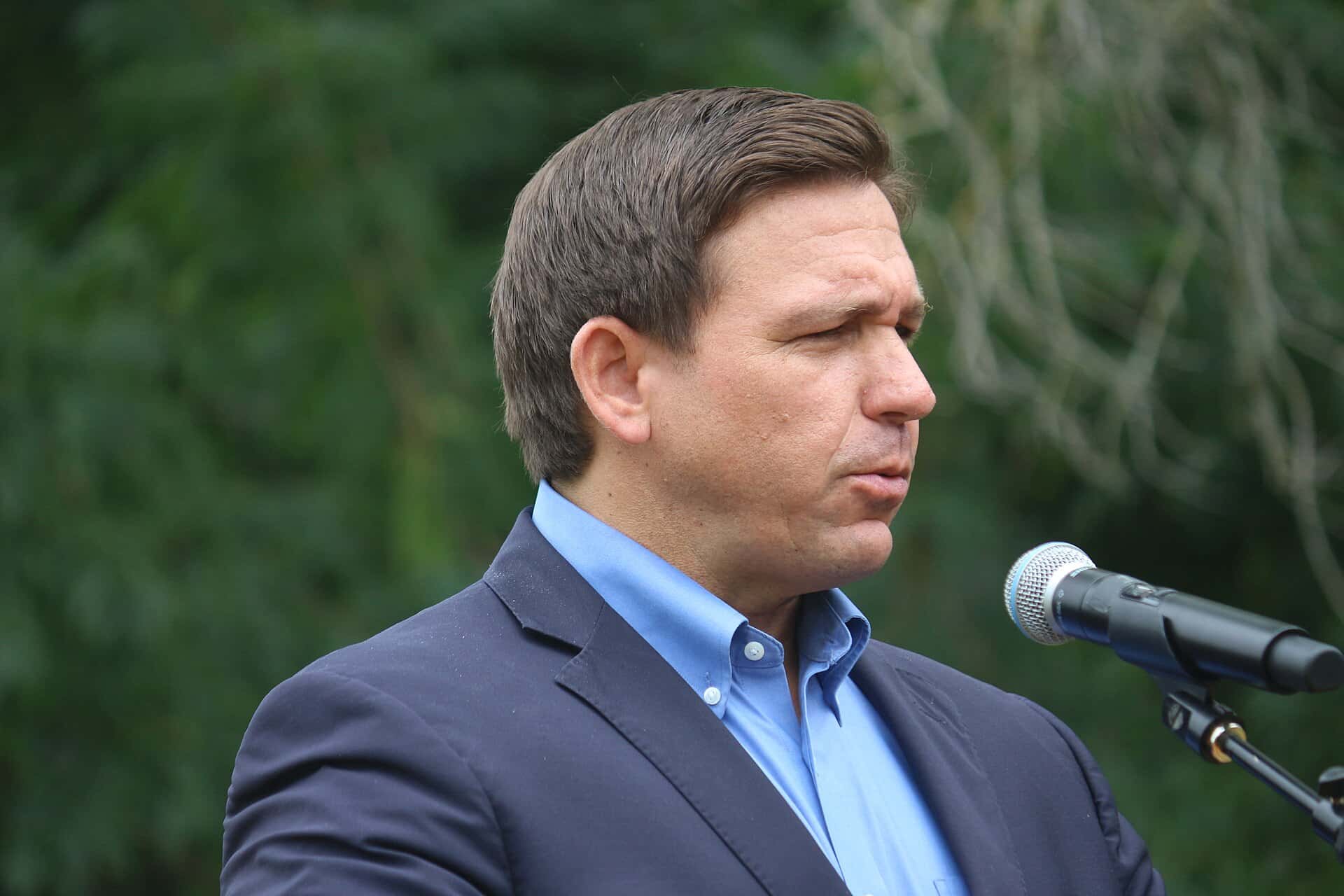
Gov. Ron DeSantis on Thursday, Oct. 1, signed a death warrant for James "Chicken Head" Robertson, a 63-year-old inmate who pleaded guilty to strangling his cellmate at Charlotte Correctional Institution in 2008. It is the 19th death warrant DeSantis has signed in 2026, matching the total from 2025, when Florida carried out more executions than in any year since the death penalty was reinstated in 1976.
Robertson is scheduled to die by lethal injection at noon on Tuesday, Oct. 13, at Florida State Prison near Starke. A second inmate, William "Bill" Lee Thompson, is set to be executed at 6 p.m. the same day, giving Florida another double execution date. The state has also scheduled the execution of William Reaves, convicted of killing an Indian River County sheriff's deputy in 1986, for Oct. 20.
The Robertson case stands apart from most capital cases in Florida's history. According to state officials and court records, Robertson told authorities that he killed his cellmate without provocation precisely so that he would be charged with first-degree murder and sentenced to death. Attorney General James Uthmeier highlighted those admissions after the warrant was signed, pointing to Robertson's own account that there was no fight or argument before the killing.
The warrant gives Robertson's case a 12-day window between signing and execution. Tracking Florida's Death Penalty, a newsletter that follows capital cases in the state, reported that it is the shortest warrant period since Florida resumed executions in 2017 following the U.S. Supreme Court's decision in Hurst v. Florida.
The killing at Charlotte Correctional Institution
Robertson was already serving time in the Florida prison system when the killing occurred in December 2008 at Charlotte Correctional Institution, a state prison in Charlotte County east of Punta Gorda. His cellmate, Frank Hart, was strangled inside the cell they shared.
According to the Florida Supreme Court's account of the case, Robertson strangled Hart with a garrote he made by tying several socks together. Prosecutors in Charlotte County charged Robertson with first-degree murder, and he pleaded guilty. A judge sentenced him to death on Dec. 18, 2012.
Robertson's stated motive has been central to the case from the start. According to his own admissions cited by the attorney general's office, he killed Hart so that he would be moved to death row, which he viewed as an escape from the conditions he faced at his previous prison. In a 2018 Netflix series, Robertson described carrying out the crime to get away from what officials have characterized as solitary-like conditions and to gain access to what he considered better conditions on death row.
Hart's killing drew attention at the time to safety inside Florida's prisons, where inmates convicted of violent crimes are frequently double-celled. The case has resurfaced periodically in discussions of prison violence and of how long-term isolation affects inmates, and the signing of the warrant has returned it to public view in Southwest Florida, where the crime took place and where the case was prosecuted.
A double execution day on Oct. 13
Under the schedule set by the governor, Robertson's execution is to take place first, at noon. Thompson's execution is set for 6 p.m., six hours later, in the same execution chamber at Florida State Prison in Bradford County.
Thompson's death warrant was the 17th signed by DeSantis this year. He was convicted in the 1976 murder, kidnapping and torture of Sally Ivester in a Miami motel room, one of the oldest cases on Florida's death row. His case has moved through the courts for roughly half a century, making it among the longest-running capital prosecutions in the state.
Florida has scheduled same-day executions before during the current pace of death warrants, and the Oct. 13 date continues that practice. Death penalty opponents, including the group Floridians for Alternatives to the Death Penalty, have criticized the scheduling of two executions on one day, while the governor's office has framed the warrants as carrying out lawful sentences imposed for the worst crimes.
The 18th warrant, signed for William Reaves, set his execution for Oct. 20. Reaves was convicted of the 1986 killing of Indian River County Sheriff's Deputy Richard Raczkoski, a case that remains a significant memory for law enforcement on the Treasure Coast.
Florida's record pace
Robertson's warrant ties the 2025 record of 19 death warrants that led to executions in a single year in Florida. That record was itself the highest annual total since capital punishment resumed in the state in 1979 following the 1976 U.S. Supreme Court decision that allowed states to reinstate the death penalty.
Any additional warrant signed between now and Dec. 31 would push 2026 past that mark. DeSantis has signed warrants at a steady clip throughout the year, often with roughly a month between signing and execution, and has scheduled executions in close succession during several stretches of 2026.
Florida has led the nation in executions during both years, according to tallies kept by national death penalty trackers and by state media. The pace contrasts with the period before 2023, when DeSantis signed relatively few warrants and Florida carried out executions only occasionally.
The governor has defended the pace as a matter of justice for victims and their families. Critics, including defense attorneys and advocacy groups, argue that the speed of the warrants leaves little time for meaningful review of new legal claims, an argument that the short window in the Robertson case is likely to sharpen.
How the warrant process works
Background: In Florida, a death warrant is signed by the governor once an inmate's ordinary appeals have run their course. The warrant sets a specific execution week and date, and the Florida Supreme Court typically issues a briefing schedule for any final, warrant-stage litigation.
Inmates under warrant commonly file last-minute motions in the circuit court where they were sentenced, followed by appeals to the Florida Supreme Court and petitions to the U.S. Supreme Court. Those claims often challenge the lethal injection protocol, the fairness of the clemency process or new evidence, and in recent years the courts have rejected nearly all of them.
Robertson's posture is unusual because he has said he sought a death sentence. It was not immediately clear whether his attorneys would pursue warrant-stage appeals, and the 12-day window would compress any such litigation into a matter of days. A clemency review is conducted before the governor signs a warrant, and the signing itself indicates that clemency was not granted.
Florida carries out executions by lethal injection using a three-drug protocol administered by the Department of Corrections at Florida State Prison. Inmates may elect electrocution under state law, though lethal injection has been the method used in all recent Florida executions.
Robertson's case also reflects how Florida's death row population has aged. At 63, he is younger than several inmates executed in recent years, but his crime is more than 17 years old, and his co-scheduled inmate's case dates back five decades. Death penalty scholars have noted that the long gap between crime and punishment is common in Florida, where capital cases routinely spend decades in appellate review.
Florida's changing death penalty law
Background: The warrants come against the backdrop of significant changes to Florida's capital sentencing laws. In 2023, the Legislature eliminated the requirement for a unanimous jury recommendation before a judge could impose death, allowing a death sentence when at least eight of 12 jurors agree. Florida is now one of only a few states that permit non-unanimous death recommendations.
The Florida Supreme Court has declined to strike down the non-unanimous standard. Those changes do not directly affect Robertson, who pleaded guilty and was sentenced more than a decade before the law was revised, but they are part of the broader expansion of capital punishment in the state under DeSantis.
The Legislature has also expanded the crimes eligible for the death penalty, including allowing capital punishment for certain child sexual battery cases. Supporters say the changes ensure that juries and judges can impose the harshest penalty in the most serious cases, while opponents warn they increase the risk of wrongful or arbitrary death sentences.
Why the case matters in Southwest Florida
For Charlotte County, the case is a reminder that violence inside state prisons often leads to prosecutions in the counties that host those facilities. The State Attorney's Office for the 20th Judicial Circuit, which covers Charlotte County, handled the prosecution that led to Robertson's guilty plea and death sentence.
Inmate advocates have long raised concerns about long stretches of isolation in Florida prisons, and Robertson's own explanation that he killed to escape those conditions has been cited in debates over prison practices.
Corrections officials, for their part, have pointed to the dangers that violent inmates pose to cellmates and staff. The killing of Hart, who was serving his own sentence when he died, underscored that inmates themselves are frequently the victims of prison violence.
What's next
Unless a court intervenes or the governor issues a stay, Robertson will be executed at noon on Oct. 13 at Florida State Prison, followed by Thompson at 6 p.m. the same day. Reaves is scheduled to be executed on Oct. 20.
Any warrant-stage motions in Robertson's case would go first to the circuit court in Charlotte County and then to the Florida Supreme Court on an expedited schedule, with a possible final petition to the U.S. Supreme Court in the hours before the execution.
With 19 warrants signed this year, any further warrant from DeSantis before the end of 2026 would set a new record for Florida executions in a single year. The Florida Press will follow the warrant-stage litigation and the scheduled executions.
Spotted an issue with this article?
Have something to say about this story?
Write a letter to the editorComments
No comments yet. Be the first to weigh in.
Related Coverage
Polk Jury Convicts TJ Wiggins in 2020 Frostproof Triple Murder; Death Penalty Phase Begins
20h ago

Four Charged With Murder in Attempted Robbery Shooting Near Fort Walton Beach
1d ago

Jury Selection Begins in Manslaughter Trial of Ex-Okaloosa Deputy in Death of Airman Roger Fortson
2d ago

Florida Set to Execute Curtis Beasley, 77, Tonight for 1995 Polk County Hammer Killing
2d ago