Palm Beach International Becomes Trump International Airport in Historic First
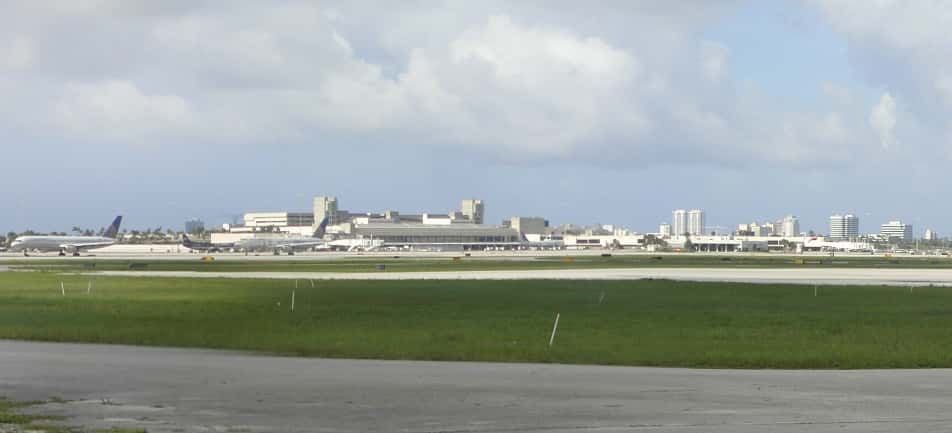
Palm Beach International Airport officially began operating under a new name, President Donald J. Trump International Airport, becoming what officials describe as the first commercial airport in U.S. history to carry the name of a sitting president. The change, which took effect at the start of July, followed a state law shifting airport-naming authority and a county vote, and it will be accompanied by a change to the airport's three-letter code later in the month.
The name change
Starting July 1, the South Florida airport officially operates as President Donald J. Trump International Airport, according to airport officials. The facility's three-letter aviation code is set to change from PBI to DJT on July 9, aligning the identifier with the new name. The renaming makes the airport a notable exception in U.S. aviation, as commercial airports are rarely named for sitting presidents.
Officials note that the airport is the first commercial airport in U.S. history to be named after a sitting president. While a small general aviation airport was named for a president during his time in office decades ago, no commercial airport had previously carried a sitting president's name. That distinction gives the renaming a historic dimension in the context of American aviation.
Importantly, the renaming does not change the airport's ownership, governance, or operations, which remain with Palm Beach County. The change is to the facility's name and identifier, not its management. Travelers will encounter the new name and, eventually, the new code, but the airport's functions continue as before under county ownership.
How the change came about
The renaming followed a sequence of steps at the state and local levels. According to reporting, the governor signed legislation earlier in 2026 transferring to the state the authority to name major commercial service airports, including Palm Beach International. That shift in naming authority set the stage for the renaming to proceed under the new framework.
Palm Beach County commissioners then voted to approve the renaming, with reporting indicating a divided vote among the commissioners. Local approval was part of the process that led to the change taking effect. The combination of the state law and the county vote produced the renaming that became official at the start of July.
The role of the Federal Aviation Administration in the process is limited, as the agency does not approve or reject airport names, which are decided at the state and local levels. What the FAA oversees is the administrative infrastructure of aviation, including navigational charts, airspace descriptions, and databases that must be updated to reflect changes such as the new three-letter code. Those updates are part of implementing the change.
How airports get their names
Airport naming in the United States generally rests with the public bodies that own the facilities, most often counties, cities, or regional authorities. Because commercial airports are typically publicly owned assets, decisions about their names tend to move through elected boards and, in some cases, state legislatures. The Palm Beach case reflects that pattern, with authority moving to the state level before the county acted, rather than being determined by any federal agency.
Many of the nation's busiest airports carry the names of political figures, aviators, or civic leaders who were honored after their public service concluded, and some retain purely geographic names that describe the city or region they serve. Naming a commercial airport for a sitting president departs from the more common practice of waiting until a figure has left office or passed away. That break from convention is a large part of why the Palm Beach renaming has drawn national attention.
Airport names also carry a practical dimension separate from their symbolism. A facility's formal name and its three-letter code function as reference points across ticketing, air traffic coordination, cargo manifests, and mapping tools. When a name or code changes, the update must propagate through a wide set of independent systems, which is why such changes are typically scheduled and phased rather than switched on all at once. The July 9 code change from PBI to DJT reflects that measured approach.
The Florida context
The renaming of a major South Florida airport carries particular resonance given the region's political prominence and the airport's location near the president's Florida residence. Palm Beach County has been closely associated with the president, and the airport serves as a gateway to the area. The renaming ties the facility's identity to that association.
The change also reflects the broader pattern of Florida's state government asserting authority in various areas, in this case over the naming of major airports. The legislation transferring naming authority to the state enabled the renaming to move forward. That shift in authority is itself a notable development in how such decisions are made in Florida.
South Florida's airports are significant infrastructure, serving large numbers of travelers and connecting the region to destinations across the country and the world. Palm Beach International is an important part of that network, and its renaming draws attention to a facility that plays a key role in the region's transportation and tourism. The change places the airport in the spotlight.
Aviation logistics behind the switch
Changing an airport's three-letter code is a more involved undertaking than changing a name on a sign. The code appears in flight plans, reservation systems, baggage tags, and the databases that airlines and ground handlers rely on to route passengers and luggage correctly. A coordinated cutover, such as the one scheduled for July 9, gives the many parties that reference the airport a common date to align their records, reducing the chance of mismatched itineraries or misdirected bags during the transition.
During any code transition, aviation systems and travel platforms often continue to recognize the prior identifier for a period so that bookings made before the change remain valid. Travelers holding itineraries issued under the PBI code may see that code persist in older documents even as new bookings reflect DJT. This kind of overlap is a routine feature of code changes and is meant to keep travel disruption to a minimum while the new identifier takes hold across the network.
Physical updates tend to follow the same phased logic. Terminal signage, directional markers, printed materials, and digital displays are typically replaced over time rather than all at once, both for cost reasons and to avoid confusing passengers mid-journey. For a facility the size of Palm Beach International, that means the new name and code will become visible gradually across the property as the various elements are refreshed. The underlying operations, staffing, and flight schedules are not affected by these cosmetic and administrative updates.
The mapping and charting side of the change tends to move on its own schedule as well. Navigational publications, airspace descriptions, and the reference databases maintained for pilots and controllers are revised on established cycles, which is one reason a code change is announced with a specific effective date. That advance notice allows the many organizations that depend on the identifier, from airlines to cargo carriers to mapping providers, to prepare their records so that the DJT code appears consistently once it takes effect. Coordinating those revisions is the kind of behind-the-scenes work that accompanies a name and code change of this scale.
What it means for travelers
For travelers, the most visible effects of the renaming are the new name and, later in July, the new three-letter code. Airport signage, branding, and identifiers will be updated to reflect the change, a process that unfolds over time. Travelers will encounter the new name in their interactions with the airport and in travel booking systems as the change is implemented.
The change to the airport code from PBI to DJT, scheduled for July 9, is a practical matter that affects how the airport is identified in aviation systems, booking platforms, and baggage handling. Such code changes require coordination across the systems that reference the airport. Travelers may notice the updated code in their itineraries and at the facility as the transition takes effect.
Because the airport's ownership and operations remain unchanged, the renaming does not alter the services and functions travelers rely on. Flights, terminals, and airport operations continue as before under county ownership. The change is primarily one of name and identity rather than of how the airport functions for the passengers who use it.
A historic distinction
The renaming's status as the first for a commercial airport named after a sitting president gives it a place in the history of American aviation. Airports are commonly named for historical figures, local leaders, or geographic features, and naming a commercial airport for a sitting president is a departure from typical practice. That distinction has drawn attention to the change.
The historic nature of the renaming reflects the intersection of politics, local governance, and infrastructure. The process that produced it, involving state legislation and a county vote, illustrates how such decisions are made. The result is a prominent facility carrying a name that sets it apart in the national aviation landscape.
The renaming will be part of the airport's identity going forward, appearing in its branding, signage, and identifiers. As travelers and the region grow accustomed to the new name, it will become the standard reference for the facility. The change marks a notable moment for the airport and for South Florida.
What's next
The change to the airport's three-letter code from PBI to DJT is scheduled for July 9, completing a key step in the implementation of the renaming. That change will be reflected in aviation systems and booking platforms as the transition proceeds. The updating of signage, branding, and identifiers will continue over time.
The airport will continue to operate under county ownership and governance, with its functions and services unchanged. Travelers will adjust to the new name and code as they use the facility. The practical work of implementing the renaming across systems and signage will unfold in the coming period.
For South Florida, the renaming places a major airport in the national spotlight and gives the facility a historic distinction. As the change takes full effect, the airport formerly known as Palm Beach International will operate under its new name, marking a notable development for the region and for American aviation.
Spotted an issue with this article?
Have something to say about this story?
Write a letter to the editorComments
No comments yet. Be the first to weigh in.
Related Coverage

Supreme Court Opens New Term Oct. 5 With Florida's Six-Person Felony Juries on the Docket
8h ago

Rubio Calls Cuba a Failed State, Warns Havana Cannot Wait Out Trump as South Florida Watches
9h ago
No Shutdown at Fiscal Year's End: What the Dec. 11 Funding and Flood Insurance Deadline Means for Florida
10h ago

The Fed's First Rate Hike Since 2023 Pushes Mortgages Past 7% and Freezes Florida's Housing Market
1d ago