Record Sargassum Bloom Blankets Southeast Florida Beaches as 2026 Season Turns Historic
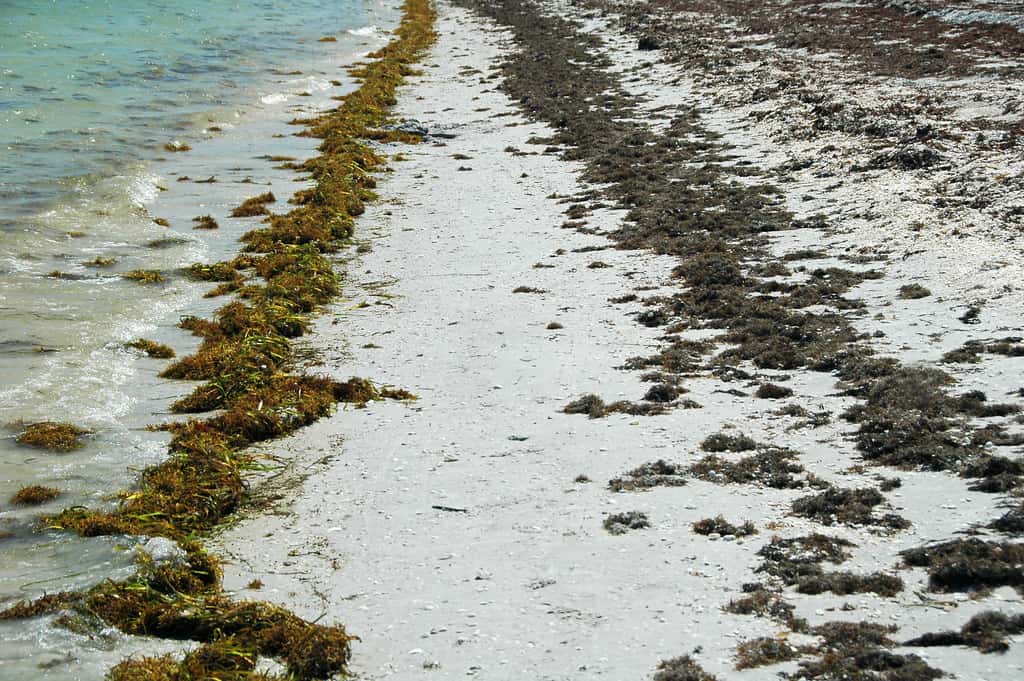
Southeast Florida's beaches are contending with one of the largest sargassum invasions on record, as an enormous belt of the brown seaweed drifts through the Caribbean and around the Florida peninsula. Scientists tracking the bloom say the 2026 season is on pace to rank among the worst ever measured, with the total amount of sargassum in the Gulf reaching record levels in June and major beaching events expected to continue through July along the state's southeast coast and the Florida Keys. The scale of this year's bloom has renewed attention on a phenomenon that has become an annual test for Florida's coastal communities.
For residents and visitors alike, the immediate reality is stretches of shoreline covered in thick, decaying seaweed and the strong odor that comes with it. Beyond the inconvenience at the water's edge, the bloom carries implications for public health, local budgets and the tourism economy that so much of coastal Florida depends on. Understanding where the seaweed comes from, why it arrives in such volume and how communities are responding helps put the record season in context.
A record-setting bloom
Researchers who monitor sargassum using satellite imagery reported that the total quantity in the Gulf nearly doubled the previous historical record in June 2026, reaching roughly 5 million metric tons. The broader Atlantic belt of sargassum, which stretches across thousands of miles of open ocean, has grown to what scientists describe as one of the largest accumulations they have documented. The satellite record allows researchers to compare this year's totals against past seasons and confirm the scale of the current bloom.
The seaweed originates far out in the Atlantic and Caribbean, where it grows in vast floating mats. Ocean currents carry it westward into the Caribbean Sea and the Gulf, where it is picked up by the currents that circulate around the Florida peninsula and feed into the Gulf Stream. That circulation pattern makes the Florida Keys and the southeast coast the areas most likely to be hit. The path the seaweed follows helps explain why some stretches of Florida coastline bear the brunt while others see comparatively little.
Forecasters expect the amounts to change only slightly through July, meaning the beaching events battering Southeast Florida are unlikely to ease significantly in the near term. In some regions, the influx is projected to increase before the season eventually winds down later in the year. Forecasts of this kind rely on tracking the large offshore mats and projecting how prevailing currents will steer them toward land.
Why it matters for beaches
When sargassum washes ashore in large volumes, it piles up in thick mats that can blanket entire stretches of sand. As the seaweed decays in the Florida sun, it releases hydrogen sulfide, a gas that carries a strong rotten-egg odor and can irritate the eyes, nose and throat. For people with respiratory sensitivities, the fumes can trigger discomfort. The smell alone is often enough to drive beachgoers away from the most heavily affected areas.
The seaweed also complicates swimming. Even before it reaches the beach, sargassum mats floating just offshore can harbor jellyfish, sea lice and small crabs that bite or sting swimmers. Once ashore, the decomposing piles make wading and sunbathing unpleasant and can trap marine debris. Swimmers who push through the mats sometimes emerge with itchy skin from the tiny organisms the seaweed carries.
Coastal communities face the logistical burden of cleanup. Removing tons of seaweed from public beaches is labor-intensive and expensive, and local governments must balance the cost and environmental sensitivity of removal against the need to keep beaches usable for residents and visitors. Heavy equipment used to clear the sand can itself disturb the beach, so cleanup crews must weigh how aggressively to intervene.
The Florida context
Florida's beaches are central to the state's identity and economy, drawing millions of visitors and supporting tourism-dependent communities along both coasts. A record sargassum season arriving during the peak summer travel period poses a direct challenge to that economy, particularly in South Florida and the Keys where the impact is concentrated. Hotels, restaurants and beach-based businesses can all feel the effect when shorelines are less inviting.
The timing is especially sensitive in 2026 because South Florida is hosting international attention around major summer events, and pristine beaches are part of the region's global image. Tourism officials and hospitality businesses have an obvious stake in keeping shorelines clean and accessible during the busy season. When the world's attention turns to the region, the condition of its beaches becomes part of the story visitors take home.
Notably, red tide, a separate phenomenon caused by the microorganism Karenia brevis, is largely absent this summer, sparing Florida the compounding effect of two simultaneous coastal nuisances. Sargassum and red tide are distinct, and while the seaweed dominates headlines this year, the absence of a significant red tide bloom offers at least one point of relief. In years when the two overlap, the combined burden on beaches and coastal air quality can be considerably heavier.
Economic ripple effects
The consequences of a record sargassum season extend well beyond the sand itself. Coastal tourism supports a wide network of businesses, from lodging and dining to recreation and retail, and diminished beach conditions can dampen the visitor spending that sustains them. When beaches are covered in decaying seaweed, some travelers may shorten trips, change destinations or spend less time and money at the shore.
Local governments also absorb direct costs. Cleanup operations require labor, equipment and disposal, and in a record year those expenses can climb as crews work to keep pace with the influx. Money spent clearing seaweed is money not available for other priorities, a tradeoff that coastal communities must manage each season the bloom returns.
The effects are uneven across the state. Communities directly in the path of the currents that carry the seaweed ashore bear the heaviest burden, while areas shielded by geography may see little disruption. That variation means the economic impact tends to concentrate in the most affected stretches of the southeast coast and the Keys rather than spreading evenly across Florida.
Businesses that depend on beach access have learned to adapt over successive seasons, adjusting operations and communicating with customers about conditions. Some operators focus on activities less affected by the seaweed, while others invest in keeping their immediate stretch of sand clear. Even so, in a record year the volume of seaweed can strain those efforts, leaving businesses to manage expectations as best they can. The recurring nature of the blooms has pushed many coastal operators to treat sargassum as a seasonal cost of doing business rather than an occasional surprise.
Health and safety guidance
Public health experts advise beachgoers to use caution around large sargassum accumulations. People with asthma or other respiratory conditions may want to avoid areas where the seaweed is decomposing heavily, since the hydrogen sulfide gas can aggravate breathing problems. The odor, while unpleasant, is generally not dangerous in open-air beach settings for healthy individuals. Officials generally recommend keeping a comfortable distance from the largest, most actively decaying piles.
Swimmers are encouraged to avoid entering the water through thick mats of floating seaweed, both because of the organisms it can carry and the difficulty of moving through it. Parents should keep an eye on children playing near piles, which can conceal debris and marine life. Sturdy footwear can help beachgoers avoid hidden hazards buried within the seaweed on the sand.
Local authorities in the most affected areas post advisories and update beach conditions, and visitors are encouraged to check those updates before heading out. Some beaches remain relatively clear depending on wind and current patterns, which can shift the seaweed's landing points from day to day. Checking conditions ahead of a trip can be the difference between a clear beach and one buried under seaweed.
The bigger environmental picture
Scientists studying the recurring sargassum blooms point to a combination of factors that may be fueling the growth, including nutrient runoff, changing ocean conditions and shifting currents. The Atlantic sargassum belt has become a near-annual feature since the mid-2010s, but the scale in recent years has repeatedly broken records. Researchers continue to study why the belt has grown so dramatically over the past decade.
The blooms are not solely negative. In the open ocean, sargassum provides important habitat for fish, sea turtles and other marine life, serving as a floating nursery. The problem arises when the massive quantities reach shore and decompose, transforming an ecological asset into a coastal nuisance. The same seaweed that shelters young marine animals offshore becomes a burden once it piles up on the beach.
Researchers continue to refine their forecasting, using satellite data to project where and when the seaweed will make landfall. Those forecasts give coastal communities some ability to prepare cleanup operations, though the sheer volume in a record year can overwhelm even well-planned responses. Improved forecasting gives local officials a head start, but it cannot reduce the total amount of seaweed heading toward shore.
What's next
With forecasts pointing to continued or increasing beaching events through July, Southeast Florida and the Keys should expect the seaweed to remain a fixture of the shoreline in the near term. Cleanup crews will stay busy, and beach conditions will vary day to day depending on winds and currents. Residents in the most affected areas may find the seaweed a recurring feature of their beaches for weeks.
The season typically peaks in the summer months before tapering off later in the year, offering eventual relief. For now, residents and visitors planning beach outings are advised to check local conditions, temper expectations for the most affected stretches, and stay mindful of the health guidance surrounding the record bloom. As the season eventually winds down, attention will likely turn to preparing for the blooms that scientists expect will return in future years.
Spotted an issue with this article?
Have something to say about this story?
Write us a letterComments
No comments yet. Be the first to weigh in.
Related Coverage
Lead pellets from shot iguanas linked to first known crocodile poisoning death in Florida
2d ago

DeSantis and Cabinet protect more than 10,770 acres, from Putnam County woods to Martin County ranches
5d ago

Record King Tides and Heavy Rain Swamp South Florida Streets as Water Managers Warn the Season Peaks Oct. 27
6d ago

Florida's loggerhead sea turtles set preliminary nesting record
Oct 1