DeSantis Announces First State Terrorist Designations Under HB 1471
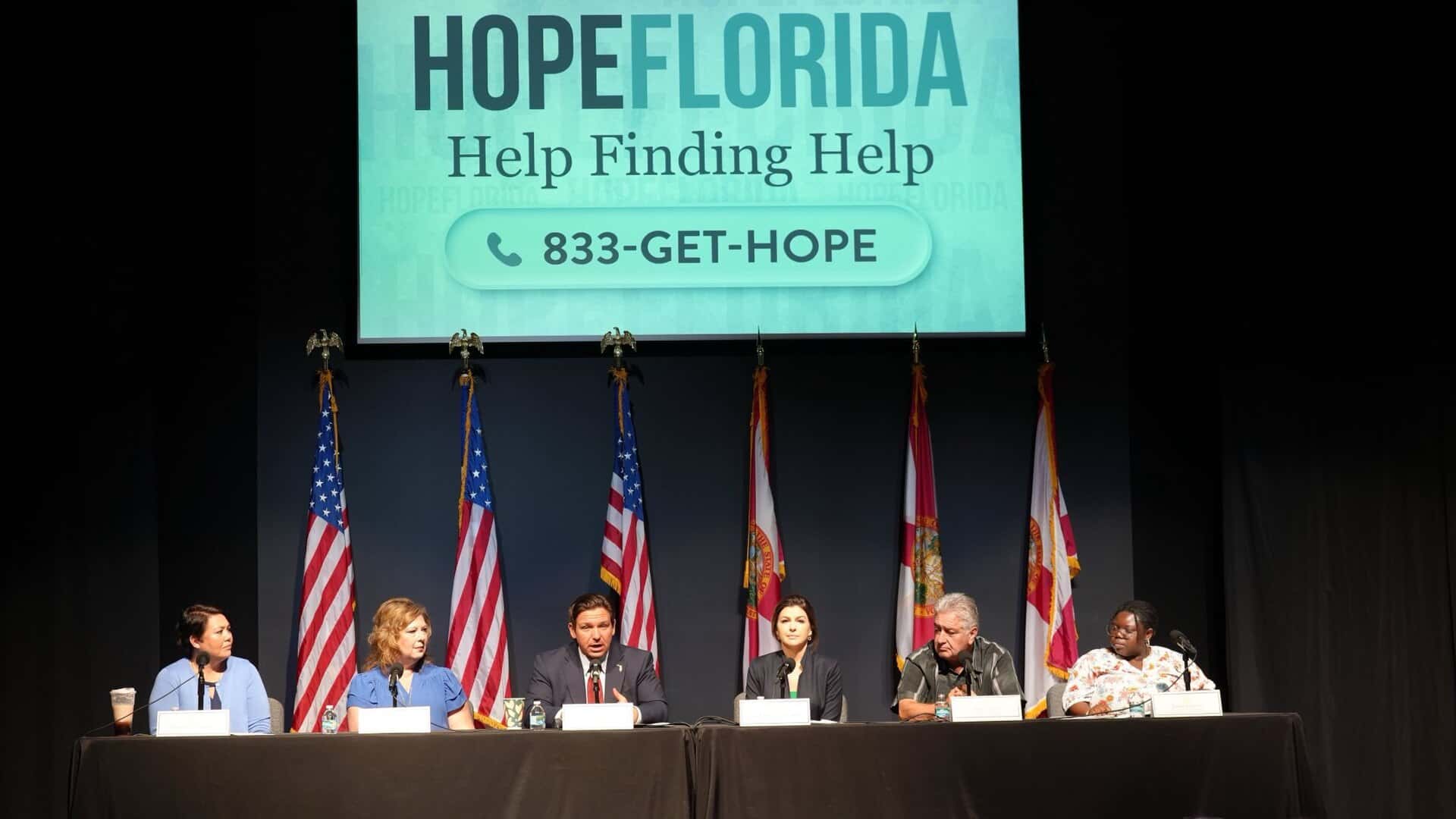
Gov. Ron DeSantis announced on July 1, 2026 that Florida had, for the first time, used authority under a new state law to identify, designate and combat organizations the state describes as terrorist groups operating within its borders. The action, taken under HB 1471, which passed during the 2026 legislative session, matters for Florida because it establishes a state-level mechanism for labeling organizations as terrorist entities, a step distinct from the federal government's designation process and one that is expected to draw legal challenges.
According to the governor's office, the state designated a set of organizations that includes the Council on American-Islamic Relations, known as CAIR, and the Muslim Brotherhood. The state also added Antifa and referenced more than 90 organizations already designated by the federal government as Foreign Terrorist Organizations, a category that includes various cartels. The announcement framed the move as the initial exercise of powers the Legislature granted through HB 1471.
The designations are the state's own, applied under Florida law, and are separate from the federal Foreign Terrorist Organization list maintained by the U.S. government. That distinction is central to understanding the action. Where federal designations carry specific national legal consequences, HB 1471 creates a parallel set of state tools, and the announcement represents Florida asserting an independent authority to apply the terrorist label under its own statute.
What the state announced
The governor's office presented the designations as a means of combating organizations it characterizes as threats operating in Florida. The list of newly named groups, as described by the state, spans organizations of very different types, from CAIR and the Muslim Brotherhood to the movement the state refers to as Antifa. The reference to more than 90 federally designated Foreign Terrorist Organizations, including cartels, folds existing federal designations into the state's framing of the threat landscape.
It is important to be precise about the nature of these claims. The characterizations of the named organizations as terrorist entities are the state's, articulated by the governor's office in announcing the action. This report does not assert that any of the designated organizations is in fact a terrorist organization; it reports that the state of Florida has applied that designation under HB 1471. The distinction between the label being applied and the underlying question of any group's actual character is a critical one.
The state described the action as the first use of authority under the new law, signaling that officials view it as the opening step in an ongoing effort rather than a one-time announcement. How the state will proceed against the named organizations, and whether additional groups will be designated in the future, remained to be seen following the initial announcement.
What HB 1471 authorizes
HB 1471, enacted during the 2026 session, provides the legal basis for the state to identify and act against organizations it designates as terrorist groups. In general terms, laws of this kind create tools around concepts such as material support, racketeering and actions targeting assets. The specifics of how any such authority is exercised depend on the statute's precise language and on how state agencies and courts interpret and apply it.
Material support provisions, broadly speaking, address conduct that provides resources or assistance to a designated organization. Racketeering statutes offer a framework for pursuing organizations engaged in patterns of certain unlawful activity. Asset-related actions can involve efforts to restrict or seize property connected to a designated entity. The announcement invoked the general availability of such tools without detailing the precise steps the state intended to take against each named group.
Because HB 1471 operates at the state level, its reach and its interaction with federal law are among the questions likely to be tested. State designations do not automatically carry the same consequences as federal ones, and the practical effect of Florida's action will depend on how the state deploys the authority the law provides and how that deployment holds up under legal scrutiny.
The state's stated rationale
The governor's office framed the designations as a public-safety measure aimed at organizations it contends pose threats within Florida. Officials presented the action as fulfilling the purpose of HB 1471, which the Legislature passed to give the state a mechanism for confronting groups it identifies as terrorist entities. The inclusion of federally designated Foreign Terrorist Organizations and cartels in the state's framing situates the action within a broader narrative of combating threats.
From the state's perspective, as articulated in the announcement, the new authority allows Florida to act against organizations without waiting for or relying solely on federal designations. That autonomy is presented as a feature of the law, enabling the state to respond to what it characterizes as threats operating within its jurisdiction. The rationale rests on the premise that the designated organizations warrant the label the state has applied.
The state's case for the designations, as with any exercise of such authority, ultimately depends on the evidence and reasoning behind each individual designation. The announcement itself communicated the fact of the designations and the general justification, while the detailed basis for naming specific organizations is the kind of material that would be central to any subsequent legal proceeding.
How the designated groups describe themselves
The organizations named by the state, and outside observers, are expected to contest the designations, and it is essential to represent their positions fairly. CAIR describes itself as a civil-rights advocacy organization. By its own account, the group works on issues involving civil liberties and the rights of Muslims in the United States, a self-description that stands in sharp contrast to the terrorist label the state has applied.
That gap between the state's designation and an organization's self-description lies at the heart of the controversy the action is likely to generate. When a government applies a terrorist label to an entity that identifies itself as an advocacy or civil-rights group, the disagreement is not merely semantic. It raises fundamental questions about the basis for the designation and the process by which it was made.
The designated organizations are expected to dispute the state's action and to reject the characterization of themselves as terrorist entities. Reporting the existence of that dispute, and the organizations' own descriptions of their missions, is necessary to present the situation accurately. The state has applied a label; the affected organizations are expected to reject it, and both facts belong in any fair account.
Anticipated legal and civil-liberties objections
Civil-liberties groups and the designated organizations are widely expected to challenge the action, potentially in court, on constitutional grounds. Among the arguments anticipated are objections rooted in the First Amendment, which protects freedoms of speech and association, and in due-process guarantees, which concern the fairness of government procedures. These are the kinds of claims that typically arise when a government applies a designation with significant consequences to an organization.
First Amendment objections could center on the concern that designating advocacy organizations as terrorist entities burdens protected speech and association. If an organization engages in advocacy, political expression or community activity, a terrorist designation could be argued to chill or penalize constitutionally protected conduct. Critics are expected to raise such concerns as central to any legal challenge.
Due-process objections could focus on the procedures by which the state made the designations, including questions of notice, the opportunity to contest the label and the standards applied. Civil-liberties advocates frequently argue that designations of this consequence require robust procedural safeguards. Whether HB 1471 and its application satisfy those requirements is the type of question courts would be asked to resolve should litigation proceed.
The prospect of legal challenge means the ultimate status and effect of the designations are unsettled. A state action of this kind can be enjoined, upheld or modified through litigation, and the outcome would shape whether and how Florida can enforce the designations. The anticipated objections are not merely rhetorical; they point to the legal battleground on which the action's fate may be decided.
A contested and evolving situation
The announcement places Florida at the center of a contested and closely watched policy question. On one side stands the state, which has applied terrorist designations under a new law and framed the action as a public-safety measure. On the other stand the designated organizations and civil-liberties groups, which describe some of those organizations very differently and are expected to challenge the designations on constitutional grounds.
A fair account holds both of these realities in view without endorsing either. The state has taken an action and offered a rationale. The affected organizations and their defenders reject the characterization and are expected to fight it. The truth of the underlying claims, and the legality of the designations, are matters that remain open and, in significant part, may be resolved through the legal process rather than through the announcement itself.
The situation is also evolving. As of the announcement, the designations had been made, but their enforcement, the specific actions the state might take and the legal responses from designated organizations were still to unfold. The coming weeks and months are likely to bring further developments, including possible litigation and responses from the named groups and civil-liberties organizations.
What's next
Attention now turns to how the state will act on the designations and how the designated organizations will respond. Legal challenges are widely anticipated, and any court proceedings would test the constitutionality of the designations and the application of HB 1471. The arguments expected to feature prominently, grounded in the First Amendment and due process, would be litigated in that forum.
The state, for its part, will decide how to exercise the authority it has asserted, including whether and how to pursue actions related to material support, racketeering or assets against the named organizations. The practical consequences of the designations will depend on those decisions and on how they fare if contested. Whether additional organizations are designated in the future is another open question.
For Floridians, the action raises significant questions about the balance between state security measures and constitutional protections, questions that the legal process may ultimately address. This report presents the state's action and stated rationale alongside the anticipated objections from designated organizations and civil-liberties groups, and it does not resolve the underlying disputes, which remain contested. How this unfolds will become clearer as the state proceeds and as any legal challenges move forward.
Spotted an issue with this article?
Have something to say about this story?
Write us a letterComments
No comments yet. Be the first to weigh in.
Related Coverage

Miami shuts enclosed park slides after 13-year-old dies following Shenandoah Park incident
1d ago
Appeals Court Orders Hope Florida Grand Jury Report Expunged, Rules $10 Million Was Never Public Money
2d ago

Jacksonville Council Committees Clear $30 Million Gas Tax Loan to Rescue JTA Ahead of Oct. 13 Final Vote
2d ago

Florida Supreme Court Suspends Pinellas-Pasco Judge Jennifer Cruz Dubbeld 20 Days Over 2024 Campaign Misconduct
2d ago