Red Tide Season Opens Quietly Along the Florida Gulf Coast With Low Cell Counts
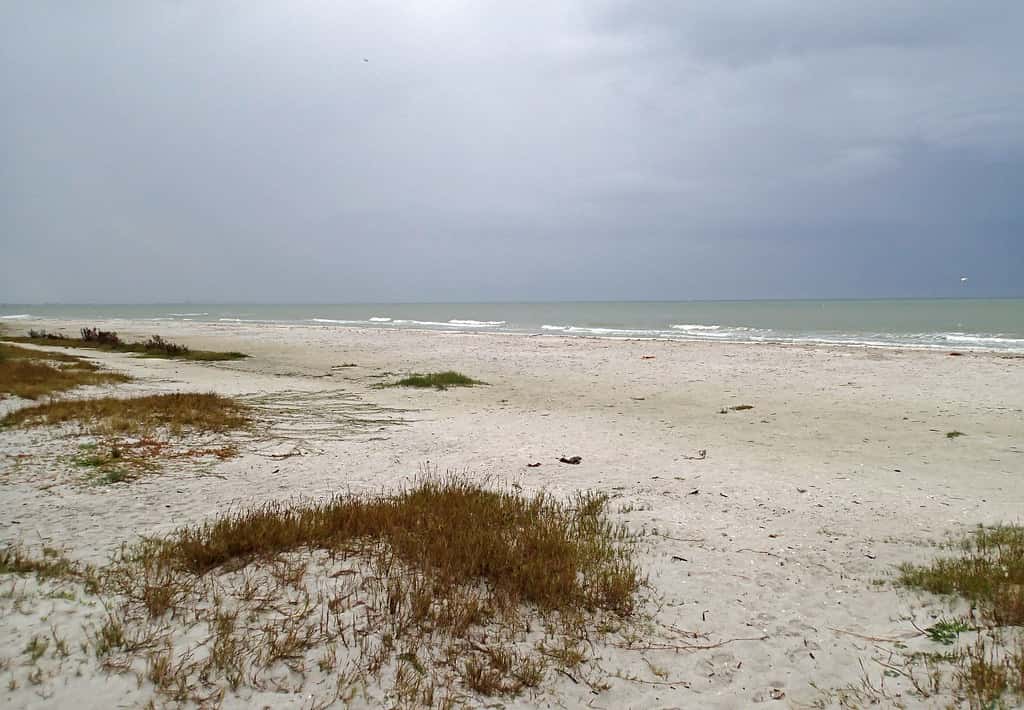
Florida's red tide season is opening about as quietly as it can. State sampling over the past week found the red tide organism Karenia brevis at background concentrations in a single sample from Northwest Florida, with no detection along the Florida East Coast. No fish kills suspected to be related to red tide were reported to the Florida Fish and Wildlife Conservation Commission's fish kill hotline or to partner agencies, and no red tide respiratory irritation was reported.
That matters because the calendar is arriving at the point when blooms typically begin. Red tide appears along the southwest Florida coast nearly every year, generally starting around September or October, and blooms often initiate 10 to 40 miles offshore before wind and currents carry them toward beaches.
A quiet opening is not a forecast for the season. Red tide dynamics are driven by offshore initiation and nearshore transport, both of which can change within weeks. But for coastal communities from Pinellas County to Collier County, and for the tourism operators who depend on them, the first week of September has arrived without the respiratory irritation and fish kills that have marked recent years.
What red tide is and how it works
Karenia brevis is a single-celled marine dinoflagellate native to the Gulf. It occurs naturally in low background concentrations year-round, and it is not an invasive species or a purely human-caused phenomenon. Blooms happen when conditions allow the organism to reproduce rapidly enough to reach concentrations that cause visible and physiological effects.
The organism produces brevetoxins, a group of neurotoxins that affect the nervous systems of fish and marine mammals. When cell counts rise high enough, fish die in large numbers, and the resulting kills wash ashore. Manatees, dolphins, and sea turtles are also affected, sometimes severely.
Brevetoxins reach humans through a different route. Wave action breaks cells apart and aerosolizes the toxin, which onshore winds carry to beaches. Inhalation causes coughing, sneezing, throat irritation, and watering eyes in most people, and can trigger significantly more serious respiratory distress in people with asthma or chronic lung disease.
Shellfish are the other exposure pathway. Filter-feeding shellfish concentrate brevetoxins in their tissue, which is why Florida closes shellfish harvesting areas during blooms. Finfish caught during a bloom are generally considered safe if filleted and rinsed, because the toxin does not concentrate in muscle tissue the way it does in shellfish.
The nutrient question
Red tide blooms initiate offshore, in water that carries relatively little land-based nutrient input. That is the basis for the position that blooms are natural events. What happens after a bloom moves inshore is a different question, and it is where the argument about human contribution sits.
Nutrient-rich water flowing into the Gulf from land can feed a bloom that has already formed, extending its duration and intensity in nearshore waters. Much of what remains of the historic Everglades carries elevated phosphorus and nitrogen loads from urban and agricultural sources. When the US Army Corps of Engineers releases water from Lake Okeechobee into the Caloosahatchee and St. Lucie rivers to manage lake levels, that nutrient load and, in some years, toxic blue-green algae travel downstream with it.
The Caloosahatchee discharges into the Gulf near Fort Myers, in the heart of the coastline where red tide blooms typically come ashore. Environmental organizations have argued that this coupling worsens red tide events, and the mechanism is plausible even if the magnitude of the contribution remains contested among researchers.
That is why Everglades restoration, Lake Okeechobee water management, and red tide are discussed together in Florida environmental policy even though they are technically distinct problems.
Better forecasting is arriving
One meaningful development is improved prediction. A new weekly forecast model now projects red tide conditions along the southwest Florida coast, giving coastal communities a forward-looking tool rather than only a description of current conditions.
That is a practical improvement for the people who need it. A beach operator, a charter captain, or a parent planning a weekend with an asthmatic child can act on a forecast in a way they cannot act on a report of what happened last week. The models draw on satellite imagery, in-water sampling, and circulation modeling to project where existing cell concentrations are likely to move.
NOAA's National Centers for Coastal Ocean Science maintains satellite imagery products for Florida harmful algal blooms, and FWC publishes current status maps updated regularly through the season with sampling results by county and by individual site.
Florida also operates a public water quality dashboard through the Protecting Florida Together initiative, which consolidates red tide, blue-green algae, and water quality data in one place.
What it means for Floridians
For residents and visitors along the Gulf coast, the current picture means beaches are clear. That is welcome news heading into a period when Florida tourism shifts toward the domestic fall market and coastal communities depend on visitor spending.
People with asthma, COPD, or other chronic respiratory conditions should still check conditions before beach visits once the season advances. Respiratory effects can begin before any visible fish kill, and the FWC status page and the beach condition reporting system maintained by Mote Marine Laboratory both publish site-level information.
Anglers should be aware that shellfish harvesting closures follow bloom conditions and are posted by the Florida Department of Agriculture and Consumer Services, which regulates shellfish harvesting areas. Recreational harvesters bear responsibility for checking area status before collecting.
Anyone who encounters a fish kill can report it to the FWC fish kill hotline, and reports from the public are a meaningful part of how the state tracks bloom extent between scheduled sampling runs.
Why the season outlook is uncertain
Predicting whether a given red tide season will be mild or severe remains difficult. The factors that determine whether an offshore population blooms include water temperature, salinity, nutrient availability at depth, and circulation patterns that concentrate or disperse cells, and those interact in ways that resist simple seasonal forecasting.
The El Nino conditions that have suppressed Atlantic hurricane activity in 2026 affect Gulf circulation and rainfall patterns, which in turn affect freshwater inflow and stratification along the southwest Florida shelf. Whether that translates into a milder or more severe red tide season is not something current science can predict with confidence.
Recent Florida red tide history has been variable. The 2017 through 2019 bloom was among the most severe and persistent on record, causing extensive fish and marine mammal mortality and significant economic damage to Gulf coast tourism. Subsequent years have been milder, though not absent.
The economic cost of a bad bloom
Red tide is an environmental story and an economic one. Southwest Florida's coastal economy runs on beach tourism, fishing charters, waterfront dining, and vacation rentals, all of which suffer immediately when a bloom comes ashore.
The mechanism is straightforward. Visitors cancel when beaches are covered in dead fish and the air causes coughing. Charter captains lose bookings. Restaurants with waterfront seating lose the seating that justifies their pricing. Vacation rental occupancy falls.
The 2017 through 2019 bloom, among the most severe and persistent on record, produced documented losses across Lee, Collier, Sarasota, and Manatee counties running into the hundreds of millions of dollars when tourism decline, cleanup costs, and property value effects were combined.
Local governments bear direct costs as well. Beach cleanup during a significant fish kill requires equipment and labor at a scale that strains municipal budgets, and the work must continue for as long as the bloom persists.
Those costs are why forecasting improvements matter economically as well as for public health. A business that knows conditions are likely to deteriorate in ten days can manage bookings and staffing rather than absorbing cancellations without warning.
What the state is doing about it
Florida has invested in red tide research and mitigation through several channels. The Florida Fish and Wildlife Conservation Commission's Fish and Wildlife Research Institute in St. Petersburg conducts the monitoring that produces the weekly status reports, and its sampling network spans the Gulf coast.
Mote Marine Laboratory in Sarasota has worked on bloom mitigation technologies, including approaches that aim to reduce cell concentrations in enclosed waters such as canals and marinas. Those methods are not applicable at the scale of an open-water bloom, but they can improve conditions in specific locations.
The state's Protecting Florida Together initiative consolidates water quality data including red tide, blue-green algae, and nutrient monitoring into a public dashboard, and the Blue-Green Algae Task Force has made recommendations on nutrient reduction.
The largest structural intervention is Everglades restoration, a multi-decade federal and state program that aims to change how water moves through South Florida. Restoring more natural southward flow would reduce the volume of nutrient-laden water discharged east and west through the Caloosahatchee and St. Lucie rivers.
Progress on those projects is measured in decades, and their effect on red tide will be visible over the same horizon rather than in any single season.
What's next
FWC updates its red tide status page regularly through the season with sampling results by county, and the weekly forecast model provides projections for the southwest coast. Those are the two resources coastal residents should bookmark.
September and October are the months when blooms most commonly initiate and move inshore, so the current low counts should be understood as a starting point rather than a season outlook. Conditions can change within a few weeks.
Longer term, the trajectory of red tide severity in Florida is tied to water management decisions on Lake Okeechobee, the pace of Everglades restoration, and nutrient reduction in the watersheds that feed the Gulf. Those are multi-decade projects, and their effect on red tide will be measured over the same horizon.
Spotted an issue with this article?
Have something to say about this story?
Write us a letterComments
No comments yet. Be the first to weigh in.
Related Coverage

Residents Sue Miami-Dade to Force a Public Vote on Superyacht Marina at Former Miami Seaquarium
3h ago

Florida Panther Deaths Reach 14 in 2026 as Two Young Females Die on Collier and Hendry Roads
3d ago

71-Year-Old Man Killed by Nearly 12-Foot Alligator While Fishing at Winter Garden Park
5d ago

Extreme Drought Vanishes From Florida Map After a Week of Rain
6d ago