Red Tide Stays Quiet Along Southwest Florida as New Forecasting Tools Aim to Predict the Next Bloom
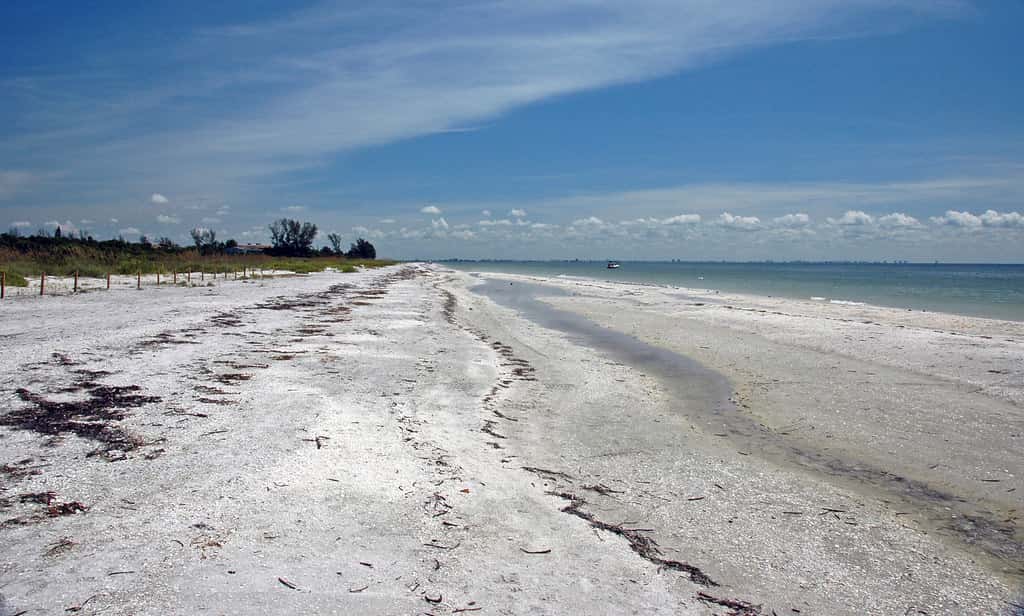
Red tide remained largely quiet along Florida's southwest coast in early June 2026, with the toxic algae detected only at low background concentrations and no fish kills tied to it reported in the most recent monitoring period. The calm offers a reprieve for Gulf Coast communities that have repeatedly suffered through devastating blooms, and it comes as scientists and water managers deploy new tools intended to predict and reduce the severity of future outbreaks.
The current status
Over the most recent week of sampling, red tide was observed at background concentrations in a single sample from Southwest Florida, according to monitoring updates. No fish kills suspected to be related to red tide were reported to the Florida Fish and Wildlife Conservation Commission's hotline or to partner organizations during that period, indicating a relatively stable and low-impact situation.
Background concentrations represent the baseline presence of the organism that causes red tide, the algae known as Karenia brevis, which is naturally present in Gulf waters. The concern arises when conditions allow that organism to multiply into a bloom, producing toxins that can kill marine life, foul beaches, and trigger respiratory irritation in people along the coast.
For now, the low levels mean Southwest Florida's beaches and coastal communities are spared the worst effects that accompany a major bloom. But the history of red tide in the region makes clear that conditions can change, and the current quiet is no guarantee against a future outbreak.
Why red tide matters to Florida
Red tide has been one of the most damaging recurring environmental threats to Florida's Gulf Coast. Severe blooms have killed vast numbers of fish, sickened or killed marine mammals including manatees and dolphins, and left beaches littered with dead wildlife. The toxins can also become airborne, causing coughing and respiratory discomfort that drives tourists away and harms coastal economies.
The economic stakes are significant. Southwest Florida's coastal communities depend heavily on tourism, fishing, and waterfront recreation, all of which suffer when red tide strikes. A bad bloom can empty hotels, shutter charter operations, and impose cleanup costs on local governments, making prediction and mitigation a priority for the region.
The ecological toll is equally serious. Manatees, an iconic and protected Florida species, are among the marine animals harmed by red tide, whether through direct exposure to toxins or the loss of seagrass habitat. Protecting these animals has become intertwined with the broader effort to manage water quality and algae blooms.
New forecasting tools
One of the most promising developments is the emergence of forecasting tools designed to give communities advance warning of blooms. The Everglades Foundation has developed an early-warning system for red tide along the Southwest Florida coast that has been able to forecast dangerous outbreaks of Karenia brevis with a reported accuracy of up to 84 percent.
Such forecasting represents a meaningful shift from reacting to blooms after they appear to anticipating them before they reach the coast. Advance warning can help local officials, businesses, and residents prepare, whether by planning beach cleanups, advising vulnerable people to limit exposure, or managing the timing of coastal activities.
A new weekly forecast model aimed at predicting red tide conditions along the southwest coast adds to the toolkit, reflecting a broader scientific push to understand and anticipate the complex interplay of nutrients, currents, temperature, and the algae itself that determines whether a bloom forms and how severe it becomes.
Water management and the Everglades
Beyond forecasting, changes in how water is managed in South Florida are intended to reduce the conditions that can fuel blooms. After environmental groups sued the U.S. Army Corps of Engineers in 2019, arguing that toxic discharges from Lake Okeechobee endangered protected species including manatees, a federal judge ordered the agency to consult with stakeholders to minimize environmental impacts.
That process resulted in a new operating manual for Lake Okeechobee releases, adopted in 2024, designed to reduce harmful discharges into coastal estuaries. Instead of sending nutrient-laden water to the coasts, where it can feed algae blooms, the approach calls for sending more water south, where it is filtered naturally as it moves through the Everglades.
The strategy ties red tide mitigation to the larger, long-running effort to restore the natural flow of water through the Everglades. By rerouting water southward and curbing damaging discharges to the estuaries, managers hope to reduce the nutrient loading that can worsen blooms while also advancing ecosystem restoration goals.
What it means for residents and visitors
For residents and visitors along the Gulf Coast, the current low levels mean beaches are generally clear of red tide's worst effects, a welcome condition as summer tourism picks up. Those sensitive to respiratory irritation can monitor local conditions, which remain favorable based on the latest sampling.
The improved forecasting tools mean communities are better positioned than in the past to respond if conditions deteriorate. Early warning allows businesses and local governments to plan rather than scramble, potentially blunting the economic and public health impact of any future bloom.
Residents can stay informed through the Fish and Wildlife Conservation Commission's regular red tide status updates and through local forecasts, checking conditions before heading to the beach during periods when blooms are more likely. Reporting fish kills and unusual conditions to the appropriate hotlines also aids monitoring efforts.
The science behind the blooms
Red tide along Florida's Gulf Coast is caused by Karenia brevis, a microscopic algae that occurs naturally in the waters of the Gulf. At low background concentrations, like those observed in early June, the organism poses little threat. The problem arises when conditions allow it to multiply rapidly into a dense bloom that discolors the water and produces potent toxins.
Scientists understand that a combination of factors influences whether a bloom forms and how severe it becomes, including water temperature, salinity, currents, winds, and the availability of nutrients. The precise interplay of these variables is complex, which is part of why predicting blooms has historically been difficult and why the new forecasting models represent a meaningful advance.
Nutrient pollution has been a particular focus of research and policy, because excess nutrients flowing into coastal waters can intensify or prolong blooms once they begin. That connection underlies the water-management changes aimed at reducing harmful discharges to the estuaries, redirecting water through the Everglades to limit the nutrient loading that can feed the algae.
The toxins produced by Karenia brevis are what make red tide so damaging. They can kill fish and other marine life, accumulate in shellfish, and become airborne in sea spray, causing respiratory irritation in people along the shore. Understanding the toxin's behavior is central to both protecting public health and assessing the ecological impact of a bloom.
Ongoing research continues to refine scientists' understanding of red tide, improving the models that forecast it and informing the strategies meant to mitigate it. The progress reflected in the early-warning systems and water-management changes represents the practical application of that scientific work to a persistent Florida challenge.
What residents can do when a bloom strikes
When red tide does intensify, the practical guidance for residents and visitors centers on awareness and avoidance. The toxins produced by Karenia brevis can become airborne in sea spray, causing coughing, sneezing, and throat irritation along the shoreline, effects that are usually temporary for healthy people but can be more serious for those with asthma or other respiratory conditions.
People sensitive to respiratory irritation are generally advised to avoid affected beaches during a bloom and to stay informed through local beach conditions reports and the Fish and Wildlife Conservation Commission's status updates. Checking conditions before heading to the coast allows beachgoers to choose locations that are unaffected.
Pet owners should keep dogs away from dead fish and water during a bloom, since animals can be sickened by exposure. Avoiding contact with discolored water and not harvesting or eating shellfish from affected areas during blooms are additional precautions that public health officials commonly recommend.
Reporting fish kills and unusual conditions to the appropriate hotlines aids the monitoring that underpins the forecasting efforts. Public observations contribute to the data scientists use to track blooms, complementing the sampling and modeling that drive the early-warning systems now being deployed along the coast.
What's next
Scientists will continue refining the forecast models and tracking conditions through the summer and fall, when warm waters and other factors can heighten the risk of blooms. The accuracy and lead time of the early-warning systems will be tested by whatever conditions develop in the months ahead.
The water-management changes centered on Lake Okeechobee and the Everglades represent a longer-term bet that altering the flow of water can reduce the frequency and severity of blooms over time. For Southwest Florida, the combination of better forecasting and smarter water management offers hope that the cycle of devastating red tide events can at least be softened, even if the natural threat can never be fully eliminated.
Spotted an issue with this article?
Have something to say about this story?
Write us a letterComments
No comments yet. Be the first to weigh in.
Related Coverage

Residents Sue Miami-Dade to Force a Public Vote on Superyacht Marina at Former Miami Seaquarium
1h ago

Florida Panther Deaths Reach 14 in 2026 as Two Young Females Die on Collier and Hendry Roads
3d ago

71-Year-Old Man Killed by Nearly 12-Foot Alligator While Fishing at Winter Garden Park
5d ago

Extreme Drought Vanishes From Florida Map After a Week of Rain
6d ago