Rick Scott Renews Push to Send ACA Subsidies to Consumers as Florida Reels From Coverage Losses
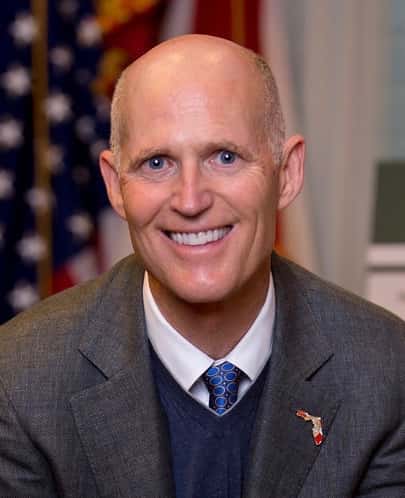
Sen. Rick Scott is renewing his push to send federal health insurance subsidies directly to consumers instead of insurance companies, releasing the latest installment of his "Rescuing America" project on Sept. 29 with a focus on the health care system. The pitch lands in a state that felt the end of enhanced Affordable Care Act subsidies more than any other: more than 440,000 Floridians left the ACA marketplace in 2026 after the extra federal help expired, the largest drop in the nation.
Scott, a Naples Republican and former hospital company executive, is promoting his More Affordable Care Act, legislation he introduced in December 2025 with Rep. August Pfluger of Texas, chairman of the Republican Study Committee, as the House lead. The bill would deposit federal subsidy dollars into what Scott calls Trump Health Freedom Accounts, modeled on health savings accounts, that families would control and use to buy coverage and pay for care.
The timing matters for Florida households. Open enrollment for 2027 marketplace coverage begins Nov. 1, and hundreds of thousands of Floridians who dropped coverage this year, along with millions who stayed but are paying more, will soon face another round of decisions about whether they can afford insurance.
What Scott is proposing
According to Scott's Senate office, the latest Rescuing America installment is a video message describing how, in Scott's view, the federal government broke the health care system and drove up prices, and how his legislation would fix it. Scott launched the broader Rescuing America project in mid-September as a series of affordability proposals, according to UPI.
The core of the More Affordable Care Act, as described in Scott's releases, is changing where subsidy money goes. Under current law, federal premium tax credits are typically paid directly to insurers on behalf of enrollees. Scott's bill would instead route those dollars into individually controlled accounts, which he argues would give families more control and force insurers to compete for customers.
The bill would also let consumers buy plans across state lines and require hospitals to post actual prices up front, according to Scott's office. Scott has emphasized that his proposal would keep the ACA exchanges, including HealthCare.gov and state-run marketplaces, in place, and would preserve protections for people with preexisting conditions.
In recent media appearances, Scott has cast the debate in broader terms, arguing that government-run approaches are not the answer to high costs. In an interview with Newsmax this week, he criticized socialism as a failed model, a theme he has returned to frequently in his health care messaging.
Florida's subsidy cliff
Florida has long had the largest ACA marketplace in the country. The state recorded roughly 4.7 million plan selections for 2025, far more than any other state, driven by a large population of self-employed and gig workers, the lowest rate of employer-sponsored insurance in the nation, and the state's decision not to expand Medicaid under the ACA.
Those same factors made Florida uniquely exposed when the enhanced premium tax credits created during the COVID-19 pandemic expired on Dec. 31, 2025. Most marketplace enrollees still qualify for subsidies, but the subsidies cover less of the premium in 2026, and people with household incomes above 400 percent of the federal poverty level no longer qualify at all.
Axios reported in July that Florida saw more than 440,000 enrollees leave the marketplace after the subsidies expired, the largest drop of any state. Industry and policy analyses have reported that the average monthly premium paid by marketplace enrollees rose about 58 percent year over year, from $113 to $178, as the extra help disappeared.
Health policy groups in Florida, including the Florida Policy Institute, warned before the subsidies expired that the state would see a wave of coverage losses. Hospitals and clinics have said that rising numbers of uninsured patients increase uncompensated care costs, which are often passed on to people with insurance.
The coverage losses have not been evenly distributed. South Florida counties, particularly Miami-Dade, have historically had some of the highest marketplace enrollment in the nation, reflecting large numbers of small business owners, contractors and service workers who do not receive coverage through an employer. Central Florida and Tampa Bay also have large marketplace populations, and rural counties with limited employer coverage depend heavily on the exchange as well.
Because Florida did not expand Medicaid, adults with incomes below the poverty line generally do not qualify for marketplace subsidies either, leaving a coverage gap that predates the 2026 changes. Advocates say the expiration of enhanced subsidies pushed more people just above that line out of coverage, compounding the gap.
How the debate played out in Washington
Congress spent much of late 2025 fighting over whether to extend the enhanced subsidies, a dispute that figured in the 43-day government shutdown last fall. Democrats pushed for an extension, arguing that millions of people would lose coverage or face sharply higher premiums. Many Republicans, including Scott, argued that the subsidies flowed mostly to insurance companies and did not address underlying costs.
The subsidies ultimately expired without an extension. Scott introduced the More Affordable Care Act in that environment, presenting it as an alternative that would keep federal assistance flowing while changing the way it is delivered. Pfluger's endorsement as Republican Study Committee chairman gave the bill a foothold among House conservatives.
The bill has not received a committee vote in either chamber. Republican leaders have discussed various health care packages over the past year, and the fate of Scott's specific approach is unclear. Democrats have argued that redirecting subsidies into accounts would not make insurance more affordable for lower-income families and could destabilize risk pools if healthier people opt for cheaper, less comprehensive coverage.
How an account-based model would work
Health savings accounts already exist under federal law, but they are tied to high-deductible health plans and funded mostly by employers and account holders. Scott's approach would use the federal subsidy itself as the deposit. In concept, an eligible Floridian would receive the value of the subsidy in an account and decide how to spend it, whether on a marketplace plan, a different type of coverage or out-of-pocket costs, depending on the rules Congress writes.
Supporters of the account model argue that consumers who control the money will shop more carefully, pushing insurers and providers to compete on price. They point to price transparency requirements as a necessary companion, since shopping is difficult when prices are hidden. Scott has said hospitals should be required to post actual prices so families can see real costs before they buy.
Critics, including many health economists, warn that if healthier people use account funds to buy cheaper, thinner coverage, sicker people would be left in comprehensive plans whose premiums would rise. They also note that lower-income families, who already receive the largest subsidies, may have the least room to absorb deductibles and could end up underinsured. How the bill handles those risks would depend on details such as which plans qualify and how leftover account balances are treated.
Selling insurance across state lines has been proposed by Republicans for years. Insurers have generally been slow to embrace the idea, because building provider networks in a new state is costly, and state insurance regulators have raised concerns about consumer protections. Florida's Office of Insurance Regulation oversees health plans sold in the state, and any cross-state sales framework would raise questions about which state's rules apply.
Questions Florida consumers may have
For now, nothing in Scott's proposal changes what Floridians will see when open enrollment begins. The More Affordable Care Act is a bill, not law, and the subsidy rules in effect for 2027 coverage will be the ones in current statute and regulation unless Congress acts before or during enrollment.
Consumers who left the marketplace in 2026 may still qualify for some assistance in 2027, depending on income and household size. Navigators and certified enrollment assisters in Florida, many funded through federal grants and nonprofit partnerships, help people compare plans and estimate subsidies at no cost. Florida Blue, the state's largest marketplace insurer, has also published guidance for members facing higher costs.
Some Floridians who dropped marketplace coverage have shifted to short-term plans, health care sharing ministries or direct primary care arrangements. Consumer advocates caution that those options often exclude preexisting conditions or cap benefits, and do not provide the same protections as ACA-compliant plans.
Scott's record on health care
Health care has been a defining issue across Scott's political career. Before entering politics, he ran Columbia/HCA, then the nation's largest for-profit hospital chain, and he first gained national attention in 2009 by financing advertising against the plan that became the Affordable Care Act. As governor, he initially opposed and later briefly supported Medicaid expansion before the Florida House blocked it.
In the Senate, Scott has repeatedly introduced proposals to increase price transparency, allow more competition among insurers and give consumers more direct control over health spending. His Rescuing America series is his latest effort to package those ideas, alongside proposals on spending, housing and other affordability issues.
Scott won reelection in 2024 and is not on the ballot this year. His colleague, Sen. Ashley Moody, faces voters in a November special election, and health care costs have emerged as a significant issue in that race and in several Florida congressional contests.
What's next
Open enrollment for 2027 marketplace coverage begins Nov. 1. Floridians can review plans and estimate subsidies through HealthCare.gov, which serves as Florida's marketplace, or with help from local navigators and licensed agents.
Scott's office has indicated the Rescuing America project will continue with additional installments on other affordability issues. Whether the More Affordable Care Act moves forward depends on Republican leaders in both chambers, who have not scheduled committee action on the bill.
Congress returns after the Nov. 3 midterm elections with a Dec. 11 government funding deadline, and health care is likely to resurface in year-end negotiations. Any change to federal subsidies would affect Florida more than any other state, given the size of its marketplace and the steep coverage losses it recorded this year.
Spotted an issue with this article?
Have something to say about this story?
Write a letter to the editorComments
No comments yet. Be the first to weigh in.
Related Coverage

New Treasury Cuba Sanctions Rules Take Effect, Ending Group and Educational Travel Licenses
2h ago

NASA and SpaceX Target Thursday Crew-13 Launch From Cape Canaveral After Dragon Leak Delay
3h ago

Last Protected Venezuelan TPS Work Permits Expire Friday as Supreme Court Weighs Government Appeal
3h ago

Carnival Posts Record Quarter and Strong 2027 Bookings, Lifting Cruise Stocks and Florida Ports
9h ago