Last Protected Venezuelan TPS Work Permits Expire Friday as Supreme Court Weighs Government Appeal
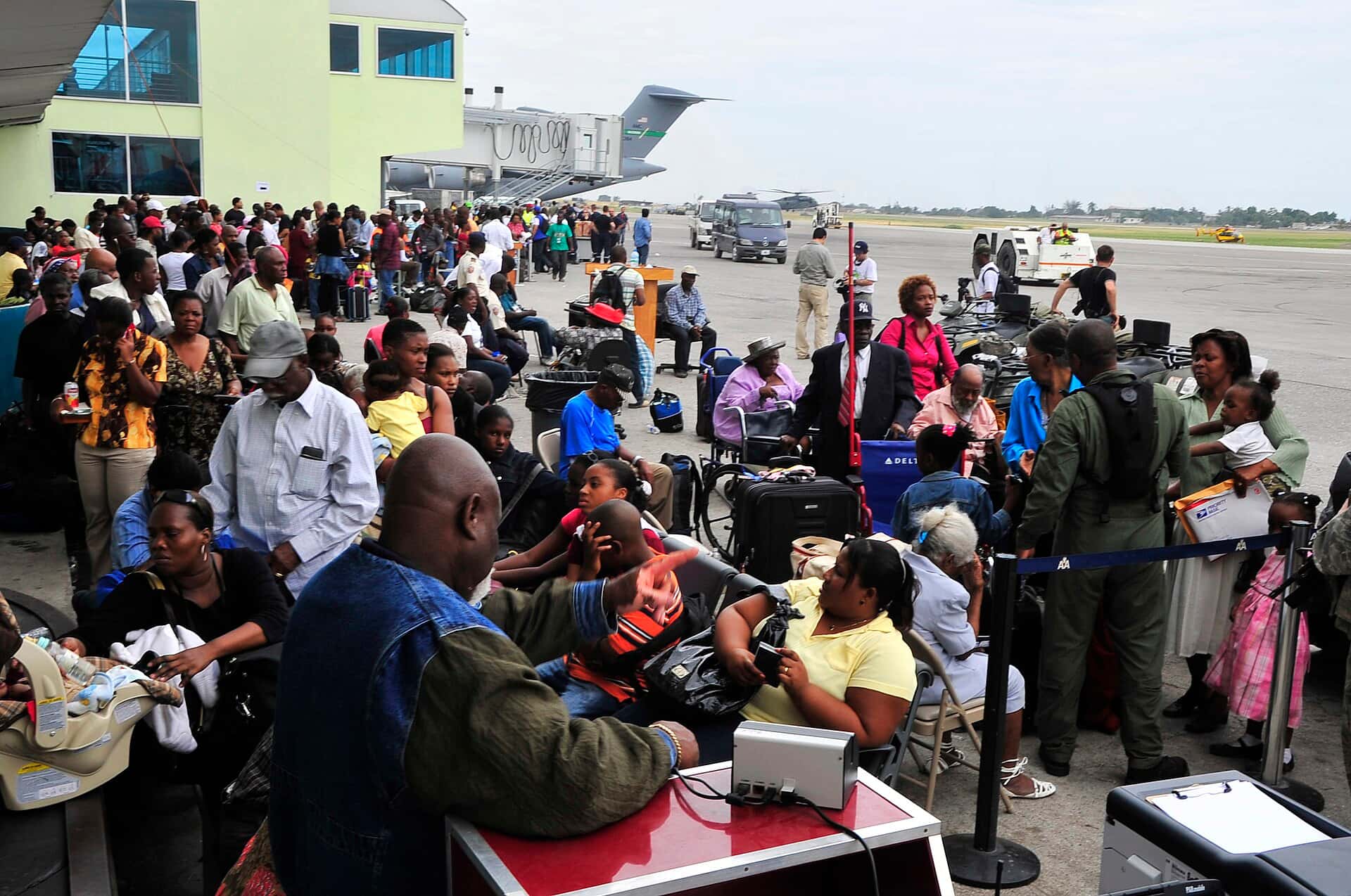
The last group of Venezuelans still holding valid Temporary Protected Status work permits under the 2023 designation reaches its expiration date on Friday, Oct. 2, a deadline that lands hardest in Florida, home to the largest Venezuelan community in the United States. At the same time, the U.S. Supreme Court has before it the Trump administration's request to wipe out the lower-court rulings that once restored the program, a petition the justices took up at their private end-of-summer conference on Sept. 28.
For thousands of families in Doral, Weston, Kendall, Orlando and other Florida communities, the practical question this week is simpler than the legal one: whether a worker who showed up to a job on Thursday can lawfully keep that job on Monday. Federal guidance issued by U.S. Citizenship and Immigration Services ties the answer to the dates printed on each person's employment authorization document, and for the narrow class still protected, the printed date runs out Friday.
The deadline also arrives months after the Supreme Court cleared the way for the government to end TPS for Haitians, the other large Florida immigrant population that relied on the program. Together the two decisions mark the end of an arrangement that, for much of the last five years, allowed hundreds of thousands of Venezuelans and Haitians in Florida to work legally and remain shielded from deportation.
Who is still covered until Friday
The group whose documents expire Friday is defined precisely in USCIS guidance for employers. It covers Venezuelan TPS beneficiaries under the 2023 designation whose TPS-related employment authorization documents show a Valid From date on or before Feb. 5, 2025, and a Card Expires date of Oct. 2, 2026. According to USCIS, those documents remained valid through Oct. 2, 2026, after the Supreme Court in October 2025 allowed the government's termination of the 2023 designation to take effect for everyone else.
Feb. 5, 2025, matters because that is the date then-Homeland Security Secretary Kristi Noem moved to undo the Biden administration's January 2025 extension of the 2023 designation. That extension, published in the Federal Register on Jan. 17, 2025, had pushed protections out to Oct. 2, 2026. People who had already received documents reflecting the extension before Noem acted kept them; people who had not were left exposed when the high court let the termination proceed.
Immigration lawyers and advocates have described the remaining group as a small slice of the original population, with estimates in published analyses running to roughly 5,000 people nationwide. Most Venezuelans who once held TPS under the 2021 and 2023 designations already lost it earlier, either when protections lapsed or when the Supreme Court's emergency orders let the terminations take effect.
Because Oct. 2, 2026, was the outer limit of the Biden-era extension itself, Friday's expiration does not depend on any new government action. Unless a court orders otherwise, the documents simply reach the end of the period for which they were issued.
The Supreme Court petition
The pending Supreme Court case is captioned Mullin v. National TPS Alliance, No. 26-48, after current Homeland Security Secretary Markwayne Mullin. The Justice Department filed its petition for a writ of certiorari on July 9, 2026, asking the justices to review a January 2026 decision of the U.S. Court of Appeals for the Ninth Circuit. The case was distributed on Sept. 9 for the court's Sept. 28 conference, the closed-door session at which the justices sort through petitions that piled up over the summer recess.
The question presented, according to the court's docket and the Solicitor General's filing, is whether the appeals court erred in affirming a district court order that set aside the secretary's vacatur and termination of TPS for Venezuela and a partial vacatur of TPS for Haiti. U.S. District Judge Edward Chen in San Francisco issued that order on Sept. 5, 2025, finding that the government had violated the Administrative Procedure Act. The Ninth Circuit affirmed, concluding that the secretary had exceeded her statutory authority.
The justices can grant the petition and schedule argument, deny it, or vacate the lower-court rulings and send the case back for reconsideration in light of a more recent precedent. That last option is widely seen by immigration practitioners as a realistic possibility, because the court has already ruled on a closely related question this year. The court typically releases the results of its late-September conference in orders issued around the opening of its new term on the first Monday in October, which this year falls on Oct. 5.
Whatever the justices do, the order is unlikely to restore work authorization for the Venezuelans whose documents expire Friday. The Supreme Court's earlier emergency orders already allowed the terminations to take effect while the litigation continued, and the petition concerns the government's ability to defend those terminations, not a request by beneficiaries to revive the program.
Mullin v. Doe changed the landscape
On June 25, 2026, the Supreme Court decided Mullin v. Doe by a 6-3 vote, a case involving the termination of TPS for Haiti and Syria. The majority held that the federal TPS statute strips courts of authority to second-guess the Homeland Security secretary's decisions to end a country's designation on anything other than constitutional grounds. A Congressional Research Service analysis summarized the decision as allowing the terminations for Haiti and Syria to proceed.
The ruling had immediate consequences in South Florida. On Aug. 5, 2026, U.S. District Judge Ana C. Reyes in Washington issued an order acknowledging that the Supreme Court's decision reversed her February 2026 ruling that had stayed the government's termination of Haiti's TPS designation. With that, the injunction that had kept Haitian TPS holders protected was lifted, according to legal analyses of the order.
Legal observers have noted that the reasoning in Mullin v. Doe appears to apply with similar force to the Venezuela case. If courts generally cannot review a secretary's termination of a TPS designation except for constitutional violations, the statutory arguments that carried the day in the Ninth Circuit face a much steeper path. That is why the government's petition in No. 26-48 is closely watched even by people who no longer hold valid documents.
The National TPS Alliance, the plaintiffs' group in the Venezuela litigation, has argued throughout the case that the government acted unlawfully and that the abrupt loss of status harms people who followed every rule of the program.
Why Florida feels it first
Florida has long been the center of gravity for both Venezuelan and Haitian migration to the United States. Miami-Dade County's Doral is so closely associated with the Venezuelan diaspora that residents commonly call it Doralzuela, and Venezuelan-owned restaurants, construction firms, medical offices and logistics companies line its commercial corridors. Broward County's Weston and the Orlando metro area also host large Venezuelan communities.
Haitian Floridians are concentrated in Miami's Little Haiti, North Miami, North Miami Beach, Fort Lauderdale, Delray Beach and other parts of Palm Beach County, as well as in Southwest Florida's agricultural belt around Immokalee and in the Orlando area. Many TPS holders in both communities work in health care, home care, hospitality, construction, agriculture and transportation, industries that have reported tight labor markets across the state.
Business groups and economists have warned that the loss of legal work authorization for TPS holders would ripple through Florida's labor market, particularly in hospitality and caregiving. Published analyses circulating ahead of Friday's deadline have attached multibillion-dollar figures to the economic activity tied to Venezuelan TPS holders in Florida, though those estimates vary depending on how many people are counted and what assumptions are used.
What employers need to know
For Florida employers, the immediate obligation is administrative. Under federal Form I-9 rules, employers must reverify the work authorization of employees whose documents are expiring, and USCIS guidance on the Venezuela litigation has instructed employers to rely on the dates shown on the documents covered by the court orders. Employees in the remaining protected class whose cards show an Oct. 2, 2026, expiration would need to present other evidence of employment authorization to continue working after that date.
Employment attorneys caution that companies must apply reverification rules evenly and avoid singling out workers based on national origin or citizenship status, which can expose employers to discrimination claims under federal law. They also note that some TPS holders may have independent paths to work authorization, such as pending asylum applications, family-based petitions or other forms of relief, and that each case should be evaluated individually.
Florida's own immigration laws add another layer. Since 2023, private employers in Florida with 25 or more employees have been required to use E-Verify for new hires. That requirement does not change the federal reverification rules for existing employees, but it means many Florida businesses already have compliance systems in place to flag expiring documents.
Deportation exposure and enforcement
Losing TPS does not by itself mean a person will be immediately deported, but it removes a key legal shield. Without TPS or another lawful status, a person can be placed in removal proceedings, and those with prior removal orders may face faster action. Florida has more local law enforcement agencies participating in the federal 287(g) program than any other state, which means routine encounters with sheriffs' deputies or police in many counties can lead to immigration screening.
Immigration attorneys in South Florida have advised former TPS holders to gather documentation of their history in the United States, check whether they have pending applications that provide independent protection, and keep copies of their immigration paperwork accessible. Advocates have also encouraged families to make plans for children and property in case a parent is detained.
The federal government has said that individuals who no longer have lawful status should depart voluntarily, and the Department of Homeland Security has promoted programs offering travel assistance for self-deportation. Haitian advocates point out that conditions in Haiti remain dangerous, with armed groups controlling much of the capital region, and they have continued to press Congress for a legislative solution.
The Florida congressional angle
Several members of Florida's congressional delegation, including Republicans from Miami-Dade County, have publicly expressed sympathy for Venezuelans fleeing the Maduro government while supporting the administration's broader immigration agenda. Democratic members from South Florida, including Rep. Debbie Wasserman Schultz, have issued statements praising earlier court rulings that preserved TPS and have called for legislation to protect Venezuelan and Haitian beneficiaries.
Bills that would grant TPS holders a path to permanent status have been introduced in past sessions of Congress but have not advanced. With the Supreme Court having sharply limited judicial review of TPS terminations, advocates say Congress is now the only realistic venue for a durable fix, a point that is likely to figure in South Florida campaigns heading into the November midterm elections.
Neither Florida senator has announced legislation specifically aimed at the Friday deadline. Republican Sens. Rick Scott and Ashley Moody have generally backed the administration's enforcement priorities, while emphasizing their opposition to the Venezuelan government.
What's next
Friday, Oct. 2, is the hard expiration date for the remaining Venezuelan TPS employment documents covered by the court orders. Workers in that group who want to keep working legally after that date will need another basis for employment authorization, and employers will need to complete reverification under federal rules.
The Supreme Court's action on Mullin v. National TPS Alliance could come as soon as the coming days, around the Oct. 5 opening of the court's new term. A grant would set up argument later in the term; a denial or a summary order in light of Mullin v. Doe would likely leave the government's terminations firmly in place.
For Haitian TPS holders, the path forward depends on how quickly the Department of Homeland Security implements the termination now that the injunction has been lifted, and on whether Congress acts. Floridians affected by either program can check their case status through USCIS and should seek advice from licensed immigration counsel or accredited nonprofit representatives before making decisions about work or travel.
Spotted an issue with this article?
Have something to say about this story?
Write a letter to the editorComments
No comments yet. Be the first to weigh in.
Related Coverage
New Treasury Cuba Sanctions Rules Take Effect, Ending Group and Educational Travel Licenses
10m ago

NASA and SpaceX Target Thursday Crew-13 Launch From Cape Canaveral After Dragon Leak Delay
46m ago

Carnival Posts Record Quarter and Strong 2027 Bookings, Lifting Cruise Stocks and Florida Ports
6h ago

Supreme Court Opens New Term Oct. 5 With Florida's Six-Person Felony Juries on the Docket
1d ago