SeaWorld Orlando Consolidates Three Parks Under New President Brad Gilmour
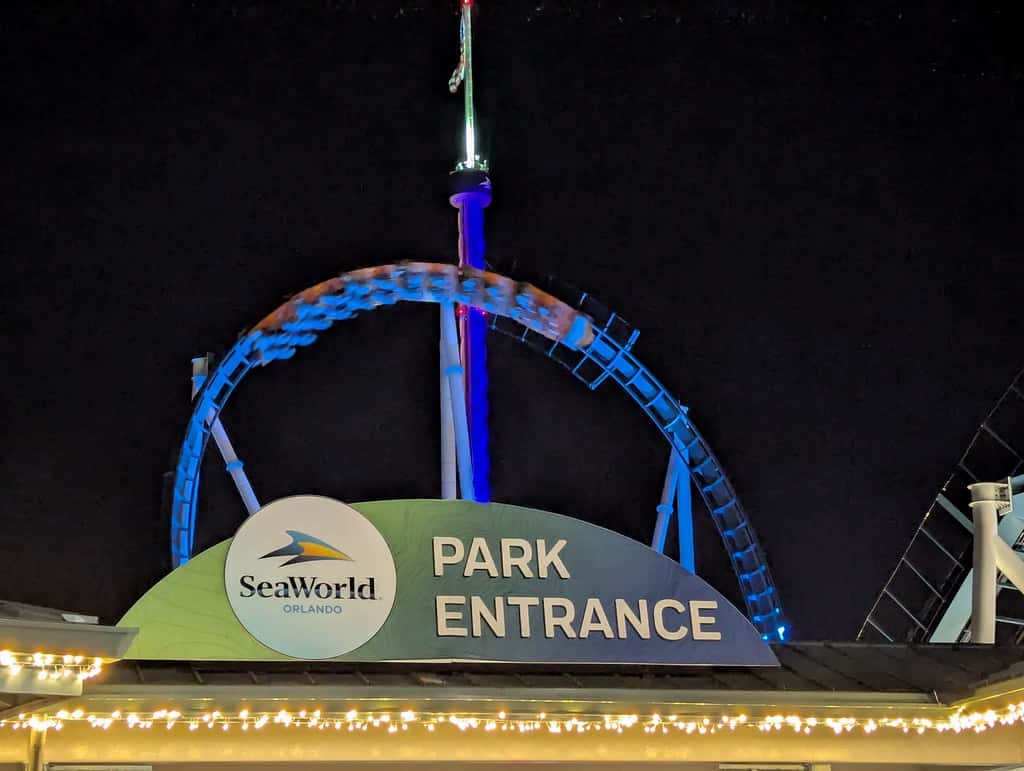
SeaWorld Orlando has named Brad Gilmour park president, placing all three of the company's Orlando properties under a single executive for the first time in recent years. Gilmour, who had served as park president of Discovery Cove and Aquatica Orlando since 2023, adds SeaWorld Orlando to his portfolio effective August 7. He succeeds Jon Peterson, who most recently held the SeaWorld Orlando role.
Gilmour brings 23 years with the company, having begun his career at Discovery Cove in 2003. The consolidation places SeaWorld Orlando, the water park Aquatica Orlando and the reservation-only marine attraction Discovery Cove under one leadership structure within United Parks and Resorts, the parent company formerly known as SeaWorld Entertainment.
The three properties sit adjacent to one another along International Drive in the heart of Orlando's tourism corridor, a geographic clustering that makes a shared leadership structure operationally straightforward.
What the consolidation means operationally
Running three adjacent properties under one president streamlines decisions that cut across all of them: staffing, seasonal operating calendars, combination ticket strategy and capital planning. The three parks already share a labor pool and a marketing footprint, and guests frequently buy multi-park passes that treat them as a single destination.
The move also reflects a broader pattern across the theme park industry, where operators have consolidated regional leadership to reduce management layers. Combining leadership of a marine life park, a water park and a premium reservation-based attraction under one executive requires familiarity with three distinct operating models, which is where Gilmour's tenure across Discovery Cove and Aquatica becomes relevant.
Discovery Cove in particular operates unlike a conventional theme park. It caps daily attendance at roughly 1,300 guests, includes meals and equipment in an all-inclusive admission price, and centers on in-water animal interactions. Its economics depend on yield per guest rather than volume, a different management discipline than a gate-driven park.
The Orlando competitive context
Orlando remains the most concentrated theme park market in the world, and the competitive environment has intensified. Universal Orlando Resort opened Epic Universe in 2025, adding a fourth gate to its resort and materially expanding capacity in the market. Walt Disney World has continued announcing expansions across its four parks.
That capacity growth changes the calculation for every operator in the market. Additional attractions draw incremental visitors to Orlando overall, but they also compete for days within a visitor's itinerary. A family with five vacation days allocates them among available parks, and each new gate competes for a slot.
SeaWorld's Orlando properties occupy a specific position in that landscape, drawing on marine life programming, a roster of thrill coasters and, at Discovery Cove, a premium experience without a direct competitor in the market. The company has invested in coaster additions in recent years as part of its approach to the thrill segment.
The Florida context
Theme parks are central to Florida's economy in ways that extend well past ticket revenue. Orange County's tourist development tax, levied on hotel stays, funds convention center operations, marketing and, through various allocations, community projects. Attendance at the major parks drives hotel occupancy, which drives that tax base.
Employment is the other channel. The major Orlando operators together employ tens of thousands of workers across operations, food service, maintenance, entertainment and animal care. Leadership changes at the property level affect the largest single-site employers in Central Florida.
Florida's tourism performance has remained strong overall, though the composition has shifted, with domestic visitation carrying more of the total than in pre-pandemic years. International arrivals, historically a significant share of Orlando's mix particularly from the United Kingdom and Brazil, have recovered unevenly.
What it means for Florida visitors
For guests, a leadership consolidation generally does not produce immediate visible changes. Ticket structures, operating hours and attraction lineups are set well in advance, and the practical effects of a management change tend to surface over subsequent seasons through capital investment decisions and event programming.
The three Orlando properties operate on different models that guests should understand when planning. SeaWorld Orlando runs as a conventional gate park with seasonal events including its summer and holiday programming. Aquatica operates seasonally as a water park with weather-dependent hours. Discovery Cove requires advance reservations and sells out during peak periods.
Florida residents receive discounted pricing at all three properties, a standard practice across Orlando operators designed to build attendance during periods when tourist volume is lower. Annual pass structures at the SeaWorld properties typically bundle access across the parks.
Local impact across Central Florida
The International Drive corridor where the three parks sit is the densest tourism concentration in Orange County outside the Disney property, encompassing hotels, restaurants, the Orange County Convention Center and retail. Attendance patterns at the parks flow directly into occupancy and revenue for the surrounding businesses.
Transportation demand along the corridor is shaped by park operating calendars, and Orange County and the region's transit planning account for those flows. Employment at the parks draws from communities across Orange, Osceola and Seminole counties.
SeaWorld also maintains a rescue and rehabilitation operation in Florida that responds to stranded and injured marine animals including manatees, sea turtles and dolphins, working alongside state and federal wildlife agencies. That function connects the company to Florida wildlife management in a way distinct from its entertainment operations.
How the three parks differ
The consolidation places three distinctly different operations under one executive, and the differences shape what the role requires.
SeaWorld Orlando operates as a conventional gate park combining animal habitats and shows with a coaster lineup that has expanded over the past decade. Its attendance is weather-dependent but year-round, with seasonal event programming layered onto the base operation to drive repeat visitation from annual pass holders.
Aquatica Orlando is a water park, which means it operates on a seasonal calendar tied to Central Florida weather and closes or reduces hours during cooler months. Water park economics differ from dry parks in staffing, since lifeguard coverage requirements scale directly with the number of open attractions.
Discovery Cove operates on an entirely different model, capping daily attendance at roughly 1,300 guests, bundling meals, equipment and parking into an all-inclusive price, and centering on reservation-based animal interaction experiences. Its revenue depends on yield per guest rather than throughput, and its animal care operation is central rather than supplementary.
The animal care operation
The SeaWorld parks maintain zoological operations that function independently of the entertainment business and are regulated under federal law, including the Animal Welfare Act and Marine Mammal Protection Act, with oversight from the United States Department of Agriculture.
The company operates a rescue program in Florida that responds to stranded, injured and orphaned marine animals including manatees, sea turtles, dolphins and birds. That work is conducted in coordination with the Florida Fish and Wildlife Conservation Commission and the National Oceanic and Atmospheric Administration, which hold regulatory authority over marine mammal and sea turtle response.
Manatee rescue and rehabilitation has been a particularly visible element of that work in Florida, with the state's manatee population facing pressures from cold stress events, watercraft strikes, red tide exposure and seagrass loss. Rehabilitation capacity across Florida facilities is limited, and the parks that maintain it are part of a small network.
The animal care operation shapes public perception of the company in ways that entertainment operations alone would not, and it represents a standing operational commitment that continues regardless of attendance cycles.
Orlando tourism after a capacity expansion
The Orlando market absorbed a significant capacity addition when Universal opened Epic Universe, and how the market adjusts affects every operator including the SeaWorld properties.
The optimistic case is that additional capacity grows the market. A destination with more to do attracts visitors who would not otherwise come and extends the length of stay for those who do, which increases total spending across hotels, restaurants and attractions rather than merely redistributing it.
The competitive case is that vacation days are finite. A family with a fixed number of days and a fixed budget allocates them among available options, and a new gate takes days from existing ones.
Evidence generally supports some of both. Orlando has historically absorbed capacity additions while continuing to grow overall visitation, but individual operators have experienced attendance pressure during periods when competitors opened major additions.
The response across operators has been investment in new attractions and in annual pass programs that build local and regional repeat visitation, which is less sensitive to the vacation-day allocation problem than destination tourism is.
How Orlando parks compete for local visitors
Annual pass programs have become central to how Central Florida attractions manage attendance, and the dynamic differs substantially from destination tourism.
Local and regional pass holders visit frequently for shorter periods, often a few hours rather than a full day. That pattern smooths attendance across the calendar, filling weekdays and off-peak periods that destination visitors do not.
Pass holder spending differs too. Admission revenue is captured upfront, so incremental visits generate revenue through food, merchandise and premium experiences rather than tickets. Operators design offerings accordingly.
Florida resident pricing extends the same logic to visitors who come once or twice a year rather than holding a pass, keeping the parks accessible to a population that lives within driving distance.
The competition among Orlando operators for that local audience is intense, and pass pricing and benefits change regularly as operators respond to one another.
What's next
United Parks and Resorts reports quarterly results that include attendance and per-capita spending across its portfolio, which is where the operational effects of the Orlando consolidation would eventually appear in public reporting.
The near-term calendar for the Orlando properties includes the transition from summer operating hours into fall, when SeaWorld Orlando typically runs seasonal event programming, and the seasonal adjustment of Aquatica's operating schedule as Central Florida moves out of peak water park months.
Longer-term attraction announcements for the SeaWorld Orlando property would fall under Gilmour's purview in his expanded role, and any such plans would typically be communicated through the company's announcement calendar rather than tied to the leadership transition itself.
Spotted an issue with this article?
Have something to say about this story?
Write a letter to the editorComments
No comments yet. Be the first to weigh in.
Related Coverage

Orlando's Theme Park Market Cools Even as Epic Universe Fills Its First Full Year
2d ago

Orlando's Theme Park Balance Shifts as Universal's Epic Universe Reshapes the Market
3d ago

Orlando Theme Park Attendance Softens Into the Fall as Disney and Universal Report Different Results
6d ago
Miami Beach Votes to Close Ocean Drive to Cars From Thanksgiving Through March
Sep 19