SpaceX Ends Falcon 9 Starlink Launches From Florida
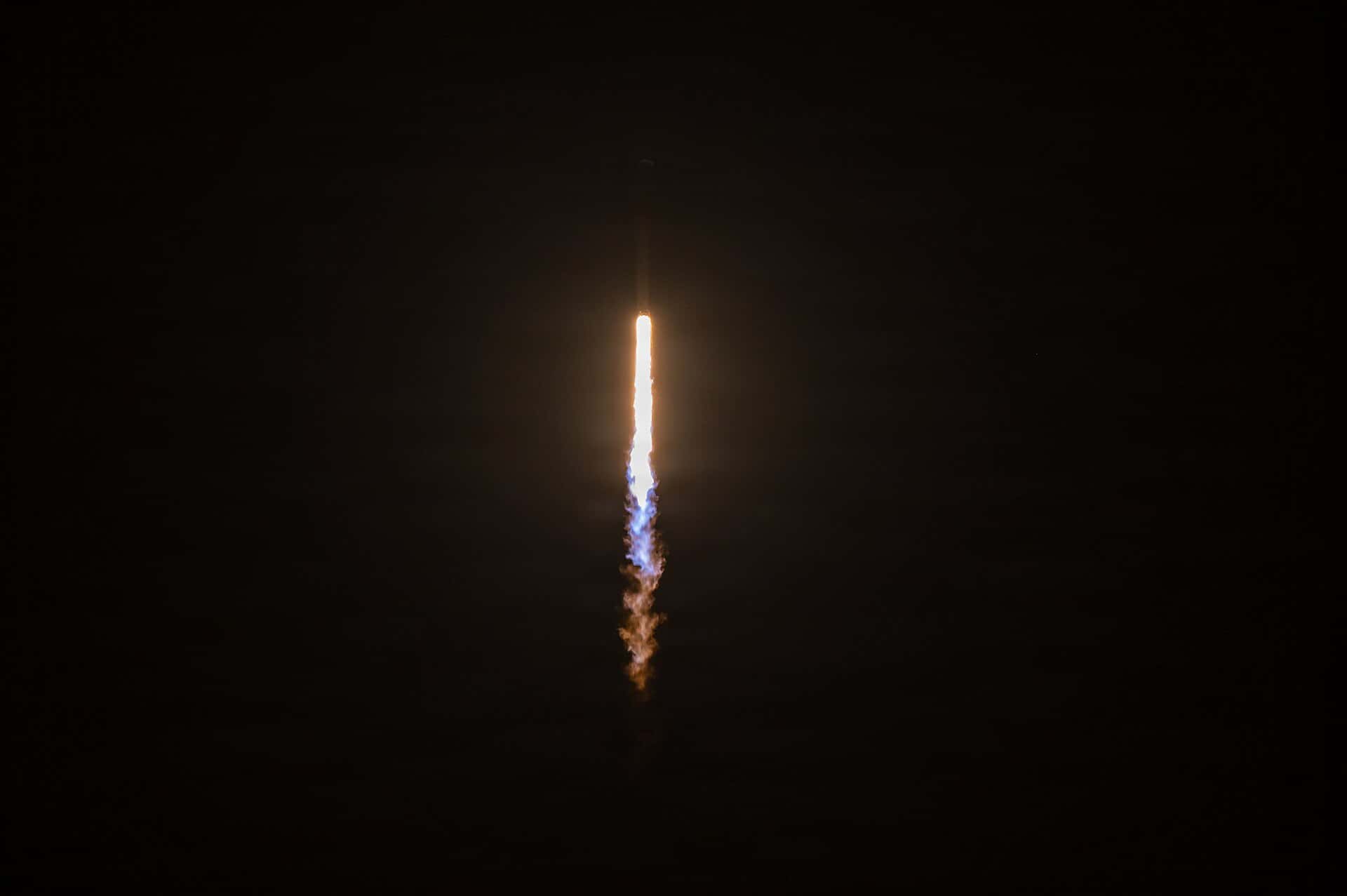
SpaceX flew its last Falcon 9 mission dedicated to launching Starlink satellites from Florida this week, closing a chapter that has defined the Space Coast's launch cadence for years. The company is shifting routine Starlink deployment to Vandenberg Space Force Base in California while it prepares Cape Canaveral for Starship operations, and future Starlink launches from Florida are expected to fly on Starship rather than Falcon 9.
The transition carries a measurable near-term consequence for Brevard County. Reporting on the shift indicates Florida's monthly launch rate could fall from roughly eight or nine to about two as the Starlink missions move west.
For a region whose identity, employment base and tourism draw are built around watching rockets leave the ground, a reduction of that magnitude is significant even if it proves temporary.
What changed
The final Florida Falcon 9 Starlink mission launched 29 Starlink satellites to low Earth orbit from Cape Canaveral Space Force Station on Tuesday, Aug. 25. SpaceX had planned back-to-back launches from both coasts, but upper level winds scrubbed the Florida attempt on the initial try, and a Falcon 9 lifted off from Vandenberg in the interim.
The reasoning behind the shift is infrastructure. Starship requires launch and landing facilities substantially different from those Falcon 9 uses, and converting or building that capability at the Cape requires pad work, ground systems installation and regulatory approvals. Reducing Falcon 9 traffic frees capacity and personnel for that transition.
Vandenberg is well suited to absorb the Starlink workload. Its location on the California coast supports the high-inclination and polar trajectories that a large share of the Starlink constellation uses, and SpaceX has expanded its West Coast launch cadence steadily.
What Starship would mean if it works
The strategic logic depends on Starship performing as intended. The vehicle is designed to carry far more mass to orbit than Falcon 9 and to be fully reusable, which would change the economics of satellite deployment fundamentally.
For Starlink specifically, the constellation's next generation satellites are larger and heavier than the versions Falcon 9 has been deploying. Starship's capacity would allow SpaceX to place substantially more capability into orbit per launch, meaning fewer flights for more satellites.
That produces a counterintuitive result for Florida. A smaller number of Starship launches could deliver more constellation capacity than a larger number of Falcon 9 flights, which means launch count is a poor proxy for the level of activity at the Cape once the transition completes.
The qualifier is that Starship remains in development. Program timelines in launch vehicle development have historically extended, and the interval between the reduction in Falcon 9 Starlink flights and the establishment of routine Starship operations from Florida is the period of genuine uncertainty for the region.
The Space Coast economy
Brevard County's economy is tied to launch activity through several channels. Direct employment at the Cape and Kennedy Space Center is the most visible, spanning SpaceX, NASA, United Launch Alliance, Blue Origin and a supporting network of contractors.
Launch tourism is a second channel that has grown substantially. High cadence turned rocket launches from occasional events into a reliable attraction, filling hotel rooms, restaurants and viewing sites on a near-weekly basis. Businesses in Titusville, Cocoa Beach and Port Canaveral have built around that rhythm.
A drop from eight or nine launches per month to roughly two changes that calculation. Fewer launches means fewer visitors timing trips around them, and the tourism effect is likely to be felt before any employment effect, since staffing decisions lag demand.
The offsetting factor is the buildout itself. Preparing the Cape for Starship requires construction, ground systems work and engineering, which sustains activity even while launch counts fall.
What still launches from Florida
The Cape is not going quiet. Falcon 9 continues to fly non-Starlink missions from Florida, including commercial satellite deployments, national security launches and crew and cargo flights to the International Space Station. Those missions frequently require the orbital inclinations that a Florida launch site provides most efficiently.
Other operators maintain a Florida presence. United Launch Alliance flies from Cape Canaveral. Blue Origin has developed launch infrastructure at the Cape for New Glenn. NASA's Artemis program operates from Kennedy Space Center, with hardware for Artemis 3 arriving through the summer.
Florida's geographic advantage remains structurally intact. Launching eastward over the Atlantic provides a rotational velocity boost and an unpopulated downrange corridor, which is why the Cape was selected in the 1950s and why it continues to host the majority of American orbital launches.
The Florida stake in commercial space
Florida has invested substantially in maintaining its position in the launch industry. Space Florida, the state's aerospace development authority, provides financing and infrastructure support to attract and retain operators, and the state has treated the sector as a priority for economic diversification.
That investment reflects a recognition that Florida's position is not automatic. Vandenberg, Wallops Island in Virginia and commercial sites in Texas and elsewhere compete for launch business, and operators make siting decisions based on trajectory requirements, range availability and cost.
The current shift illustrates the point. SpaceX moved a substantial share of its launch cadence between coasts based on operational logic, and it did so without any change in Florida policy. States can influence but not control these decisions.
What it means for Floridians
For Brevard County residents, the near-term effect is fewer launches to watch and reduced visitor traffic tied to them. Anyone planning a trip specifically to see a launch should expect fewer opportunities and should check schedules carefully, since the cadence that made a launch nearly certain during any given week no longer holds.
For the broader state economy, the aerospace sector remains a meaningful part of Florida's employment base, particularly in high wage engineering and technical roles. Those jobs are concentrated on the Space Coast but extend to suppliers and research operations elsewhere in the state.
The longer-term question is whether Starship operations establish themselves at the Cape on the timeline SpaceX intends. If they do, Florida's position strengthens, since Starship operations would bring larger scale infrastructure and a workforce to match. If the timeline extends, the region absorbs a longer period of reduced activity.
What the Space Coast has been through before
Brevard County has experienced a launch cadence collapse before, and the history is the main reason local officials tend to describe the current shift as a transition rather than a decline.
The Space Shuttle program ended in 2011, and the effect on the region was severe. Thousands of jobs disappeared, housing values fell, and businesses built around the program closed. Recovery took years and came from a source that had not existed at the program's peak: commercial launch providers leasing federal infrastructure and flying at cadences the Shuttle era never approached.
That experience produced a local economic development strategy focused on diversification, including efforts to attract manufacturing, technology and defense employers alongside launch operations. The reasoning was that a regional economy dependent on a single program is vulnerable to decisions made elsewhere.
The current situation differs in an important respect. The Shuttle's retirement removed a program entirely. The current shift moves one category of mission to another site while other Florida launch activity continues and while infrastructure investment for a future vehicle proceeds at the Cape.
Why launch site geography matters
The decision about where a rocket launches is driven substantially by orbital mechanics rather than by business preference, which limits how much any state can influence it.
Launching eastward takes advantage of Earth's rotation, which provides a velocity boost that is largest near the equator. Florida's latitude and its Atlantic coastline make it efficient for missions to equatorial and moderately inclined orbits, including geostationary transfer orbits and the International Space Station's inclination.
Polar and sun-synchronous orbits require launching roughly north or south, and a Florida launch on that trajectory would carry the vehicle over populated areas. Vandenberg's California location allows southward launches over open Pacific water, which is why those missions fly from there.
Starlink's constellation includes shells at inclinations that suit both sites, which gives SpaceX flexibility that a mission with a fixed orbital requirement would not have. That flexibility is what makes the current shift possible, and it is also why non-Starlink Florida missions are unaffected.
What Starlink is and why the cadence was so high
The volume of launches that produced Florida's recent cadence traces to the nature of the constellation being built.
Starlink provides internet service through a large number of satellites in low Earth orbit, an approach that reduces latency compared with traditional satellites in much higher orbits. The tradeoff is that low orbits cover less ground per satellite and decay over time, which means the constellation requires thousands of satellites and continuous replacement.
Satellites in these orbits experience atmospheric drag and deorbit within a few years, a design feature that prevents long-term debris accumulation. The consequence is that maintaining service requires an ongoing launch program indefinitely rather than a one-time deployment.
That replacement requirement is what turned Cape Canaveral into a site launching multiple times per month, and it is why moving the Starlink workload has such a pronounced effect on the local launch count.
What Floridians rely on Starlink for
The service has a specific Florida relevance beyond the launches themselves, particularly in disaster response.
Satellite internet has been deployed in Florida communities after hurricanes where terrestrial infrastructure was destroyed, providing connectivity for emergency operations, utility restoration crews and residents when cell towers and fiber were down. Emergency managers have incorporated portable satellite terminals into response planning.
Rural connectivity is the other application. Parts of Florida, particularly in the interior agricultural counties and portions of the Panhandle, have limited broadband infrastructure, and satellite service has filled gaps where extending fiber is not economical.
Those uses continue regardless of where the satellites launch from, which is a distinction worth noting. The shift affects Florida's launch industry and the Space Coast economy, not the availability of the service to Florida customers.
What's next
SpaceX continues preparing Cape Canaveral facilities for Starship, work that involves pad infrastructure, ground support systems and regulatory review including environmental analysis and Federal Aviation Administration licensing.
Starlink launches from Vandenberg are expected to continue at high cadence in the interim. Non-Starlink Falcon 9 missions from Florida continue on their existing manifest.
For the Space Coast, the measure of this transition will be how long the gap lasts. The Cape has been through cycles before, most notably after the Space Shuttle program ended in 2011, when launch activity and employment fell sharply before the commercial sector rebuilt both. That history is the reason the region tends to view a cadence reduction as a phase rather than a decline.
Spotted an issue with this article?
Have something to say about this story?
Write us a letterComments
No comments yet. Be the first to weigh in.
Related Coverage
SpaceX Targets Tuesday Dawn Launch From Cape Canaveral With Final Solar Arrays for the Space Station
12h ago

Justice Department Restarts Federal 7-OH Ban Using the Same Limits Florida Adopted in June
14h ago

FHA Home Loans to Non-Permanent Residents Collapse in Orlando, Lakeland and Miami After HUD Rule Change
16h ago

Federal Appeals Court Upholds Florida Bar's Higher Fees for Experienced Out-of-State Lawyers
16h ago