SpaceX Falcon 9 Launches 29 Starlink Satellites From Cape Canaveral as Space Coast Cadence Climbs
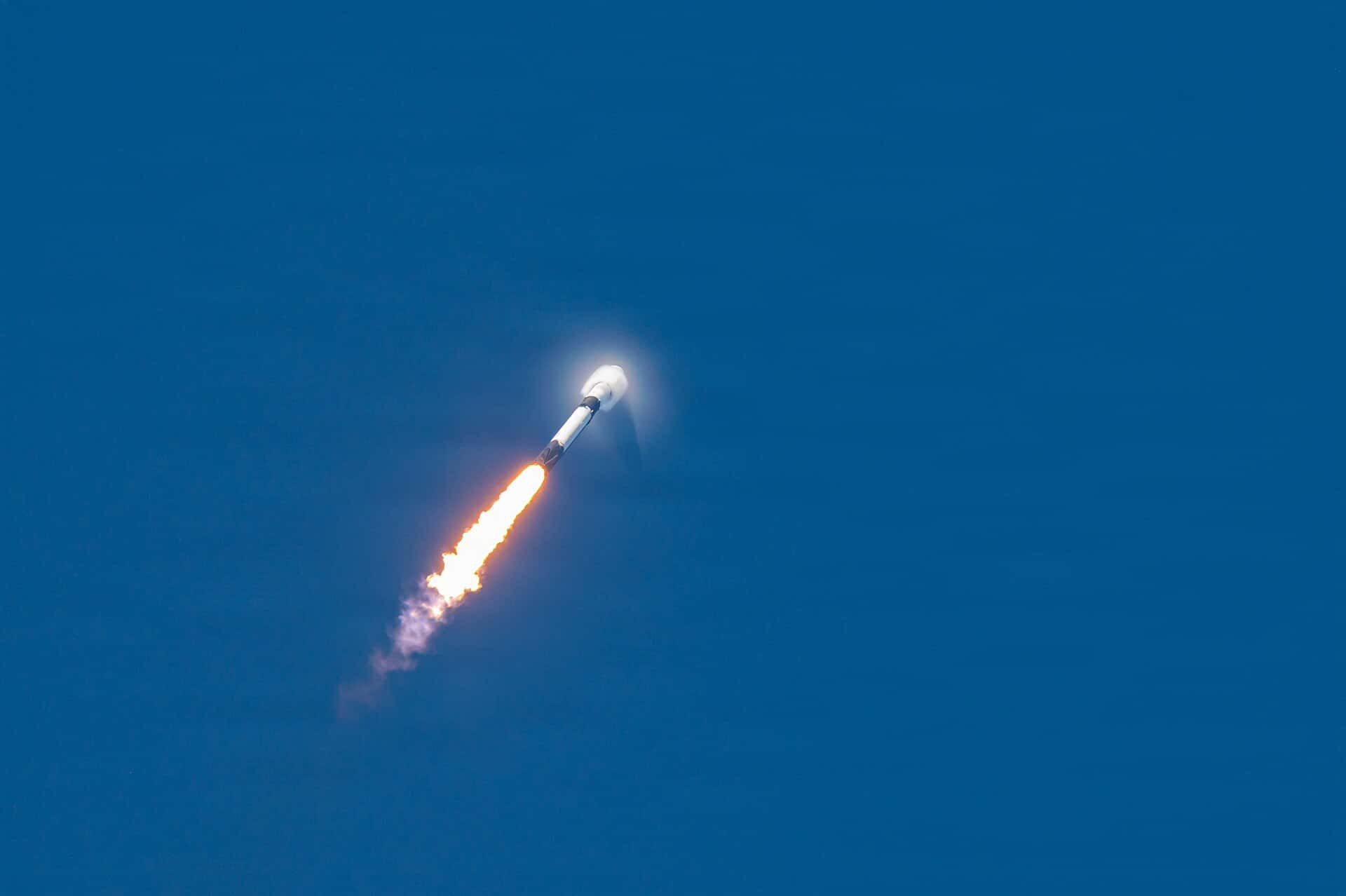
Florida's Space Coast began another busy week before sunrise, with SpaceX targeting a Falcon 9 launch of 29 Starlink V2 Mini Optimized satellites from Cape Canaveral Space Force Station. The mission, lifting off from Space Launch Complex 40, was set to send the satellites toward low Earth orbit during a launch window that opened around 6:07 a.m. EDT on June 8, 2026. For Brevard County, the early flight was one more entry in a launch calendar that has turned Florida's Atlantic coastline into the busiest spaceport region in the country.
The launch was the latest in SpaceX's steady stream of Starlink deployments, the company's effort to build out its broadband satellite network. According to SpaceX and independent launch trackers, the first-stage booster was to return for a landing on the droneship A Shortfall of Gravitas, stationed in the Atlantic Ocean. The reuse of boosters has become routine for the company and is central to the rapid cadence that defines operations along the Space Coast.
For Florida, the significance of a single Starlink launch lies less in the mission itself than in the rhythm it represents. Brevard County's economy, workforce, and tourism profile are increasingly tied to a cadence of launches that has grown year after year, anchoring the state's central role in the U.S. commercial space industry. Each liftoff from Cape Canaveral or neighboring Kennedy Space Center reinforces a regional identity built around access to orbit.
As of early June 8, the launch was described by trackers as scheduled or in progress rather than confirmed complete, and outcomes for any given attempt depend on weather and technical readiness. SpaceX has nonetheless maintained a high launch cadence in recent years, and the Starlink missions that make up much of that schedule have become among the most frequent flights staged from Florida.
A pre-dawn launch from SLC-40
The mission was set to depart from Space Launch Complex 40, one of the busiest pads at Cape Canaveral Space Force Station. The window opening around 6:07 a.m. EDT placed the launch in the early morning, a common slot for Starlink flights that allows SpaceX to thread missions between other activity on the range. Launch windows can shift or scrub for weather or technical reasons, and trackers list backup opportunities for missions of this kind.
The payload, 29 Starlink V2 Mini Optimized satellites, reflects the design SpaceX uses to pack more capability into each batch bound for low Earth orbit. The satellites are intended to expand and replenish the Starlink constellation, the network that delivers internet service to customers in many parts of the world. Deploying them in batches is the method SpaceX has used to build the constellation at scale.
The plan called for the Falcon 9 first stage to separate and return to Earth for a controlled landing on the droneship A Shortfall of Gravitas in the Atlantic. Droneship landings allow SpaceX to recover boosters from missions that do not have the performance margin to return to land, and they have become a familiar sight in the company's operations off the Florida coast.
Booster recovery is the foundation of SpaceX's cost and cadence strategy. Reusing first stages across many flights reduces the expense of each launch and shortens the turnaround between missions, allowing the company to keep a dense schedule. For the Space Coast, that strategy translates into a higher frequency of launches and a steadier flow of activity at the spaceport.
The Space Coast's record cadence
Cape Canaveral and Kennedy Space Center together form the core of Florida's Space Coast, a stretch of Brevard County that has reclaimed its place at the center of American spaceflight. The pace of launches has risen sharply in recent years, driven largely by SpaceX's frequent Falcon 9 flights but supported by a broader roster of missions and operators using the range.
That cadence has reshaped expectations for what a single spaceport region can sustain. Where launches were once rare and singular events, the modern Space Coast schedules them in close succession, sometimes within days of one another. The result is a near-continuous tempo of activity that distinguishes Florida from other launch sites in the country.
June 2026 illustrates the density of the calendar. Beyond the June 8 Starlink flight, other Cape Canaveral missions targeted for the month include AST SpaceMobile Block 2 BlueBird satellites in mid-June, a Globalstar 2-R mission, and SiriusXM's SXM-11. The lineup spans broadband, mobile connectivity, and satellite radio, a snapshot of the range of customers drawn to Florida's launch infrastructure.
The clustering of missions reflects both demand and capacity. Commercial operators need reliable access to orbit, and the Space Coast offers the pads, recovery assets, and range support to provide it. As more constellations and communications networks seek deployment, the schedule has thickened, and Florida has absorbed much of that growth.
What launches mean for Brevard County
The economic weight of the launch industry is felt most directly in Brevard County, home to Cape Canaveral and Kennedy Space Center. The cadence of missions supports a workforce that spans engineering, manufacturing, range operations, and the many supporting businesses that orbit the spaceport. A busier launch calendar translates into sustained demand for those jobs.
The ripple effects extend beyond the pads. Suppliers, contractors, and service providers across the region benefit from a steady tempo of activity, and the concentration of aerospace work has helped anchor a local economy increasingly identified with spaceflight. The growth of commercial launch operators has broadened that base beyond its historical reliance on government programs.
Tourism is another beneficiary. Launches draw spectators to Brevard County's beaches and viewing areas, and a high cadence means more frequent opportunities for visitors to witness a liftoff. The spectacle of a rocket departing the Florida coast has become a draw in its own right, feeding hotels, restaurants, and attractions across the Space Coast.
That visibility carries an identity as much as an economic value. The Space Coast brand, built on decades of spaceflight history and renewed by the current launch boom, positions Brevard County and Florida as central players in the national space story. Each mission reinforces a sense of place tied to the business of reaching orbit.
Florida's role in commercial space
Florida's prominence in commercial spaceflight rests on infrastructure accumulated over decades and adapted for a new era. The pads, ranges, and recovery operations along the Atlantic coast were built for an earlier age of spaceflight and have been repurposed and expanded to serve a marketplace dominated by private operators flying frequent missions.
SpaceX's Starlink program is a major driver of that activity. The constellation requires continual launches to deploy and maintain its satellites, and a large share of those flights originate in Florida. The cumulative effect is a launch site that sees rockets depart on a schedule once unimaginable, with Starlink missions forming a recurring backbone of the calendar.
The diversity of June's manifest underscores that Florida serves more than one company or purpose. AST SpaceMobile's BlueBird satellites are aimed at connecting mobile phones directly via space, Globalstar supports satellite communications, and SiriusXM delivers satellite radio. The breadth of customers signals that Florida's appeal extends across the commercial space sector.
That breadth matters for the durability of the industry's presence in the state. A spaceport reliant on a single customer is vulnerable to that customer's fortunes, but a range serving many operators across many markets builds resilience. Florida's position as a hub for varied missions strengthens its long-term role in U.S. commercial space.
How a Falcon 9 mission unfolds
A Falcon 9 launch follows a sequence that has become familiar through repetition. After the window opens and final checks are completed, the rocket lifts off and climbs through the atmosphere, with the first stage providing the initial thrust. The cadence of these steps is closely tracked by the company and by independent observers who follow each mission.
Following stage separation, the first stage begins its return while the second stage continues toward orbit with the payload. For this mission, the booster's destination was the droneship A Shortfall of Gravitas in the Atlantic, where it was to attempt a landing for recovery and potential reuse on a future flight.
The second stage carries the satellites to the planned orbit and deploys them, completing the primary objective of the mission. For Starlink flights, deployment releases the batch of satellites that will then maneuver into their operational positions within the constellation over the following period. The deployment marks the point at which the satellites begin their own journeys.
Because each attempt depends on weather and technical readiness, launches can be delayed or scrubbed and rescheduled. As of early June 8, the Starlink mission was described as targeted for that morning, and confirmation of a successful flight and landing would follow the attempt itself. SpaceX's track record of frequent launches reflects a process refined through repeated execution.
What's next
The June 8 Starlink launch was positioned as the opening act in a crowded month for Cape Canaveral. With the AST SpaceMobile BlueBird mission targeted for mid-June and the Globalstar 2-R and SiriusXM SXM-11 missions also on the calendar, the Space Coast is set to sustain its high tempo through the weeks ahead.
Each of those missions will test the range's capacity to stage launches in close succession, a capacity that has grown to meet the demands of commercial operators. The schedule reflects a marketplace in which access to orbit is sought across communications, broadband, and other sectors, all converging on Florida's launch infrastructure.
For Brevard County, the steady cadence reinforces an economy and identity bound to spaceflight. The jobs, tourism, and regional brand tied to the Space Coast all depend on a calendar that keeps rockets departing the Florida coast, and the current pace shows little sign of slowing.
Observers will watch whether the month's manifest holds to schedule and whether the cadence continues its upward trend. Whatever the outcome of any single launch, the broader trajectory points to Florida remaining at the center of the U.S. commercial space industry, with Cape Canaveral as its busiest gateway to orbit.
Spotted an issue with this article?
Have something to say about this story?
Write us a letterComments
No comments yet. Be the first to weigh in.
Related Coverage

USDA's $8 Billion Harvest Fuel Relief: What Florida Growers and Fishermen Can Expect
10h ago
SpaceX Posts $4.4 Billion Profit on $14.6 Billion Revenue as Starship Readies for Florida Pads
11h ago

NOAA Weighs Reopening Part of Florida's Rare Oculina Bank Coral Reef to Shrimp Trawling
13h ago

Monroe County Elections Chief Investigating Video of Apparent Armed Federal Agents Outside Keys Early Voting Site
13h ago