SpaceX Launches 29 Starlink Satellites from Cape Canaveral, Booster Lands for Record 28th Time
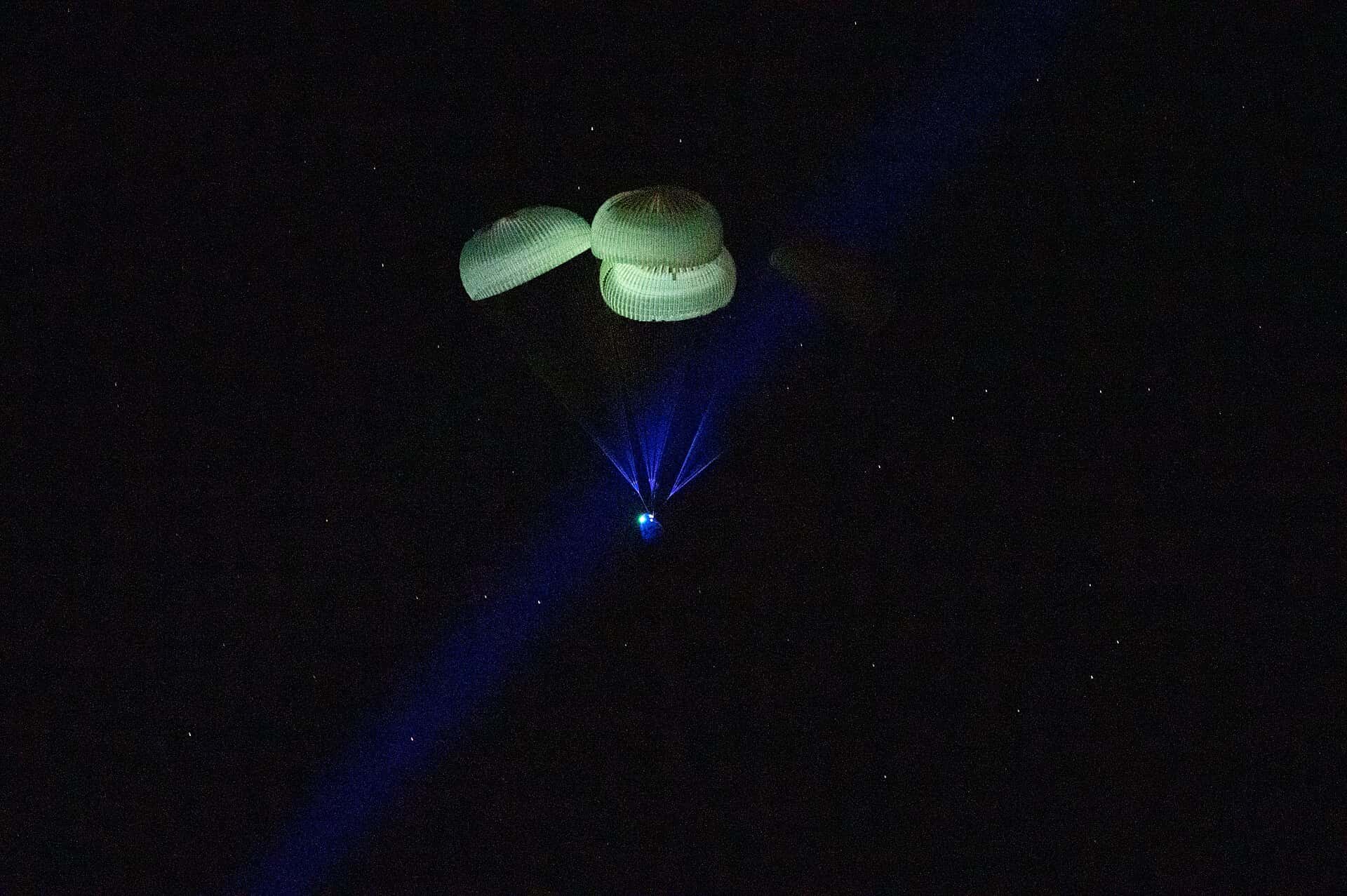
A SpaceX Falcon 9 rocket lifted off from Space Launch Complex 40 at Cape Canaveral Space Force Station on May 25, successfully deploying 29 Starlink V2 Mini Optimized satellites into low Earth orbit in the latest mission adding to the company's global satellite internet constellation. The launch marked the 28th flight of first-stage booster B1078, setting a new record for the number of missions completed by a single Falcon 9 booster, and the booster again executed a successful landing on the autonomous drone ship named A Shortfall of Gravitas positioned in the Atlantic Ocean approximately 400 miles downrange from the launch site.
The Mission in Detail
Liftoff occurred at 7:41 a.m. Eastern Daylight Time from SLC-40, one of the two Falcon 9 launch pads at Cape Canaveral Space Force Station. The rocket carried 29 Starlink V2 Mini Optimized satellites, the latest generation of the internet broadband satellites that SpaceX has been deploying at a rapid pace to expand the Starlink network's global coverage and improve its performance. V2 Mini satellites are significantly larger and more capable than the original Starlink satellites, offering more bandwidth per satellite and requiring fewer individual units to provide coverage at any given location.
Approximately eight and a half minutes after liftoff, booster B1078's engines reignited for the entry burn and then the landing burn sequence that brought the 15-story first stage safely back down onto the drone ship's deck. The landing, which SpaceX livestreamed on its website and YouTube channel, generated the distinctive sonic boom that Space Coast residents and visitors have come to associate with Falcon 9 recoveries at sea. Booster B1078 is now the most-flown Falcon 9 first stage in history, having accumulated 28 flights since it first flew in 2021, well ahead of the previous record of 23 flights set by another Falcon 9 booster.
Approximately 65 minutes after liftoff, the Falcon 9's upper stage deployed all 29 satellites into their planned low Earth orbit, from which they will use onboard electric thrusters to reach their operational altitude and begin providing service as part of the Starlink network. SpaceX typically confirms satellite deployment and status in the days following launch as the vehicles check out their systems and begin raising their orbits.
Cape Canaveral's Role in the Global Space Economy
The May 25 launch was the latest in what has become a relentless drumbeat of SpaceX launches from Florida's Space Coast, where Cape Canaveral Space Force Station and the adjacent Kennedy Space Center together form the busiest launch corridor in the world. SpaceX has achieved an extraordinary launch cadence in recent years, with Falcon 9 rockets launching from the Space Coast an average of more than once per week over the course of 2025 and into 2026. Each launch generates direct economic activity in Brevard County and the surrounding communities through payroll, supplier spending, fuel purchases, and the visitor spending of aviation and space enthusiasts who travel to witness launches in person.
The economic significance of the Space Coast launch corridor to Florida extends beyond the direct SpaceX operations. The clustering of aerospace activity at Cape Canaveral has created a dense ecosystem of suppliers, contractors, engineering firms, and support businesses that serve both SpaceX and the other entities that operate in the corridor, including United Launch Alliance, Blue Origin, and various national security space launch providers. Brevard County's aerospace employment represents one of the highest-wage job clusters in Florida, and the region's workforce and infrastructure have been built up over more than six decades of launch operations dating back to the early NASA programs.
The Falcon 9's reusability, demonstrated by the 28-flight record set by booster B1078, has been transformative for the economics of launch services. When a Falcon 9 booster that cost tens of millions of dollars to build can be reflown 28 times rather than discarded after a single use, the per-flight amortization of the booster's cost drops dramatically. That cost reduction has allowed SpaceX to offer launch prices that have disrupted the commercial launch market, displacing established providers like United Launch Alliance and international competitors that still rely primarily on expendable rockets. The reusability advantage translates directly into Florida's launch economy through the higher launch frequency that lower per-mission costs make commercially viable.
Starlink's Florida Impact
The Starlink satellite internet service that each successive launch expands has particular relevance for Florida's geography and connectivity landscape. Florida's long, narrow peninsula features a large number of coastal communities, rural areas, and barrier islands where traditional terrestrial internet infrastructure is limited or expensive to maintain. For residents of rural Florida counties, small coastal communities on barrier islands, and areas where hurricane damage has disrupted conventional internet service, Starlink offers a connectivity option that was not practical or available before the constellation reached its current scale.
The maritime applications of Starlink also carry outsized relevance for Florida, which has the largest fleet of recreational and commercial watercraft of any state in the country and which serves as the home port for the world's largest cruise lines. Carnival Corporation, Royal Caribbean, Norwegian Cruise Line, and other cruise operators have adopted Starlink for passenger connectivity on their vessels, providing cruise passengers with broadband internet access at sea that was not available at anything like the current quality or price point before satellite constellation technology reached its present capability.
Commercial fishing vessels, pleasure craft, and the emergency response vessels of the US Coast Guard, which maintains a significant Florida presence, also benefit from the enhanced maritime connectivity that Starlink provides. The Coast Guard's maritime search and rescue operations in Florida's waters, the Florida Fish and Wildlife Conservation Commission's law enforcement patrols, and the Florida Division of Emergency Management's post-hurricane response coordination all potentially benefit from reliable broadband connectivity that functions far from shore and in conditions that challenge conventional cellular networks.
B1078's Record and SpaceX's Reusability Program
The 28th flight of booster B1078 represents the practical culmination of SpaceX's decade-long investment in developing, testing, and refining Falcon 9 first stage reusability. When SpaceX first successfully landed a Falcon 9 booster in December 2015, the achievement was celebrated as a technological breakthrough but greeted with skepticism about whether economically meaningful reuse at scale was achievable. A decade later, the company routinely flies boosters to more than 20 landings, has a fleet of drone ships and landing zones supporting recovery operations, and has integrated reusability so thoroughly into its operations that a new booster first flight is now the exception rather than the rule.
The engineering that enables 28 flights from a single rocket booster involves meticulous maintenance, inspection, and refurbishment between flights. After each landing, SpaceX technicians at its Florida facilities inspect the booster's nine Merlin engines, the landing legs, the grid fins, the propellant tanks, and the avionics systems. Worn components are replaced, any damage from the launch environment is repaired, and the booster is fueled and integrated with a new upper stage for its next mission. The logistics of managing a fleet of dozens of boosters in various stages of refurbishment, integration, and readiness at Cape Canaveral represent a significant manufacturing and operations challenge that SpaceX has mastered over the course of hundreds of successful recovery missions.
Kennedy Space Center and NASA Programs
While SpaceX's commercial Starlink launches dominate the launch manifest at Cape Canaveral Space Force Station, the adjacent Kennedy Space Center supports NASA's human spaceflight programs and serves as the launch site for the Space Launch System rocket that carries the Artemis missions toward the Moon. NASA's Commercial Crew program, which uses SpaceX's Crew Dragon spacecraft launched on Falcon 9 rockets from KSC's Launch Complex 39A, has continued to deliver astronauts to and from the International Space Station, maintaining American access to the station that was restored after a decade of dependence on Russian Soyuz vehicles.
The May 25 Starlink launch from SLC-40 coexists with the broader manifest at the Space Coast, where the two NASA-associated pads at KSC and the military launch complexes at the Space Force Station collectively support a launch rate that would have seemed implausible even a decade ago. The combination of NASA programs, national security launches, commercial satellite deployments, and the Starlink manifest makes the Cape Canaveral corridor the most actively utilized launch complex on earth, a status that generates not only economic activity but significant geopolitical significance as American access to space has become a strategic asset in the competition with China's expanding space program.
What Comes Next for SpaceX in Florida
SpaceX's Florida launch schedule through the summer and fall of 2026 includes additional Starlink deployments, commercial satellite missions for international customers, and the ongoing Crew Dragon transportation missions to the ISS. Blue Origin's announced $600 million expansion of its Cape Canaveral campus, while not a SpaceX initiative, will further increase the density of launch infrastructure and manufacturing activity at the Space Coast corridor, deepening the economic ecosystem that benefits the broader Brevard County and Space Coast community.
For the thousands of Florida residents and visitors who regularly watch Falcon 9 launches from beaches, highway overpasses, and parks throughout the Space Coast region, the regularity of launches has transformed what was once a special event into a routine feature of life in Brevard County. Launch viewing tourism, while not as intensively developed as other Florida tourism segments, contributes meaningfully to local hospitality and retail spending, and the Space Coast's identity as a launch destination continues to attract visitors whose primary purpose is watching a rocket lift off from the county where American human spaceflight first began in the early 1960s.
Spotted an issue with this article?
Have something to say about this story?
Write us a letterComments
No comments yet. Be the first to weigh in.
Related Coverage

Isaias Shuts Pensacola and Okaloosa Airports as Airlines Waive Fees and Tolls Lift on Panhandle Bridges
4h ago

Ex-CIA official pleads guilty in $194 million fraud, will forfeit $102 million in Palm Beach and Hobe Sound real estate
4h ago
11th Circuit voids septic permit ban in Indian River Lagoon manatee case after federal 'harm' rule rollback
4h ago

Trump ties disaster aid to midterm campaign as Hurricane Isaias nears Florida Panhandle
23h ago