Rubio's Latin America Diplomacy Carries Weight in South Florida's Diaspora
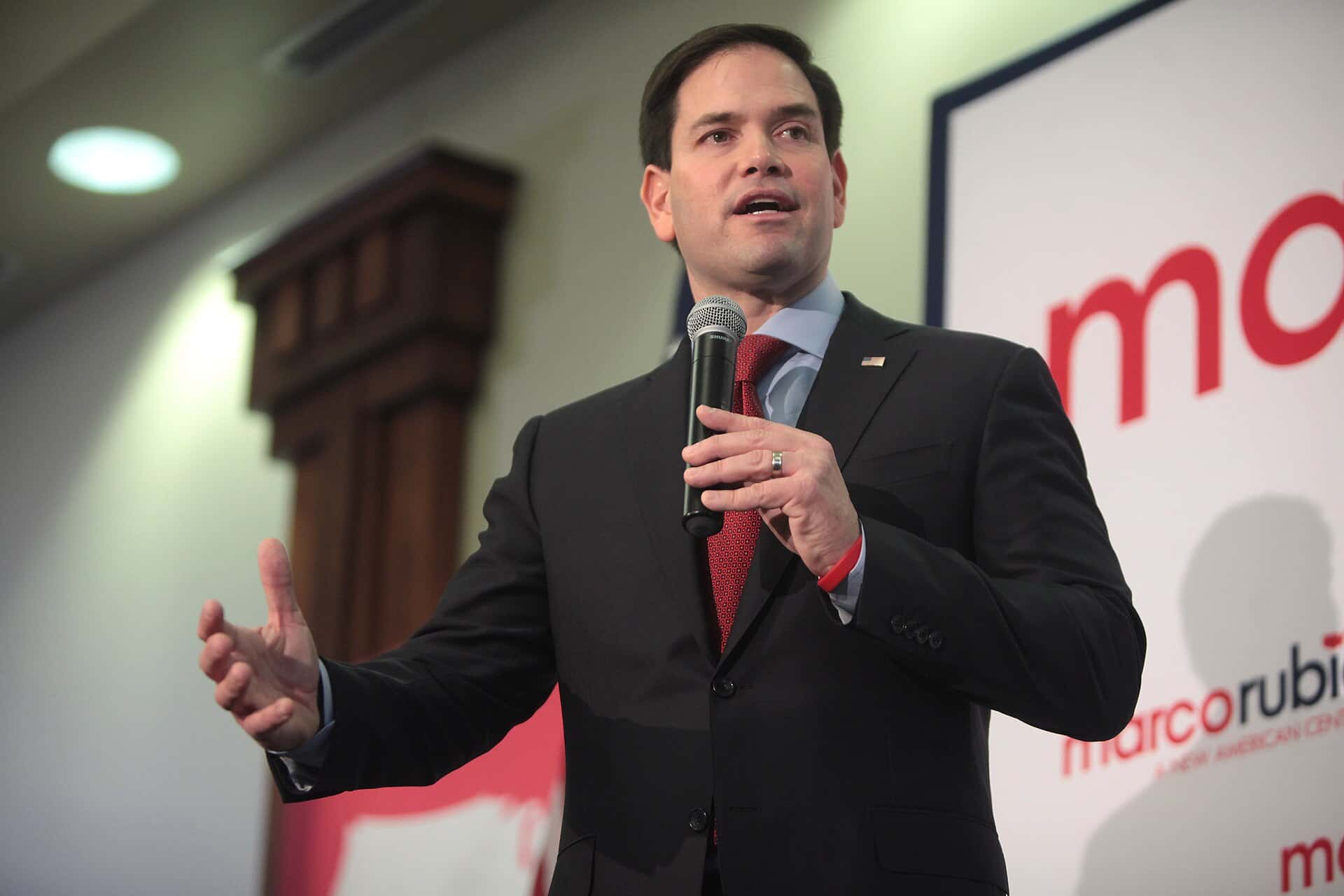
Secretary of State Marco Rubio, the former Florida US senator now serving as the nation's top diplomat, is conducting an active season of Latin America diplomacy that carries unusual weight in South Florida. As a Cuban American from Miami, Rubio brings a personal and political connection to the region that resonates deeply with the Cuban, Venezuelan, Nicaraguan, and Haitian communities that give the area much of its distinctive character. His work at the State Department is followed in South Florida not as distant policy but as decisions with direct meaning for families with roots across the Caribbean and Latin America.
Rubio is the 72nd secretary of state, sworn in during January 2025, and by mid-2026 he is deep into the diplomacy that defines the role. His recent activity has ranged from meetings with foreign counterparts to appearances tied to the nation's 250th anniversary, and it unfolds against the backdrop of long-running US concerns about Cuba, Venezuela, and Nicaragua, three countries whose politics have shaped South Florida's population for generations.
For a state where the diaspora vote can move elections and where the fate of relatives abroad is a constant preoccupation, having a Florida-rooted secretary of state directing Latin America policy is significant. It links Washington's foreign policy to the lived experience of hundreds of thousands of Floridians in a way that few Cabinet appointments ever have.
A Miami Story at the State Department
Rubio's biography is inseparable from the South Florida communities that now watch his work so closely. As a Cuban American who built his political career in Miami, he embodies the trajectory of a region shaped by waves of migration from the island and, later, from other parts of Latin America. His rise from Florida politics to the Senate and then to the State Department gives South Florida a sense of proximity to national foreign policy that is rare for any region.
The secretary of state directs American diplomacy across the globe, but Rubio's long focus on the Western Hemisphere makes his tenure especially consequential for Florida. Over his years in public life, he has been a leading voice on US policy toward Cuba, Venezuela, and Nicaragua, positioning himself as a persistent advocate for a firm posture toward those governments. That record is well known in Miami, where the politics of the diaspora and the politics of Washington have long been intertwined.
The result is a dynamic in which national policy and local identity overlap. When the State Department addresses the hemisphere, South Florida residents often hear echoes of their own family histories, and the presence of a Miami figure at the helm sharpens that connection.
Early July Diplomacy on the Calendar
Rubio's schedule in early July 2026 illustrates the range of a secretary of state's duties. Around July 6, 2026, he met with Chilean Foreign Minister Francisco Perez Mackenna, an engagement that reflects the broader work of maintaining relationships across Latin America. Chile is a significant partner in the region, and high-level meetings of this kind are the routine substance of hemispheric diplomacy, the kind of contact that keeps channels open on trade, security, and shared regional concerns.
A few days earlier, around July 2, 2026, Rubio spoke at a reception marking the Consular Affairs launch of the "Patriot Passport," a redesigned passport commemorating the nation's 250th anniversary. The event tied the work of the State Department to a broader national milestone, and it underscored the department's role in the everyday services that connect Americans to the world, from travel documents to consular support abroad.
These appearances, one focused on bilateral diplomacy and the other on a domestic ceremonial occasion, capture the dual nature of the office. A secretary of state manages both the grand strategy of foreign relations and the institutional life of a large federal department. For South Florida audiences, the Chile meeting is a reminder that Rubio's remit spans the hemisphere, while the passport event shows the department's public-facing work at home.
Why Cuba Policy Matters in South Florida
No issue connects Rubio to South Florida more directly than US policy toward Cuba. Miami and its surrounding communities were built in significant part by Cubans who left the island across successive decades, and the question of how the United States engages with Havana remains a defining concern for many families. Rubio's long-standing advocacy for a firm stance toward the Cuban government aligns him with a substantial segment of that community.
Cuba policy in South Florida is not an abstract debate. It touches family visits, remittances, the ability to communicate with relatives, and the broader hope, held by many, for political change on the island. Because these matters affect daily life, the diaspora follows federal decisions on Cuba with an intensity that outsiders sometimes underestimate. A secretary of state who shares that heritage brings a personal dimension to the policy that few of his predecessors could.
The details of specific policy remain the province of the federal government, and the direction of US-Cuba relations is shaped by many forces beyond any single official. What is distinctive in this moment is that the person leading American diplomacy comes from the very community most invested in the outcome, a fact that lends every development an added resonance in Miami.
Venezuela, Nicaragua, and a Growing Diaspora
South Florida's connection to Latin America extends well beyond Cuba. In recent years, large numbers of Venezuelans have settled in the region, fleeing economic collapse and political turmoil, and they have become a growing and increasingly influential community. Nicaraguans, too, have long had a presence in the area, joining a mosaic of communities with ties to countries across the hemisphere.
Rubio has been a prominent voice on US policy toward both Venezuela and Nicaragua, issues that carry the same personal stakes for those communities that Cuba policy carries for Cuban Americans. Families separated by migration, concern for relatives still living under difficult conditions, and hopes for change all shape how the diaspora views Washington's posture toward these governments. As with Cuba, the specifics of policy are set at the federal level, but the attention paid to them in South Florida is unusually keen.
The addition of large Venezuelan and Nicaraguan populations has broadened the region's political map. Where Cuban Americans once defined the diaspora's engagement with foreign policy, a wider set of communities now brings its own priorities to the conversation. A secretary of state focused on the hemisphere speaks to all of them, and the diversity of South Florida's Latin American communities means his decisions ripple across multiple constituencies at once.
The Diaspora's Political Weight in Florida
The interest South Florida takes in Latin America diplomacy is amplified by the political weight the diaspora carries within the state. Florida is one of the largest and most closely watched states in national politics, and its Latin American communities have long been a decisive force in its elections. Candidates for offices from city hall to the presidency have tailored their messages to Cuban American, Venezuelan, and Nicaraguan voters, recognizing that these communities can tip close contests.
Foreign policy toward Cuba, Venezuela, and Nicaragua is therefore not only a matter of international relations but also a feature of Florida's domestic politics. Positions on these issues are scrutinized by voters who bring personal history to the ballot box, and the alignment between a candidate's foreign policy stance and the diaspora's priorities can shape electoral outcomes across the region.
Rubio's own career is a testament to that dynamic. His path through Florida politics was built in part on his engagement with these communities and their concerns, and his elevation to secretary of state now places a figure shaped by Florida's diaspora politics at the center of the policy those same voters care about most. The feedback loop between South Florida and Washington runs through his office.
Haitian Ties and a Wider Caribbean Lens
South Florida's stake in hemispheric diplomacy also runs through its large Haitian community, one of the most significant in the United States. Concentrated in Miami-Dade and Broward counties, Haitian Americans bring their own history of migration and their own close attention to conditions in the Caribbean. For them, as for the region's other diaspora communities, US foreign policy is a matter followed with personal urgency rather than abstract curiosity.
The presence of Cuban, Venezuelan, Nicaraguan, and Haitian communities side by side gives South Florida a distinctive vantage point on Latin America and the Caribbean. Few places in the country combine so many communities with direct ties to the hemisphere, and that concentration turns the region into a natural audience for the work of a secretary of state focused on the Americas. The mix of histories and homelands ensures that hemispheric diplomacy touches a broad cross-section of local life.
Because the specifics of policy toward each country are set at the federal level and shaped by many actors, the diaspora's interest lies as much in tone and direction as in individual decisions. Residents watch for signs of how the United States intends to engage with the region as a whole, reading each meeting and statement for what it may signal about the future. That attentiveness is a defining feature of South Florida's political culture.
What South Florida Is Watching
Looking ahead, South Florida will continue to watch Rubio's diplomacy closely, attentive to any developments touching Cuba, Venezuela, and Nicaragua. The communities most affected have learned to read federal signals carefully, and they will follow his meetings, statements, and travel for indications of where US policy toward the hemisphere is heading. That attention is a constant, rooted in the personal stakes these issues carry for so many Floridians.
The broader work of the State Department, from engagements like the meeting with Chile's foreign minister to institutional milestones like the Patriot Passport launch, will continue regardless of any single regional focus. But in South Florida, it is the hemispheric thread that draws the most interest, because it connects most directly to the lives and histories of the region's residents.
For now, the story is one of a Florida-rooted secretary of state conducting the ordinary and extraordinary business of American diplomacy, with a large and engaged audience back home tracking every step. As that diplomacy unfolds through 2026, the Cuban, Venezuelan, Nicaraguan, and Haitian communities of South Florida will remain among its most invested observers, watching to see how the work of one of their own shapes the policy that has defined their region for generations.
Spotted an issue with this article?
Have something to say about this story?
Write us a letterComments
No comments yet. Be the first to weigh in.
Related Coverage

Isaias Shuts Pensacola and Okaloosa Airports as Airlines Waive Fees and Tolls Lift on Panhandle Bridges
3h ago

Ex-CIA official pleads guilty in $194 million fraud, will forfeit $102 million in Palm Beach and Hobe Sound real estate
4h ago

11th Circuit voids septic permit ban in Indian River Lagoon manatee case after federal 'harm' rule rollback
4h ago
Trump ties disaster aid to midterm campaign as Hurricane Isaias nears Florida Panhandle
23h ago