Tampa Police Arrest Man in Fatal North Nebraska Avenue Shooting
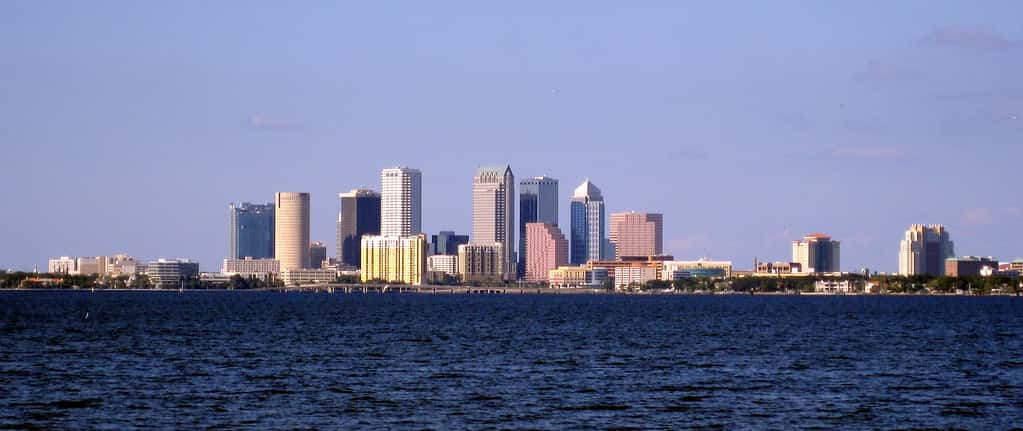
The Tampa Police Department has arrested a man in connection with a fatal shooting on North Nebraska Avenue late Saturday night, according to a release from the City of Tampa. Officers responded shortly after 11 p.m. on August 29 to the 7100 block of North Nebraska Avenue on a report of a fight involving several people and found a man in his late 30s who had been shot. He died at the scene.
Police identified the arrested man as Fletcher McCray, 43. According to the department, McCray approached officers at the scene and told them he had shot the victim, saying the victim had threatened him. Detectives reviewed surveillance video of the incident as part of the investigation. McCray is presumed innocent, and the account released by police has not been tested in court.
Cases in which an accused person reports the shooting themselves and remains at the scene proceed differently from those beginning with a search for an unknown suspect. Investigators have an account from the outset, and the work shifts toward testing that account against physical evidence and witnesses rather than toward identification.
What police have described
The department's account places the incident in the 7100 block of North Nebraska Avenue in Tampa, with officers dispatched shortly after 11 p.m. on a report of a fight involving multiple people. On arrival, officers found the shooting victim, a man in his late 30s, who was pronounced dead at the scene.
Police say McCray approached officers on scene and made a statement acknowledging that he shot the victim, and that he told investigators the victim had threatened him. That statement is significant procedurally, and it is worth being precise about what it establishes: it is an account given by an accused person to police, not a verified description of events.
Detectives reviewed surveillance video of the incident, which the department noted as part of its investigation. Video evidence in a case with a claimed threat is likely to be central, because the sequence and timing of what occurred before the shooting will bear directly on the legal questions the case presents.
Statements made to officers at a scene occupy a particular position in criminal procedure. Whether a statement is admissible can depend on whether the person was in custody at the time, whether they had been advised of their rights, and whether the statement was volunteered rather than elicited through interrogation. A person who approaches officers and speaks before any custodial questioning begins is in a different posture than one questioned after arrest, and those distinctions are litigated routinely.
The self-defense question in Florida
A claim that a victim made a threat raises Florida's self-defense framework, which is more expansive than that of many states and which shapes how these cases proceed from the outset.
Florida law provides that a person is justified in using deadly force if they reasonably believe it necessary to prevent imminent death or great bodily harm to themselves or another, or to prevent the imminent commission of a forcible felony. Florida does not impose a duty to retreat before using force in a place where a person has a lawful right to be.
The state's stand your ground statute also provides for immunity from criminal prosecution, not merely a defense at trial. A defendant can raise the claim in a pretrial hearing, where the burden falls on the state to overcome the immunity claim by clear and convincing evidence. That structure means self-defense claims in Florida are frequently litigated before any trial occurs.
None of that framework has been invoked in this case as far as the public record shows, and whether McCray's attorney raises it is a decision that will come later. What can be said is that a case in which the accused reported a threat to officers on scene sits in territory where Florida law provides substantial avenues for a defense.
Surveillance video has changed how these cases are investigated and resolved, and Tampa, like most Florida cities, has substantial private camera coverage along commercial corridors. Video can corroborate or contradict an account decisively, and prosecutors frequently make charging decisions on the strength of footage that would once have depended on conflicting witness recollections. What video often cannot capture is audio, which means a claimed verbal threat may not appear in the record at all.
What comes next in the case
The State Attorney's Office for the Thirteenth Judicial Circuit, which covers Hillsborough County, will make the formal charging decision. Prosecutors review the investigative file, including the surveillance video and any witness statements from the people involved in the reported fight, and file the charging document.
That review matters more than usual in a case with a claimed threat. Florida prosecutors are obligated to evaluate whether the evidence supports proceeding, and a case where the self-defense evidence is strong may result in reduced charges or no charges at all. That decision typically takes days to weeks.
Witnesses will be important. Police responded to a report of a fight involving several people, which means there were others present who can describe what happened before the shooting. Their accounts, weighed against the surveillance video, will shape the state's assessment.
The stand your ground statute has been among the most consequential and most contested pieces of Florida criminal law since its enactment. Supporters argue it protects people who defend themselves from the burden of a criminal trial. Critics argue that shifting the burden to the state at a pretrial hearing resolves too many cases before a jury ever weighs the facts. Florida courts have issued extensive case law interpreting the statute, and its application remains genuinely complicated.
Tampa and violent crime
The Tampa Police Department investigates homicides within city limits, working alongside the Hillsborough County Sheriff's Office, which covers unincorporated areas of the county. The two agencies coordinate on cases that cross jurisdictional lines.
The North Nebraska Avenue corridor runs north from downtown Tampa through a mix of residential and commercial areas. Like most major urban arterials, it carries steady traffic and activity at late hours.
Florida agencies report crime data to the Florida Department of Law Enforcement, which compiles statewide figures. Those statistics are published on a lag and are more useful for identifying multi-year trends than for characterizing any given week, and individual incidents are not evidence about broader patterns in either direction.
A report of a fight involving several people also complicates the legal picture in a specific way. Florida's self-defense provisions include limitations on who may claim justification, including provisions addressing a person who initiates or provokes a confrontation. Establishing who did what first, in an incident with multiple participants and a rapidly developing sequence, is exactly the kind of factual question that determines whether a justification claim succeeds.
Reporting on cases before they resolve
There is a reason the language in coverage of an active case is careful, and it is not legal formality. A person who has been arrested has been accused, not convicted, and arrests are made on probable cause, which is a substantially lower standard than the proof beyond a reasonable doubt required for conviction.
Cases regularly change shape between arrest and resolution. Charges are reduced, evidence emerges that was not available on the night of an incident, and prosecutors decline cases that initially appeared straightforward. That is the criminal process functioning as designed rather than failing.
In a case that may involve a self-defense claim, the gap between the initial account and the eventual outcome can be particularly wide. Readers encountering the first report of an incident are seeing the earliest and least complete version of what happened.
Hillsborough County's State Attorney handles one of the larger criminal caseloads in the state, covering Tampa and the surrounding communities. Homicide charging decisions in the circuit go through senior prosecutors, and cases with a plausible self-defense component receive particular scrutiny precisely because filing a charge that cannot survive an immunity hearing serves neither the state nor the accused.
Florida also allows a person who is found immune under the statute to seek recovery of attorney fees and certain costs from the state in defined circumstances, which is an unusual provision and reflects the legislature's intent that the immunity be meaningful rather than nominal. That feature is one reason defense attorneys raise the claim at the earliest stage when the facts support it.
What's next
The immediate procedural steps are first appearance before a judge, a determination on pretrial release, and the State Attorney's charging decision. The Hillsborough County Clerk of Court maintains the public docket once a case is formally filed.
The victim's identity has not appeared in the information released, which is standard while family notification is completed. Agencies typically release a name once relatives have been informed.
The Tampa Police Department indicated the investigation was continuing. Detectives will complete their review of the surveillance footage and witness interviews, and the completed file will go to prosecutors, who make the decision that determines whether and how this case proceeds.
For residents of the surrounding neighborhood, the practical information is that the scene has been processed and the investigation is being handled by the department's homicide unit. Tampa police, like most agencies, ask anyone with information or video from the area to contact investigators, and Crime Stoppers of Tampa Bay accepts anonymous tips.
The department has not indicated whether it expects additional arrests. A report of a fight involving several people leaves open the possibility that others present face their own exposure depending on what the investigation establishes, and nothing in the initial release addresses that question either way.
Spotted an issue with this article?
Have something to say about this story?
Write us a letterComments
No comments yet. Be the first to weigh in.
Related Coverage

Putnam County jury convicts Caylen Deller of murder, rejecting self-defense claim
6h ago
Florida Supreme Court tosses Henry Lee Jones's death sentence in 2003 Melbourne motel killing, orders new trial
7h ago

Michelle Parker's ex-fiance Dale Smith Jr. charged with murder nearly 15 years after Orlando mom vanished
1d ago

Former Melbourne police officer Otto Lenke sentenced to death for killing Fort Pierce motorcycle shop owner
1d ago