Florida Supreme Court tosses Henry Lee Jones's death sentence in 2003 Melbourne motel killing, orders new trial
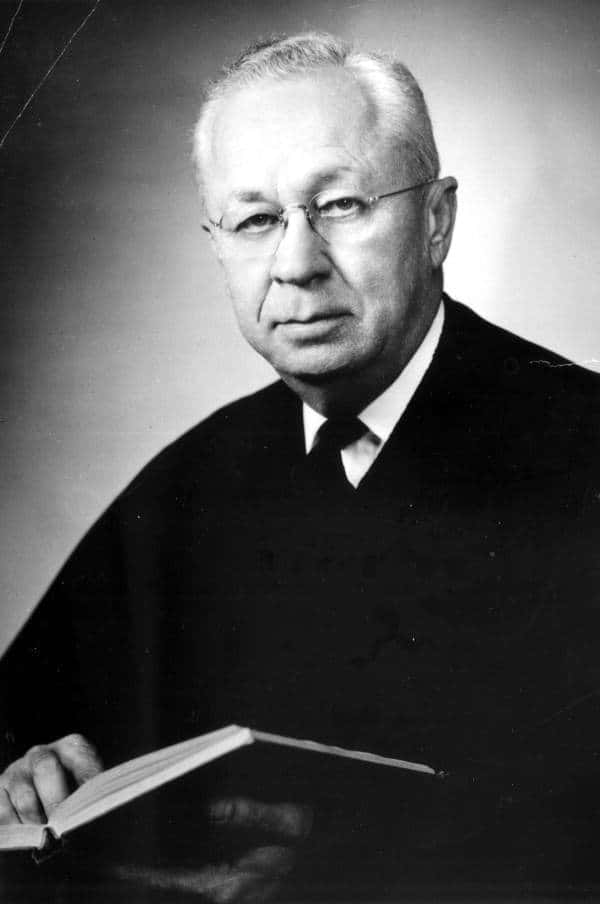
The Florida Supreme Court on Thursday, Oct. 15, set aside Henry Lee Jones's murder conviction and death sentence for the 2003 killing of 19-year-old Carlos Perez in a Melbourne motel, ruling 5-2 that prosecutors violated his constitutional rights by withholding Florida Department of Law Enforcement records that undercut a key part of the state's case. The court sent the Brevard County case back for a new trial.
The ruling does not decide whether Jones killed Perez. It means the state must try him again if it wants to keep the conviction. Jones is also under a death sentence in Tennessee for two other murders, so the decision does not free him.
What the court decided
Chief Justice John Couriel wrote the majority opinion, joined by Justices Labarga, Muñiz, Grosshans and Francis. Justice Barrios wrote a dissent joined by Justice Tanenbaum.
The case turned on Brady v. Maryland, the 1963 U.S. Supreme Court decision that requires prosecutors to turn over evidence favorable to a defendant when it is material to guilt or punishment. The majority concluded that the state broke that rule and that Jones was prejudiced, reversing a Brevard circuit judge's denial of his postconviction motion.
Jones raised four claims on appeal. The court said it needed to address only the Brady claim, and that the others were moot because of its decision.
The withheld DNA records
Housekeepers at the Melbourne motel found Perez's body on Aug. 27, 2003. He had been strangled and stabbed repeatedly in the neck, then rolled up in a comforter, according to the opinion. Prosecutors told jurors that Jones, who worked in the same temporary labor pool as Perez, befriended him, tied him up, sexually assaulted him and killed him.
DNA from a woman who lived at the motel was found on a swab taken from Perez's body. At trial, the state offered an innocent explanation: the DNA had likely transferred from a comforter that was not washed between rooms. A motel maid testified that comforters were not always washed, the medical examiner called transfer through the comforter "quite possible," and a detective testified that the DNA could have arrived that way. The woman testified she had never met Perez, and in closing arguments prosecutors told jurors there was "nothing suspicious" about the DNA.
FDLE's own analysts had reached the opposite conclusion. According to FDLE call logs described in the opinion, an analyst told the lead detective in a July 2012 call that the comforter theory "sounded highly unlikely." A month later, after the analyst and her supervisor reviewed the data, they told the detective it was highly unlikely the DNA came from a comforter in another room and more likely the result of direct contact.
The state had those records more than a year before trial and did not turn them over in discovery, the court said. When Jones's public defender deposed the lead detective in April 2013 and asked about conversations with FDLE regarding the DNA, she did not mention the analysts' assessment. The state did not contest on appeal that the logs were suppressed.
Why the majority said it mattered
The majority wrote that the logs could have been used to impeach the medical examiner and the detective who endorsed the transfer theory, to challenge the woman's testimony that she never met Perez, and to attack the thoroughness of the investigation. Jones could have explored whether she was in Perez's room, what she saw around the time of the killing, and whether another person was at the scene, the court said.
The court also said the logs could have changed how the defense confronted the state's portrayal of the killing as sexually sadistic. Although the state relied heavily on similarities between Perez's death and other killings tied to Jones, the majority said the transfer theory was also a central part of the prosecution, and it could not say there was no reasonable probability of a different verdict had the evidence been used.
The dissent
Barrios argued that even if the records were favorable to Jones, they were not material. She wrote that the state's case rested mainly on the similarity of Perez's killing to the murders of Clarence and Lillian James in Bartlett, Tennessee, days earlier, along with physical evidence: a hair in the motel room whose mitochondrial DNA matched Jones, footwear impressions consistent with shoes found in his car, motel linens and a five-gallon bucket of cleaning supplies in his vehicle, and a Puerto Rican flag that Perez's father said he had given his son.
Calling the evidence against Jones "overwhelming," Barrios wrote that casting more doubt on the transfer theory would have had minimal impact and would not have undermined most of the evidence the state relied on.
A case spanning two states
The Florida opinion notes that Jones was convicted in Tennessee state court of the first-degree murders of Clarence and Lillian James, who were bound and had their necks cut in Bartlett, Tennessee, just days before Perez was killed, and that he was sentenced to death there. At trial in Brevard County, the state presented that case as evidence of a common method, along with testimony from a witness who said he saw Jones kill Lillian James.
At the Florida trial, prosecutors also presented evidence that Jones was the primary suspect in the 2002 killing of Keith Gross in Fort Lauderdale, though he was never charged in that case, the opinion notes. Jones represented himself before the jury at the Brevard trial, according to the dissent. A judge sentenced him to death in May 2014, WFTV reported at the time. The Florida Supreme Court affirmed the conviction and sentence on direct appeal in 2017.
Jones's postconviction appeal was handled by the Capital Collateral Regional Counsel for the Middle Region. Attorney General James Uthmeier's office represented the state.
What's next
The opinion is not final until the time for filing a rehearing motion expires, and, if one is filed, until the court rules on it. The state could ask the justices to reconsider.
If the ruling stands, the case returns to Brevard County circuit court, where prosecutors will decide whether to try Jones a second time for Perez's death. Meanwhile, Jones remains under a death sentence in Tennessee for the James murders.
Spotted an issue with this article?
Have something to say about this story?
Write us a letterComments
No comments yet. Be the first to weigh in.
Related Coverage

Michelle Parker's ex-fiance Dale Smith Jr. charged with murder nearly 15 years after Orlando mom vanished
21h ago

Former Melbourne police officer Otto Lenke sentenced to death for killing Fort Pierce motorcycle shop owner
22h ago

Ex-FSU cornerback accused of 150-mph Hillsborough chase while refusing to let woman out of SUV, FHP says
1d ago
Part-Time Pensacola Police Officer Arrested in Uniform After Alleged Hydrocodone Buy
1d ago