Byron Donalds says states must work with ICE, but a dozen states don't and courts have backed them
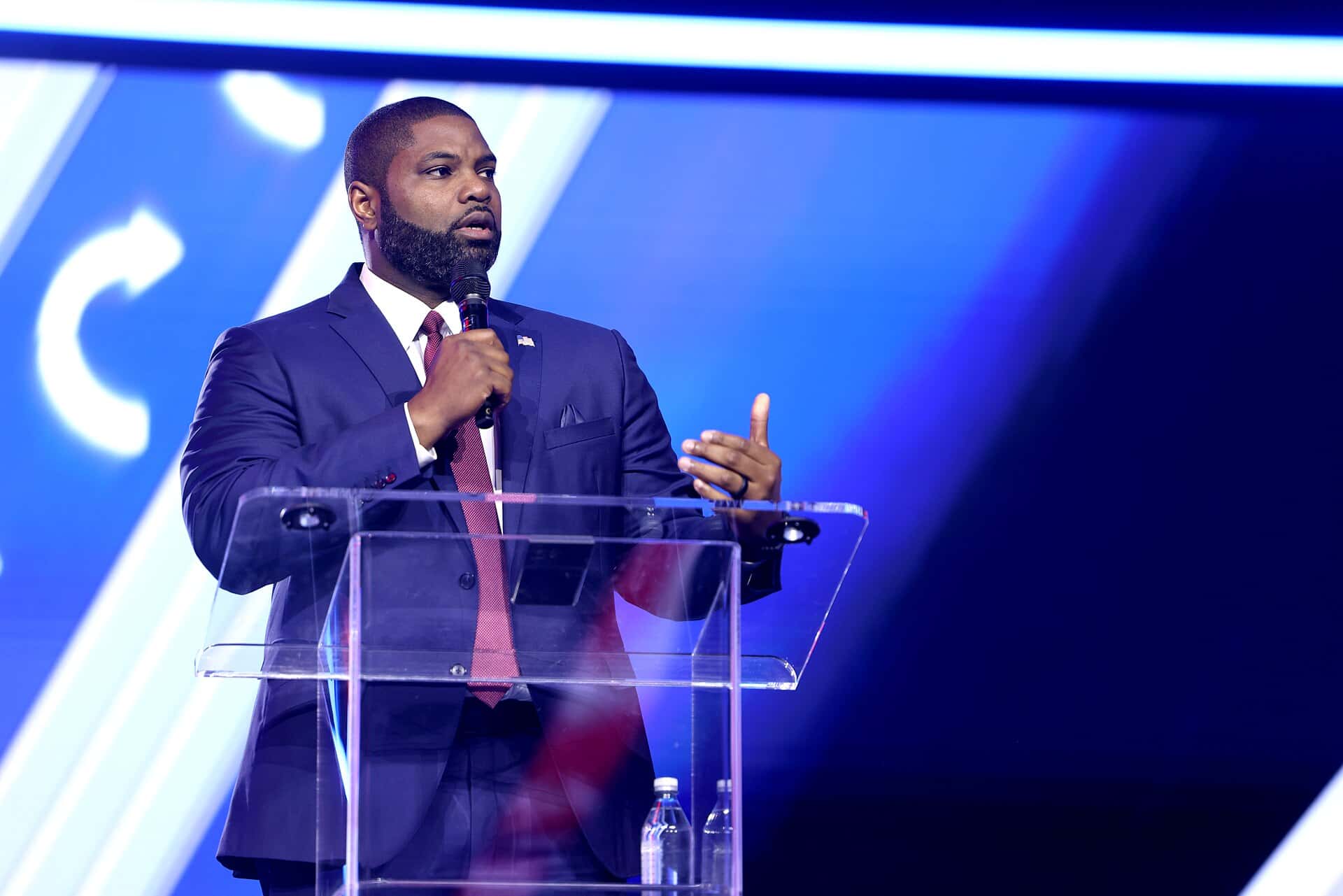
Republican gubernatorial nominee Byron Donalds told a group of Jacksonville business leaders this week that the U.S. Constitution requires every state to work with Immigration and Customs Enforcement, a claim legal experts dispute and one that does not match how immigration enforcement works across the country. Nine states have adopted laws forbidding compliance with ICE detainers, and 12 states have no enforcement agreements with the agency at all, according to a Florida Phoenix review published by WLRN.
The exchange matters for Floridians because the next governor will oversee one of the most aggressive state immigration enforcement systems in the nation, and the two candidates disagree sharply about it. Donalds' Democratic opponent, former congressman David Jolly, has said he would end Florida's mandate that every county participate in ICE's 287(g) program.
What Donalds said
Donalds made the remarks Tuesday at a roundtable with members of the business community in Jacksonville. Mathew Meskimen, first vice president of the Northeast Florida Builders Association, asked how a Gov. Donalds would protect the construction workforce as ICE raids job sites.
"We cannot continue to build houses, and we cannot continue to build houses affordably, if we can't find the workers to do the work," Meskimen said, according to the Florida Phoenix. He prefaced the question by calling himself a lifelong Republican, "as conservative as it gets and a capitalist by nature."
Donalds was not sympathetic. He said that as governor he would "have to comply with federal law," calling that a constitutional requirement.
"In politics, people are saying, 'Well, governors can pick and choose how that's going to be implemented.' That's actually not true," Donalds said. "ICE is federal law enforcement. Not state law enforcement. Under the Constitution, every state has the responsibility to comply with federal law enforcement, because the states gave authority to the federal government for immigration and naturalization, deportation."
"States don't set immigration policy. The federal government does," he added. Donalds acknowledged other states take a different approach. "We have leadership in other states that I quite frankly disagree with," he said. "They're not doing what their duty is under the Constitution."
What the law says
Kathrina Szymborski Wolfkot, senior counsel in the Judiciary Program at the Brennan Center for Justice at the NYU School of Law, told the Florida Phoenix that Donalds' description is inaccurate.
"There is no federal law that requires states and localities to cooperate with federal immigration enforcement, whether statutorily or constitutional," she said. Whether local agencies cooperate is a question of state law, she added, noting that judges, including some appointed by President Donald Trump, have upheld state laws that forbid 287(g) agreements or honoring detainers wherever the federal government has challenged them.
States such as Oregon and Illinois bar law enforcement agencies from asking about or collecting information on immigration status, the Phoenix reported. The Trump administration has sued more than a dozen Democratic-led states, counties and cities over their policies since returning to the White House, according to a CBS News review cited in the report, but has little to show for it so far.
Nationally, ICE says it has signed 2,660 memoranda of agreement for 287(g) programs covering 38 states and two territories.
How Florida does it
Florida sits at the opposite end of that spectrum. Weeks after Trump's second inauguration in January 2025, Gov. Ron DeSantis signed a package of immigration laws aimed at carrying out the president's mass deportation agenda. It directed every Florida county, though not municipalities, to enter 287(g) agreements, which let state and local officers work with federal immigration authorities. Before the law, 47 counties and the Department of Corrections already had agreements with ICE; the mandate extended them to all 67 counties.
Florida has the highest rate of requests for local jails to hold people for ICE after an arrest on other charges this year, and the second-most detainer-related arrests in the country after Texas, according to a Prison Policy Initiative study cited by the Phoenix.
ICE activity has climbed accordingly. Agents detained more than 28,600 people in Florida in July 2026, about 400 more than the month before, according to the Deportation Data Project, as reported by WLRN.
The fight over cities
Whether Florida's cities must sign on remains contested. The 2025 law says municipalities are not required to enter 287(g) agreements, but Attorney General James Uthmeier has warned local officials who considered rescinding them. South Miami sued the DeSantis administration to settle the question; in oral arguments, state attorneys argued cities are not explicitly required to enter agreements but cannot cancel them once in force, the Phoenix reported.
In Doral, where more than seven in 10 residents were born outside the U.S., activists have pressed Mayor Christi Fraga to end the city's agreement, WLRN reported this month. Activists point out that state statutes require only sheriffs and county jail operators to sign written agreements with ICE, while other agencies must use their "best efforts" to support enforcement. Fraga has said she followed the city attorney's advice, and that residents' fear stems from federal raids rather than from local officers trained under 287(g). Several other South Florida cities, including Miramar, Coral Springs and Pompano Beach, have not signed agreements, and Fort Lauderdale is the largest Florida city without one, according to WLRN.
The cost for builders
Meskimen's question reflects a worry across Florida's construction industry. The National Association of Home Builders says the housing industry faces a severe labor shortage, with members reporting that increased immigration enforcement and job site raids are heightening worker fears. The group cites government data showing construction is short about 300,000 workers, according to the Phoenix. Meskimen did not respond to the Phoenix's request for comment after the event.
What's next
Donalds and Jolly face off Nov. 3, with early voting beginning Monday in most large counties. Their positions on 287(g) offer voters a clear contrast: Donalds says the state has no choice but to work with ICE, while Jolly would end the county mandate. Under the 2025 state law, all 67 counties currently must take part in the program.
Spotted an issue with this article?
Have something to say about this story?
Write us a letterComments
No comments yet. Be the first to weigh in.
Related Coverage

Artemis II astronaut Christina Koch leaves flight status to become NASA's acting deputy chief engineer
1h ago

After cutting 760,000 from ACA plans over fraud, Trump administration reinstates some as Florida braces for open enrollment
1h ago

Wholesale inflation jumps 1.3% in September as gas soars: what it means for Florida
15h ago

NASA leaders to update Artemis acceleration and 2028 Moon landing plan at Kennedy on Oct. 23
17h ago