USDA Final Forecast Shows Florida Orange Crop Climbing Back Toward 13 Million Boxes
Federal agricultural forecasters closed out the 2025-26 Florida citrus season with an all orange estimate of 12.9 million boxes, a figure revised upward repeatedly through the year from a January projection that would have set a record low.
The final estimate from the USDA Agricultural Statistics Board comprised 4.77 million boxes of non-Valencia oranges and 8.15 million boxes of Valencia oranges. The non-Valencia figure rose by 70,000 boxes from the April forecast and the Valencia figure by 650,000 boxes.
Florida Citrus Mutual, the growers' trade association, characterized the result as another encouraging sign of the industry's continued recovery. The season represented roughly a five percent increase over the prior year.
How the forecast evolved
The USDA issues citrus forecasts monthly through the harvest season, revising as fruit size, drop rates and harvest data become available. The 2025-26 sequence moved consistently in one direction.
The January estimate placed total Florida orange production at 12 million 90-pound boxes, down 200,000 boxes or about 1.6 percent from the prior year and a level that would have marked a record low for the state.
April brought the first upward revision, to 12.2 million boxes. The July forecast completed the sequence at 12.9 million, roughly five percent above the previous season.
Upward revisions through a season generally reflect better than expected fruit retention and size. Fruit drop, the rate at which developing oranges fall from trees before harvest, has been a major variable in Florida in recent years and is influenced by both disease pressure and weather.
The long decline behind these numbers
The recovery framing requires historical context. Florida produced more than 240 million boxes of oranges in the 1997-98 season. Current production is roughly five percent of that peak.
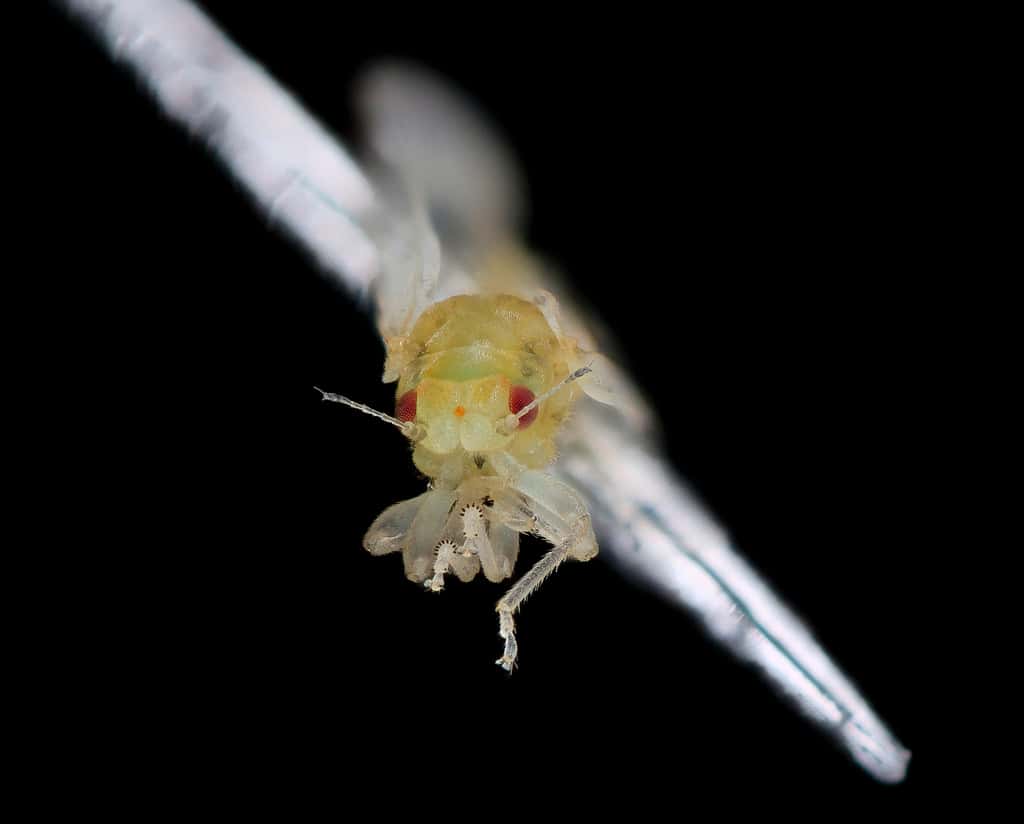
The principal cause is citrus greening, a bacterial disease spread by an insect called the Asian citrus psyllid. The disease was first detected in Florida in 2005 and has since infected effectively the entire commercial acreage in the state.
Infected trees produce smaller, misshapen fruit that drops prematurely and has altered juice characteristics. There is no cure, and infected trees decline over years rather than dying immediately, which means growers face gradually falling yields from existing groves.
Hurricanes compounded the damage. Storms in recent seasons caused direct fruit loss, tree damage and grove flooding, and recovery from wind damage takes years in a perennial crop.
Acreage has contracted substantially as growers exited the business or converted land to other uses, and residential development pressure across Central Florida has provided an alternative to replanting.
What research is pursuing
The response to citrus greening has run along several tracks simultaneously. Antimicrobial treatments applied through trunk injection have shown effects on tree health in field trials, and their adoption has expanded.
Breeding programs have pursued tolerant and resistant varieties, both through conventional crossing and through genetic modification. Developing a new citrus variety is a long process given the time required for trees to reach bearing age.
Individual protective covers placed over young trees have been used to prevent psyllid access during establishment, giving new plantings a disease-free start. The approach is labor intensive and adds cost but has produced results in trials.
Federal and state research funding has supported this work through the University of Florida's Institute of Food and Agricultural Sciences and through USDA programs, and the industry's future depends substantially on whether these approaches scale economically.
What it means for Florida
Citrus occupies a place in Florida's identity that exceeds its current economic weight. The orange blossom is the state flower, orange juice is the state beverage, and the fruit appears on the state's license plates.
Economically, the industry supports growers, harvesting crews, packinghouses, processing facilities and transportation across Central and South Florida. Employment in the sector has contracted alongside production but remains meaningful in rural counties.
Land use is the more consequential long-term question. Groves that come out of production frequently do not return, and conversion to residential and commercial development is permanent. That conversion has reshaped the landscape along the I-4 corridor and in the Indian River district.
For consumers, Florida production levels affect orange juice supply and pricing, though the domestic market now depends substantially on imports, particularly from Brazil.
Local impact across the state
Polk, Hendry, DeSoto, Highlands and Hardee counties contain much of the state's remaining commercial citrus acreage, and those rural economies have felt the contraction most directly.
The Indian River district along the Atlantic coast, historically known for grapefruit, has faced its own pressures from greening, hurricanes and development.
Packinghouses and processing facilities have consolidated as volume declined, and each closure removes employment from communities with limited alternative employers.
Agricultural land conversion has implications beyond the industry itself, affecting water management, wildlife habitat and the rural character of counties experiencing residential growth pressure.
How the forecasts are built
USDA citrus forecasts rest on physical measurement rather than on grower surveys alone, which is why they carry authority in an industry where a great deal of money turns on the number.
Statisticians conduct an objective count in a sample of groves, counting fruit on selected trees to estimate fruit per tree across the crop. That count is combined with acreage data to produce a total fruit estimate.
Fruit size measurements taken through the season convert that count into boxes, since a box is a weight measure rather than a count. Fruit that sizes well produces more boxes from the same number of oranges, which is part of why estimates rise or fall through a season.
Droppage surveys track the rate at which fruit falls from trees before harvest. Citrus greening has elevated drop rates substantially compared with historical norms, and the disease's effect on drop is a principal source of forecast uncertainty in the current era.
What happens to the crop
The distinction between the two orange categories in the forecast reflects how Florida's crop is actually used, which differs from California's.
Valencia oranges, which accounted for 8.15 million boxes in the final estimate, are the primary juice variety. They mature later in the season and have the juice characteristics processors want. Florida's industry has historically been oriented toward processing rather than fresh market sales.
Non-Valencia varieties, at 4.77 million boxes, include the early and midseason types. Some go to processing and some to fresh market, and the split varies with pricing and fruit quality.
Processors convert the fruit into not-from-concentrate juice and frozen concentrate, and Florida's processing infrastructure was built for volumes far exceeding current production. Underutilized capacity carries fixed costs that fall on a shrinking volume of fruit.
Domestic juice demand has itself declined over decades as consumption patterns shifted, which means the industry faces pressure on both the supply and demand sides simultaneously.
How citrus greening actually works
The mechanics of the disease explain why it has proven so difficult to manage and why recovery has been measured in single-digit percentage gains rather than in restoration of past production.
The bacterium responsible, commonly referred to by the abbreviation HLB, is transmitted when an Asian citrus psyllid feeds on a tree. The insect acquires the bacterium from an infected tree and transmits it to healthy ones, which means controlling the insect is central to controlling spread.
Inside the tree, the bacterium colonizes the phloem, the tissue that transports sugars produced in the leaves to the roots and fruit. Blocked phloem starves the root system, which is why infected trees decline gradually and why their fruit fails to size and mature properly.
Symptoms take months to years to appear after infection, which means a grove can be extensively infected before growers observe visible signs. By the time symptoms are widespread, transmission throughout the grove has generally already occurred.
Because the bacterium lives inside the tree's vascular system, treatments must reach that tissue to be effective, which is the reasoning behind trunk injection approaches that deliver antimicrobials directly.
The economics facing growers
Whether Florida citrus recovers depends less on horticultural possibility than on whether growing remains financially viable.
Production costs per acre have risen substantially as growers added treatments, nutritional programs and psyllid control to conventional grove management. Those inputs are necessary to keep infected trees producing, but they raise the break-even yield.
Yields per acre have fallen at the same time, which compresses margins from both directions. A grower facing higher costs and lower output needs favorable pricing to remain profitable.
Replanting requires a multi-year commitment before any return. New trees take several years to bear commercially, during which the grower carries costs without revenue, and the new trees face the same disease pressure that damaged the previous planting.
Land values provide the alternative. Residential and commercial development pressure across Central Florida has made grove land valuable for other uses, and a grower weighing years of uncertain returns against a certain sale price faces a straightforward calculation.
How Florida compares to other producers
Placing Florida's production in national and global context clarifies what the industry's contraction has meant for supply.
California now produces substantially more oranges than Florida, but the two states serve different markets. California's crop is oriented toward fresh consumption, with varieties selected for appearance, peeling and shipping durability. Florida's has historically gone to juice.
That difference means California's production does not substitute for Florida's in the juice supply chain. Processors requiring juice oranges cannot simply source from California instead.
Brazil is the dominant global producer of orange juice and has supplied an increasing share of American consumption as Florida output declined. Brazilian production has faced its own greening pressure and weather challenges, which affects global pricing.
Texas and Arizona produce citrus at smaller scale, and Texas has faced both greening and freeze damage in recent years. The overall picture is one in which multiple growing regions confront the same disease simultaneously, which limits the extent to which supply can shift between them.
What's next
The 2026-27 season forecast cycle begins with an October estimate, which will provide the first indication of whether the upward trajectory continues into a second consecutive season.
Weather through the fall and winter will be a determining factor, including whether any tropical system affects the growing region and whether winter cold events occur during vulnerable periods.
Research results on treatment efficacy and on tolerant varieties will shape longer-term planting decisions, and grower willingness to replant is the ultimate indicator of confidence in the industry's future.
USDA's National Agricultural Statistics Service publishes the citrus forecasts and is the authoritative source for production estimates, in cooperation with the Florida Department of Agriculture and Consumer Services.
Spotted an issue with this article?
Have something to say about this story?
Write a letter to the editorComments
No comments yet. Be the first to weigh in.
Related Coverage

Supreme Court Opens New Term Oct. 5 With Florida's Six-Person Felony Juries on the Docket
1d ago

Rubio Calls Cuba a Failed State, Warns Havana Cannot Wait Out Trump as South Florida Watches
1d ago

No Shutdown at Fiscal Year's End: What the Dec. 11 Funding and Flood Insurance Deadline Means for Florida
1d ago

The Fed's First Rate Hike Since 2023 Pushes Mortgages Past 7% and Freezes Florida's Housing Market
2d ago