Blue Origin to Invest $600 Million in Cape Canaveral Expansion, Creating 500 High-Wage Jobs on Florida's Space Coast
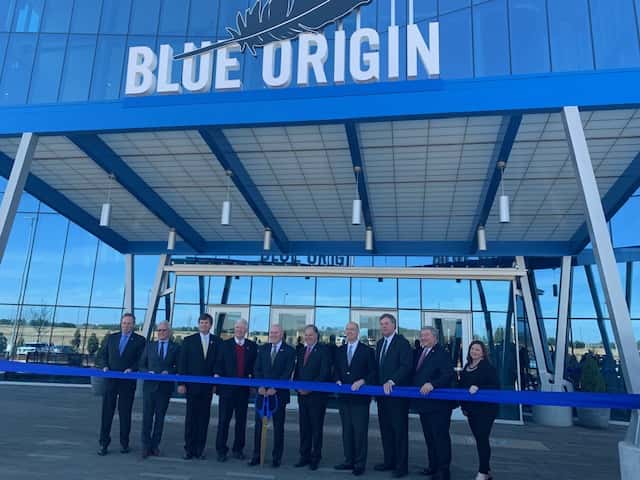
Blue Origin, the rocket company founded by Jeff Bezos, announced Friday that it will invest $600 million to expand its manufacturing campus at Cape Canaveral, a development that Governor Ron DeSantis hailed as a milestone for Florida's Space Coast economy. The project, called Project Horizon, will add an estimated 830,000 square feet of new manufacturing space dedicated to producing upper stages for the company's heavy-lift New Glenn rocket and is expected to create 500 new jobs paying an average salary of more than $98,000 per year.
Project Horizon Unveiled
The expansion announced Friday builds on Blue Origin's existing Rocket Park campus at Cape Canaveral, which the company has operated as its primary manufacturing hub in Florida. The new facility, designed specifically for New Glenn upper stage production, will significantly increase the volume and mass of cargo Blue Origin can deliver to orbit as the company ramps up its commercial launch operations from Launch Complex 36 at Cape Canaveral Space Force Station.
According to the governor's office, the 830,000-square-foot facility will give Blue Origin the manufacturing capacity to increase the frequency and capability of New Glenn launches. Rocket components built at the expanded Rocket Park site will travel approximately nine miles southeast to Launch Complex 36 for integration and liftoff. The facility is expected to support not only commercial satellite launches but also national security and civil space missions as Blue Origin competes more aggressively for government contracts.
DeSantis signed off on a state incentive package tied to the announcement, though the full terms of any state support were not immediately disclosed. The governor's office framed Florida's regulatory environment and existing aerospace infrastructure as key factors in Blue Origin's decision to expand in the state rather than at facilities in other regions.
Florida's Competitive Space Economy
The Blue Origin announcement is the latest in a series of major space industry investments on Florida's Space Coast. SpaceX has dramatically expanded its operations at Cape Canaveral and Kennedy Space Center over the past decade, making the region one of the busiest launch corridors on earth. United Launch Alliance, Boeing, and a growing cluster of aerospace suppliers and startups have also deepened their footprints along the Brevard County corridor in recent years.
Florida's aerospace industry already supports tens of thousands of direct and indirect jobs and generates billions in annual economic activity, according to the state's economic development office. The Space Coast's combination of launch infrastructure, a skilled technical workforce, favorable weather conditions, and proximity to federal facilities at Patrick Space Force Base and Kennedy Space Center has made the region a magnet for private space companies looking to scale operations.
The timing of the Blue Origin announcement is also significant for the company itself. The Federal Aviation Administration recently cleared Blue Origin to resume New Glenn launches after an upper-stage malfunction grounded the rocket in April. The expansion plans signal the company's confidence that the technical issues have been addressed and that it expects a substantial increase in launch cadence in the coming years.
500 Jobs Paying Top Wages
The 500 direct jobs that Blue Origin expects to create with Project Horizon carry an average salary of more than $98,000 per year, well above Florida's median household income. Aerospace and advanced manufacturing positions of this type typically require engineering degrees, technical certifications, or specialized trades skills, and companies in the sector often partner with nearby universities and community colleges to develop the local pipeline.
Brevard County, home to Cape Canaveral, has a well-developed aerospace workforce that includes graduates from institutions such as Florida Institute of Technology and Eastern Florida State College. The county's economic development office has long marketed the existing talent base as a competitive advantage for companies considering expansion in the region.
Beyond the 500 direct positions, economic analysts typically estimate that each high-wage aerospace job supports several additional positions in the broader regional economy through spending on housing, retail, services, and local suppliers. The indirect employment effect of the Blue Origin expansion could therefore extend well beyond the positions the company fills directly in its new facility.
New Glenn's Commercial Ambitions
New Glenn is Blue Origin's flagship heavy-lift rocket, designed to carry large payloads to low Earth orbit, geostationary orbit, and beyond. The vehicle completed its first successful launch in January 2025, a milestone that positioned Blue Origin as a genuine competitor to SpaceX's Falcon 9 and Falcon Heavy in the commercial launch market. New Glenn stands approximately 320 feet tall and features a reusable first stage, a key factor in reducing launch costs over time as the company recovers and relaunches boosters.
The rocket's upper stage, which will be the primary product manufactured in the new Cape Canaveral facility, is the portion that separates from the reusable first stage to deliver payloads to their final orbit. Upper stage production is a precision-intensive process requiring sophisticated manufacturing techniques, specialized materials, and rigorous quality control. By dedicating a purpose-built 830,000-square-foot facility to upper stage production at Cape Canaveral, Blue Origin is signaling its intention to dramatically increase New Glenn's launch frequency from the current modest pace.
The company has announced contracts with commercial satellite operators and is competing for additional government launch contracts, including in the national security space segment. A higher production rate for upper stages would allow Blue Origin to meet increasing customer demand without the bottlenecks that have constrained launch cadence in the company's early years of New Glenn operations.
DeSantis Frames Florida as the Aerospace Capital
Governor DeSantis, speaking at the announcement, framed the Blue Origin investment as validation of Florida's broader strategy to position the state as the national and global center of the commercial space industry. The governor pointed to the state's track record of attracting major aerospace tenants, the existing infrastructure at Cape Canaveral and Kennedy Space Center, and Florida's tax and regulatory environment as factors that make the state competitive against other locations that might have sought the Blue Origin expansion.
The investment follows DeSantis's prior announcements related to the space sector, including efforts to attract additional launch providers and space technology companies to the state. Florida has also worked to expand Space Florida, the state's aerospace economic development arm, as a vehicle for facilitating public-private partnerships with companies operating in or near the state's launch corridor.
For residents of Brevard County and the surrounding communities that make up the Space Coast, the announcement carries both economic and symbolic weight. The region experienced significant job losses in the early 2010s following the retirement of the Space Shuttle program, and the recovery driven by private companies like SpaceX and now Blue Origin has transformed the local economy. Project Horizon represents one of the largest single private investments in the corridor since the commercial space era began in earnest.
What Comes Next
Blue Origin has not disclosed a precise construction timeline for the expanded Rocket Park campus, but given the company's stated desire to increase New Glenn launch frequency, industry observers expect ground-breaking to occur in 2026 with the facility coming online over the following two to three years. Hiring for the 500 new positions would likely phase in as construction progresses and production ramps up.
The expansion also opens questions about the longer-term trajectory of Blue Origin's Florida footprint. The company currently operates launch operations from Cape Canaveral and has manufacturing operations both at Rocket Park and at its headquarters in Kent, Washington. Centralizing more upper stage production in Florida could presage further consolidation of New Glenn production closer to the launch site, which would reduce the logistical complexity of moving large rocket components and could support additional hiring in the state.
For Florida's Space Coast communities, the announcement adds to a 2026 aerospace investment portfolio that has seen significant activity even as broader economic headwinds have affected other sectors of the state's economy. Cape Canaveral, Cocoa Beach, Melbourne, and the surrounding municipalities that depend on the aerospace sector for jobs and tax revenue will be watching closely as Blue Origin breaks ground on what could become one of the most significant manufacturing facilities the region has hosted in decades.
Workforce Pipeline and Education Partners
Developing the workforce to staff an 830,000-square-foot advanced manufacturing facility requires engagement with Florida's higher education and technical training system well before the facility opens. Blue Origin has historically partnered with universities and community colleges near its operational sites to develop pipelines of engineering, technician, and manufacturing talent, and the Cape Canaveral expansion is expected to generate similar partnerships with Florida institutions including Florida Institute of Technology in Melbourne, Eastern Florida State College in Cocoa, the University of Central Florida in Orlando, and the Florida Polytechnic University in Lakeland.
The aerospace manufacturing positions Blue Origin is expected to create require a range of educational backgrounds. Some roles will require four-year engineering or computer science degrees with specializations in aerospace engineering, mechanical engineering, materials science, or propulsion systems. Others will be accessible to workers with two-year technical degrees or industry certifications in precision machining, welding, composites fabrication, or quality control. Florida's community college system, which has invested significantly in advanced manufacturing programs over the past decade, is well positioned to supply the technical workforce component of Blue Origin's hiring needs as the facility phases up its operations.
Space Florida, the state's aerospace economic development arm, is expected to play a facilitating role in connecting Blue Origin with Florida's workforce development infrastructure. Space Florida has relationships with both higher education institutions and workforce agencies that can support the recruitment, training, and credentialing of the workers Blue Origin will need, and the organization has experience managing the complex logistics of standing up aerospace manufacturing capacity in a state where the talent pool, while deep, must be developed and retained in competition with other high-wage industries that target the same engineering and technical workforce.
Spotted an issue with this article?
Have something to say about this story?
Write us a letterComments
No comments yet. Be the first to weigh in.
Related Coverage

Uthmeier Asks Pasco Judge to Force Meta to Remove Florida Users Under 14 and Cap Teens at Two Hours a Day
22h ago

Florida Attorney General James Uthmeier Sues TP-Link, Saying Its Routers Left Florida Home Networks Exposed
2d ago
FIU to install Florida's first on-campus trapped-ion quantum computer
3d ago
Florida's data center law: what SB 484 does as DeSantis touts it
6d ago