Brazil, Portugal and Uruguay Headline the World Cup Matches Coming to Miami's Hard Rock Stadium
South Florida is about to take center stage in the soccer world as Miami's Hard Rock Stadium prepares to host a slate of 2026 FIFA World Cup matches featuring some of the sport's biggest national teams. With group-stage games spotlighting Brazil, Portugal, Colombia, and Uruguay, followed by knockout-round fixtures, the venue in Miami Gardens will draw global attention and fans from around the world to the region this summer.
The matches coming to Miami
Hard Rock Stadium is set to host seven matches across the tournament, running from mid-June into July. The schedule includes four group-stage games, a Round of 32 fixture, a quarterfinal, and the third-place playoff, giving South Florida a mix of early-tournament drama and high-stakes knockout soccer.
The group-stage slate opens with Saudi Arabia facing Uruguay on June 15, followed by Uruguay against Cabo Verde on June 21. The marquee fixtures arrive later in June, with Scotland meeting Brazil on June 24 and Colombia taking on Portugal on June 27, matchups that bring traditional powers and passionate fan bases to Miami.
The remaining matches at the stadium come in July, including the Round of 32, the quarterfinal, and the third-place playoff, also known as the Bronze Final, scheduled for July 18. That spread ensures that Miami will host meaningful soccer deep into the tournament, not just in its opening rounds.
Why these matchups matter
The group-stage draw delivered genuine star power to Miami. Brazil remains one of the most decorated and globally followed national teams in the sport, and its meeting with Scotland will draw enormous interest. Portugal, with its own deep talent pool and worldwide following, faces a Colombia side that brings one of South America's most fervent fan cultures.
Uruguay, a two-time World Cup champion with a storied history, plays two of its group matches in Miami, against Saudi Arabia and Cabo Verde, giving the venue a consistent presence of one of the tournament's traditional contenders. The variety of teams ensures a wide range of playing styles and fan communities converging on South Florida.
The later-round fixtures raise the stakes further. A quarterfinal at Hard Rock Stadium means Miami could host one of the final eight teams left in the tournament, and the third-place playoff guarantees a meeting of two sides that fell just short of the final, both representing some of the best teams in the world.
A natural fit for South Florida
Miami is in many ways an ideal World Cup host. The region's deep and diverse population includes large communities with strong ties to soccer-loving nations across Latin America, Europe, the Caribbean, and beyond, creating built-in fan bases for many of the teams playing in the tournament.
The presence of Lionel Messi with Inter Miami in Major League Soccer has further elevated the sport's profile in South Florida in recent years, helping cultivate an audience primed for the World Cup's arrival. The combination of an established soccer culture and a global, multilingual population positions Miami to embrace the tournament fully.
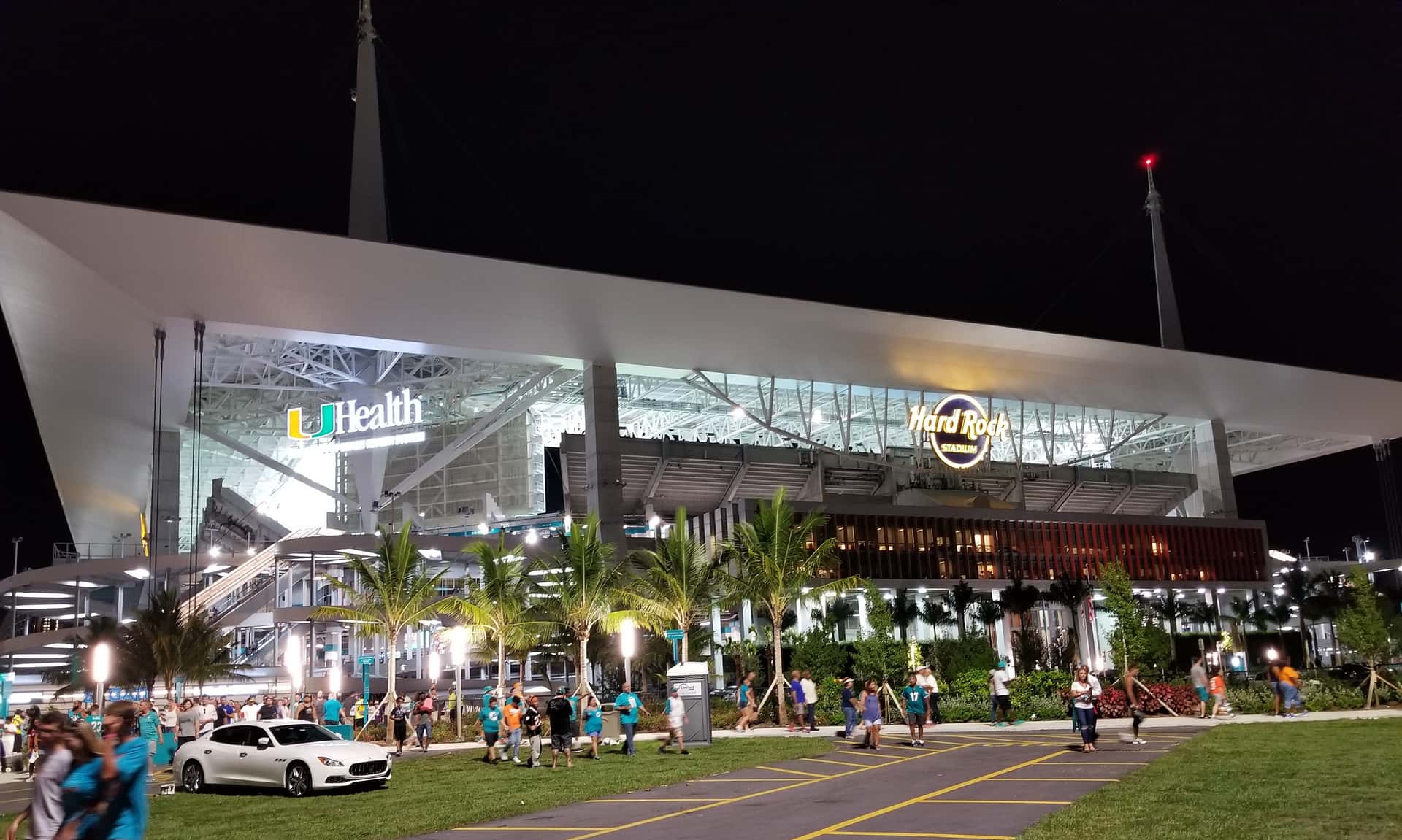
Hard Rock Stadium, the home of the NFL's Miami Dolphins and a regular host of major events, brings the infrastructure and experience needed to stage matches of this magnitude. The venue has hosted high-profile sporting events before, and the World Cup represents its largest stage yet.
What it means for fans
For Florida soccer fans, the tournament offers a rare chance to see the world's best national teams in person without leaving the state. The slate of group-stage matches alone brings Brazil, Portugal, Colombia, and Uruguay to Miami, an array of talent that would normally require international travel to witness.
The atmosphere around the matches is expected to extend well beyond the stadium. Watch parties, fan gatherings, and public events tied to the World Cup are anticipated across South Florida, turning the tournament into a region-wide celebration even for those without tickets to the games.
Fans planning to attend should prepare for the logistics that accompany events of this scale, including transportation, security, and crowds, given the international audience the tournament draws. The experience of seeing a World Cup match in person is a draw in itself, and Miami's slate offers multiple opportunities.
The bigger picture for the region
Hosting World Cup matches places Miami on a global stage, with broadcasts beamed to audiences around the world. That visibility carries reputational and economic significance for the region, showcasing South Florida to an international audience of soccer fans and potential visitors.
The matches also fit into the broader story of the 2026 World Cup as a North American event, co-hosted across the United States, Mexico, and Canada. Miami's role as one of the U.S. host cities connects South Florida to a continent-spanning tournament that is the largest in the competition's history, with 48 teams and 104 matches.
For a region that prides itself on its international character, hosting the world's most-watched sporting event is a natural showcase. The teams, the fans, and the global spotlight converge on Miami at a moment when soccer's popularity in the area has never been higher.
The teams and their fans
The group-stage draw delivered to Miami a collection of teams with passionate followings, many of which have strong communities in South Florida. Brazil, the most successful nation in World Cup history, commands a global fan base, and its match against Scotland will draw supporters of both the storied South American power and the Scottish side making its presence felt.
Portugal brings a deep tradition and a worldwide following, and its meeting with Colombia pairs two teams whose supporters are known for their energy and devotion. Colombia, in particular, has a fervent fan culture, and South Florida's large Colombian community is likely to turn out in force for the match, lending the stadium a vibrant atmosphere.
Uruguay, a two-time World Cup champion, plays two of its group matches in Miami, against Saudi Arabia and Cabo Verde. The presence of a traditional South American power across multiple matches gives the venue a recurring connection to one of the sport's historic contenders, and Uruguayan supporters will have several chances to cheer their team.
The diversity of the teams reflects the global nature of the tournament and the international character of South Florida itself. The region's communities with ties to the competing nations transform the matches into celebrations of heritage and identity, with fans bringing the colors, songs, and traditions of their countries to the stands.
That convergence of teams and fan communities is part of what makes Miami a fitting host. The matches are not only sporting events but cultural gatherings, drawing together the many communities that call South Florida home and connecting them to the nations competing on the field.
Planning to attend the matches
For fans hoping to attend matches at Hard Rock Stadium, planning ahead is essential given the scale of the event and the international crowds it draws. Tickets for World Cup matches are in high demand, and securing them through official channels is the safest route for fans determined to be inside the stadium for marquee fixtures like Scotland against Brazil or Colombia against Portugal.
Transportation and logistics warrant careful thought. Hard Rock Stadium sits in Miami Gardens, and large crowds on match days place heavy demands on roads, parking, and transit. Fans are well served by arriving early, planning their routes, and accounting for the enhanced security screening that accompanies events of this magnitude.
Even fans without tickets can take part in the tournament atmosphere through the public gathering spaces and watch parties planned across South Florida. These fan zones offer a communal way to experience the matches, often capturing the energy and diversity that make the World Cup a global cultural event.
Visitors traveling to Miami for the matches should also prepare for summer conditions, including heat and the possibility of afternoon storms typical of the season. Staying hydrated and planning around the weather are practical considerations for anyone spending the day at or around the stadium.
What's next
With the first match at Hard Rock Stadium set for June 15, the tournament's presence in Miami begins almost immediately. The group-stage fixtures will give way to the knockout rounds, and the venue's hosting duties extend through the July 18 third-place playoff.
As the World Cup unfolds across North America, Miami's matches will be among the most closely watched in the United States, bringing global powers and their fans to South Florida. For local soccer fans, the summer of 2026 offers a once-in-a-generation chance to experience the world's game at the highest level, right at home.
Spotted an issue with this article?
Have something to say about this story?
Write a letter to the editor