SAVE Act Stalls in Senate as Florida Prepares Its Own Voter Citizenship Rules
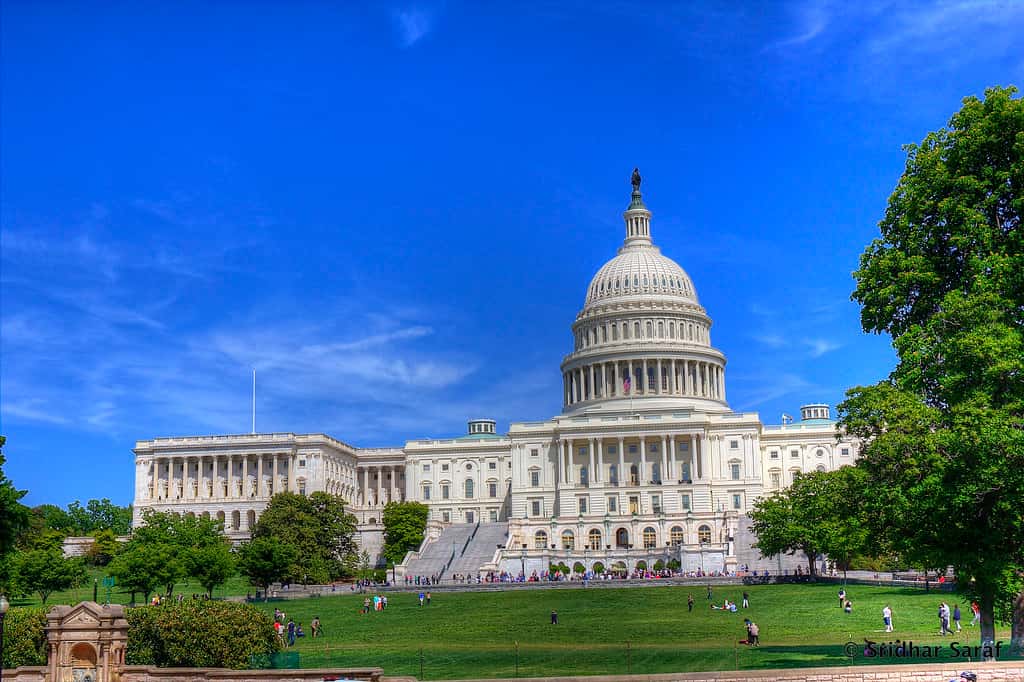
Gov. Ron DeSantis said Tuesday there is basically zero chance the federal SAVE Act passes the U.S. Senate before lawmakers leave for the August recess, an assessment that carries weight given his standing among conservatives and Florida's position as the largest state to enact its own version of the policy.
The federal measure, formally the Safeguard American Voter Eligibility Act, would require documentary proof of U.S. citizenship when registering to vote in federal elections. It has passed the House in prior sessions but has not overcome the Senate's 60-vote threshold.
The Florida angle is direct. DeSantis signed a Florida SAVE Act into law this spring, making the state one of several to enact proof-of-citizenship requirements at the state level. That law begins affecting Florida voters next year, independent of what Congress does.
What DeSantis said
DeSantis characterized the federal bill's prospects before the August recess as basically zero. His comments came amid pressure from some Senate Republicans, including Sen. Mike Lee of Utah and Sen. Rick Scott of Florida, who have pushed leadership to keep the chamber in session through the scheduled break to take up the measure.
Senate Majority Leader John Thune has held to the scheduled recess despite those requests. Some Republican senators have said they would vote to cancel the August break to address the legislation, but the votes to change the calendar have not materialized.
The arithmetic is the obstacle. Legislation of this type requires 60 votes to overcome a filibuster, and the measure has not attracted the bipartisan support that threshold requires. Election administration bills have been among the most reliably party-line matters in recent Congresses.
DeSantis is in the final months of his second term as governor, with the office on the November ballot. His public commentary on federal legislation carries into a national conservative audience that extends beyond Florida.
What the federal SAVE Act would do
The bill would require documentary proof of citizenship for voter registration in federal elections. Acceptable documents would typically include a passport, a birth certificate, or certain naturalization documents, presented at the time of registration.
Supporters argue the requirement closes a gap in the current system, under which registrants attest to citizenship under penalty of perjury but are not generally required to produce documentation. They characterize documentary proof as a straightforward verification step.
Opponents argue the requirement would create barriers for eligible citizens who lack ready access to the specified documents. Estimates of the share of Americans without a current passport, and the number of married women whose current legal name differs from the name on their birth certificate, have featured prominently in that argument.
The federal National Voter Registration Act currently governs registration procedures for federal elections, and states administer elections within that framework. Changing the documentary requirement would alter the baseline all states operate under.
Florida's state law
Florida's version, signed this spring, adds proof-of-citizenship and identification requirements at the state level. The law applies to people who need to update or change their registration and to first-time voters, requiring them to prove citizenship.
The law also directs Florida officials to remove from the voter rolls people the state determines are ineligible. List maintenance is a routine and legally required function of election administration, though the methods and data sources used have generated litigation in Florida and other states over the years.
The provisions begin affecting Florida voters starting next year, which means they will not govern the Aug. 18 primary or the Nov. 3 general election in this cycle. Voters in the current election operate under the prior framework.
Florida's Division of Elections and the 67 county supervisors of elections administer the changes. Implementation questions, including which documents suffice and how existing registrants are treated, are handled through agency guidance and rulemaking.
How Florida elections work now
Florida requires voters to present identification at the polls, with a list of acceptable photo and signature documents specified in statute. Voters without acceptable identification may cast a provisional ballot, which is counted if the signature matches the one on file.
Registration in Florida requires attestation of citizenship, age, and residency. Applicants provide a Florida driver's license number, state identification number, or the last four digits of a Social Security number, which the state uses to verify identity against other databases.
Vote-by-mail requires an active request on file with the county supervisor. Florida law now requires voters to renew mail ballot requests each general election cycle rather than allowing them to carry over indefinitely, a change from prior practice.
Florida has a substantial population of naturalized citizens, particularly in South Florida, where Cuban American, Venezuelan, Colombian, and Haitian American communities include large numbers of naturalized voters. Documentation requirements affect that population differently than native-born citizens.
What it means for Florida voters
Nothing changes for the current election cycle. Voters registering or voting in the August primary and November general election operate under existing rules, and the state law's requirements begin in the following year.
Voters registering or updating registration next year should expect to provide citizenship documentation. That includes people who move within the state, change their name, or change party affiliation, all of which involve updating a registration record.
Election administration costs fall on county supervisors, who must handle document review, staff training, and voter communication. Supervisors across Florida have historically raised funding and implementation timeline concerns when new requirements are enacted.
Voter registration organizations, including nonpartisan civic groups, face additional compliance requirements under Florida law that were enacted in prior sessions and have been subject to litigation.
How Florida administers elections
Florida elections are administered by 67 county supervisors of elections, who are independently elected constitutional officers in most counties. The Florida Division of Elections within the Department of State provides statewide coordination, maintains the voter registration database, and issues guidance.
That decentralized structure means implementation of any new requirement varies in practice. Supervisors handle voter registration processing, ballot design, early voting sites, poll worker recruitment, and canvassing within their counties.
Florida's statewide voter registration system, required under federal law, links county records into a single database. That system supports list maintenance, duplicate detection, and verification against driver's license and Social Security records.
Canvassing boards in each county certify results and handle provisional ballot determinations and signature cure processes. Their composition and procedures are set in state law.
The national context
Several states have enacted or attempted to enact proof-of-citizenship requirements for voter registration. Arizona's law produced extensive litigation, ultimately resulting in a system that distinguishes between federal-only and full-ballot voters depending on documentation.
The National Voter Registration Act requires states to accept a federal registration form for federal elections, and courts have addressed whether states may impose documentary requirements beyond what that form requires. Those cases have produced a complicated legal landscape.
The federal SAVE Act would resolve that tension in favor of documentary proof by changing the federal baseline. That is a substantial part of why supporters have prioritized federal legislation over continued state-by-state action.
Election administration officials across parties have raised implementation questions, including how to treat existing registrants, what documents suffice, and how to handle name changes that create discrepancies with birth certificates.
What it means for the 2026 cycle
Florida voters in the Aug. 18 primary and Nov. 3 general election operate under existing rules. The state law's proof-of-citizenship provisions take effect the following year and do not govern this cycle.
What does apply this cycle is the existing identification requirement at the polls and the mail ballot request renewal rule. Voters who have not renewed a mail ballot request will not receive a ballot automatically.
County supervisors have been publicizing those requirements ahead of the primary. Voters can confirm registration status, party affiliation, and mail ballot status through their county supervisor or the Division of Elections.
The election will determine the officials who administer and potentially revise these rules going forward, including a new governor, a new Legislature, and supervisors of elections in counties where that office is on the ballot.
Florida's recent election law changes
The Legislature has revised Florida election law multiple times over recent sessions. Changes have addressed drop box availability and staffing, mail ballot request duration, third-party voter registration organization requirements, and signature matching procedures.
Several of those provisions drew federal litigation. Courts have upheld some and enjoined others, and appellate proceedings have continued across multiple cases, producing a body of law that has shifted during the period.
Third-party registration organizations face registration requirements, delivery deadlines for collected forms, and penalties for violations. Civic groups that conduct registration drives have challenged portions of those rules.
Supervisors of elections have generally sought clarity and lead time when requirements change, noting that implementation requires system changes, poll worker training, and voter communication that cannot be completed quickly.
What's next
The Senate leaves for the August recess on its scheduled timeline, and the federal SAVE Act will not be taken up before that. Whether it returns to the floor in the fall depends on leadership priorities and on the broader legislative calendar.
Other states continue to move on similar measures, and litigation over state proof-of-citizenship laws has proceeded in federal court in several jurisdictions. Those cases could produce appellate rulings that shape how far states can go under existing federal law.
Florida's implementation proceeds regardless. State agencies and county supervisors will issue guidance and adjust systems ahead of the effective date, and voters will encounter the requirements when they next update a registration.
The November election will seat a new Florida governor and a new Legislature, either of which could revisit the state law. It will also determine the composition of Florida's congressional delegation, which votes on the federal measure.
Spotted an issue with this article?
Have something to say about this story?
Write us a letterComments
No comments yet. Be the first to weigh in.
Related Coverage

U.S. Measles Cases Top 4,500 in 2026, More Than Double Last Year, as Florida Weighs Looser School Vaccine Rules
6h ago
Trump Offers $1 Million Reward for Voter Fraud Tips as Nearly 2.8 Million Floridians Cast Early Ballots
7h ago
Trump Administration Touts $193.7 Million for Rural Florida Health Care as Telehealth, Mobile Clinics and Paramedic Programs Roll Out
7h ago

Lois Frankel Faces Republican Deborah Adeimy in Palm Beach County's Redrawn 23rd District, a Safe Seat Under DeSantis's New Map
9h ago