Florida College Immigration Status Rule Takes Hold as Fall Enrollment Begins
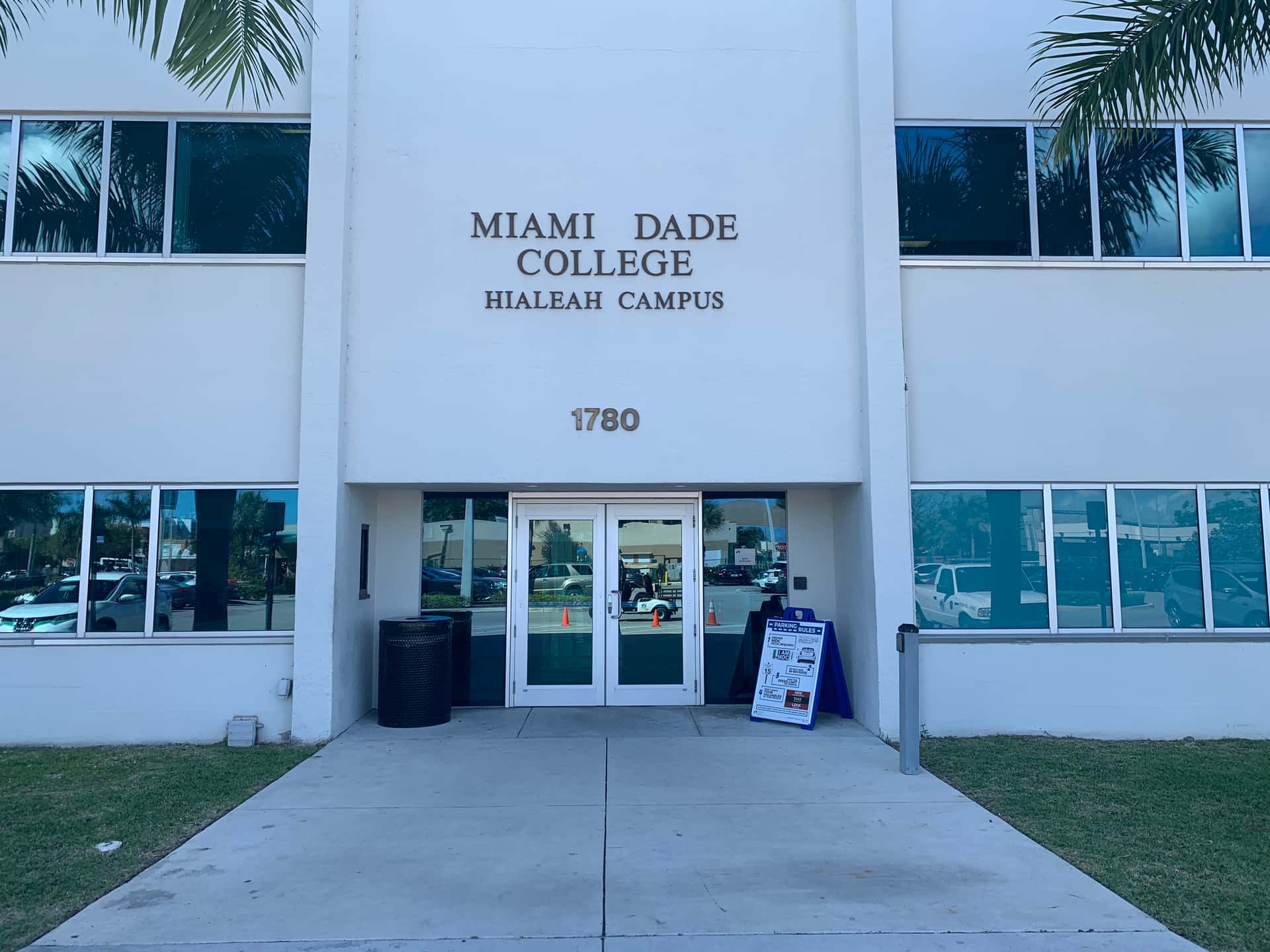
A rule adopted by the Florida State Board of Education requiring the state's 28 public colleges to verify that admitted students are U.S. citizens or lawfully present is now shaping fall enrollment across the system. The rule also extends to adult general education programs offered through school districts and state colleges, including GED preparation and English language classes.
The board approved the measure at its June 30 meeting, with all members voting in favor except Daniel Foganholi, who cast the lone dissenting vote. Under the rule, boards of trustees at each of the 28 institutions in the Florida College System must ensure admitted students meet the citizenship or lawful presence standard.
The rule does not apply to Florida's 12 public universities, which are governed by the Board of Governors rather than the State Board of Education. That distinction means the University of Florida, Florida State University, and the other State University System institutions are outside its scope.
What the rule requires
The measure directs the trustees of each state college to verify immigration status prior to admission. Florida's college system includes institutions such as Miami Dade College, Valencia College, Broward College, Hillsborough Community College, Santa Fe College, and Florida State College at Jacksonville, which together enroll a large share of the state's postsecondary students.
The adult general education component reaches further into local school districts. Adult education programs, which include GED preparation, adult basic education, and English for speakers of other languages, are commonly operated through district technical centers and community campuses and serve adults seeking a high school credential or language skills.
Roughly 50,000 undocumented immigrants participate in Florida's higher education system in some form, according to figures cited in coverage of the board's decision, with an estimated 8,000 undocumented students graduating from Florida high schools annually.
Florida separately repealed in-state tuition eligibility for undocumented students who graduated from Florida high schools, a benefit that had been in place under a 2014 law. That repeal took effect ahead of the current rule and had already raised costs sharply for affected students.
The procedural objections
The most substantial pushback has focused on process rather than policy. Rep. Anna Eskamani, an Orlando Democrat, argued during public comment that the changes did not move through the 2026 legislative session and questioned whether the board could accomplish through rulemaking what the Legislature had not enacted in statute.
The Joint Administrative Procedures Committee, a bipartisan legislative committee that reviews agency rules for consistency with statutory authority, sent a letter to the Department of Education and the board raising questions about the rule changes. JAPC's function is to check whether agencies are exceeding the authority delegated to them by the Legislature.
Florida's Administrative Procedure Act governs how agencies adopt rules, requiring notice, opportunity for comment, and a demonstrated statutory basis. Rules can be challenged before an administrative law judge at the Division of Administrative Hearings on grounds that they exceed delegated authority or are arbitrary.
Whether a formal rule challenge is filed remains to be seen. Such challenges are the standard vehicle for testing rules of this kind, and they proceed on a faster timeline than ordinary civil litigation.
The broader immigration policy context in Florida
The rule fits within a sustained state-level immigration enforcement posture. Florida enacted legislation in recent years requiring certain employers to use E-Verify, restricting some transportation of undocumented immigrants, and expanding cooperation between state and local law enforcement and federal immigration authorities.
Federal enforcement activity in Florida has intensified in parallel. Immigration and Customs Enforcement conducted a multi-day operation in Palm Beach County in early July that resulted in 309 arrests, working with local agencies under the federal 287(g) program that deputizes local officers for certain immigration functions.
Temporary Protected Status for Haitian nationals terminated July 27 following a U.S. Supreme Court decision in June that allowed the administration to end the designation. Florida is home to the largest concentration of affected Haitian TPS holders in the country, with estimates in the range of 150,000 people.
The combined effect on Florida's immigrant communities has been significant. Community organizations in South Florida, Central Florida, and agricultural regions have reported increased anxiety around routine activities, including school enrollment and workplace attendance.
What it means for students and institutions
For prospective students who cannot document lawful presence, the practical result is loss of access to Florida's state colleges and to adult education programs operated through the public system. Private institutions and out-of-state options remain, but both are substantially more expensive.
The adult education piece may have the wider reach. GED preparation and English language classes serve working adults, including people who are lawfully present but whose household members are not, and enrollment barriers can deter families broadly regardless of individual eligibility.
For the colleges, the rule creates administrative obligations. Institutions must build or expand verification procedures within admissions offices, train staff, and handle appeals and documentation questions. Colleges have limited experience with immigration document review, which is technical and error-prone.
Florida's state colleges have historically functioned as open-access institutions, admitting students with a high school diploma or equivalent and serving as the primary pathway into higher education for first-generation and working students. The rule narrows that access category.
Economic and workforce implications
Florida's economy depends heavily on sectors with substantial immigrant workforces, including agriculture, construction, hospitality, and health care support occupations. Workforce training programs at state colleges feed directly into those sectors.
Construction is a particular pressure point. Florida's homebuilding and repair capacity depends on labor availability, and the industry has reported workforce constraints. Any reduction in the pipeline of credentialed workers affects capacity, which in turn affects housing costs and post-storm recovery speed.
Health care faces parallel constraints. Certified nursing assistant, medical assistant, and allied health training programs housed at state colleges supply hospitals and long-term care facilities that have struggled with staffing across Florida.
Business organizations have generally been cautious in commenting on immigration policy in Florida, given the political environment, though agricultural and construction trade groups have periodically raised labor supply concerns in legislative testimony.
How Florida's college system is governed
Florida operates two separate public postsecondary systems. The Florida College System comprises 28 institutions governed by local boards of trustees under the oversight of the State Board of Education, which also oversees K-12 public education.
The State University System comprises 12 institutions governed by the Board of Governors, a body created by constitutional amendment in 2002. That separation is why the rule adopted by the State Board of Education reaches the colleges but not the universities.
State colleges serve a distinct student population. Many offer both two-year associate degrees and selected four-year bachelor's programs, and they function as the primary access point for students who work while attending, students returning to education later in life, and students transferring into universities.
Florida's 2 plus 2 articulation framework guarantees that students completing an associate of arts degree at a state college are admitted to a state university, a pathway that a large share of Florida bachelor's degree holders use.
The in-state tuition change
Florida enacted a law in 2014 allowing undocumented students who attended and graduated from Florida high schools to pay in-state tuition rates. That provision was repealed, and the repeal took effect ahead of the current admissions rule.
The financial consequence was immediate and substantial. Out-of-state tuition at Florida institutions runs several times the in-state rate, which placed enrollment beyond reach for many affected students even before the admissions restriction.
Undocumented students are ineligible for federal financial aid, including Pell Grants and federal loans, under existing federal law. That has been the case regardless of state tuition policy, meaning affected students relied on family resources, private scholarships, and employment.
The combination of the tuition repeal and the admissions rule effectively closes the state college pathway. Students in that situation now face private institutions, out-of-state options, or leaving postsecondary education, all of which carry substantially higher costs or none of the same credential.
What the rule does not change
Public K-12 schools remain obligated to enroll all children regardless of immigration status. That requirement stems from a longstanding U.S. Supreme Court decision holding that states may not deny free public education to children based on immigration status, and it is unaffected by the college rule.
Florida's 12 public universities fall under the Board of Governors rather than the State Board of Education and are outside the rule's scope. Admissions policy at those institutions is set through a separate governance structure.
Private colleges and universities in Florida, including large institutions in South Florida and Central Florida, set their own admissions criteria. They are not bound by the state board rule, though they operate under federal requirements regarding financial aid eligibility.
Emergency medical care, public safety services, and other basic public functions are similarly unaffected. Those obligations arise from separate legal frameworks that operate independently of education policy.
What's next
Fall terms at Florida's state colleges begin in August, which is when the rule's practical effects will be most visible in enrollment operations. Institutions will be implementing verification during the peak admissions period.
The Joint Administrative Procedures Committee's inquiry remains open, and the Department of Education's response will indicate whether the agency believes it has clear statutory authority. That exchange typically occurs in writing and becomes part of the public record.
The Legislature convenes its next regular session in early 2027 and could codify the rule in statute, modify it, or leave it as an agency rule. A statutory enactment would largely resolve the delegated-authority question.
The November election will seat a new governor, who appoints members of the State Board of Education, along with a new Legislature. Both will shape whether the current direction on immigration and higher education access continues.
Spotted an issue with this article?
Have something to say about this story?
Write us a letterComments
No comments yet. Be the first to weigh in.
Related Coverage

Miami-Dade, Broward and Palm Beach Ask Voters to Renew School Tax That Funds Teacher Pay
1d ago

Walk-through weapons detectors arrive at Duval County elementary schools under $2 million plan
3d ago

Under State Pressure, Palm Beach County Schools Pull and Review More Than 1,800 Library Books
4d ago

OCPS Rejects Special Magistrate's Plan as School Board Takes Up Teacher Contract Impasse
5d ago