Carnival Rewards Now Counts Dollars Instead of Days, and PortMiami Is Building for Bigger Ships
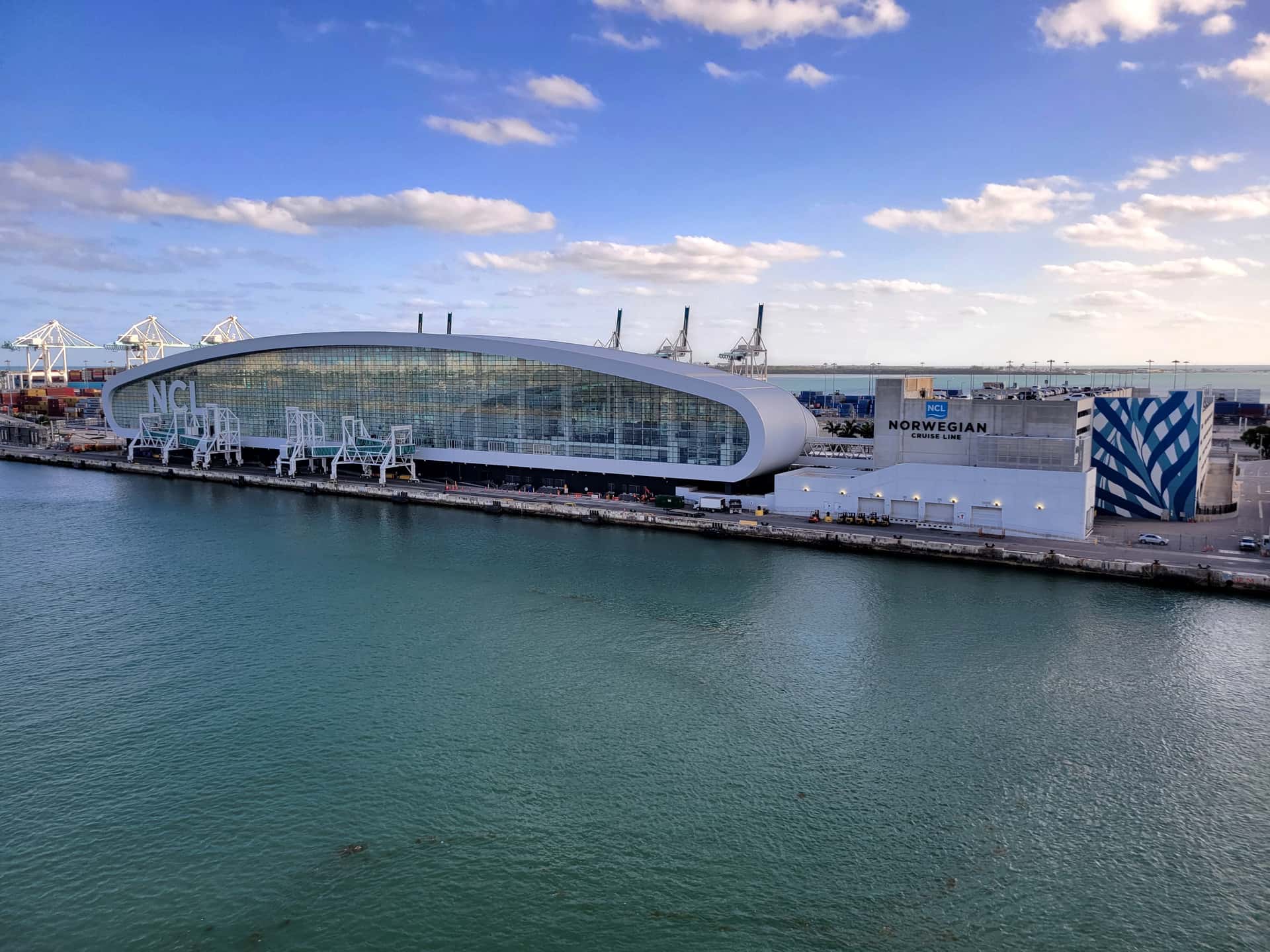
Two changes are reshaping the business that South Florida built its port economy on. On September 1, Carnival launched Carnival Rewards, replacing a loyalty program based primarily on how often a guest sailed with one that also counts what a guest spends. Across the harbor, Royal Caribbean Group is building Terminal G at PortMiami, a facility designed for its largest ships and capable of processing roughly 7,000 passengers per ship call.
Both developments matter to Florida disproportionately. PortMiami is the world's busiest cruise port, and the major cruise lines are headquartered in South Florida. Carnival Corporation, Royal Caribbean Group, and Norwegian Cruise Line Holdings all run their operations from the Miami area, which makes cruise industry strategy a local employment story as much as a travel story.
The two changes point in the same direction: more passengers, on larger ships, with more spending captured per passenger. That is the growth model the industry has pursued since it recovered from the pandemic shutdown, and Florida's ports are where it is being built out.
What Carnival Rewards changes
The program Carnival retired, the VIFP Club, awarded status primarily on cruise days. A guest who sailed frequently rose through tiers regardless of how much they spent once aboard.
Carnival Rewards changes the accounting. Status is determined by what the company calls Status Qualifying Stars, with guests earning three stars for every dollar spent on eligible Carnival purchases, including gratuities, and one star for every casino point earned. The change moves the program from a frequency model to a spending model.
The transition was not abrupt. Carnival announced the retirement of the VIFP Club in June 2025, initially planned the new program for June 2026, and then delayed the launch to September 2026 to give guests more time to adjust and to lock in lifetime top-tier status under the old rules.
The logic mirrors what airlines and hotels did years earlier. Frequency-based programs reward the customer who books the cheapest fare repeatedly. Spending-based programs reward the customer who generates the most revenue. From the company's perspective, that is a correction. From the perspective of a budget-conscious frequent cruiser, it is a demotion.
Who wins and who loses
The winners are guests who spend heavily aboard: premium cabins, beverage packages, specialty dining, shore excursions, spa services, and casino play. Those guests were already the most profitable and will now accumulate status faster than their cruise count alone would have delivered.
The losers are frequent, frugal cruisers. Florida residents are heavily represented in that category, because living within driving distance of a homeport makes short cruises accessible in a way they are not for someone who must fly. A retiree in Broward County who takes numerous short sailings on interior cabins built status quickly under the old rules and will accumulate it more slowly now.
That geography is why the change lands harder in Florida than elsewhere. The state has the largest concentration of drive-to cruise customers in the country, and the drive-to customer is exactly the profile the old program favored.
Royal Caribbean has publicly indicated it does not plan to follow Carnival's approach, which is a competitive signal rather than a permanent commitment. If Carnival's shift proves profitable without costing it loyal customers, competitive pressure to match it will build.
Terminal G and the shift to larger ships
The infrastructure story is about scale. Royal Caribbean Group's Terminal G at the west end of PortMiami is designed to handle the company's largest vessels, with capacity to process approximately 7,000 passengers per ship call. Construction began following a groundbreaking attended by Miami-Dade County Mayor Daniella Levine Cava and Royal Caribbean Group Chairman and CEO Jason Liberty, with work formally starting in January 2026 and the terminal expected to open in 2027.
Seven thousand passengers per call is an enormous throughput number, and it reflects the size of modern cruise ships. The industry's largest vessels carry passenger loads that exceed the population of many towns, and turning one around in a single day requires purpose-built infrastructure for embarkation, debarkation, baggage, customs processing, and provisioning.
The economics favor size. Larger ships spread fixed costs across more passengers, offer more onboard revenue venues, and command marketing attention as destinations in themselves. That is why every major line has built progressively larger vessels, and why ports that cannot accommodate them lose business.
For PortMiami, terminal investment is defensive as well as expansionary. Port Canaveral, Port Everglades, and Port Tampa Bay all compete for cruise business, as do ports in Texas and the Northeast. A port that cannot berth the newest ships does not get their itineraries.
What the cruise industry means to Florida
The employment footprint extends well beyond the ships. Corporate headquarters in Miami-Dade and Broward counties employ thousands in marketing, revenue management, itinerary planning, legal, finance, and information technology. Those are professional jobs concentrated in South Florida because the industry chose to base itself there.
Port operations add longshore work, terminal staff, security, customs and border processing, and provisioning. A ship taking on food, beverages, fuel, and supplies for a week at sea generates substantial local purchasing on every turnaround, which supports distribution businesses across the region.
The visitor economy is the third layer. Passengers who fly in for a cruise frequently arrive a day early and stay a day after, filling hotel rooms, restaurants, and rental cars. Cruise passengers who drive from elsewhere in Florida spend less locally but still contribute parking and food purchases.
Miami-Dade County collects revenue directly from port operations, and the port's performance affects the county budget. That is why county leadership participates in terminal groundbreakings: the port is a county asset and its throughput is a county revenue line.
The federal and regulatory layer
Cruise operations sit at the intersection of several federal regimes, which is what makes the industry a national news story with a local footprint. Ships are inspected by the Coast Guard, passengers are processed by Customs and Border Protection, and public health protocols involve the Centers for Disease Control and Prevention.
Most cruise ships operating from Florida are foreign-flagged, which shapes their tax treatment and labor rules. That structure has been a subject of periodic congressional interest, and proposals to change the tax treatment of cruise lines surface from time to time. Any such change would land hardest on the Florida economy, because that is where the industry's onshore operations sit.
Itineraries depend on foreign relations. Caribbean destinations, Mexican ports, and the long-closed Cuba market all depend on federal policy decisions and on conditions in the destination countries. A policy change affecting a single popular port can force fleet-wide itinerary revisions.
The pandemic demonstrated how exposed Florida is to federal decisions about the industry. Extended sailing suspensions halted operations at Florida ports, and the state's litigation over restart conditions reflected how much local economic activity depended on the outcome.
What passengers should know
For a Florida resident who cruises regularly, the loyalty change is worth understanding before booking.
- Status now accrues on spending rather than primarily on cruise days, so onboard purchases count toward tier progress
- Gratuities count toward status qualification under the new structure
- Casino play earns status credit through casino points
- Guests who held high status under the prior program should confirm how it converted
- Comparing programs across lines is now more complicated, because the lines are using different models
The practical effect for most casual cruisers is minimal. Loyalty status matters at the margins, delivering priority boarding, onboard credits, and occasional upgrades. A guest who sails once every few years was unlikely to reach meaningful status under either system.
The guests most affected are the ones for whom status was a meaningful part of the value proposition, and that group skews toward Florida residents who sail frequently from nearby ports.
The competitive landscape
The cruise industry has consolidated into a small number of large corporate groups, each operating multiple brands at different price points. That structure means loyalty program decisions at the corporate level affect several brands simultaneously.
Royal Caribbean's public position that it will not follow Carnival's spending-based approach is a differentiation play. Loyalty programs are one of the few features a cruise line can change quickly to distinguish itself, and a competitor whose customers feel devalued is a recruiting opportunity.
Capacity growth is the larger competitive variable. Every major line has ships on order, and the industry's expansion requires filling those berths. Terminal investments like Terminal G exist because the ships are coming whether or not the infrastructure is ready.
PortMiami's own operations continue through the construction. The port tunnel was closed overnight for maintenance from September 15 through 17, the kind of routine infrastructure work that a facility operating at this volume has to schedule around ship calls.
Why Florida's ports compete with each other
Florida has four significant cruise ports, and they are rivals rather than partners. PortMiami, Port Everglades in Fort Lauderdale, Port Canaveral on the Space Coast, and Port Tampa Bay each pursue cruise line contracts, and a line's decision about where to homeport a ship has large consequences for the winning port's revenue.
The competition runs on infrastructure and access. A port needs channel depth for the largest ships, berth length, terminal throughput capacity, parking, and highway and airport connections that can absorb thousands of passengers arriving and departing on the same day. Investments like Terminal G are how a port stays in that competition.
Port Canaveral has grown substantially by combining cruise operations with proximity to Orlando's theme parks, which lets a line sell a combined vacation. Port Everglades benefits from adjacency to Fort Lauderdale-Hollywood International Airport. Each port markets a different advantage.
For the state, the competition is mostly beneficial, since a cruise passenger sailing from any Florida port spends money in Florida. The cost falls on individual counties that invest heavily in terminals and then lose an itinerary to a rival, which is why port authorities treat capacity investment as a competitive necessity.
What's next
Terminal G is expected to open in 2027, which means construction activity at the west end of PortMiami continues through next year. The facility's opening will increase the port's capacity to handle the largest vessels.
The loyalty program change will be evaluated by how guests respond over the next year. Whether Carnival retains its frequent cruisers while capturing more revenue from high spenders is the question, and the answer will determine whether competitors follow.
For Florida, the measure that matters is passenger volume through the state's ports and employment at the companies headquartered here. Both have grown through the industry's post-pandemic expansion, and both depend on the capacity investments now under construction.
Spotted an issue with this article?
Have something to say about this story?
Write a letter to the editor