DeSantis and Florida Cabinet Set Emergency Vote on State Terrorism Designations
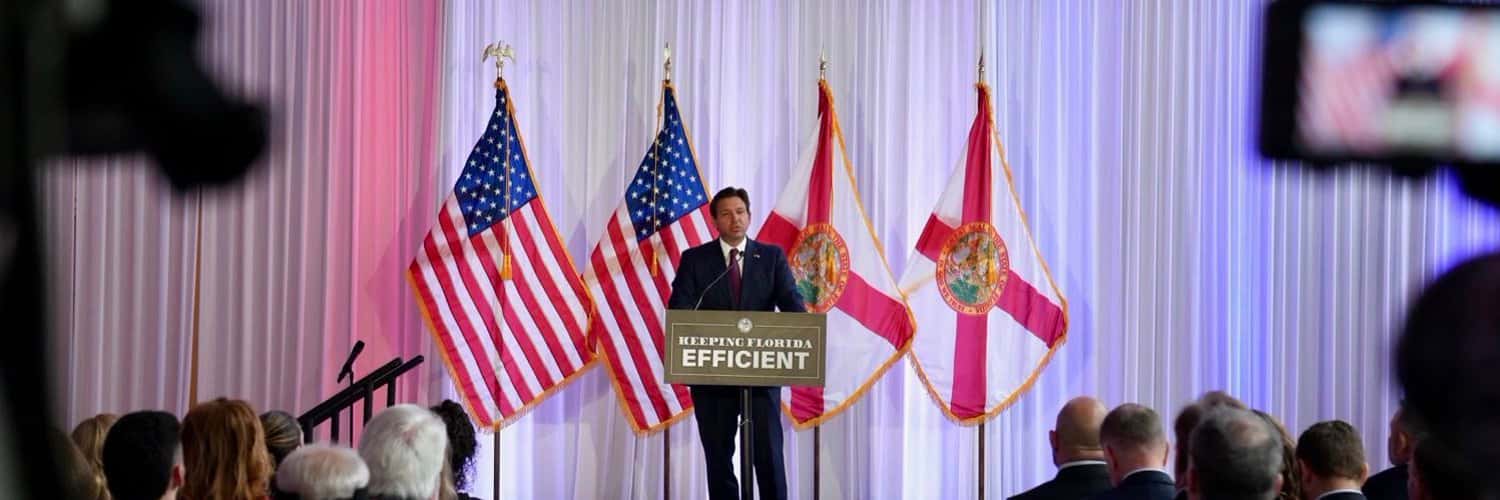
Governor Ron DeSantis and the three elected members of the Florida Cabinet are moving to formalize how the state attaches terrorist labels to organizations, taking up an emergency rule that fills in the procedural gaps left by a law that took effect on July 1. The teleconference was scheduled for the anniversary of the September 11 attacks, a timing choice the administration has presented as deliberate. The vote matters because a state terrorism designation in Florida is not symbolic. It reaches funding, licensing, and eligibility for state programs.
What the Cabinet is considering
The rule interprets HB 1471, the anti-terrorism measure passed during the 2026 regular legislative session. That law gave the Governor authority to recommend organizations for designation, but it required the backing of the Cabinet to make a designation stick. The Cabinet consists of Attorney General James Uthmeier, Chief Financial Officer Blaise Ingoglia, and Agriculture Commissioner Wilton Simpson. All three are Republicans, and all three have publicly aligned with the Governor on the underlying statute.
An emergency rule is a specific instrument in Florida administrative law. It allows an agency or officer to put a procedure in place faster than the ordinary rulemaking process permits, on a finding that an immediate danger to the public health, safety, or welfare requires it. Emergency rules carry a limited lifespan and typically must be followed by permanent rulemaking if the state intends the procedure to endure. That means Friday's action, if approved, is likely to be the first step rather than the last.
The substance of the rule concerns process: how a recommendation reaches the Cabinet, what record supports it, how an organization is notified, and what avenue exists to contest the label. Those details have been the weak point in the program so far. When the state moved quickly in July, the absence of a clear procedure became the opening for litigation.
How Florida got here
The Legislature passed HB 1471 during the 2026 regular session, and the law became effective July 1. DeSantis moved the same week, announcing his intention to apply the designation to the Council on American-Islamic Relations, the Muslim Brotherhood, and antifa. He said at the time that the designations were based on conduct rather than on belief or affiliation alone.
The Governor's recommendation was not limited to those three. It also swept in more than 90 foreign organizations that the United States government has already designated as foreign terrorist organizations. That list includes the Venezuelan crime syndicate Tren de Aragua, the Sinaloa cartel, the Gulf Cartel based in Matamoros, and the Islamic Revolutionary Guard Corps, a branch of Iran's armed forces. Folding in the existing federal list gave the state program immediate breadth without requiring Florida to build its own evidentiary record for each foreign group.
The domestic designations drew the sharper response. CAIR, a national Muslim civil rights organization with active Florida chapters, said it would challenge the designation in court. A Florida court subsequently placed the designated list on hold while that litigation proceeded, a development that left the state's new authority in limbo through the late summer.
Why a state terrorism label carries weight
DeSantis has described the practical consequences in terms of money and access. He has said the designations would affect state and local funding, the treatment of organizations at colleges and universities, and eligibility under Florida's K-12 school-choice scholarship program. Each of those touches a different set of Floridians.
State and local funding is the most direct lever. Florida distributes grants through a range of agencies for community services, public safety partnerships, and social programs. A designation would function as a disqualifier, removing an organization from consideration regardless of the merits of a particular application. For groups that rely on a mix of public and private support, the effect can be immediate.
The higher education piece is broader than it may first appear. Florida's public universities recognize hundreds of student organizations, and recognition carries access to funding, meeting space, and the ability to hold events on campus. A designation applied to a national parent organization raises questions about affiliated campus chapters that the rule may or may not answer. University general counsels across the State University System have been watching for exactly that clarity.
The school-choice connection is the least discussed and potentially the most consequential. Florida operates one of the largest publicly funded scholarship programs in the country, and participating private schools must meet eligibility requirements administered by the state. Tying designation status into that framework creates a compliance question for schools with religious or community affiliations that overlap with a designated group.
The legal challenge ahead
CAIR's court challenge is the central obstacle. Organizations contesting a designation of this kind generally argue on two tracks. The first is procedural due process: that a government cannot impose a stigmatizing label with concrete consequences without notice, a meaningful opportunity to respond, and a record that can be reviewed. The second is First Amendment: that designations resting on advocacy, association, or political speech rather than on conduct run into constitutional limits.
The emergency rule under consideration appears aimed squarely at the first track. By putting a written procedure on the books, the state strengthens its position that designated organizations receive process. Whether that procedure satisfies a court depends on its specifics, including what evidentiary standard applies and whether an organization can seek review before a designation takes effect rather than only afterward.
The second track is harder to cure through rulemaking. DeSantis has consistently framed the designations as conduct-based, and that framing is not accidental. A designation tied to documented acts stands on firmer ground than one tied to statements or ideology. The litigation record will test whether the state's asserted conduct findings hold up.
What it means for Floridians
For most residents, the immediate effect is indirect. The designations do not create new criminal offenses for ordinary citizens, and they do not change the federal government's own terrorism designations, which continue to operate independently under federal law. What changes is the state's posture toward specific organizations operating inside Florida.
The clearer impact falls on people who interact with the named groups. That includes families whose children attend schools affiliated with a designated organization, students in campus chapters, and people who use legal, social, or advocacy services provided by those organizations. Muslim community organizations across South Florida, Tampa Bay, and Central Florida have reported uncertainty about what the designations mean for routine operations such as renting public facilities or partnering with local governments.
There is also a business dimension. Florida employers and financial institutions apply sanctions screening against federal lists as a matter of routine compliance. A separate state list introduces a second screening question, and the rule's treatment of that issue will determine whether Florida businesses face a new compliance burden or whether the state list operates only against state government itself.
Reaction across the state
Republican legislative leaders have defended the law as a response to organized criminal networks operating across the Gulf and to groups they argue have supported violence. Supporters point to the inclusion of cartels and Tren de Aragua as evidence that the program targets demonstrable criminal enterprises rather than domestic political opponents.
Civil liberties organizations and several Democratic legislators have objected to the domestic designations specifically, arguing that the state is applying a national security instrument to a civil rights organization. They have also raised concerns that the Cabinet, a body of four elected officials, is not structured to conduct the kind of evidentiary review a designation demands.
Local officials have largely stayed out of the dispute while waiting to see what the rule requires of them. County and municipal governments in Florida distribute state pass-through dollars and contract with nonprofit providers, which means a designation could reach down into local budgeting decisions well after the Cabinet acts.
How Florida's Cabinet works
The Florida Cabinet is an unusual institution by national standards. Most states vest executive authority in a governor with appointed department heads. Florida distributes it across four separately elected officials who act collectively on a defined set of matters, a structure inherited from the state's post-Reconstruction constitution and narrowed by voters in 1998.
Before that revision, the Cabinet had six elected members and reached further into state administration. The amendment consolidated offices, eliminating the elected Secretary of State, Commissioner of Education, Comptroller, and Treasurer, and creating the Chief Financial Officer position that merged the last two. The result is the four-member body that exists today.
The Cabinet sits as the head of several agencies and boards, including the Department of Law Enforcement, the Department of Revenue, the Department of Highway Safety and Motor Vehicles, and the State Board of Administration, which manages the state pension fund and the Florida Hurricane Catastrophe Fund. It also sits as the Board of Trustees of the Internal Improvement Trust Fund, which holds state lands.
Adding terrorism designations to that portfolio is a departure. The Cabinet's existing responsibilities are largely administrative and fiscal. Determining whether an organization has engaged in conduct warranting a terrorism label is an adjudicative function, and the body has no established procedure, staff, or evidentiary practice for work of that character. The emergency rule is in part an attempt to supply what the institution lacks.
The federal comparison
The federal government's designation system offers a point of contrast. The Secretary of State designates foreign terrorist organizations under the Immigration and Nationality Act, following a process that requires an administrative record, notification to Congress, publication in the Federal Register, and an opportunity for judicial review in the United States Court of Appeals for the District of Columbia Circuit.
That process has been litigated extensively over three decades, and courts have required the government to provide designated organizations with unclassified summaries of the evidence and a meaningful opportunity to respond. Those requirements were not in the original statute. They emerged from litigation.
Federal law also does not provide a mechanism for designating domestic organizations as terrorist entities. The absence is deliberate, reflecting longstanding concern that such authority applied to domestic groups would collide with the First Amendment. Federal prosecutors address domestic political violence through criminal charges against individuals rather than through organizational designations.
Florida's statute crosses that line by reaching domestic organizations, which is the feature that distinguishes it and the feature most likely to determine its fate in court. Whether a state may do what the federal government has declined to do is an open question with no direct precedent.
What's next
If the Cabinet approves the emergency rule, the state gains a procedure it can point to in court. That does not automatically lift the judicial hold on the designated list. The court that placed the list on hold will have to assess whether the new procedure cures the defects that prompted the pause, and CAIR's constitutional arguments remain live regardless.
Permanent rulemaking would follow, and that process involves public notice, an opportunity for written comment, and the possibility of an administrative challenge before a rule takes effect. Organizations that expect to be affected will have a formal channel to weigh in at that stage, which the emergency process does not provide.
The larger question is whether Florida's designation authority survives review intact, survives in narrowed form, or is struck down. The answer will shape whether other states adopt similar statutes. Several legislatures have watched Florida's approach closely, and the outcome of the CAIR litigation will be the signal they act on.
Spotted an issue with this article?
Have something to say about this story?
Write us a letterComments
No comments yet. Be the first to weigh in.
Related Coverage

Harry Shorstein, five-term Jacksonville-area state attorney and juvenile justice reformer, dies at 86
23h ago

Pinellas commissioners set Oct. 27 vote on Vince Nowicki's Flock camera ban after Bob Gualtieri's fierce defense
1d ago

Volusia County Launches Florida's First Online Database of Convicted Domestic Abusers
2d ago

Miami-Dade sheriff ends Sergeant-at-Arms security detail; Levine Cava warns of risk at Government Center
2d ago