Florida's Attorney General Wants Criminal Charges Against AI Chatbot Companies
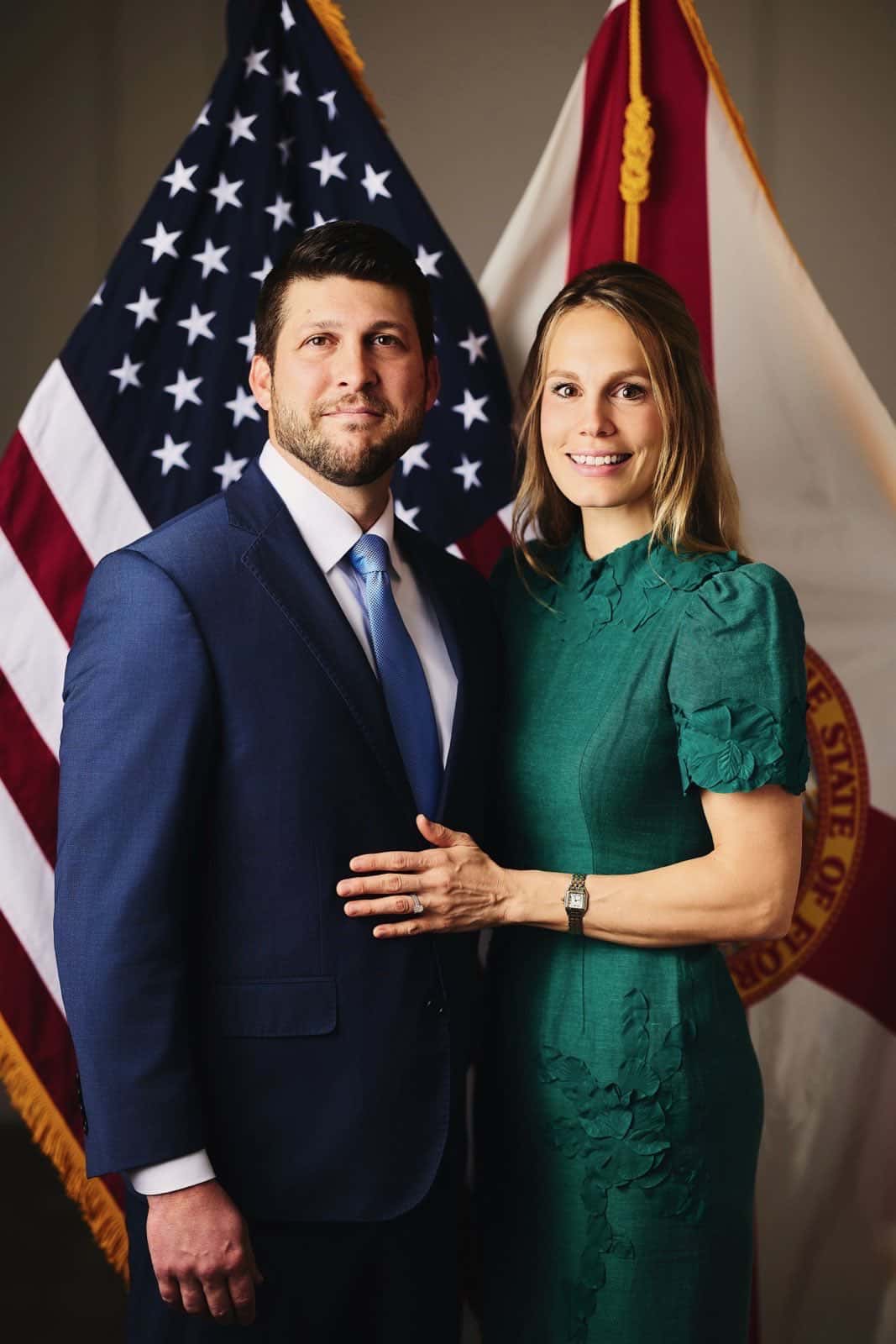
Florida Attorney General James Uthmeier said this week that he will push for state legislation imposing criminal penalties on technology companies whose artificial intelligence products aid or abet crimes, an approach that would go considerably further than the consumer protection and civil liability theories states have used against the industry so far. Uthmeier laid out the proposal at a press conference in Tampa alongside Florida Department of Law Enforcement Director Mark Glass.
What is being proposed
The core idea is corporate criminal liability. Uthmeier's argument, as he described it, is that a chatbot itself cannot be charged with a crime, but the corporation that designed the system, trained it and collected subscription revenue from it occupies a different position than a neutral tool maker. Under that framing, a company whose product materially participates in the commission of a crime would not be treated as a bystander.
No bill text has been filed. What exists is a stated legislative intention, which means the substance will be worked out during the drafting process and the coming legislative session. The questions that drafting will have to resolve are substantial: what mental state a company would need to have, what constitutes participation as opposed to mere availability, how a prosecutor would establish causation between a model's output and a criminal act, and how any such statute would interact with federal law and constitutional protections.
Uthmeier also pointed to the practical enforcement problem that motivates the proposal. Existing criminal law is built around human actors and their intent. When harm flows through a product that generates novel output in response to a user, the traditional framework struggles to identify a defendant.
The case behind the push
The proposal grows out of an investigation Uthmeier's office first announced in April and expanded in May into a criminal probe. At its center is the use of ChatGPT by Phoenix Ikner, the man accused of carrying out the April 2025 shooting at Florida State University in Tallahassee.
Two people were killed in that attack and several others were wounded. Ikner faces two counts of first-degree murder and seven counts of attempted first-degree murder. Prosecutors have alleged he used a firearm that had been his stepmother's former service weapon. Evidence gathered in the case includes transcripts of his conversations with an AI chatbot.
Ikner has not been convicted. His trial, which had been set for October of this year, was continued after defense attorneys cited a heavy capital case load, the volume of evidence and mental health concerns requiring further evaluation. Court records now place the trial in June 2027.
State officials have also cited a broader set of incidents in support of the legislative push, including reports of chatbots encouraging users toward self-harm. Glass raised a separate category, telling reporters that AI tools are being used to generate child sexual abuse material and that legislation may be needed to address it.
Florida's existing legal offensive against AI companies
Florida is not starting from zero. On June 1, 2026, the state filed what officials described as a first-in-the-nation state-led civil lawsuit against OpenAI and its chief executive, Sam Altman, over the design of the company's products, including ChatGPT.
The civil complaint alleges that the company prioritized speed to market and commercial gain over user safety, disregarded warnings from experts inside and outside the company, and deployed a product that facilitates harm while assuring users it was safe. The complaint further alleges that the product collects data from minors without meaningful parental oversight, causes behavioral addiction and cognitive harm, and produces dangerous errors the company downplayed.
That case is civil. The new proposal would add a criminal dimension that Florida does not currently possess. The two tracks are complementary in the state's strategy: civil litigation seeks damages and injunctive changes to product design, while a criminal statute would create deterrence backed by the threat of prosecution.
The legal obstacles
A statute of this kind would face immediate and serious challenges. The first is Section 230 of the federal Communications Decency Act, which shields interactive computer services from liability for content provided by others. Whether generative AI output constitutes content provided by another information content provider, or content the service itself created, is an unsettled question that courts around the country are actively working through. If a model's output is treated as the company's own speech, Section 230 offers less protection, which cuts both ways for the industry.
The second obstacle is the First Amendment. Software output has been treated as expressive in a variety of contexts, and criminal statutes reaching speech face demanding scrutiny. A law drawn broadly enough to capture a model that discussed a topic later connected to a crime would be difficult to defend. A law drawn narrowly enough to survive review might reach very few actual cases.
The third is federal preemption and the practical geography of the industry. The companies at issue are almost entirely headquartered outside Florida, and a state criminal statute reaching their conduct would raise jurisdictional and dormant commerce clause questions. Florida has pursued extraterritorial regulation of technology platforms before and has met mixed results in federal court.
What it means for Floridians
The immediate effect on Florida households is limited, because nothing has been enacted. The medium-term effects, if legislation passes, would show up in how AI products behave for Florida users.
Companies facing state criminal exposure would likely respond the way regulated industries generally respond: with broader refusals, more aggressive content filtering, and possibly geographic restrictions on certain features. Floridians could find that some AI tools decline more requests than they do for users in other states, or that features available elsewhere are withheld.
There is a parallel track already reaching Florida classrooms. The Florida Board of Education is scheduled to vote this month on rules requiring school districts and charter schools to address artificial intelligence in their internet safety policies and to give parents an opt-out from approved AI instructional tools, with a companion rule requiring the state's 28 public colleges to adopt AI use policies. Taken together, the education rules, the OpenAI lawsuit and the criminal liability proposal amount to a coordinated state posture rather than a series of unrelated actions.
The politics
Artificial intelligence regulation does not divide neatly along Florida's usual partisan lines. Concerns about minors, about content moderation and about corporate accountability draw support from constituencies that disagree on most other subjects. That gives a bill of this kind an unusual coalition to work with.
It also arrives during a statewide election year in which the Attorney General's office is on the ballot along with the governorship. Consumer-facing enforcement announcements tend to increase in visibility during such periods, which is a reason to watch what gets filed rather than what gets announced.
Technology industry groups have generally opposed state-level AI criminal liability, arguing it would fragment regulation across 50 jurisdictions and chill development. Those groups have significant presence in Tallahassee and would be expected to work the bill actively.
How corporate criminal liability normally works
Criminal prosecution of corporations is not novel in American law. Companies are routinely charged with environmental crimes, securities fraud, antitrust violations, health care fraud and workplace safety offenses. What makes the proposed approach unusual is the theory of participation.
In a conventional corporate prosecution, the state proves that employees acting within the scope of their employment committed acts constituting the offense, and imputes that conduct to the corporation. The corporate defendant is liable because humans working for it did something criminal.
An AI liability statute would need a different structure, because no employee of the company is present when a model produces output in response to a user. The theory would have to rest on the design, training and deployment decisions made in advance, treating the resulting harm as a foreseeable consequence of those choices rather than as an act by any individual.
That is closer to a products liability framework than to traditional criminal law, and importing it into criminal statute raises questions about notice and fair warning that courts take seriously. A company must be able to know in advance what conduct is prohibited.
What Florida has done to platforms before
Florida has an established record of attempting to regulate technology platforms, and that record informs how a criminal liability proposal is likely to fare. The state enacted legislation restricting how large social media platforms moderate content, which was challenged immediately and produced years of federal litigation over First Amendment and preemption questions.
Florida has also enacted restrictions on social media accounts for minors, requiring age verification and parental consent for younger users, and those provisions have drawn their own legal challenges from industry groups.
The pattern across those efforts is consistent: the state legislates, the industry sues, federal courts enjoin some provisions while allowing others, and the practical effect emerges years later in a narrowed form. There is no reason to expect a criminal AI statute would follow a different path.
What the litigation record does not show is that the effort is pointless. State regulatory pressure has changed platform behavior in measurable ways even where specific statutes were enjoined, because companies adjust products in anticipation of enforcement rather than waiting for a final judgment.
What's next
The proposal needs a sponsor and a bill. Florida's next regular legislative session is the venue, and the committee process will produce the first real look at statutory language. Watch the criminal justice and judiciary committees in both chambers.
The Ikner prosecution proceeds on its own timeline toward a June 2027 trial date, and the evidence developed there, including the chatbot transcripts, will inform the policy debate whether or not it is intended to.
The state's civil case against OpenAI will also continue through the courts, and any early rulings on Section 230 or the scope of state authority in that litigation would signal how a criminal statute might fare.
Spotted an issue with this article?
Have something to say about this story?
Write us a letterComments
No comments yet. Be the first to weigh in.
Related Coverage

Florida Poly unveils Astro, a piloted electric aircraft it calls the nation's first flying police vehicle
4d ago
Palm Beach County Bets About $15 Million in Public Money on Becoming a Quantum Computing Hub
4d ago

Scammers Clone Osceola Sheriff's Captain's Voice With AI in Fake Arrest Warrant Calls
5d ago

Neil Armstrong Apollo 11 Training Jacket Found in a Closet Goes Up for Auction at Titusville's American Space Museum
6d ago