DeSantis Kicks Off 2026 Hurricane Season With Preparedness Push and New CORE Program
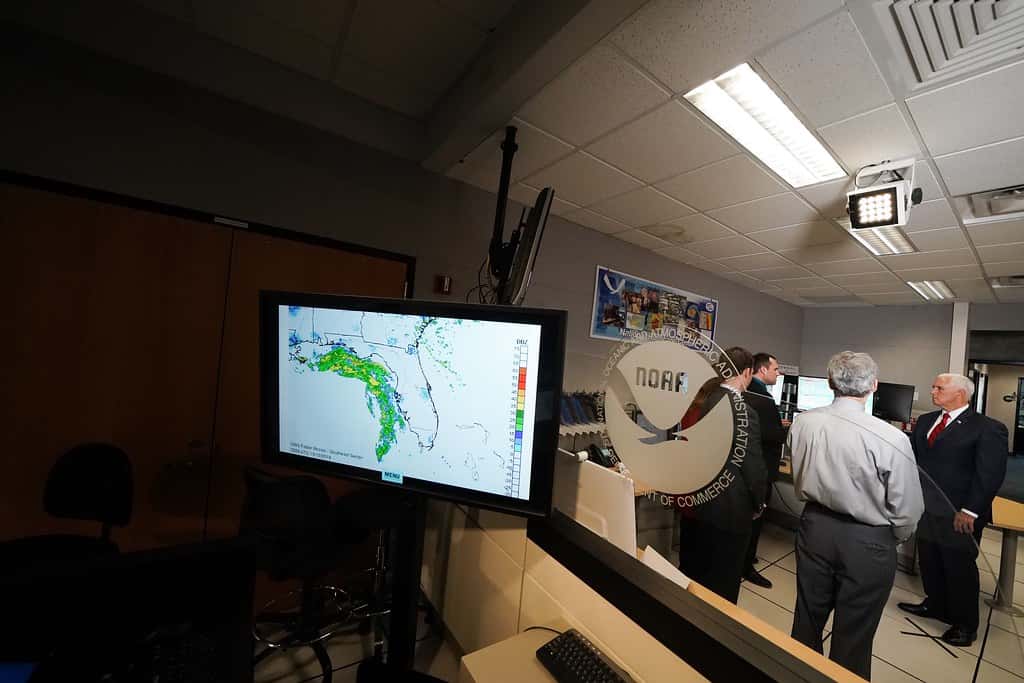
Gov. Ron DeSantis urged Floridians to ready their homes and families for the 2026 Atlantic hurricane season at a press conference in Orlando in early June, marking the official June 1 start of a six-month stretch that historically delivers the state's most dangerous weather. The governor used the appearance to roll out a new statewide workforce program called CORE and to remind residents that the time to prepare is now, before the first named storm threatens the peninsula.
The 2026 season runs from June 1 through Nov. 30, and Florida sits at the center of nearly every Atlantic forecast because of its long coastline and dense coastal population. DeSantis was joined at the briefing by Florida Division of Emergency Management Executive Director Kevin Guthrie, Florida Department of Transportation Secretary Jared Perdue, and Florida National Guard Major General John Haas, a lineup meant to signal that the state's storm response apparatus is already standing by.
The central message from the podium was straightforward: hurricane readiness is a year-round responsibility, and Floridians should not wait for a cone of uncertainty to appear on a television map before acting. Officials stressed that the steps families take in early June, from mapping evacuation zones to stocking supplies, are the ones that pay off when a storm is bearing down and store shelves are bare.
A New Program to Train the Next Generation
The headline announcement was CORE, the Coalition for Operational Readiness and Education, a new statewide initiative aimed at building a pipeline of emergency managers and disaster-response professionals. State officials described CORE as an effort to formalize and expand training for the people who staff emergency operations centers, coordinate shelters, manage logistics, and rebuild communities after a storm passes.
According to the state, CORE brings together the Florida Division of Emergency Management, the Florida Department of Education, FloridaCommerce, higher-education institutions, and private-sector partners. The goal is workforce development: creating clearer educational pathways, internships, and credentials so that students and career-changers can move into emergency management roles that have long depended on on-the-job learning.
The program reflects a recognition that Florida's repeated brushes with major hurricanes have placed enormous demands on a relatively small professional workforce. By linking universities and colleges with state agencies and employers, CORE is designed to ensure that the next wave of storms is met by trained personnel rather than improvised staffing. Officials framed the coalition as an investment in resilience that extends well beyond any single season.
Guthrie, the state's top emergency management official, said in substance that preparedness begins long before a storm ever forms, and that training and education are what build genuinely resilient communities. He cast CORE as part of a broader philosophy that treats readiness as a continuous discipline rather than a seasonal scramble, with skilled people at the heart of any effective response.
Five Steps to Hurricane Preparedness
Alongside the new program, DeSantis promoted a public-facing checklist the state is calling the Five Steps to Hurricane Preparedness. The framework is meant to give households a simple, memorable sequence of actions, and officials encouraged Floridians to work through all five before the season's first serious threat.
The first step, Know Your Home and Know Your Zone, asks residents to understand the specific risks their property faces, including storm surge, wind, and flooding, and to confirm which evacuation zone they live in. The second, Make a Plan, calls for a family emergency and communication plan so that household members know where to go and how to reach one another if they are separated when a storm hits.
The third step, Build a Kit, urges Floridians to assemble supplies that can sustain a household for several days without power or open stores, including food, water, medications, flashlights, batteries, and pet supplies. The fourth, framed as 'Halfway Full is Halfway There,' advises keeping vehicle fuel tanks at least half full during the season to avoid the long gas lines that form when evacuations begin and to maintain the option to leave quickly.
The fifth step, Evacuate Tens of Miles, Not Hundreds, addresses one of the most common mistakes Florida families make. Officials reminded residents that the safest move is usually a short trip out of an evacuation zone to higher, safer ground, following local guidance, rather than a marathon drive across the state that can leave drivers stranded on clogged highways. The state has repeatedly emphasized that running from water, not wind, is the goal.
A Permanent Tax Break Replaces the Old Holidays
One significant change shaping the 2026 season is fiscal rather than meteorological. Florida now has a permanent, year-round sales-tax exemption on many disaster-preparedness supplies, a policy enacted through 2025 legislation that replaced the temporary tax-free holidays the state ran in previous years. For shoppers, that means there are no special, limited-window disaster-supply tax holidays in 2026.
The permanent exemption covers a range of common readiness items, including batteries, certain generators, and smoke and carbon monoxide alarms, among other supplies. By making the break year-round, lawmakers removed the pressure on families to time their purchases to a narrow holiday and instead allowed them to buy needed equipment whenever it is convenient and affordable.
State officials have presented the change as a tangible benefit for Florida households, particularly those that struggled to take advantage of short tax holidays in the past. The shift also aligns with the broader preparedness message of the early-June event, which is that readiness should be steady and ongoing rather than a last-minute rush tied to a calendar date or an approaching storm.
For consumers, the practical upshot is that the smart play is to stock and replenish supplies now, in the calm at the start of the season, rather than waiting for a storm watch. With the tax break in place year-round, there is no financial reason to delay assembling a kit or replacing aging batteries and detectors.
The Forecast Backdrop
The preparedness push comes against a forecast that many seasonal outlooks describe as below-normal to near-average for 2026, a notable contrast with several recent hyperactive years. Forecasters have pointed to a mix of atmospheric and oceanic conditions that could temper the number of named storms compared with the most explosive seasons on record.
State officials and emergency managers, however, were careful to warn that a quieter overall season does not translate to safety for any individual community. Florida's history is full of seasons that produced few storms but a single devastating landfall, and a below-average year can still bring a catastrophic hurricane to a given stretch of coast. The relevant statistic for any household is whether a storm hits them, not how many form across the entire basin.
That caution was a recurring theme of the Orlando event. The governor and his team emphasized that seasonal forecasts are useful for planning at the state level but should never lull residents into complacency. A single major hurricane, regardless of the season's total, can reshape a region for years, as recent Florida history has repeatedly demonstrated.
The message, in short, was that Floridians should prepare every year as if a major storm is coming, because for some communities it eventually will. The early-June briefing was timed precisely to drive that point home while there is still time to act calmly.
Lessons From Recent Seasons
Florida's emphasis on readiness is rooted in hard experience. The state has weathered a string of damaging hurricanes in recent years that strained emergency operations, displaced families, and tested the resilience of power grids, roads, and shelters across multiple regions. Those events have sharpened the state's focus on logistics, fuel supply, and the workforce that keeps response systems running.
The presence of the transportation secretary and the National Guard's senior commander at the Orlando event underscored how broad the state's response machinery has become. Highway capacity, fuel distribution, debris removal, and the staging of personnel and equipment are now treated as core elements of hurricane planning, not afterthoughts handled once a storm is already on the radar.
The CORE program fits squarely into that lesson. Each recent storm has highlighted the value of experienced, well-trained personnel at every level, from county emergency managers to the logistics specialists who move supplies into hard-hit areas. By building a stronger talent pipeline, the state hopes to reduce the strain that major events place on its response system and to spread expertise more evenly across all 67 counties.
The cumulative damage of those seasons has also reshaped how Floridians think about everyday readiness. Insurance costs, building codes, and home-hardening decisions are now part of the conversation in coastal communities that once treated storms as an occasional inconvenience. State officials have folded that mindset into their messaging, arguing that the work of preparing a household stretches far beyond a single supply kit to include the longer-term choices families make about where and how they live. The early-June event reflected that wider view, casting preparedness as a permanent feature of life in a hurricane-prone state rather than a seasonal obligation.
What's Next
For Floridians, the immediate task is to translate the state's five-step checklist into action while the weather is calm. That means confirming evacuation zones, building or refreshing a supply kit, finalizing a family communication plan, and keeping vehicles fueled as the season progresses. The permanent sales-tax exemption gives households a financial incentive to do that work now rather than later.
The CORE program, meanwhile, will unfold over the coming months as the state, education institutions, and private partners build out training pathways and credentials. Its full impact will not be visible during a single season but should grow as new emergency management professionals enter the workforce and deepen the state's bench of trained responders.
As the 2026 season gets underway, emergency officials will continue monitoring the tropics and issuing guidance through the Florida Division of Emergency Management and local authorities. Residents were encouraged to follow official channels for evacuation orders and storm updates, and to remember that the most reliable protection against any hurricane is preparation undertaken well before the storm appears.
Spotted an issue with this article?
Have something to say about this story?
Write us a letterComments
No comments yet. Be the first to weigh in.
Related Coverage

Storm-Force Low Off Southeast Coast Has 40% Chance to Turn Subtropical as Florida Coast Faces Tidal Flooding, Rough Surf
2d ago
Strong fall cold front brings Florida Saturday rain, cooler air and dangerous surf this weekend
5d ago
Hurricane Center Gives Atlantic Low Near Cabo Verde a 20% Chance as Florida Gets a Break After Isaias
Oct 12

Tallahassee and the Big Bend Escape Isaias' Worst, With Downed Trees, Brief Outages and Rising Rivers to Watch
Oct 9